
The modern indoor cat lives a life of luxury, but often at the cost of their primal instincts. In the wild, felines spend a significant portion of their day hunting, stalking, and solving problems to earn their next meal. When we remove that challenge by providing a bowl of kibble twice a day, boredom can set in, leading to lethargy, anxiety, or destructive behaviors.
Mental stimulation is just as vital as physical exercise. Puzzle toys bridge the gap between a domestic lifestyle and a cat’s natural predatory drive. By forcing a cat to think, maneuver, and work for their rewards, these toys reduce stress and keep their cognitive functions sharp. Here are the 20 best puzzle toys to transform your cat’s playtime into a brain-boosting adventure.
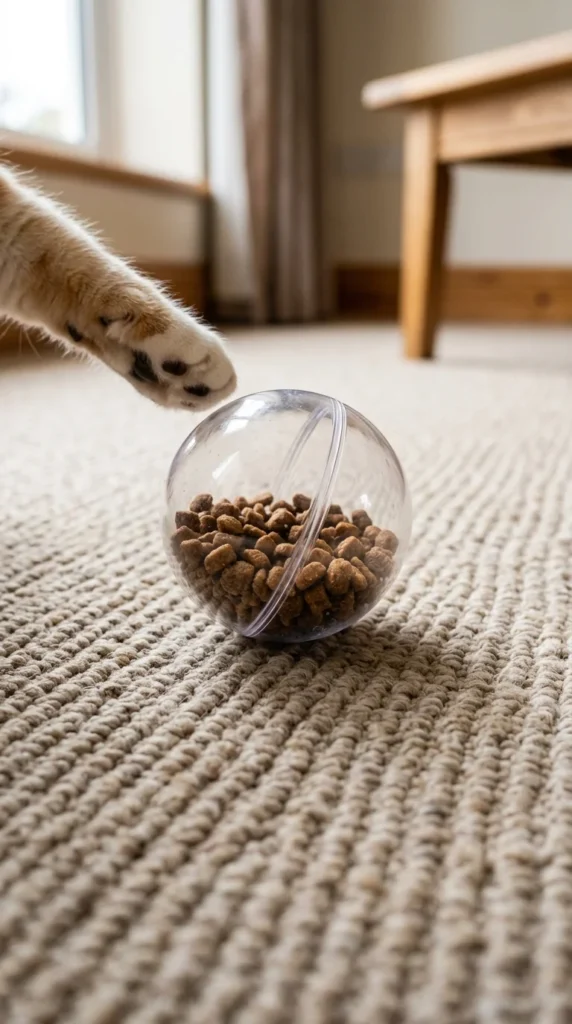
1. Treat Balls
Treat balls are the gold standard for high-energy cats. These spheres feature adjustable openings that release kibble or treats as the cat bats the ball around the room. It mimics the “chase” aspect of hunting. As the cat learns the rhythm of the roll, they become more adept at manipulating the ball to get the reward. It’s an excellent way to turn mealtime into an hour-long activity rather than a five-minute scarf-and-barf session.
2. Snuffle Mats
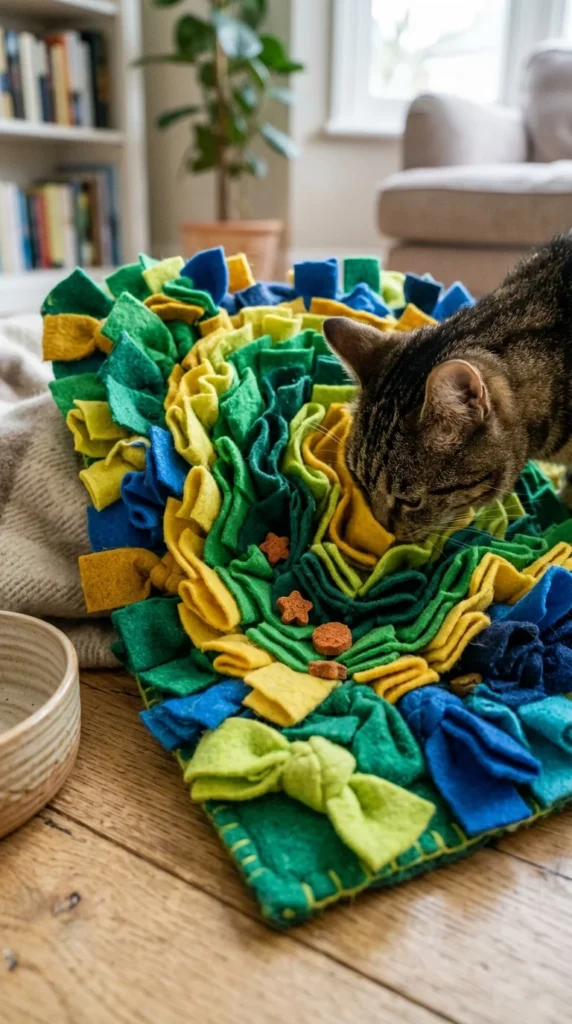
Originally designed for dogs, snuffle mats have become a favorite for felines who love to forage. These mats consist of long strips of felt or fabric tied to a sturdy base. By hiding dry food or silvervine inside the “grass,” you encourage your cat to use their nose and paws to dig out their prizes. This tactile experience is highly grounding for anxious cats and provides a different type of sensory engagement than plastic toys.
3. Food Trees
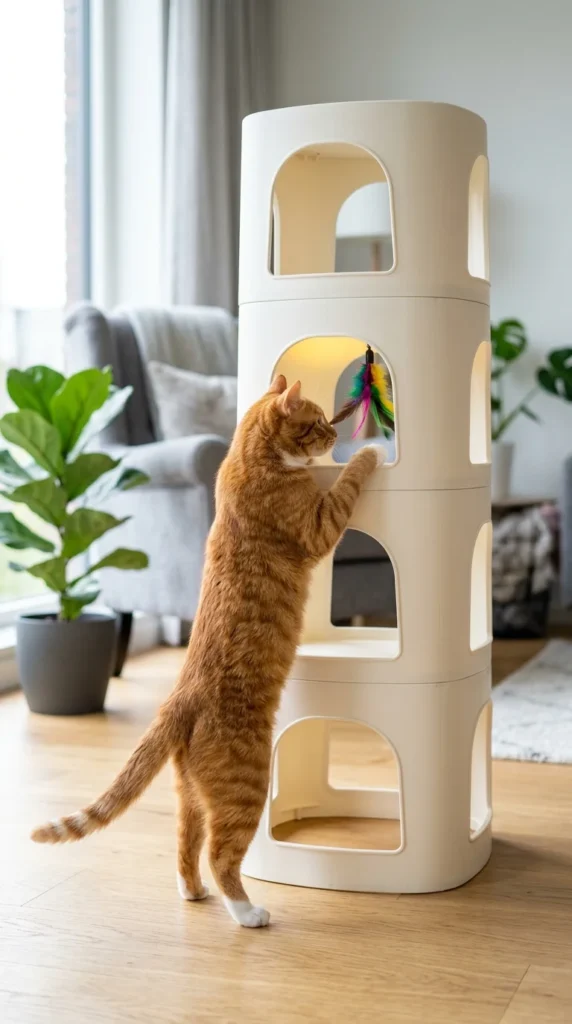
A food tree challenges a cat’s vertical dexterity. These toys usually feature multiple levels with holes of varying sizes. The cat must reach inside, hook a piece of kibble with their claw, and drop it down through the tiers until it reaches the collection tray at the bottom. It requires coordination and patience, preventing “fast eaters” from consuming their food too quickly while providing a satisfying physical task.
4. Sliding Puzzles
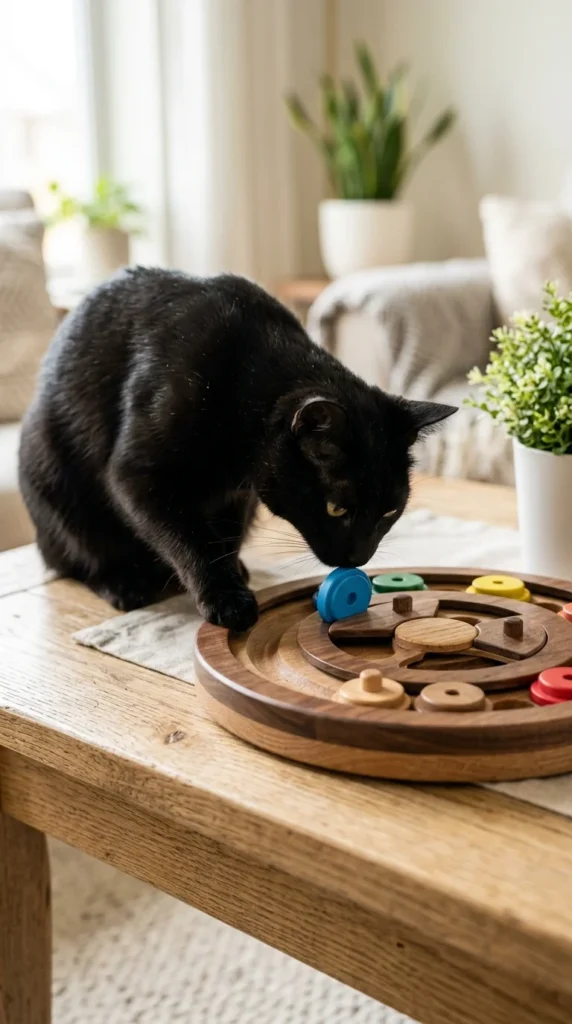
Sliding puzzles are the “Sudoku” of the cat world. These boards feature compartments hidden under sliding discs or rotating covers. The cat must learn to slide the covers in specific directions to reveal the treats beneath. Many of these boards come with different difficulty levels, allowing you to start simple and gradually challenge your cat’s problem-solving skills as they get smarter.
5. Ripple Rugs
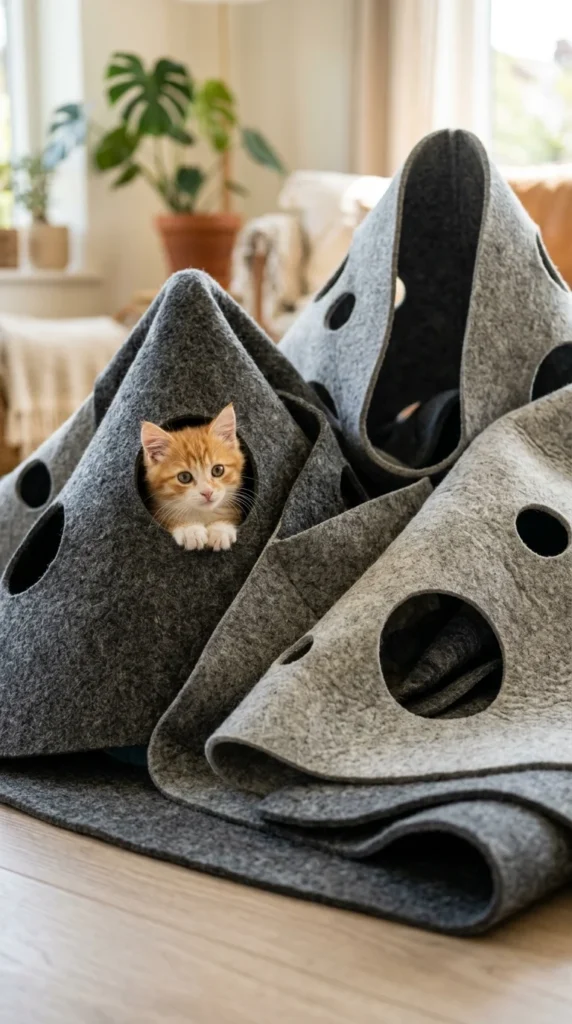
The Ripple Rug is a versatile, interactive play space. It consists of two layers of non-slip felt; the top layer features several holes and can be shaped into “ripples” using Velcro points. Owners can hide toys or treats inside the folds. It stimulates a cat’s instinct to hunt in burrows and provides an ever-changing landscape that you can reshape every day to keep things fresh.
6. Robotic Mice
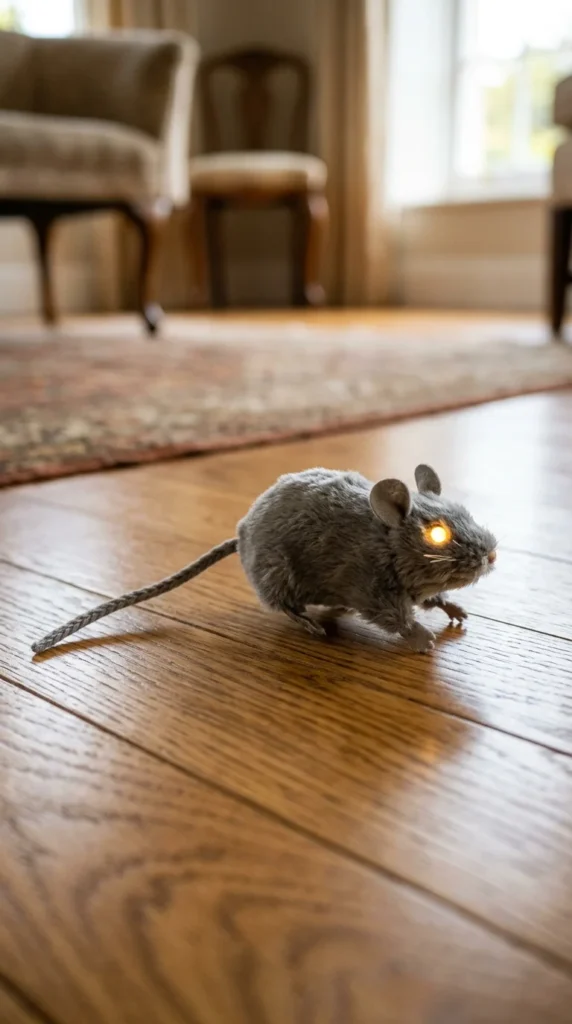
While traditional stuffed mice are great, robotic mice take the hunt to the next level. These toys are programmed to move sporadically—zipping forward, stopping, and turning—much like real prey. Some models are even smart enough to navigate around obstacles. The unpredictable movement triggers a cat’s predatory “pounce” reflex, requiring them to time their movements and predict the robot’s next path.
7. Egg Cartons
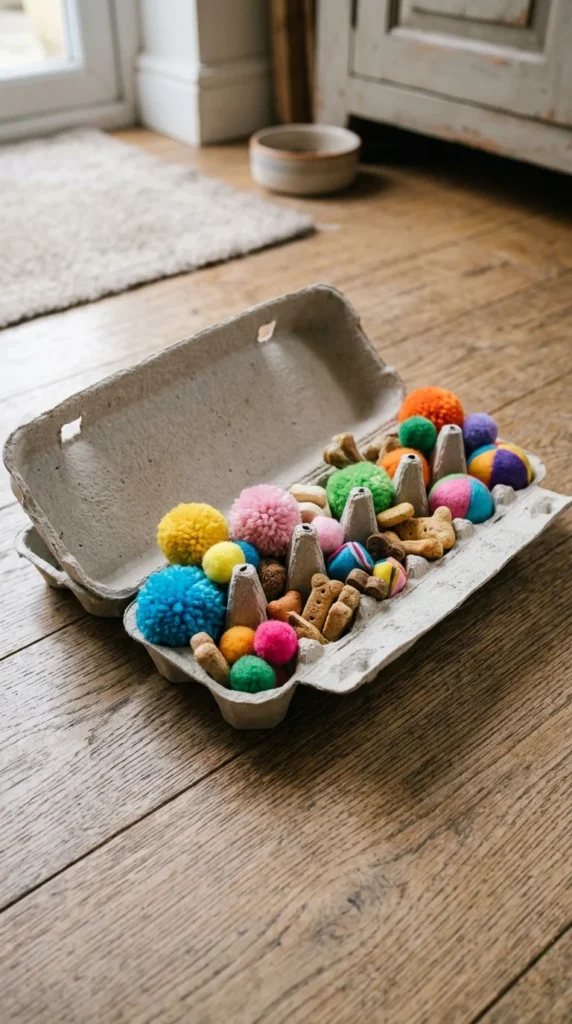
You don’t always need a high-tech gadget to stimulate a cat’s brain. A simple cardboard egg carton acts as a fantastic “piston” puzzle. By placing treats in the cups, you force the cat to use their “fishing” reflex to scoop the food out. To make it harder, you can close the lid partially or place small balls on top of the treats, requiring the cat to remove the obstacle before getting the reward.
8. Licking Mats
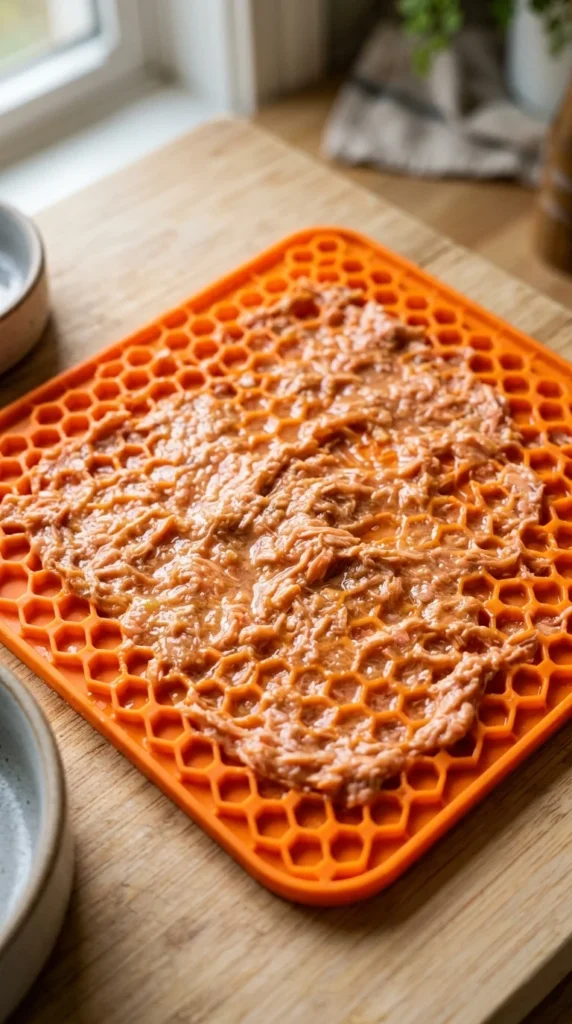
Licking is a self-soothing behavior for cats. Licking mats are silicone pads with intricate textures like nubs, ridges, or mazes. When you smear wet food or Churu-style treats onto the mat, the cat must use their tongue to get into every crevice. This not only provides mental stimulation but also promotes dental health by scraping bacteria off the tongue and stimulating saliva production.
9. Maze Boxes
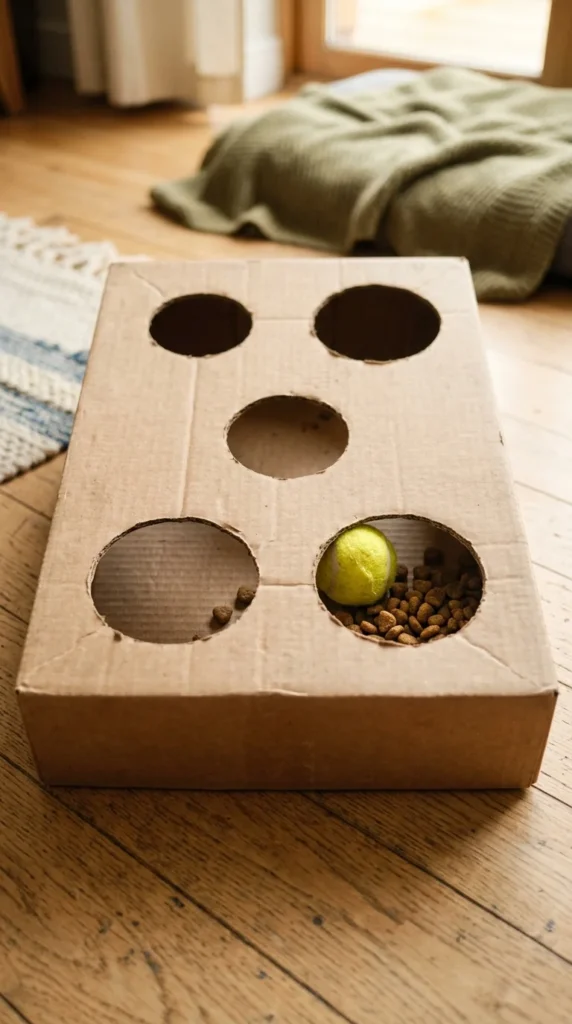
Maze boxes (or “peek-a-prize” boxes) are heavy-duty containers with various holes cut into the top and sides. You drop toys, bells, or treats inside, and the cat has to reach in and navigate the items through the internal maze to the exit holes. This is particularly good for cats who are “paw-oriented” and enjoy the tactile sensation of reaching into dark spaces.
10. Wand Teasers
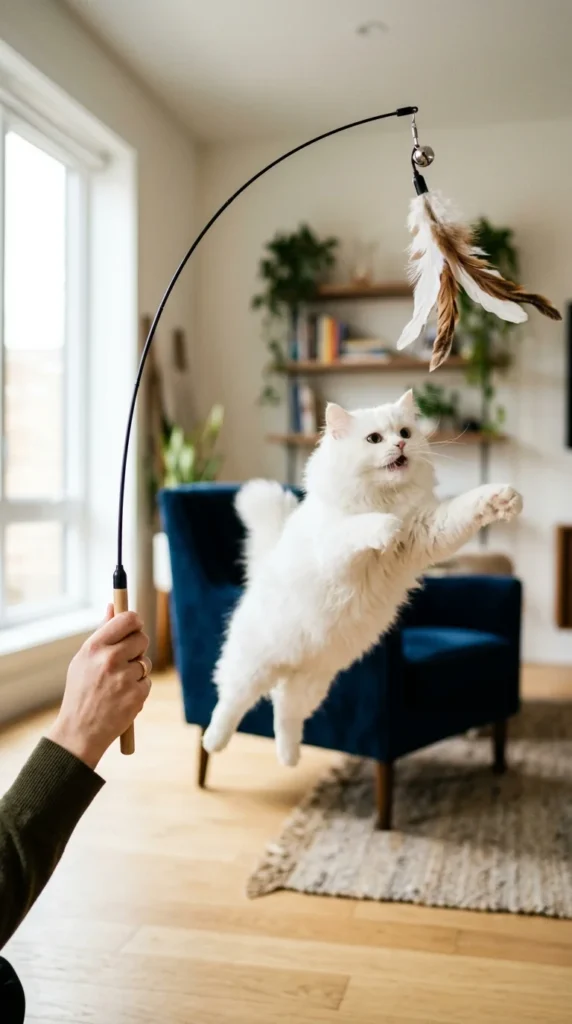
While it requires human participation, the wand teaser is the ultimate mental and physical workout. The “puzzle” aspect comes from the human mimicking the movement of a bird or a bug. By hiding the feather behind furniture or “fluttering” it just out of reach, you force the cat to calculate distances, wait for the perfect moment, and strategize their ambush.
11. Puzzle Pipes

Puzzle pipes are stationary tubes with openings that allow a cat to stick their paws in but not their heads. Usually, a ball or a treat is placed inside. The cat must bat the item from one end of the pipe to the other or try to hook it out of a specific slot. The transparency of the pipes adds a visual element that keeps the cat hyper-focused on the “prey” inside.
12. Electronic Spinners
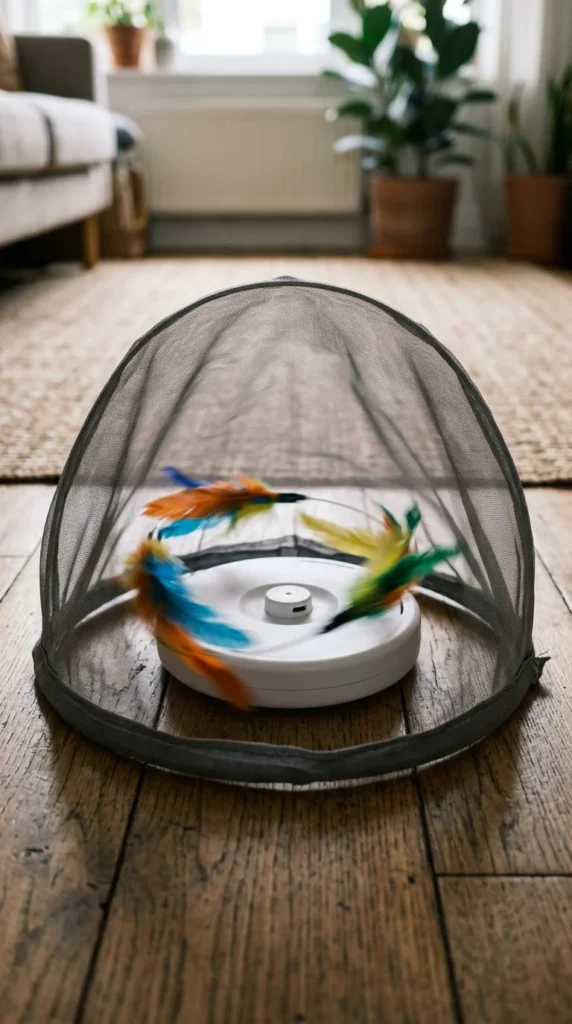
Electronic spinners usually involve a concealed wand or feather that moves in a circle under a piece of fabric. The cat sees the “bulge” moving and must decide when and where to pounce. Because the speed and direction often change automatically, it prevents the cat from getting bored and challenges their reaction time.
13. Treat Towers
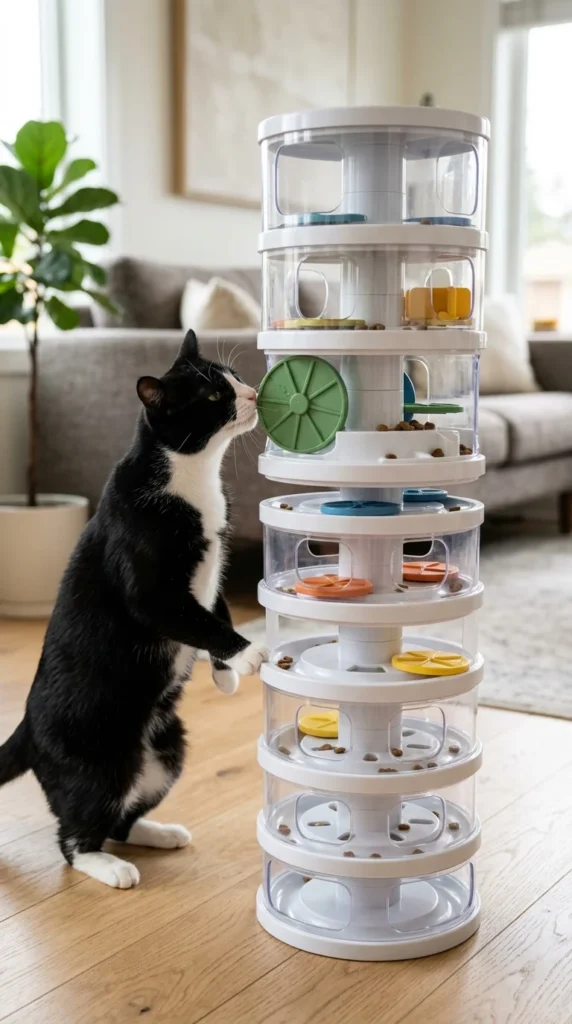
Unlike a food tree, a treat tower often involves rotating elements. The cat might need to spin a specific level to align two holes before the treat falls to the next level. This requires a higher level of cognitive function, as the cat must understand the cause-and-effect relationship between spinning the plastic and receiving the food.
14. Spring Toys

Simple but effective, plastic springs provide a mental challenge through unpredictable physics. Because of their shape, they bounce in random directions when swatted. A cat must learn to anticipate the erratic movement, which keeps their brain engaged during solo play. They are especially popular with kittens who are still developing their coordination.
15. Activity Boards
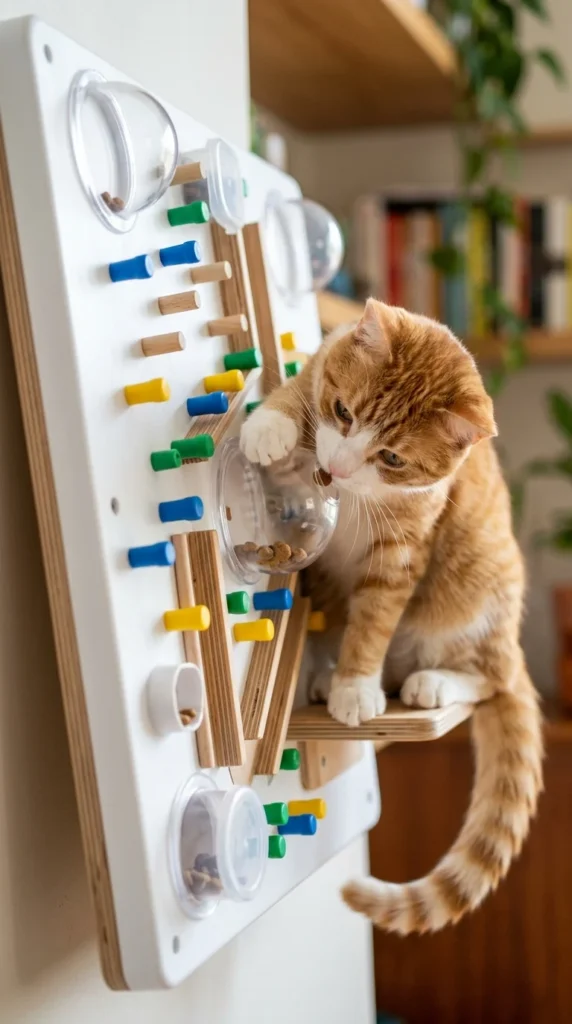
Activity boards are “all-in-one” stations that offer multiple types of puzzles on a single base. One corner might have a “fishing” task, another a “sliding” task, and another a “licking” task. These are perfect for multi-cat households or for keeping a cat busy for an extended period, as they have to switch their “logic” to solve each different section.
16. Tumbler Toys

Tumbler toys use a weighted base to ensure they always return to an upright position. When a cat bats at the toy, it wobbles uncontrollably. This movement is fascinating to cats, and if the toy is filled with treats, the erratic wobbling becomes a game of chance. It encourages the cat to use varying levels of force to see which “wobble” produces a snack.
17. Floating Toys
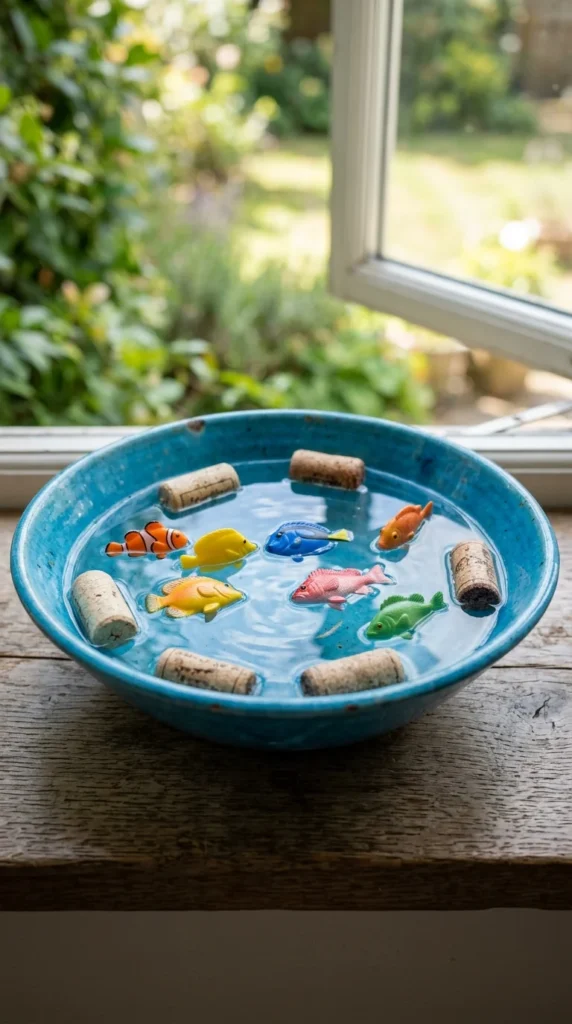
For cats who aren’t afraid of water, floating puzzles are a great sensory experience. Placing plastic balls or floating treats in a shallow basin of water forces the cat to “fish.” They have to manage the surface tension and the movement of the water to grab their prize, which is a significant departure from their usual land-based play.
18. Cardboard Castles
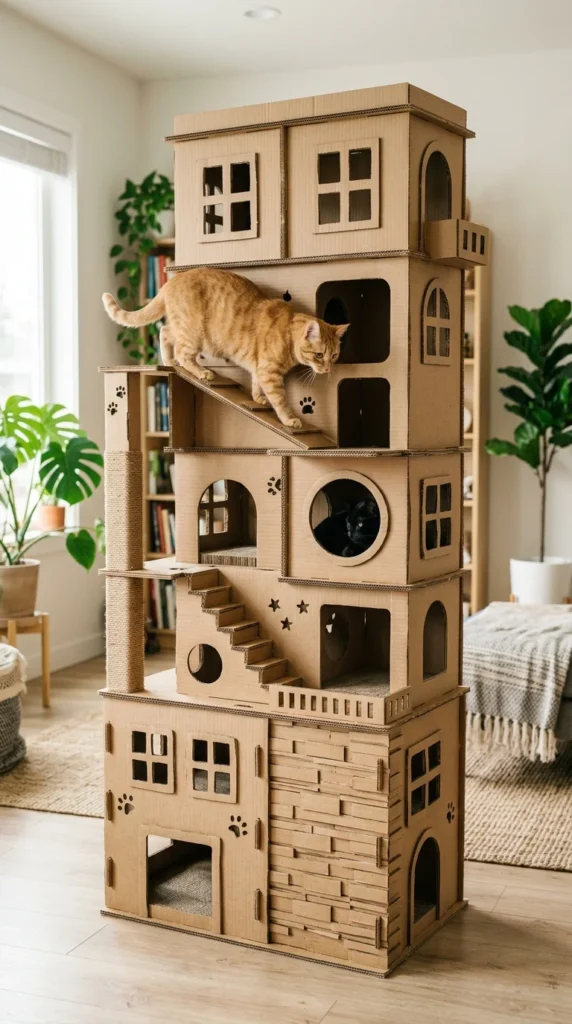
Cardboard castles provide a structural puzzle. Cats love to navigate tight spaces and vertical heights. By providing a multi-level cardboard structure with hidden “rooms,” you encourage your cat to map out their environment. You can hide treats in different “rooms” each day to turn the entire house into a giant scavenger hunt.
19. Catnip Infusers
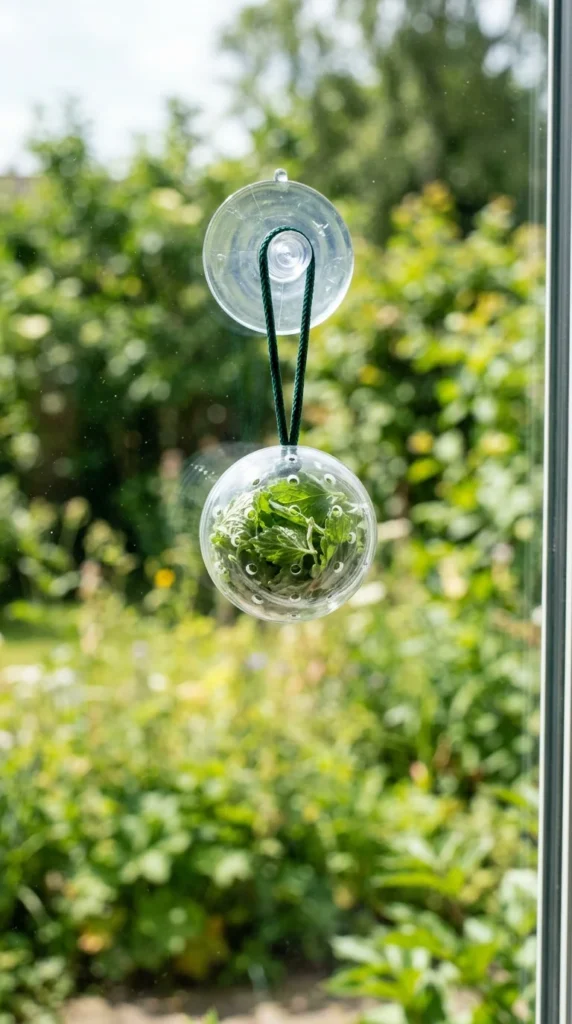
Scent is a powerful tool for mental stimulation. Catnip infusers are puzzles that require the cat to rub, bat, or lick the toy to release the scent. Some versions are designed as wall-mounted rollers. The “puzzle” here is sensory—finding the best way to interact with the object to get the maximum olfactory reward.
20. Self-Rolling Balls
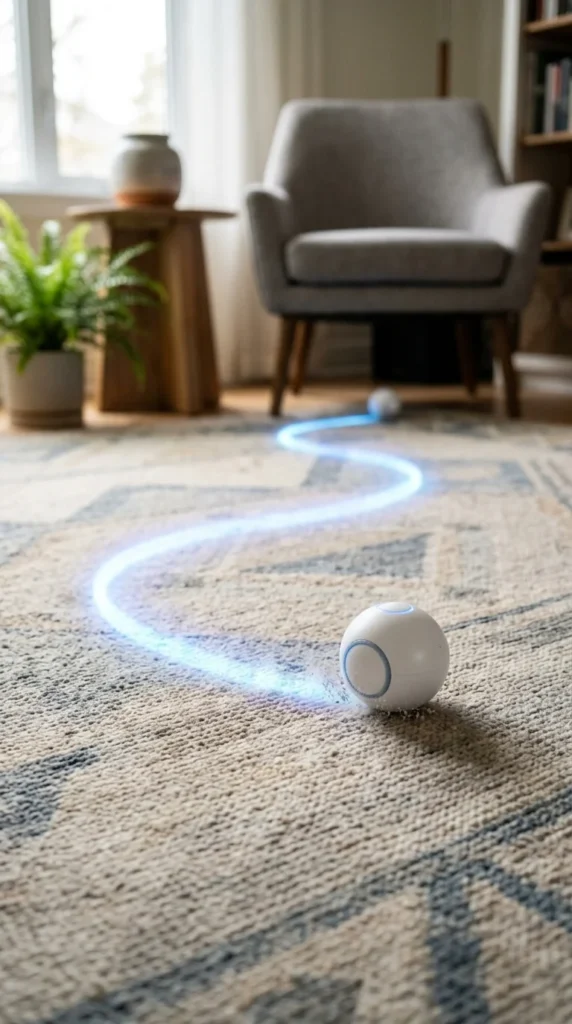
Self-rolling balls are the high-tech cousins of the treat ball. They use internal sensors to avoid obstacles and “tease” the cat by rolling away whenever they get close. Some models can be controlled via a smartphone app, but the “auto” mode is best for mental stimulation, as the cat has to figure out the ball’s internal logic to “capture” it.
Tips for Introducing Puzzle Toys
- Start Easy: If your cat has never used a puzzle toy, don’t start with the hardest level. They may get frustrated and give up. Use high-value treats to build their confidence.
- Rotate Regularly: Cats are highly intelligent and can “solve” a toy to the point where it no longer provides a challenge. Rotate your collection, introducing a “new” toy every few days to keep the novelty alive.
- Supervise Initial Play: Always watch your cat the first few times they use a new toy to ensure they don’t break off small pieces or get their paws stuck.
- Use for Meals: Instead of using a bowl, try putting half of your cat’s daily kibble into puzzle toys. This mimics natural foraging and helps with weight management.
By incorporating these toys into your cat’s daily routine, you aren’t just giving them something to play with—you’re giving them a job to do. A working cat is a happy, healthy, and well-adjusted cat.