
Building a bond with a reptile is a unique journey that differs significantly from training a dog or a cat. Reptiles operate on instinct and habituation rather than a desire to please. To a reptile, you are initially a giant, potential predator. Transitioning from “threat” to “neutral presence” and finally to “trusted companion” requires patience, consistency, and a deep understanding of their biology. Whether you own a curious Bearded Dragon, a shy Ball Python, or an intelligent Monitor Lizard, these eighteen tips will help you cultivate a relationship based on safety and mutual respect.
1. Gradual Introduction

The biggest mistake new keepers make is rushing the process. When you first bring a reptile home, they are stressed by the change in environment. For the first 7 to 14 days, avoid all handling. Use this time to simply exist in the same room. Sit by the enclosure, talk softly, and let them get used to your presence without the threat of being touched. This “passive interaction” establishes you as a non-threatening part of their new landscape.
2. Scent Familiarization
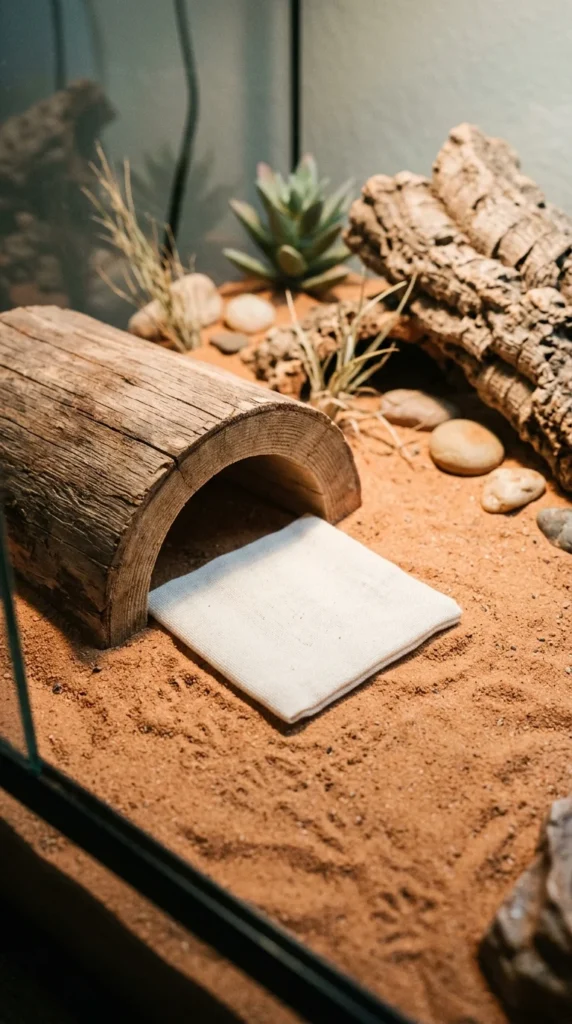
Reptiles, particularly snakes and monitors, rely heavily on their sense of smell (chemoreception). To help them recognize you, place a small item of your clothing—like a clean sock or a piece of a t-shirt you’ve worn—inside their enclosure. This allows the animal to investigate your scent in a safe, low-stress environment. By the time you actually begin handling, your scent will be familiar and associated with the safety of their home.
3. Choice-Based Interaction
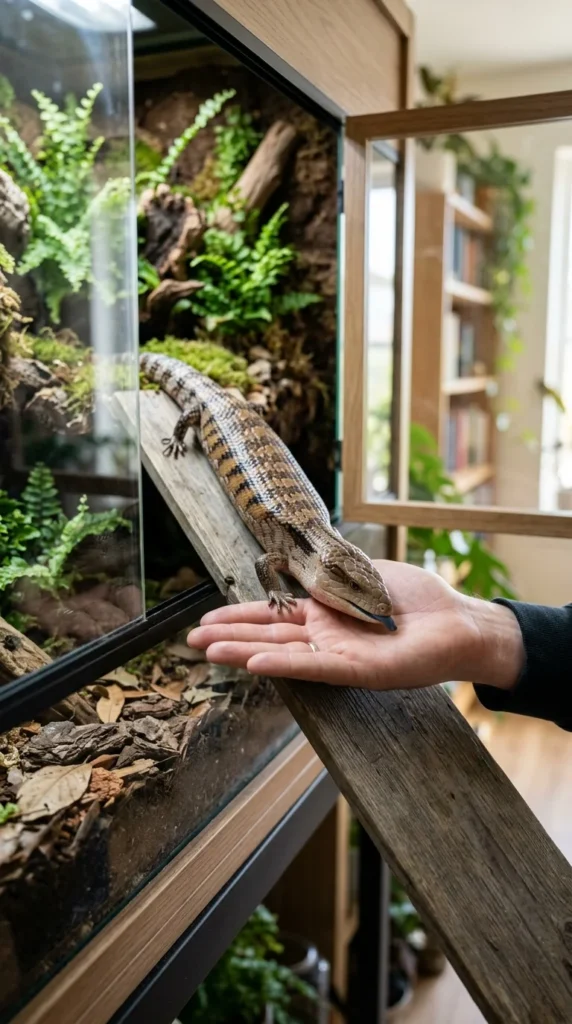
Trust is built when an animal feels it has control. Practice “choice-based handling” by opening the enclosure and placing your hand nearby, allowing the reptile to come to you. If they crawl onto your hand, they are consenting to the interaction. If they retreat, respect that boundary. Over time, reptiles often become curious and will choose to explore you, which creates a much stronger foundation of trust than forced handling.
4. Correct Approach
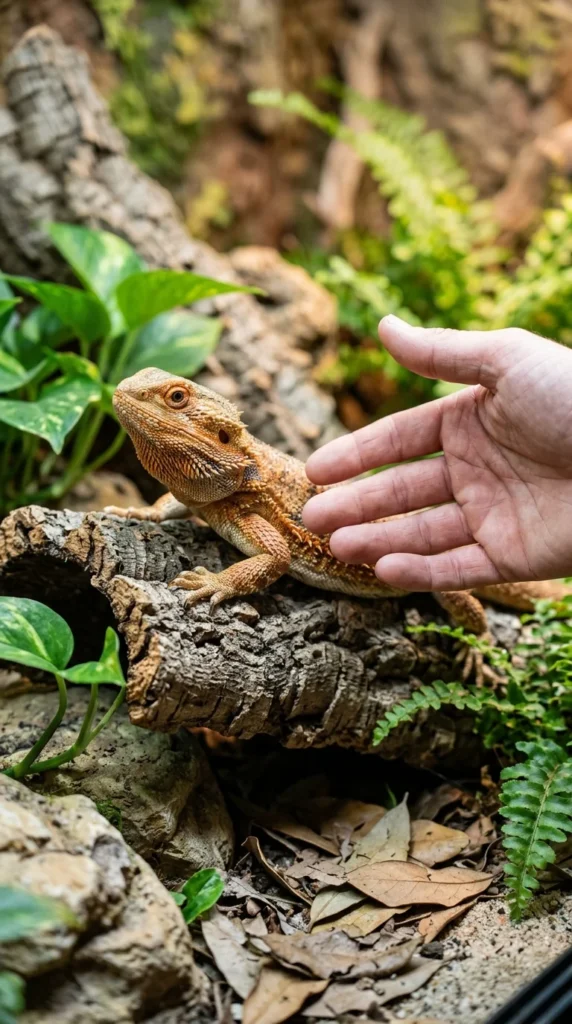
In the wild, many predators (like birds of prey) attack from above. If you reach down into a tank to grab your reptile from overhead, you are mimicking a predator’s attack, triggering their “fight or flight” response. Always approach from the side or from the front at eye level. This allows the reptile to see you coming and understand that you are not a swooping hawk.
5. Supporting Weight

A reptile that feels like it might fall will never feel safe. When picking up your pet, always support the heaviest part of their body and ensure their feet (if they have them) or their belly (if they are a snake) feel secure. For snakes, use two hands to support the front and back thirds of the body. For lizards, ensure all four feet are resting on your hand or arm. A secure reptile is a calm reptile.
6. Consistency

Reptiles thrive on routine. Try to handle your pet at the same time of day and in the same manner. This predictability reduces anxiety because the animal learns what to expect. If you handle them sporadically or change your technique every time, they remain on high alert. Aim for short, daily sessions rather than one long, exhausting session once a week.
7. Body Language

To build trust, you must become a student of reptile body language. Learn the signs of stress for your specific species. For lizards, this might include puffing out the beard, hissing, or tail whipping. For snakes, it might be an “S” curve posture or rapid tongue flicking. If your reptile shows signs of intense stress, end the session calmly. Pushing through their fear will only reinforce that you are something to be feared.
8. Time Management

Initial handling sessions should be very short—no more than 5 to 10 minutes. It is better to have a five-minute positive interaction than a twenty-minute session that ends in a bite or a flight response. As the reptile becomes more comfortable and stops showing signs of stress, you can gradually increase the duration of your time together.
9. Post-Feeding Protocol

Never handle a reptile for at least 48 hours after they have eaten. For snakes, handling too soon can lead to regurgitation, which is physically taxing and extremely stressful. For lizards, it can cause digestive upset. Respecting their “digestive downtime” shows that you are observant of their biological needs, and it prevents the animal from associating your presence with physical discomfort.
10. Shedding Awareness

When a reptile is in “blue” (the stage of shedding where their eyes turn cloudy), they are partially blind and feel incredibly vulnerable. Their skin is also sensitive and itchy. During this time, even the tamest reptile can become defensive. Avoid handling altogether during the shed cycle. Once they have successfully shed their skin, they will be much more receptive to interaction.
11. Enclosure Hygiene

A clean environment leads to a healthy, less stressed animal. If the enclosure is dirty, the reptile’s baseline stress level will be higher, making them more likely to react defensively during handling. By keeping their home pristine, you ensure they are in the best possible frame of mind for socialization. Additionally, spot-cleaning while they are inside helps them get used to your hands moving around their “territory” without touching them.
12. Hand Temperature

Reptiles are ectothermic, meaning they rely on external heat. If your hands are ice-cold, the sensation of being picked up can be a shock to their system. Before handling, make sure your hands are warm. A warm hand feels more like a basking spot and less like a cold, dead object, making the experience much more pleasant for the animal.
13. Calm Environment

Reptiles are sensitive to vibrations and loud noises. When you are working on trust-building, ensure the room is quiet. Turn off the TV, keep other pets (like barking dogs) out of the room, and avoid loud music. A calm environment allows the reptile to focus entirely on you without being distracted or startled by external stimuli.
14. No Sudden Movements

Fast, jerky movements are the hallmark of a predator. When reaching for or moving your reptile, do so with slow, deliberate confidence. If you flinch or pull away quickly when they move, you reinforce their flight instinct. Moving slowly and predictably signals that you are not a threat and that you are in control of the situation.
15. Tail Handling
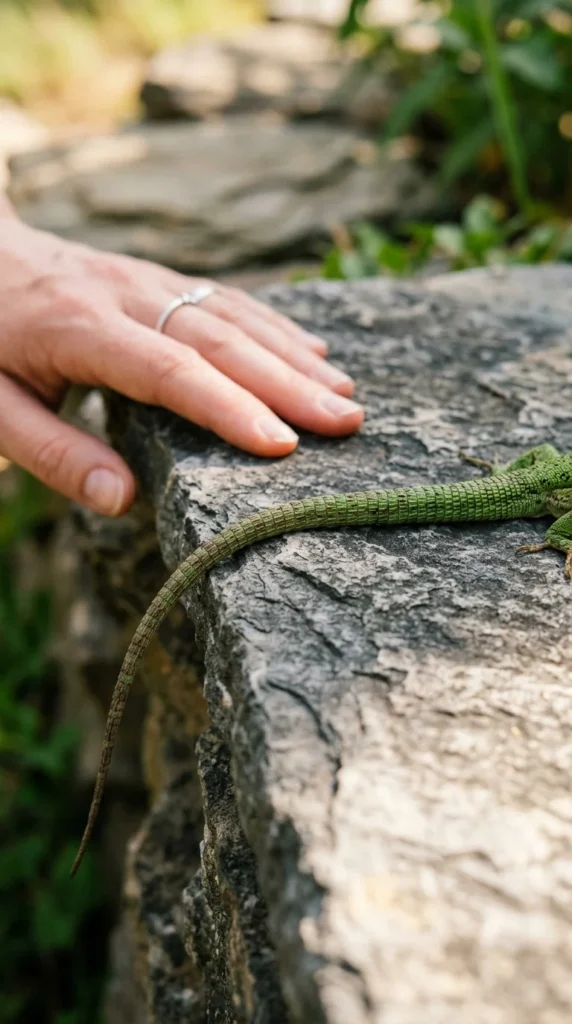
Many reptiles, particularly geckos and some lizards, have the ability to drop their tails (autotomy) when they feel threatened or if the tail is grabbed. Even for species that don’t drop their tails, the tail is a sensitive area. Never grab, pull, or lift a reptile by its tail. This is a sure-fire way to break trust and potentially cause permanent physical damage.
16. Tongue Flicks

Pay attention to how your reptile “tastes” the air. Frequent, long, and relaxed tongue flicks in snakes and monitors usually indicate curiosity. Short, rapid, or frantic tongue flicks can indicate agitation or high stress. By watching these subtle cues, you can gauge how comfortable your pet is at any given moment and adjust your handling accordingly.
17. Positive Association

While you shouldn’t handle a reptile right after they eat, you can use treats to build positive associations. Once a reptile is comfortable being out, offering a favorite treat (like a waxworm or a piece of fruit, depending on the species) from your hand or tongs while they are near you can help them associate your presence with a reward. This shifts their perception of you from “neutral” to “beneficial.”
18. Wash Hands

This is a safety tip for both you and the reptile. Washing your hands before handling removes the scent of other animals or food, which prevents “accidental” feeding bites. Washing after handling protects you from potential bacteria like Salmonella. Maintaining this hygiene routine ensures that every interaction is safe, clean, and professional, furthering the longevity of your bond.