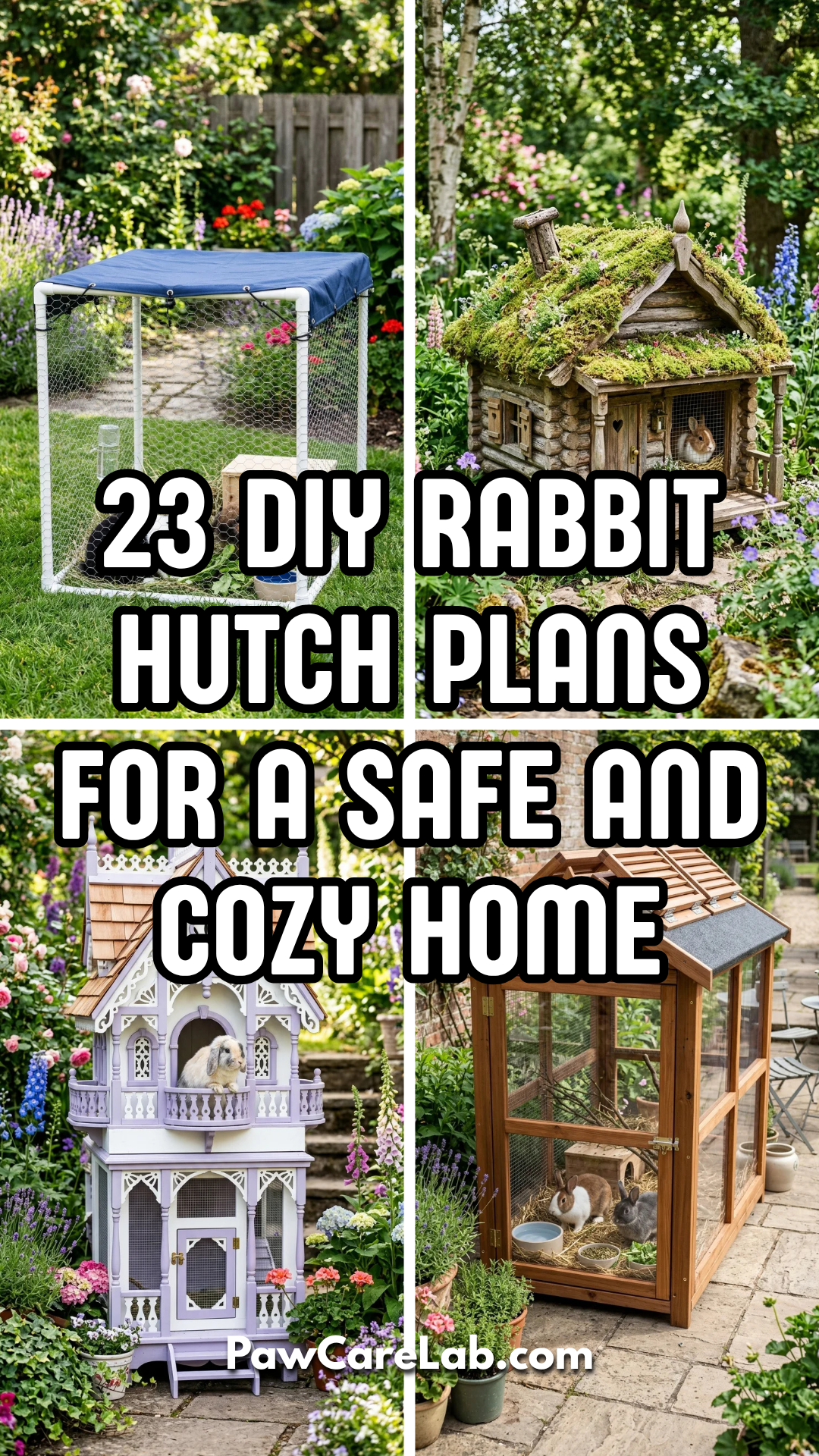
Creating a sanctuary for your long-eared companions is one of the most rewarding projects a pet owner can undertake. A rabbit hutch isn’t just a cage; it’s a bedroom, a playroom, and a safe haven all rolled into one. Whether you are looking to house your bunnies indoors or provide a sturdy outdoor retreat, DIYing your hutch allows you to customize the dimensions, aesthetics, and safety features to perfectly suit your needs.
Here are 23 creative and functional DIY rabbit hutch plans to inspire your next build.
1. Double-Decker
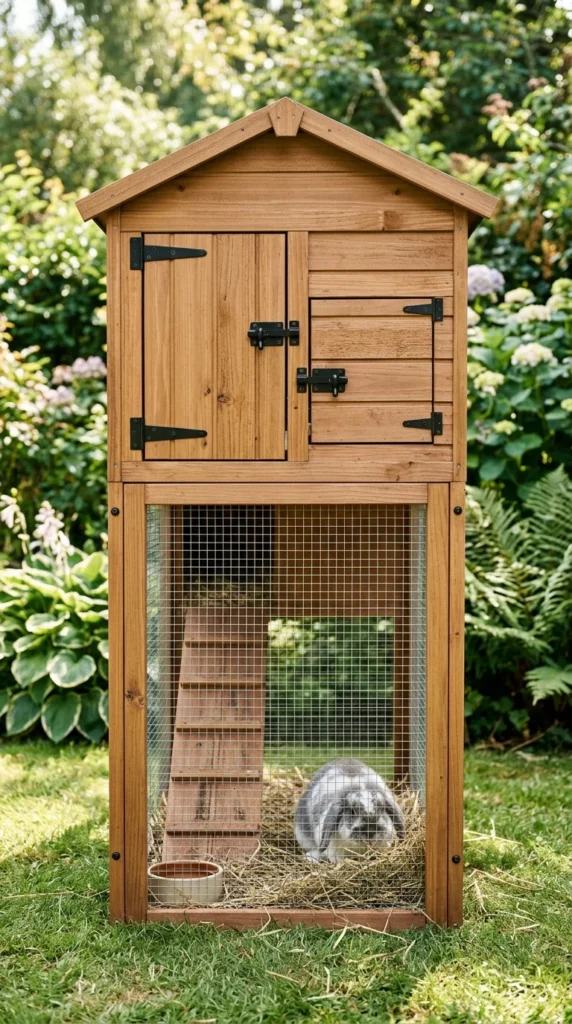
The double-decker design is a classic for a reason. It maximizes vertical space, providing a distinct separation between the “living room” (an open wire area for exercise) and the “bedroom” (a dark, enclosed area for sleeping). This layout is perfect for smaller yards where horizontal space is at a premium.
2. A-Frame
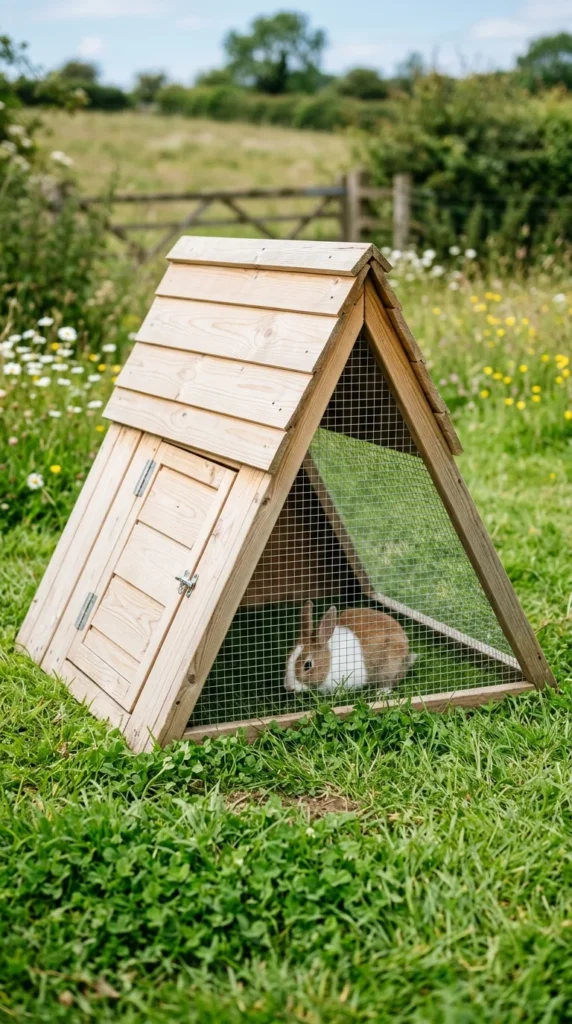
The A-frame hutch is incredibly sturdy and relatively simple to build. Its sloping sides allow rain and snow to slide right off, making it an excellent choice for outdoor use. Many owners love this design because it can be easily fitted with handles to make it portable.
3. Dresser Conversion

For indoor bunny parents, a dresser conversion is the height of “upcycling” chic. By removing drawer sliders and replacing front panels with mesh, you turn a piece of furniture into a multi-story condo that blends seamlessly with your home decor.
4. Indoor Condo
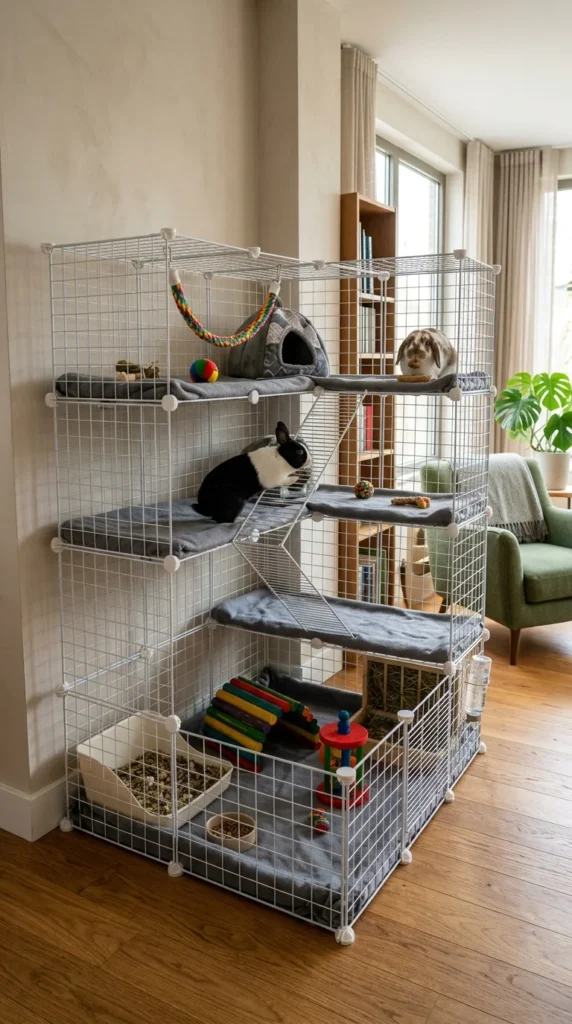
Often referred to as C&C (cubes and coroplast) cages, these condos are highly customizable. You can expand them as your rabbit family grows. They offer excellent ventilation and allow your rabbit to feel like part of the household activities.
5. Pallet Hutch
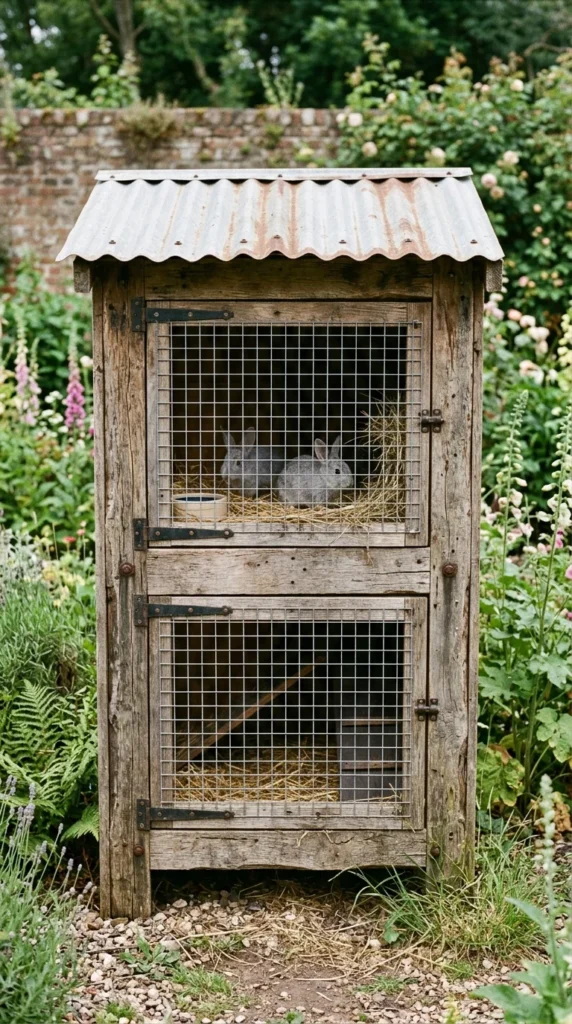
If you’re on a budget, pallet wood is a fantastic resource. A pallet hutch provides a heavy, durable structure that stands up well to the elements. Just ensure the wood is heat-treated (marked “HT”) rather than chemically treated to keep your bunnies safe from toxins.
6. Shed Style
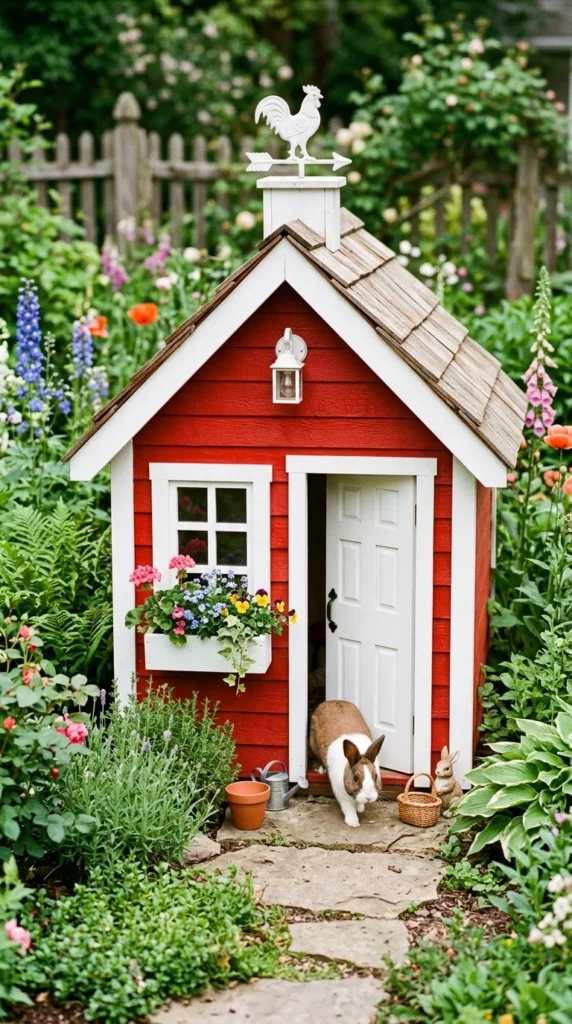
The shed-style hutch is for the DIYer who wants their rabbit’s home to look like a tiny human house. These are often large enough for an adult to step into, making cleaning much easier. They provide superior protection against predators and harsh weather.
7. PVC Frame

PVC is an underrated material for pet enclosures. It’s lightweight, rust-proof, and very easy to clean. This type of hutch is ideal for temporary outdoor “playtime” or for owners who need a hutch that can be easily hosed down.
8. Coffee Table
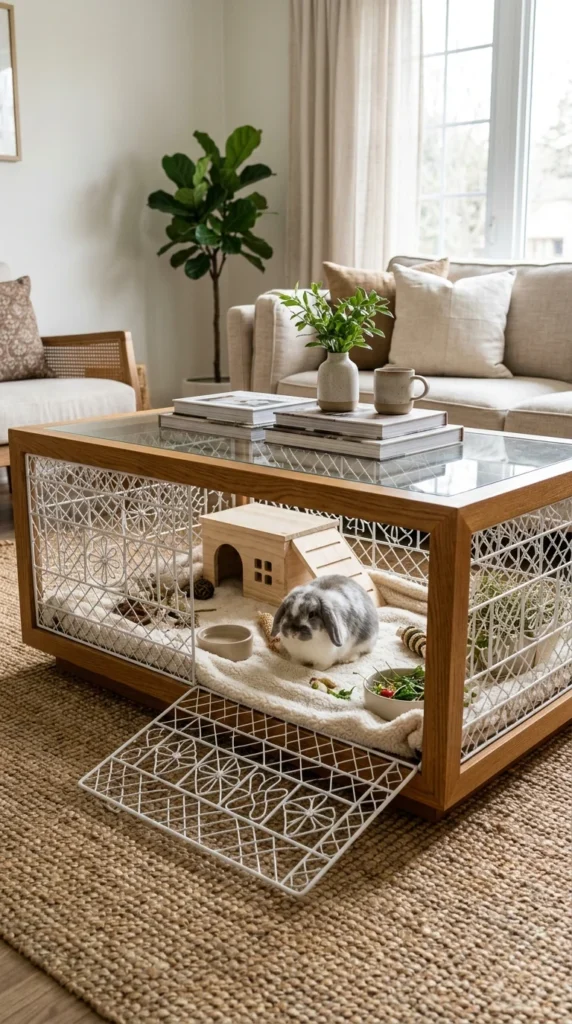
Dual-purpose furniture is a great way to save space. A coffee table hutch allows your rabbit to be right at your feet while you relax. Ensure the glass top is tempered and provide plenty of ventilation on all four sides.
9. Corner Hutch
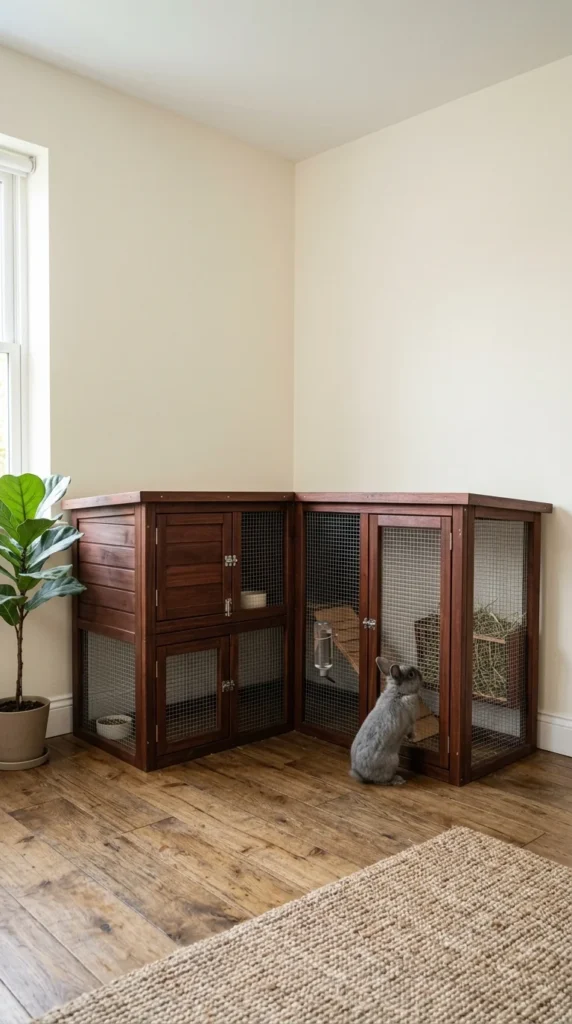
Utilizing the corners of a room or a porch can free up a lot of floor space. An L-shaped design gives the rabbit a long “runway” to hop through, which is great for their physical health.
10. Movable Tractor

Similar to a chicken tractor, a rabbit tractor allows your pets to graze on fresh grass every day. By moving the hutch to a new spot daily, you ensure the grass isn’t overgrazed and your rabbits get fresh nutrients.
11. Modern Minimalist
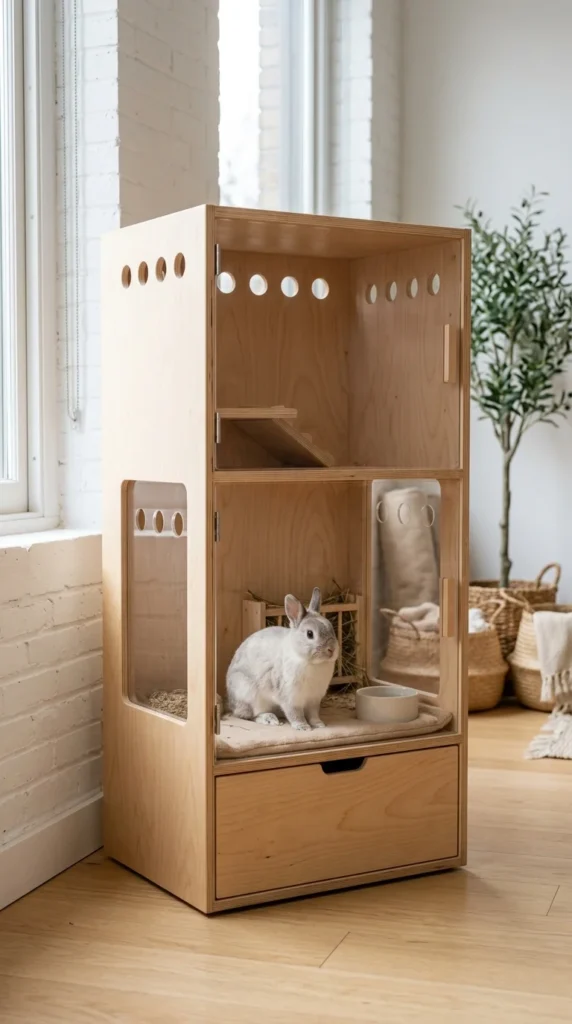
For those who love the “less is more” aesthetic, a minimalist hutch uses light woods and transparent materials. This allows for high visibility so you can watch your bunny’s antics from anywhere in the room.
12. Under-Stair
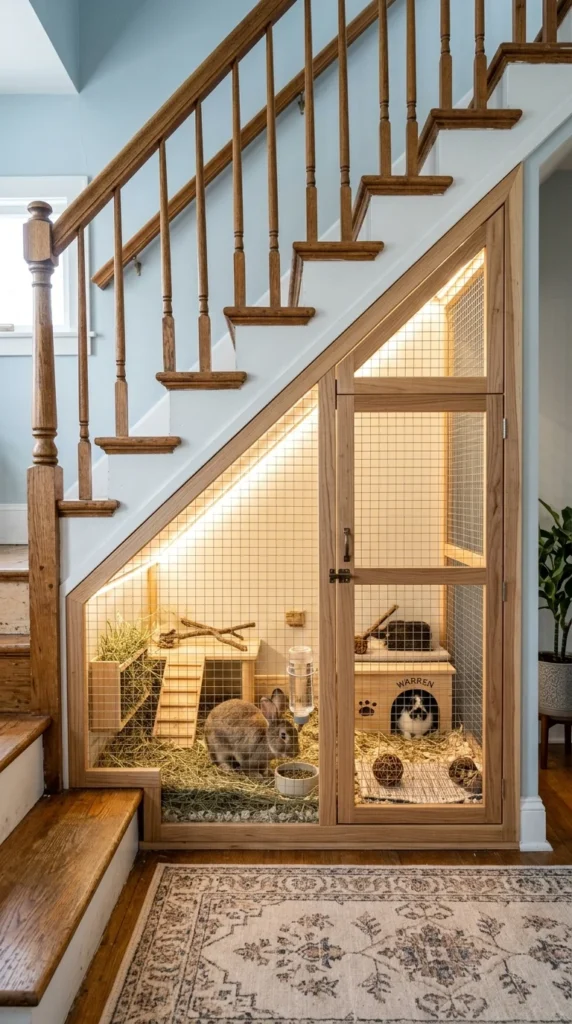
If you have unused space under your stairs, it’s the perfect spot for a built-in hutch. It’s naturally cozy and tucked away, providing the quiet environment rabbits often crave for napping.
13. Bookcase Retrofit
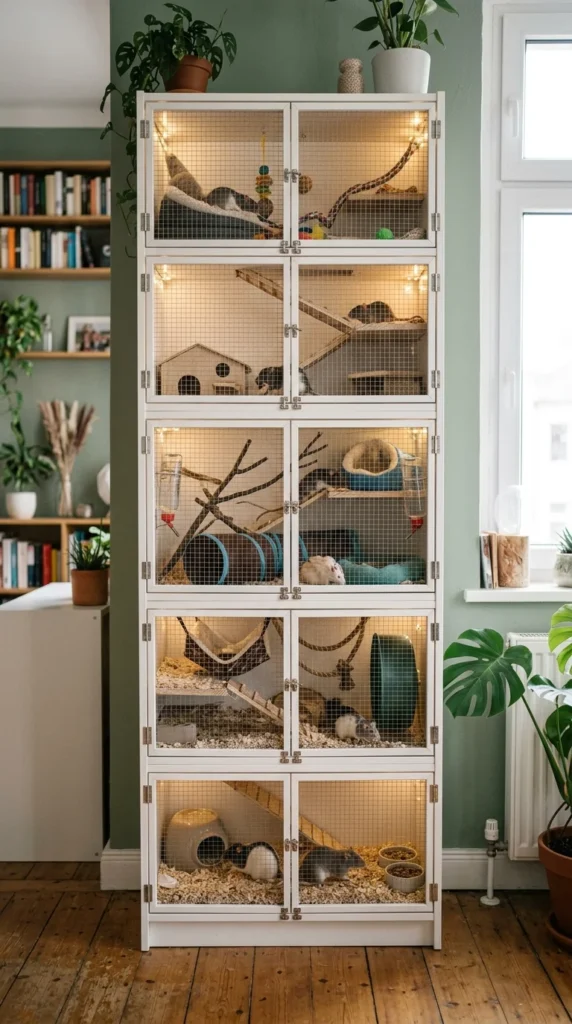
A bookcase retrofit is one of the easiest vertical builds. By removing a few shelves to create double-height ceilings and adding ramps, you can create a “skyscrapers” for your rabbit.
14. Log Cabin
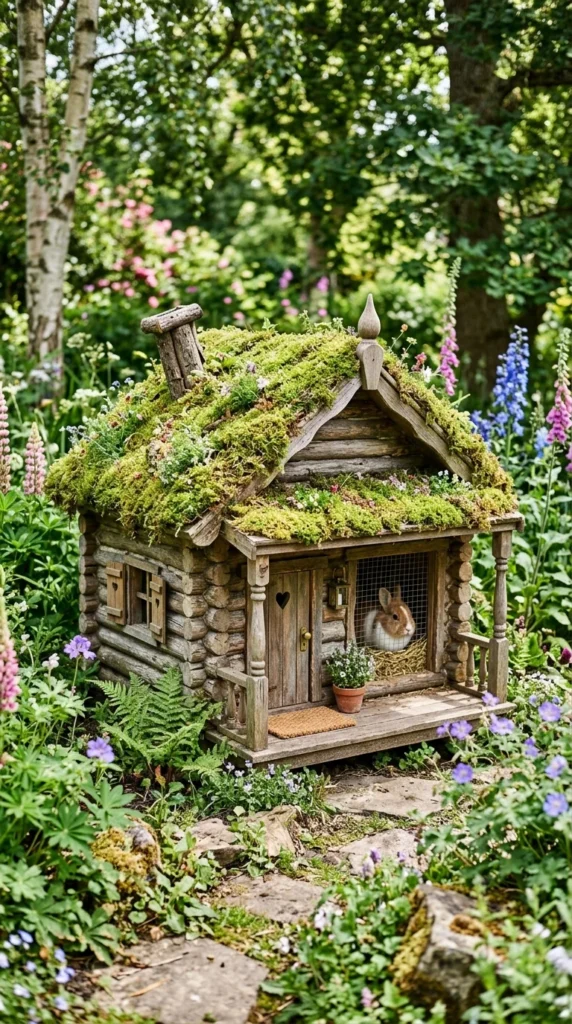
The log cabin hutch is perfect for a rustic garden setting. The thick logs provide excellent natural insulation, keeping the interior cool in the summer and warm in the winter.
15. Wire Cube
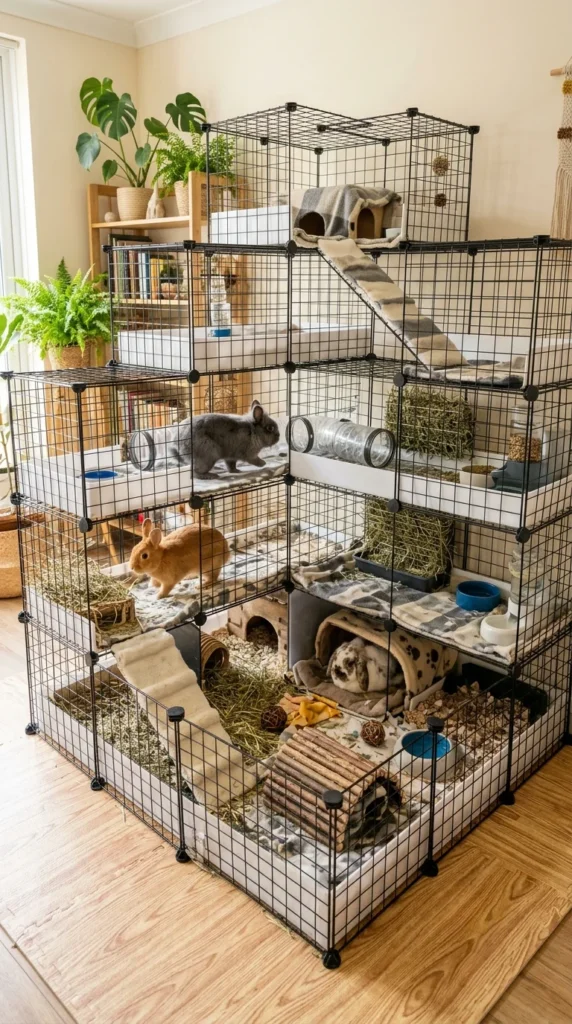
Wire cube grids are the “Legos” of the rabbit world. This DIY plan is less about woodworking and more about creative assembly. It’s the most flexible option for odd-shaped rooms.
16. Hidden Cabinet
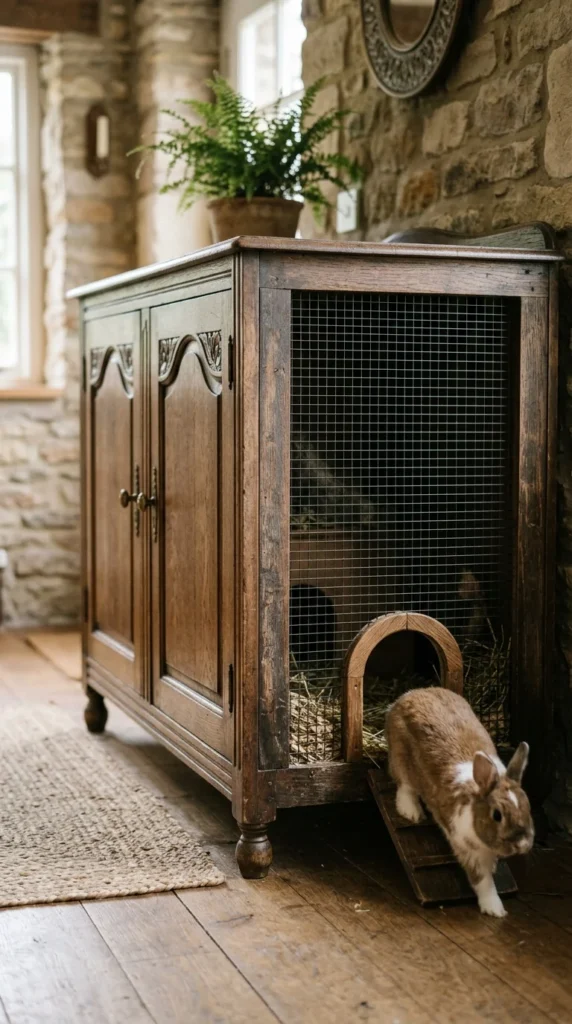
If you prefer your rabbit’s home to be out of sight when guests arrive, a hidden cabinet is the way to go. From the front, it looks like standard furniture, but the side or back provides the necessary access and air for the rabbit.
17. Victorian Mansion
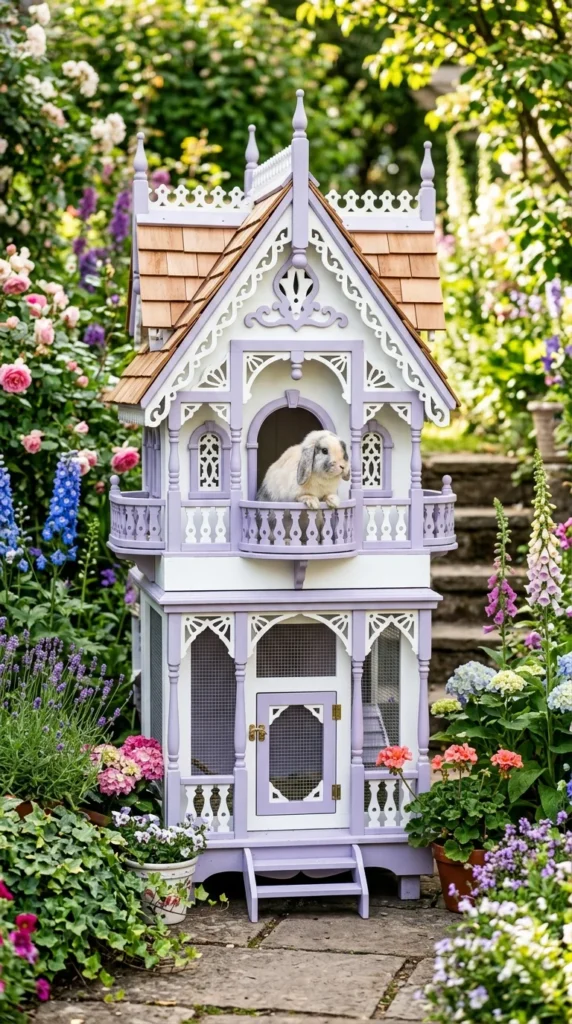
For the truly dedicated DIYer, the Victorian mansion is a showstopper. It’s as much a garden ornament as it is a pet home. It requires advanced carpentry skills but results in a stunning architectural piece.
18. Greenhouse Style
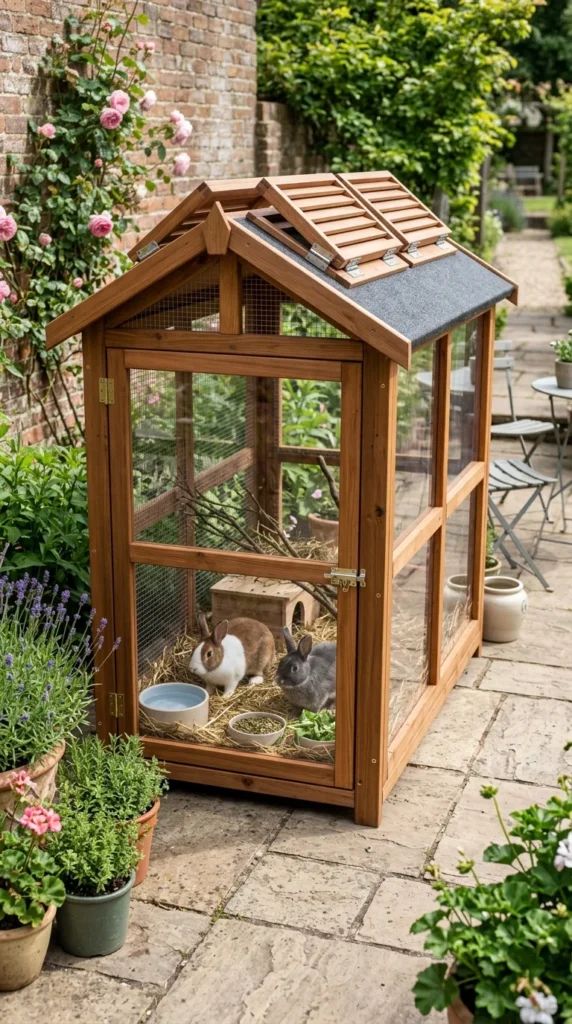
A greenhouse-style hutch is excellent for colder climates, as it traps solar heat. However, it requires careful monitoring and significant ventilation to ensure it doesn’t overheat during the day.
19. Stacked Crates
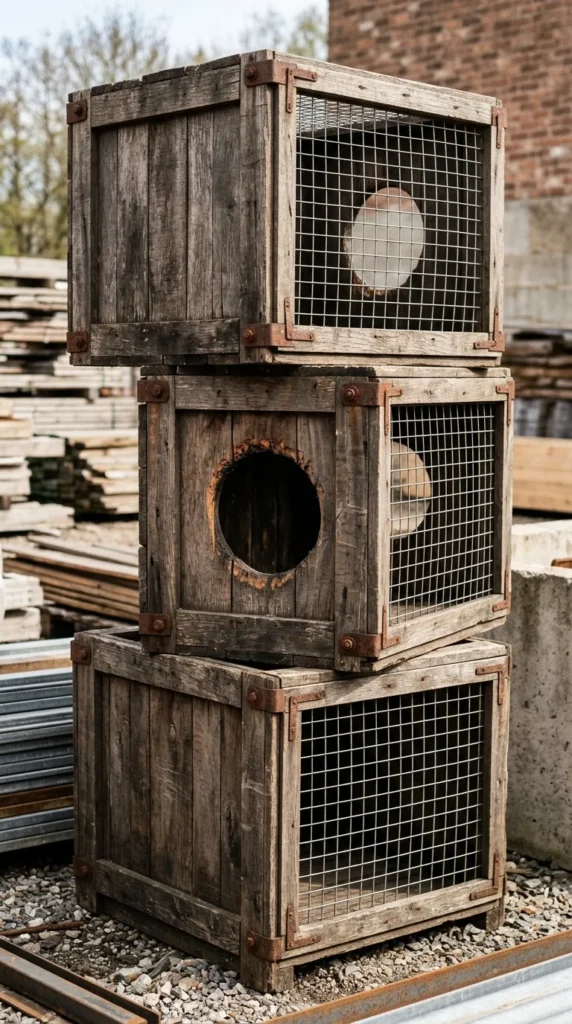
Industrial shipping crates are incredibly sturdy. By stacking them, you create a modular, “industrial-chic” hutch that is very difficult for even the most determined chewer to damage.
20. Plywood Modern
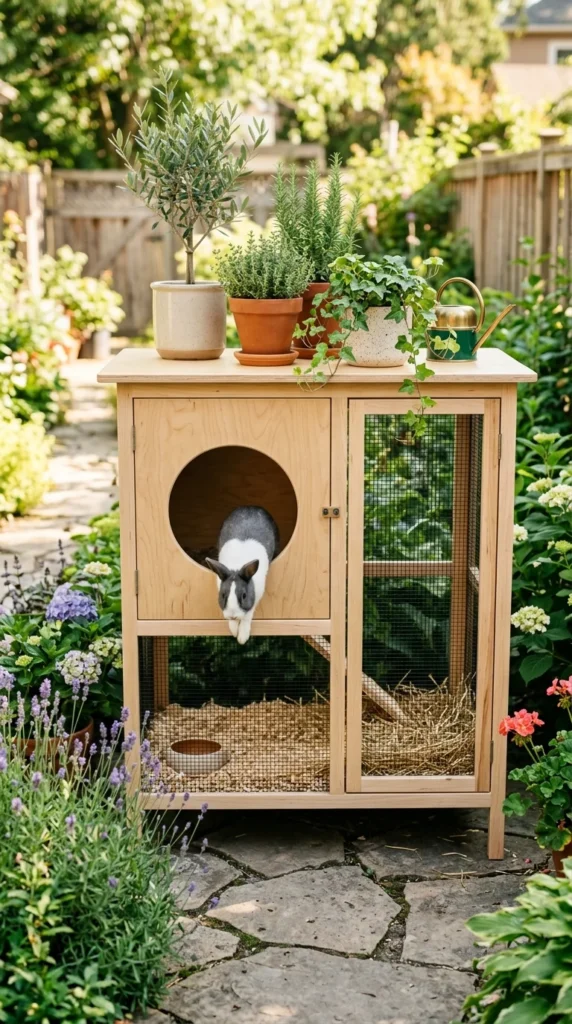
Plywood is easy to work with and provides a smooth, clean look. This plan focuses on geometric shapes and functionality, offering a bright and airy space for your pet.
21. Farmhouse Style
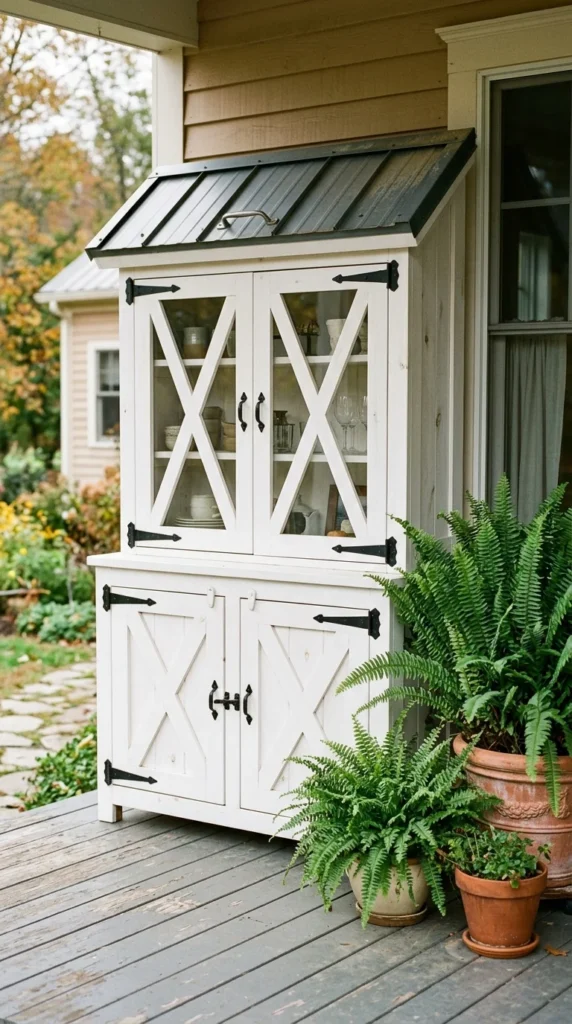
The farmhouse look is timeless. Using white paint and dark hardware gives the hutch a clean, “Fixer Upper” vibe that looks great on any porch or in any laundry room.
22. Castle Fort
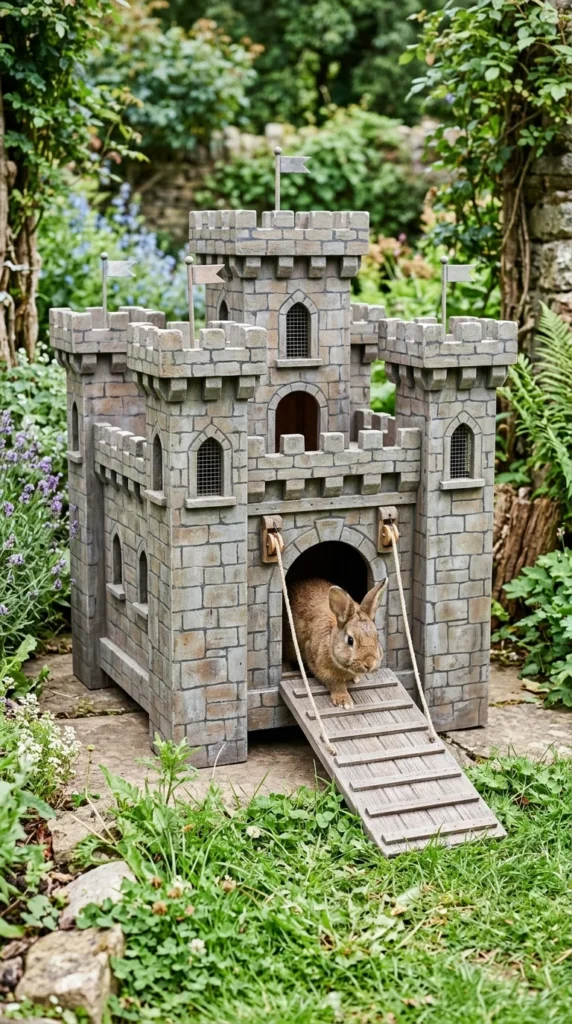
Turn your bunny into royalty with a castle hutch. This design often includes multiple “towers” connected by bridges, providing plenty of mental stimulation and exercise for active rabbits.
23. The Backyard Run
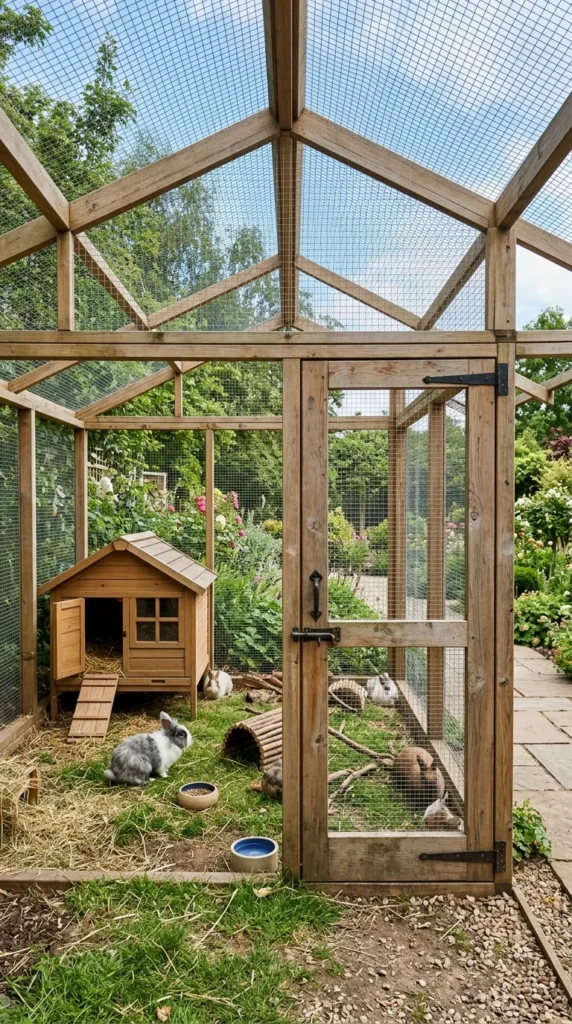
If you have the space, a full walk-in run is the gold standard. It allows you to sit inside with your rabbits, fostering a deeper bond while giving them the maximum amount of space to run, jump, and “binky” to their heart’s content.
Essential Tips for Your DIY Build
No matter which plan you choose, keep these safety and comfort factors in mind:
- Size Matters: A rabbit should be able to take three consecutive hops in their enclosure and stand fully on their hind legs without hitting the ceiling.
- Wire Safety: Always use “hardware cloth” rather than “chicken wire.” Chicken wire is too weak to keep predators out and too thin to stop a rabbit from chewing through it.
- Flooring: Rabbits have sensitive feet and can develop “sore hocks” if they stand on wire floors all day. Ensure at least half of the hutch has a solid floor covered in soft bedding or hay.
- Ventilation: Good airflow is critical to prevent the buildup of ammonia from urine, which can cause respiratory issues in rabbits.
- Predator Proofing: Use heavy-duty latches. Raccoons are notorious for being able to open simple sliding bolts. Carabiners or padlocks are much safer.