
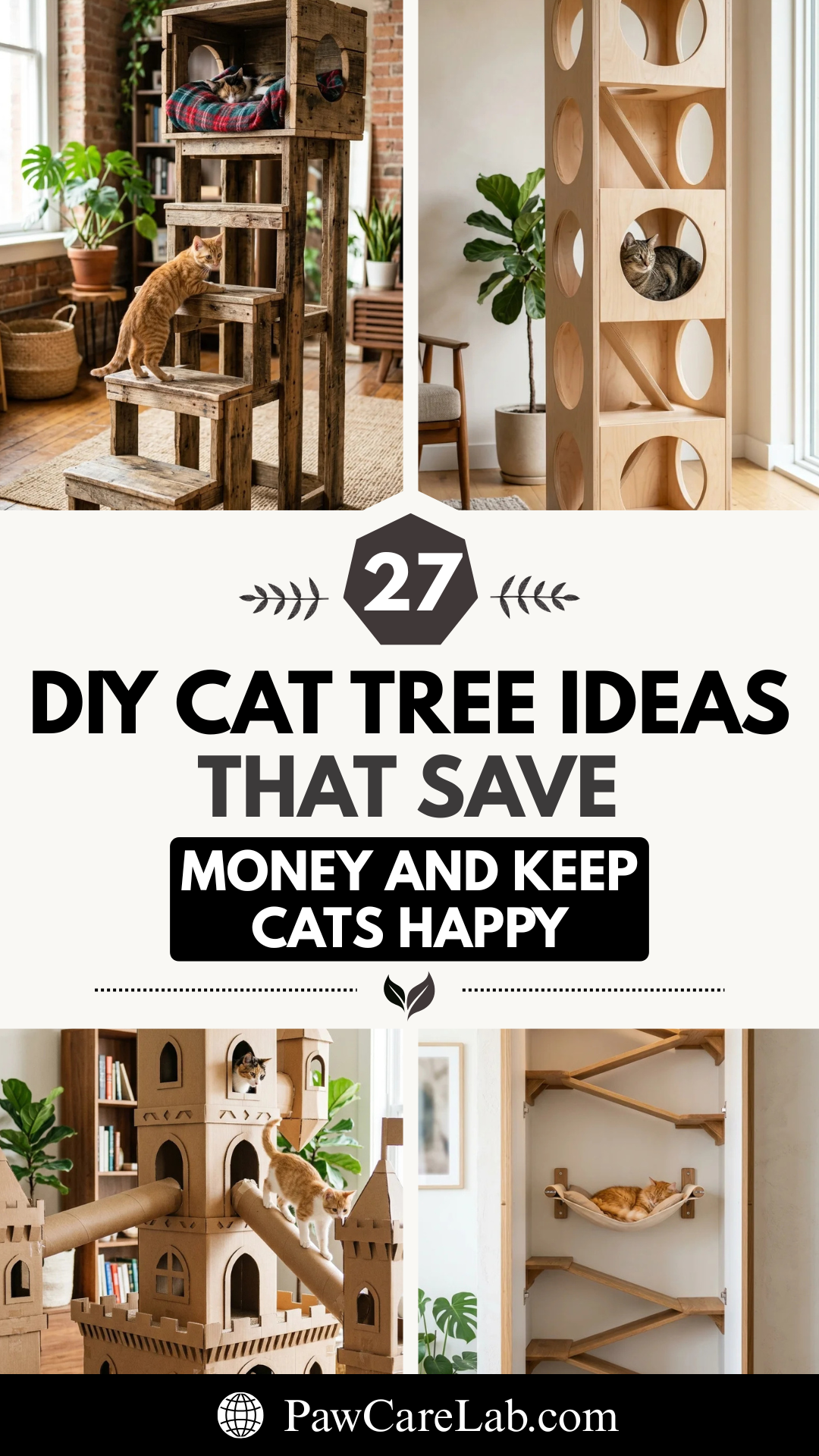
Cats are natural climbers, observers, and scratchers. In the wild, they seek high vantage points to survey their kingdom and sharpen their claws on textured bark. In the home, however, these instincts often lead to shredded sofas and adventurous leaps onto the refrigerator. While commercial cat trees offer a solution, they are frequently eyesores, cheaply made, or prohibitively expensive.
Building your own cat tree is the ultimate win-win. You can customize the size to fit your living space, choose materials that match your interior design, and save hundreds of dollars in the process. From minimalist wall-mounted perches to rustic natural wood towers, here are 27 DIY cat tree ideas to inspire your next weekend project.
1. Natural Branches
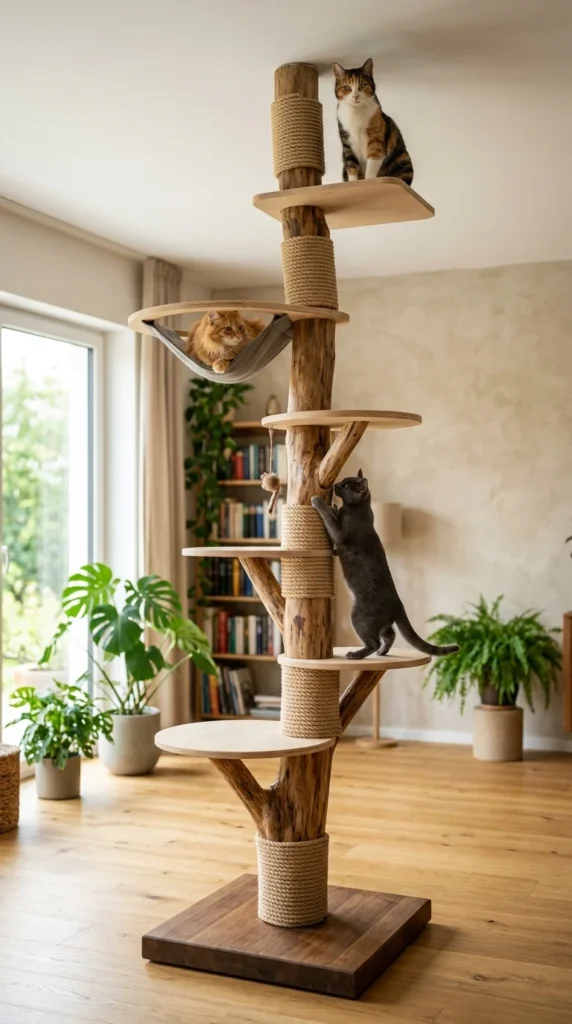
Using real tree branches is the most aesthetic way to bring the outdoors in. Search for fallen hardwood limbs (like oak or maple) that are sturdy and dry. After sanding away any loose bark or debris, you can bolt these branches to a heavy plywood base. Adding flat wooden “leaves” or platforms covered in carpet or faux fur gives your cat a place to rest, while the natural texture of the wood provides an excellent scratching surface.
2. PVC Pipes
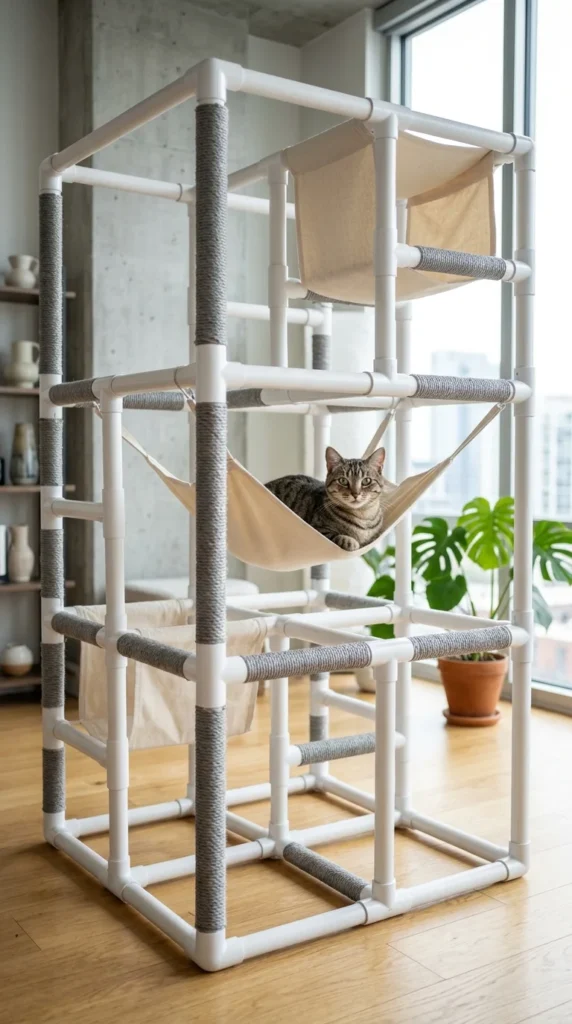
PVC pipe is a DIYer’s best friend because it is lightweight, affordable, and incredibly easy to assemble. By using various connectors (T-joints, elbows, and four-way crosses), you can build a sprawling jungle gym. To make it cat-friendly, wrap the vertical pipes in sisal rope and use heavy-duty fabric or canvas to create “hammocks” between the horizontal bars.
3. Wood Pallets
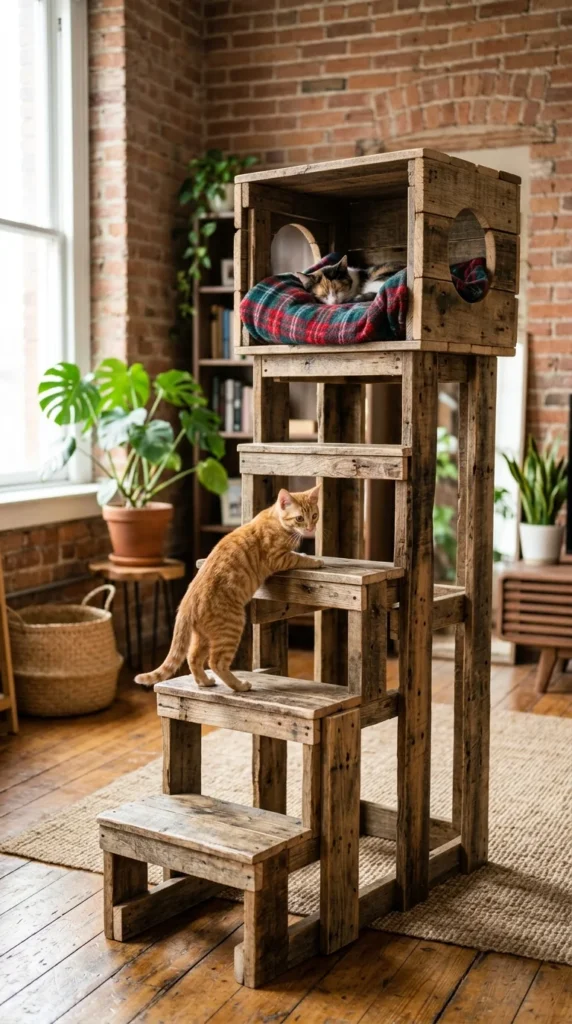
Upcycling shipping pallets is a sustainable way to build a sturdy cat tower. Disassemble the pallets to harvest the slats, then build a rectangular frame with internal “floors.” The rough-hewn nature of pallet wood is perfect for cats who love a more tactile scratching experience, though you should ensure all surfaces are sanded enough to prevent splinters.
4. Bookshelf Conversion
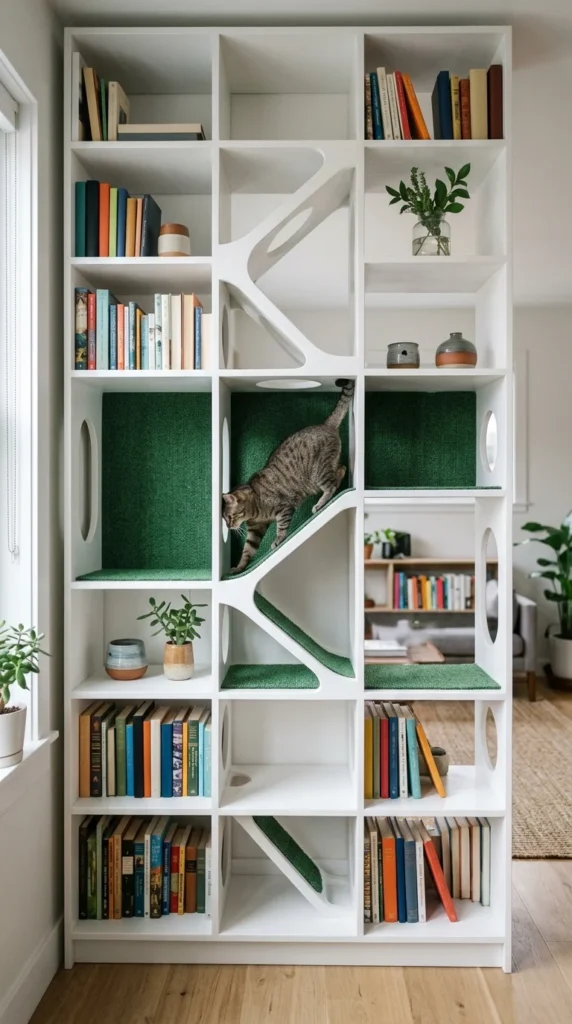
If you have an old IKEA Billy bookcase or a similar shelving unit, you’re halfway to a cat tree. By cutting circular holes in the corners of each shelf, you create an internal “stairway” for your cat. Line the shelves with carpet remnants and add a few “peek-a-boo” holes in the sides of the unit for added entertainment.
5. Ladder Style
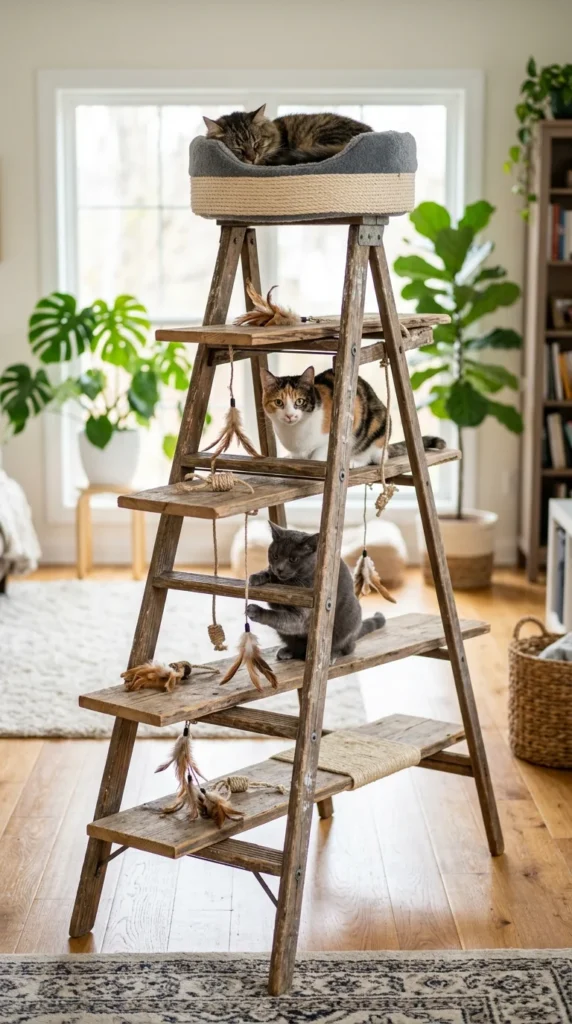
A vintage wooden ladder provides a ready-made frame for a multi-level cat tree. Simply secure wide planks across the rungs to create larger lounging areas. The A-frame shape is inherently stable, making it a great choice for households with multiple high-energy cats who like to chase each other upward.
6. Crate Stack
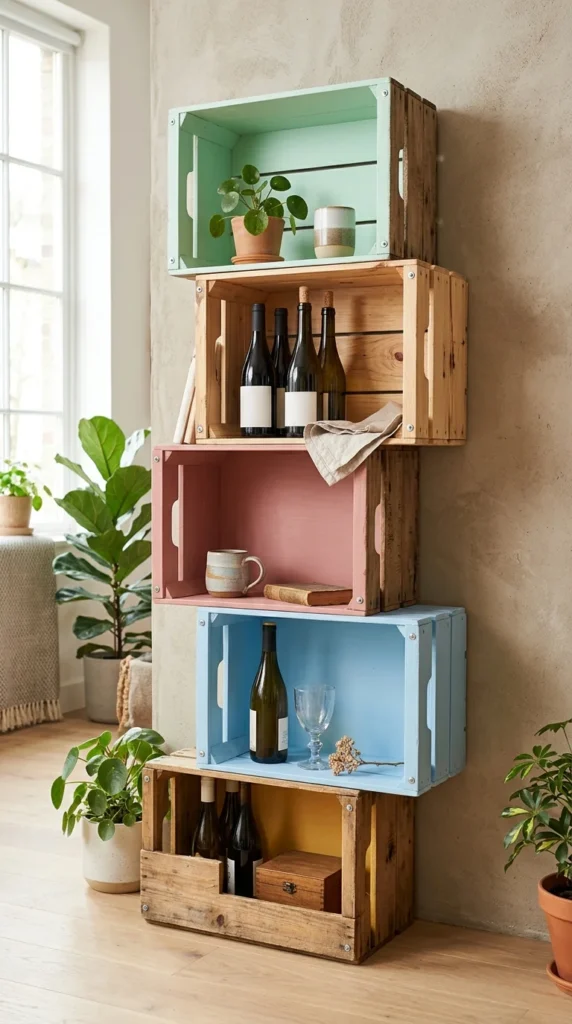
Wooden crates are modular and versatile. By stacking and bolting them together in an irregular pattern, you create a series of “rooms” and “roofs.” This design is perfect for timid cats who prefer to hide in enclosed spaces but still want the height of a traditional tree.
7. Wall Shelves

For those living in small apartments, floor space is a premium. Wall-mounted shelves allow your cat to utilize “vertical real estate.” Use heavy-duty brackets and ensure you are anchoring directly into wall studs. You can mix and match shelf lengths and heights to create a custom “highway” across your walls.
8. Cardboard Castle
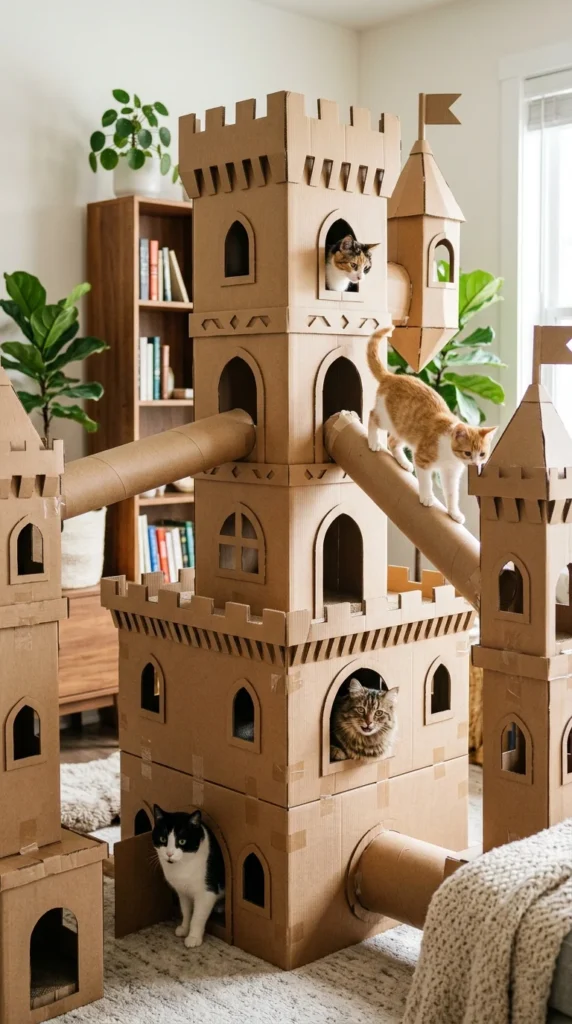
Cardboard is a cat’s favorite material. While not as permanent as wood, a well-engineered cardboard castle can last for months. Use non-toxic wood glue and heavy-duty shipping boxes. You can even paint the exterior with pet-safe paint to match your room’s decor.
9. Step Stool Hack

Small step stools can be stacked to create a compact, budget-friendly cat tree. This is an ideal solution for kittens or older cats who may struggle with very high jumps. The footprint is small, making it perfect for corners or beside a window.
10. Plywood Towers
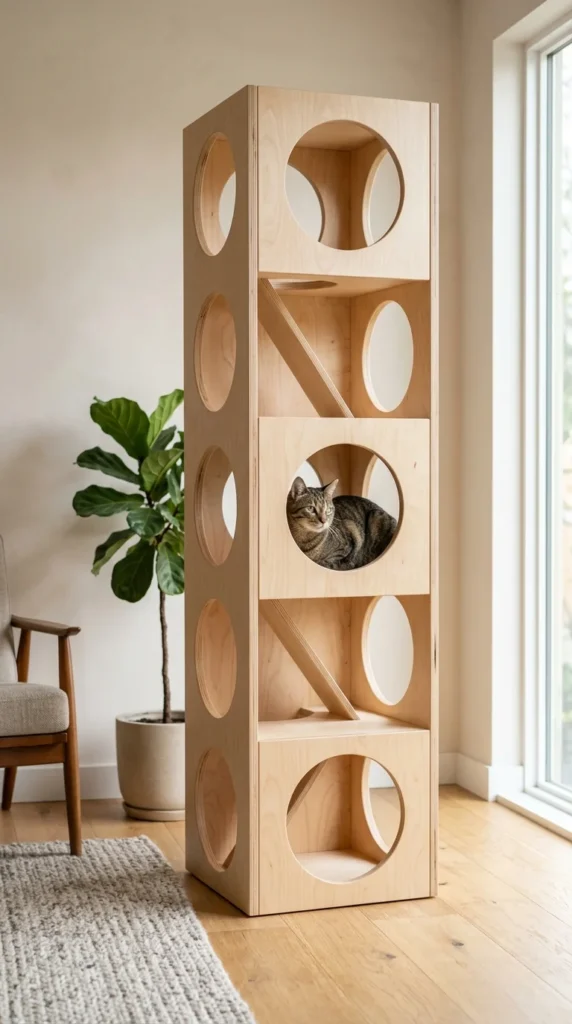
If you enjoy a modern, Scandinavian aesthetic, building a tower from birch plywood is the way to go. Focus on geometric shapes and clean edges. By using a jigsaw to cut out decorative circles or triangles, you can create a piece of “cat furniture” that looks like a high-end designer item.
11. Basket Tree
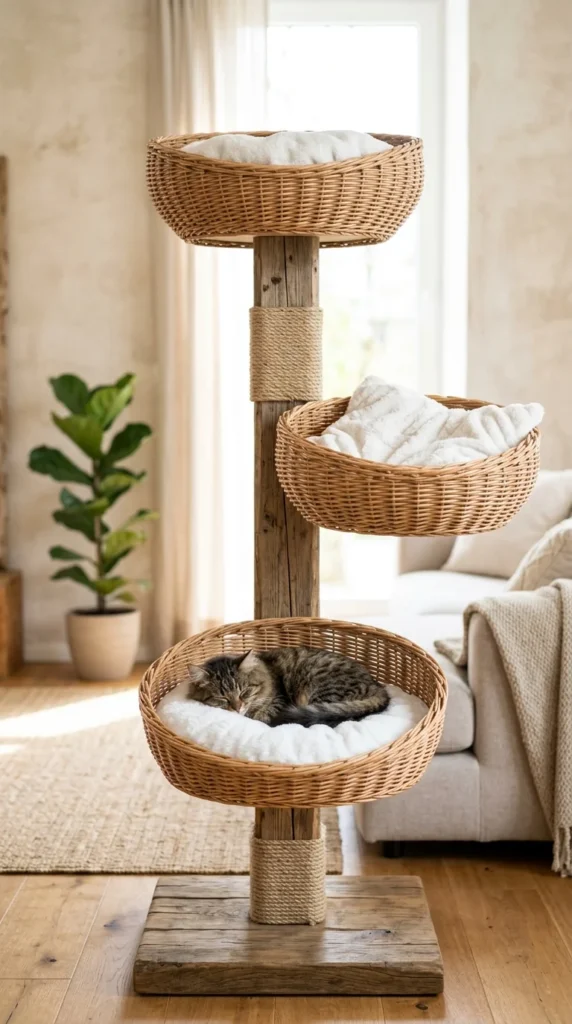
Some cats prefer the “nesting” feel of a basket. By bolting sturdy wicker or seagrass baskets to a central wooden post, you provide secure, high-walled sleeping spots. This design is particularly charming in bohemian or farmhouse-style homes.
12. Rope Wrapped Posts
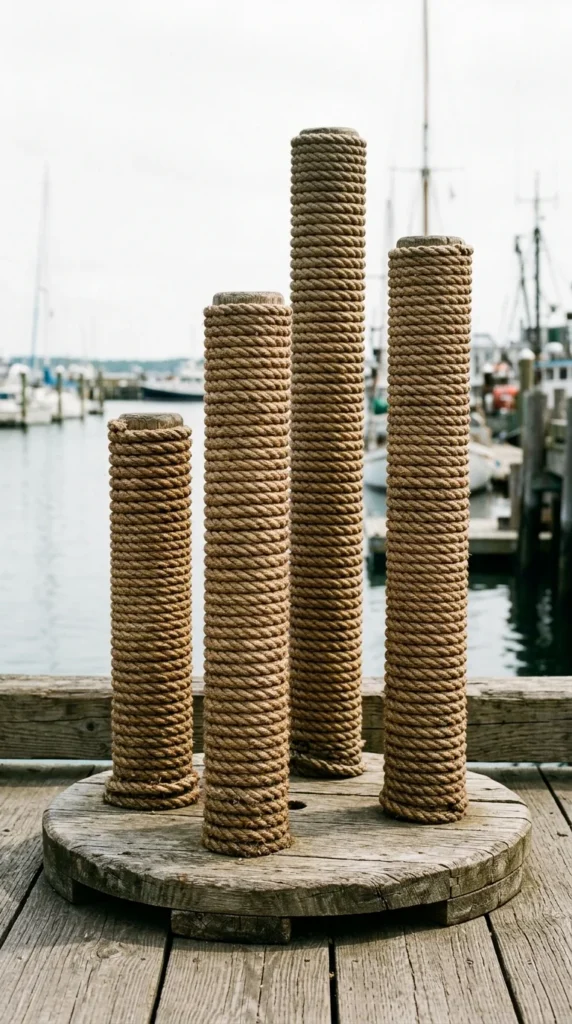
Sometimes, simplicity is best. If your primary goal is to save your furniture, a series of posts of varying heights—all wrapped in thick sisal or manila rope—is highly effective. It encourages stretching and scratching without taking up the visual space of a full tree.
13. Ceiling-to-Floor
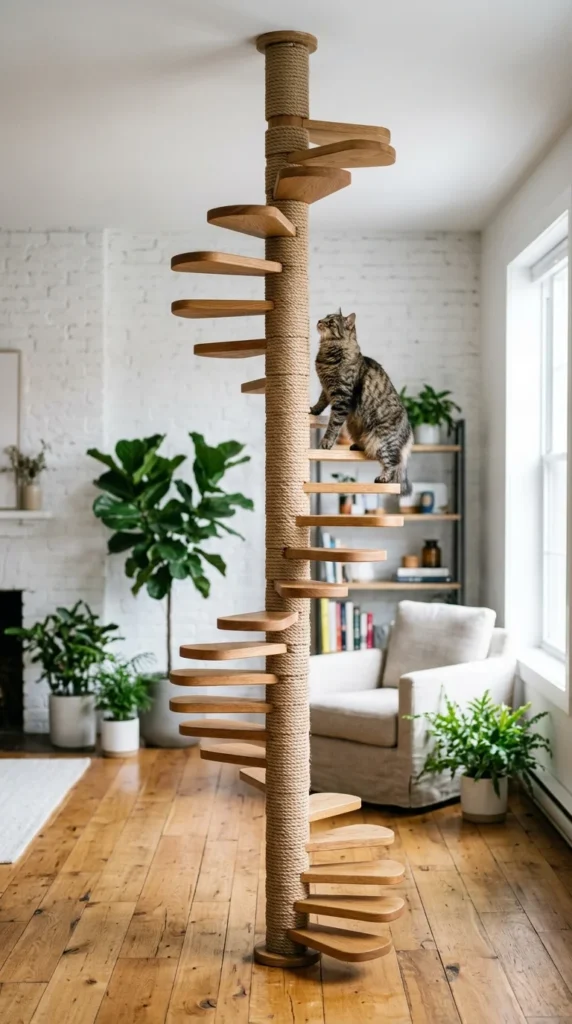
A floor-to-ceiling tension pole is the ultimate space-saver. By using a long 4×4 timber and a heavy-duty bolt at the top to create tension against the ceiling, you create a rock-solid climbing post that can’t be knocked over by even the largest Maine Coon.
14. Corner Tree
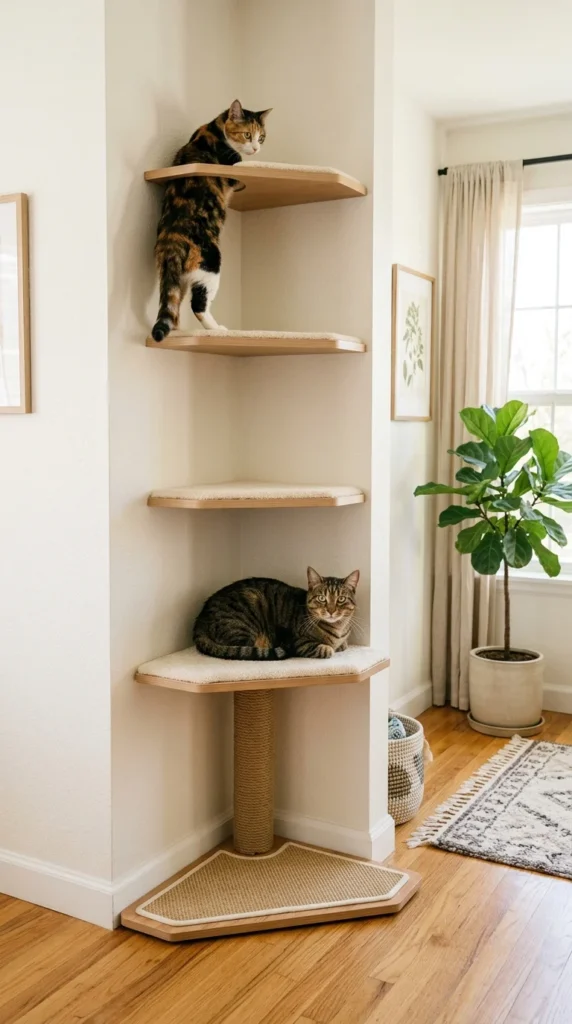
Maximize unused corners by building a tree with a right-angled base and triangular shelves. This keeps the tree out of the main walking paths of your home while still providing your cat with a high vantage point.
15. Suitcase Bunk

For a whimsical, vintage look, use old hardshell suitcases. The bottom suitcase acts as a ground-level “den,” while the top one (supported by sturdy wooden legs or a central post) acts as a high-altitude bunk. It’s a great way to repurpose thrift store finds.
16. Hanging Tunnels
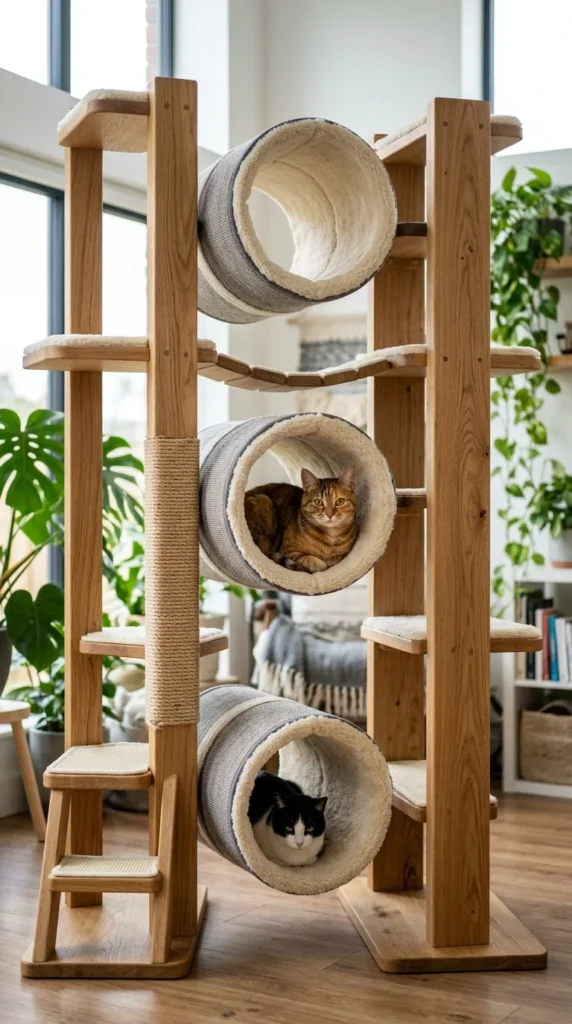
Cats love the feeling of being enclosed. By incorporating horizontal tunnels into your DIY build, you provide a “sky-walk” for your pet. You can use large-diameter concrete form tubes (Sonotubes) for this, as they are incredibly strong and lightweight.
17. Concrete Form Tubes

Sonotubes—the heavy-duty cardboard tubes used for pouring concrete—are available at hardware stores and are surprisingly perfect for cat trees. They are large enough for a cat to hide inside and can be easily covered in carpet or fabric using spray adhesive.
18. Tire Stack
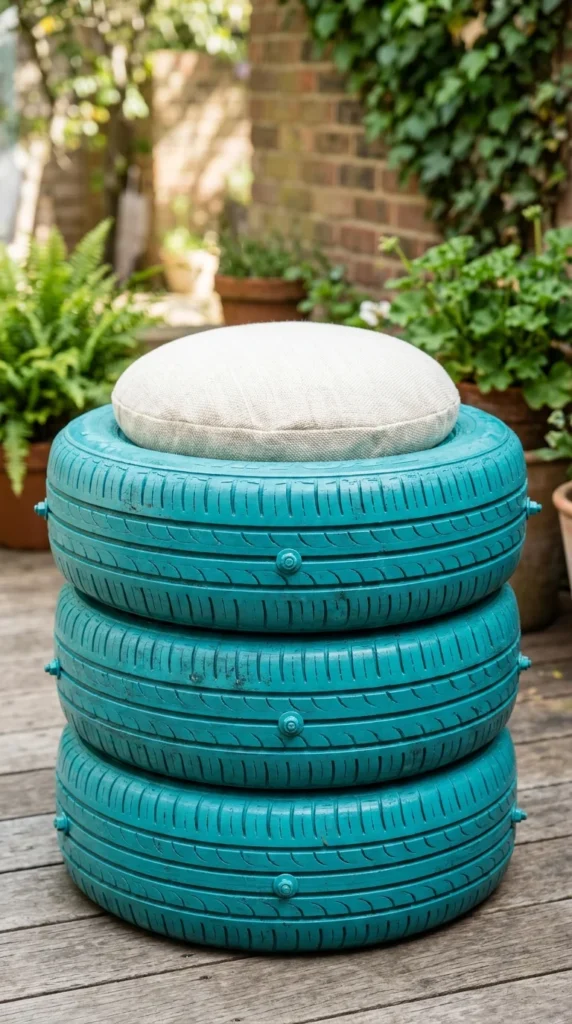
For an industrial or “shabby chic” outdoor cat enclosure, stacked tires can be used to create a heavy-duty climbing structure. Be sure to scrub the tires thoroughly and paint them to seal the rubber, then add a wooden top or a cushion for comfort.
19. Trunk Table
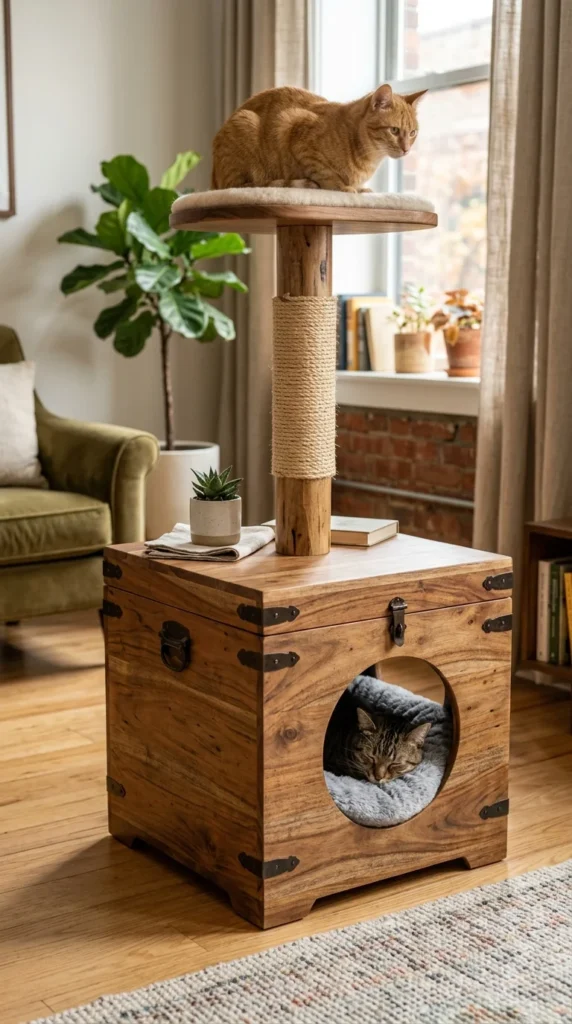
Multi-functional furniture is a great way to hide your “cat lady” status. A side table can serve as the base of your cat tree, with a scratching post extending from the top. The interior of the table can house a hidden litter box or a cozy bed.
20. Driftwood Sculpture
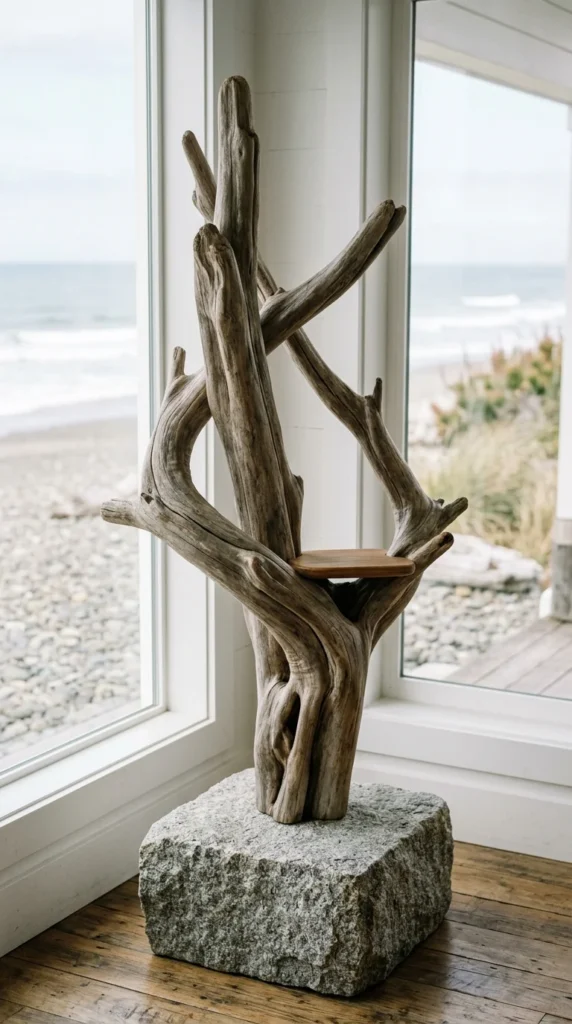
If you live near a beach, a large piece of sun-bleached driftwood can become a stunning focal point. Driftwood is naturally smooth and often has unique shapes that provide interesting climbing challenges for your cat.
21. Closet Conversion
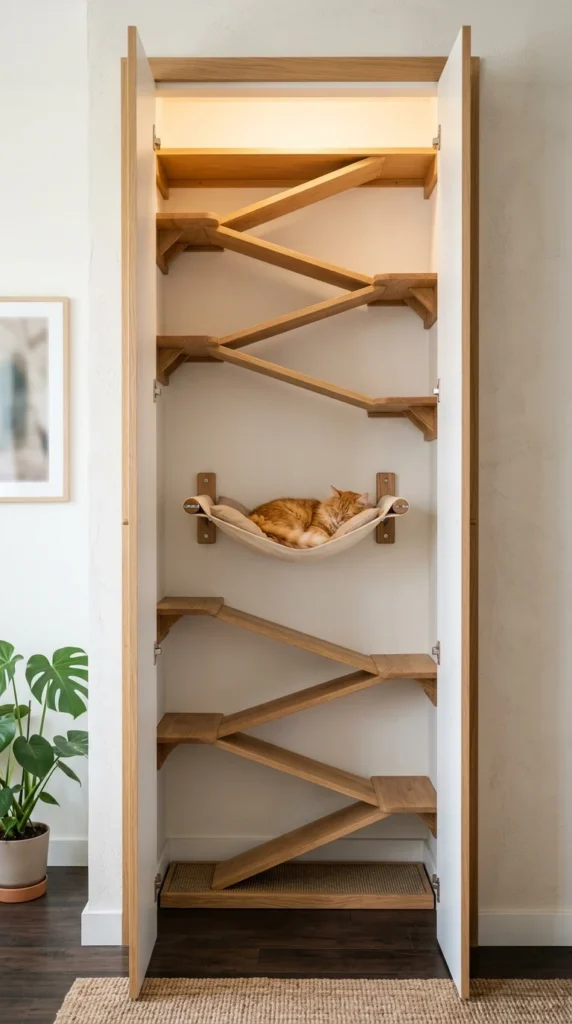
If you have a spare closet or a small pantry, you can convert the entire interior into a cat paradise. By installing “staircase” shelves along the walls, your cat can climb to the very top shelf, which is often unused by humans anyway.
22. Fabric Hammocks
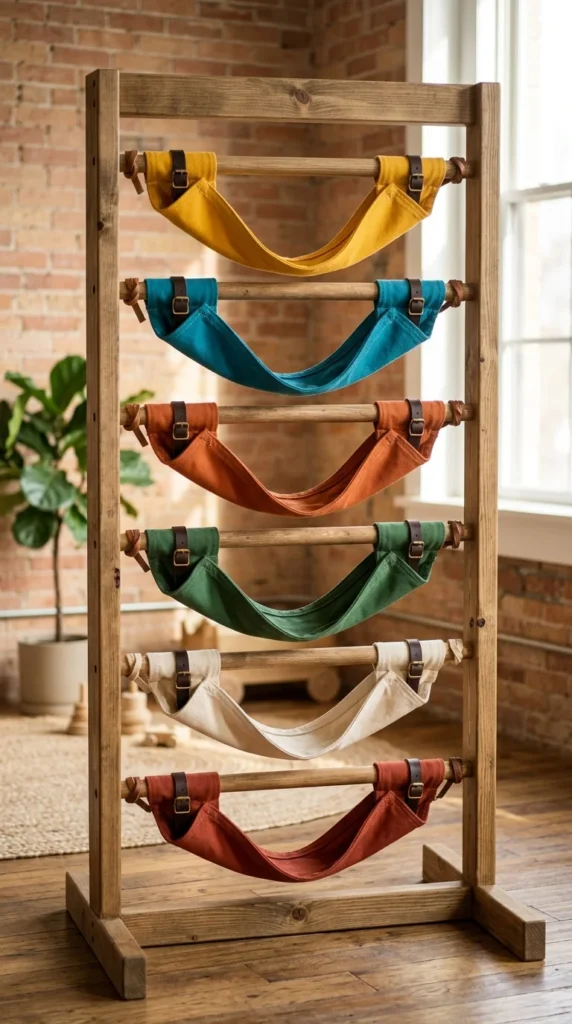
Not all cat trees need solid platforms. Many cats prefer the “give” of a hammock. You can incorporate fabric levels into a wooden or PVC frame by sewing “sleeves” that slide over the support bars.
23. Geometric Cubes
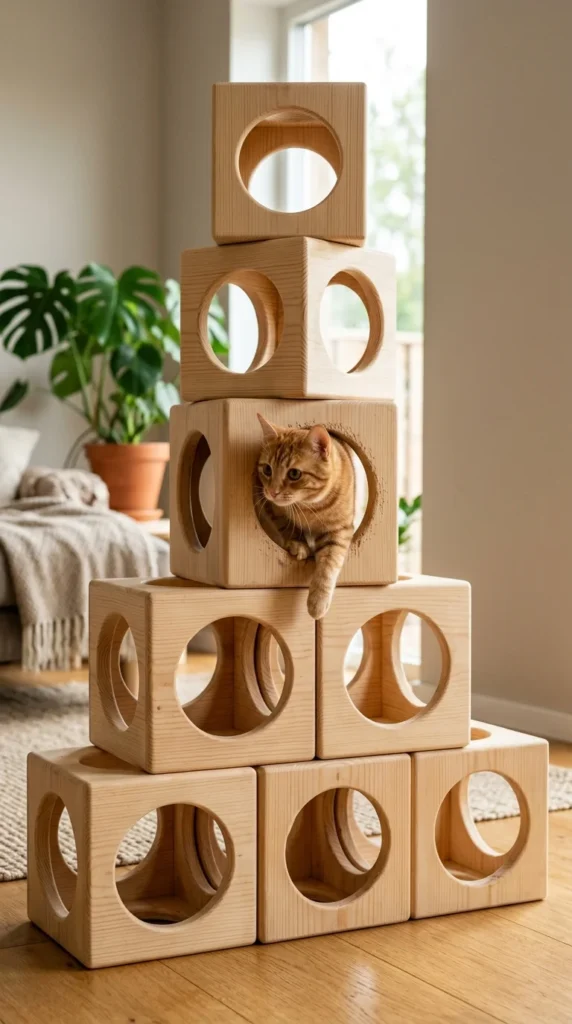
Geometric designs are trending in home decor. Building a series of hollow plywood cubes and bolting them together in an interesting arrangement provides a modern look while offering plenty of “rooms” for a multi-cat household.
24. Window Perch
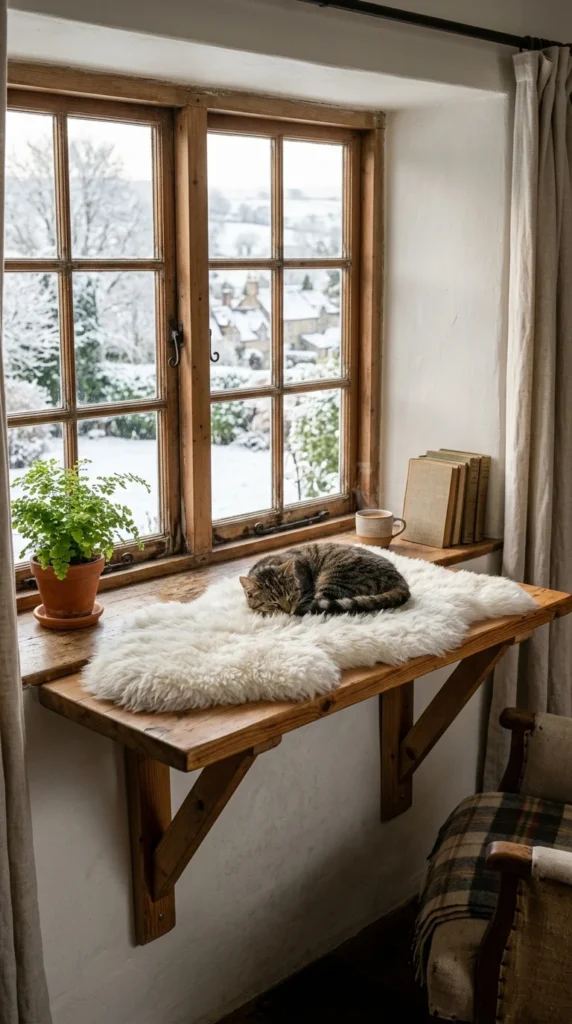
The “cat TV” (the window) is the most popular spot in the house. A simple DIY window perch can be extended into a multi-level tree that starts at the floor and ends right at the glass, allowing your cat to watch birds comfortably.
25. Bamboo Poles
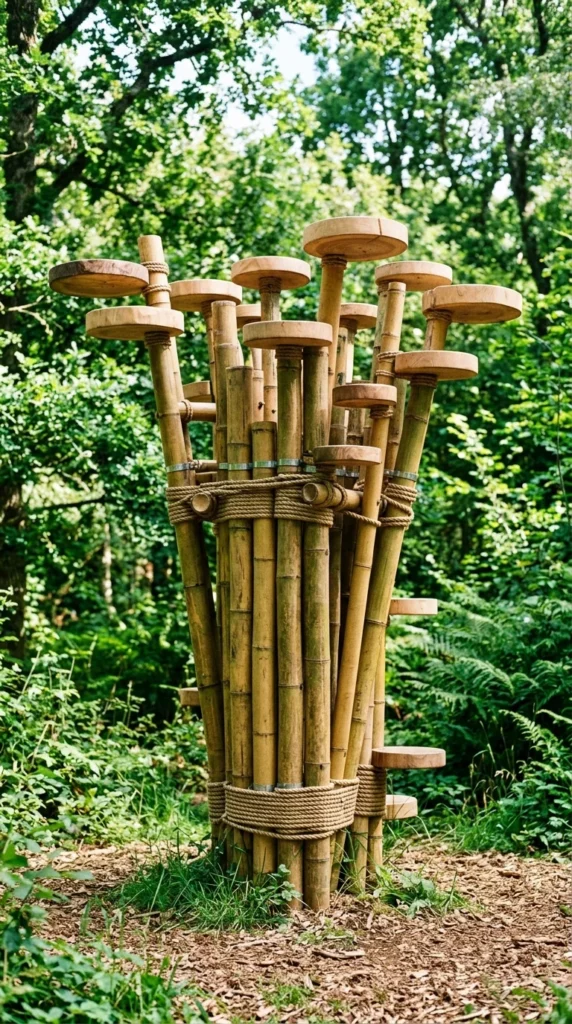
For a tropical or Zen vibe, use thick bamboo poles. Bamboo is incredibly strong and has a unique aesthetic. Wrap sections in twine for scratching and use flat bamboo or wood for the sitting platforms.
26. Repurposed Chairs
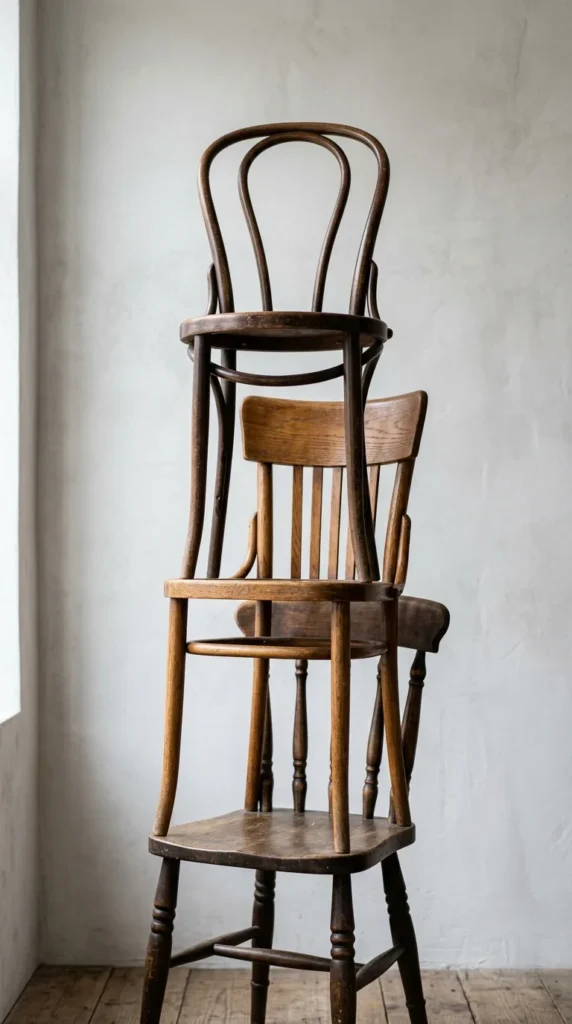
Stacking and securing old wooden chairs is a creative and quirky way to build a cat tree. By removing the backs of some chairs and keeping others, you create a variety of heights and “lookout” points.
27. Multi-Level Gym
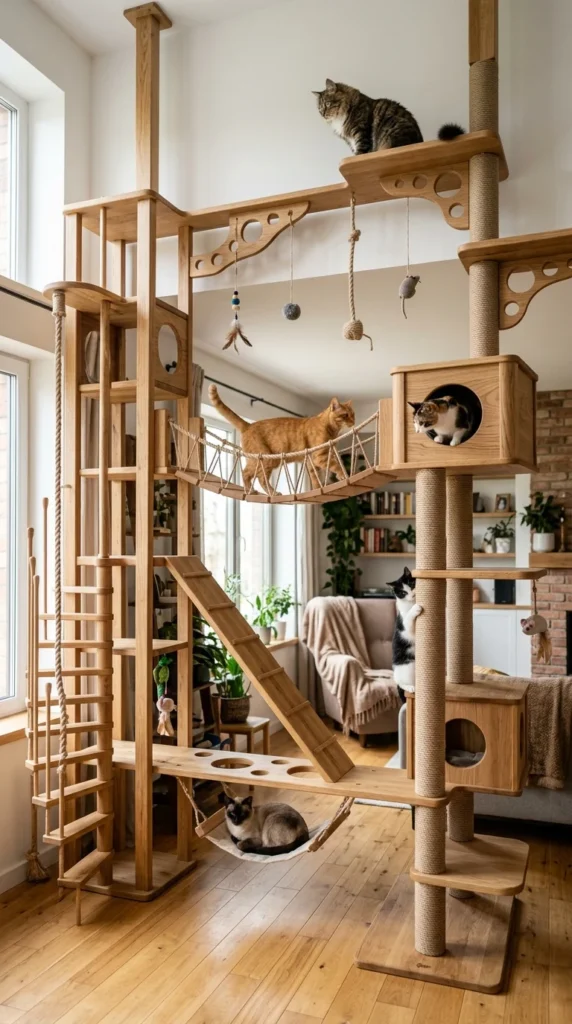
If you have the space and the ambition, a multi-level gym is the ultimate project. This involves combining several of the ideas above—wall shelves, floor-to-ceiling poles, and bridges—to create a “super-highway” that spans an entire room.
Key Tips for DIY Cat Tree Success
- Stability is Everything: Cats will not use a tree that wobbles. Always use a heavy, wide base—usually a double layer of 3/4″ plywood.
- Safety First: Ensure there are no protruding nails, screws, or staples. Use non-toxic glues and avoid paints with high VOCs.
- Choose the Right Rope: Use Sisal or Manila rope. Avoid synthetic ropes (like nylon), as they are too slippery and can hurt a cat’s claws.
- Fabric Choices: Use “heavy-traffic” fabrics like carpet remnants, upholstery fabric, or faux fur. Avoid looped carpets (like Berber), as cats’ claws can get painfully stuck in the loops.
By building your own cat tree, you aren’t just saving money—you’re creating a bespoke sanctuary that caters to your cat’s specific personality and climbing style. Whether you have a “bush cat” who likes to stay low or a “tree cat” who wants to touch the ceiling, these DIY ideas provide the perfect blueprint for a happy, active feline.