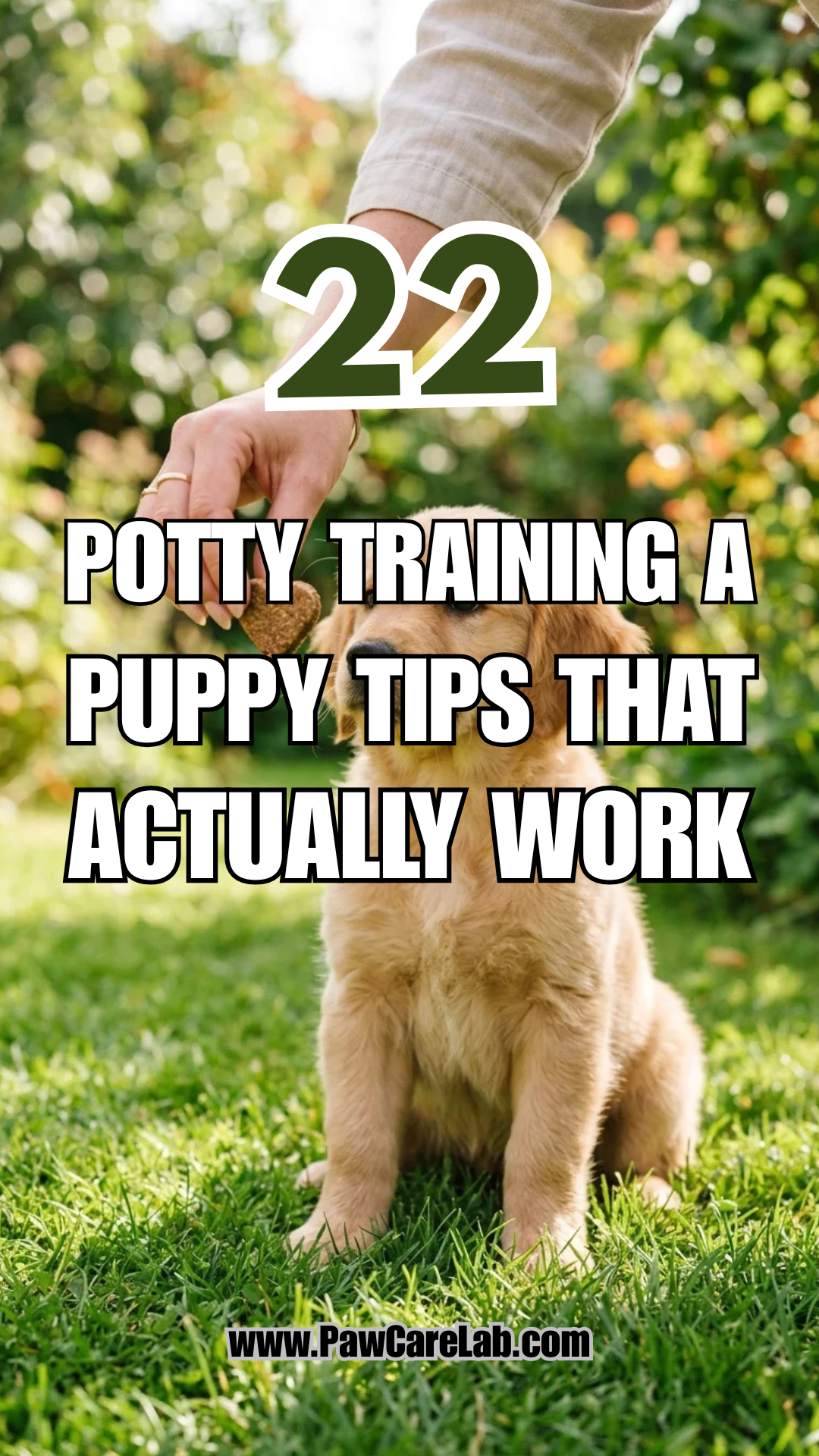
Welcoming a new puppy into your home is an explosion of joy, puppy breath, and wagging tails. However, it also comes with the inevitable challenge of housebreaking. Potty training is often the first major hurdle in a puppy owner’s journey, and while it can be frustrating, it is a vital foundation for a happy life together. The secret isn’t magic; it’s a combination of consistency, timing, and positive reinforcement. If you’re tired of cleaning carpets and want a reliable roadmap to success, here are 22 potty training tips that actually work.
1. Consistency

Consistency is the bedrock of all dog training. Puppies thrive on predictable schedules. You must take them out at the same times every day—first thing in the morning, after every meal, after every nap, and right before bed. When the “outside” routine becomes as predictable as breakfast, the puppy’s internal clock begins to sync with your expectations.
2. Crate Training
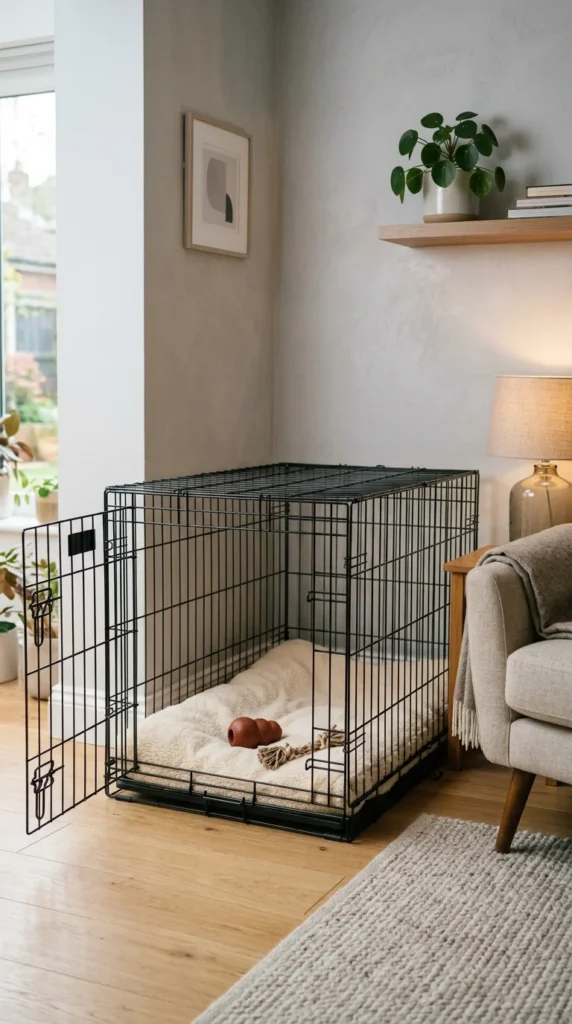
A crate is not a cage; it is a den. Because dogs have a natural instinct not to soil where they sleep, a crate is an invaluable tool for potty training. Ensure the crate is large enough for them to stand up, turn around, and lie down, but not so large that they can use one corner as a bathroom and the other as a bed.
3. Feeding Schedule
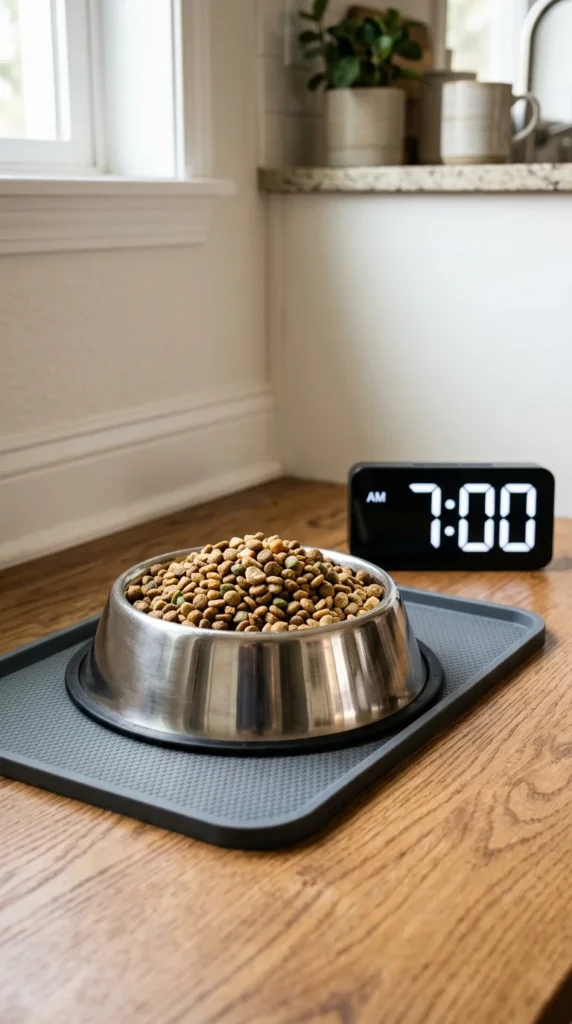
Predictable input leads to predictable output. Instead of “free-feeding” (leaving food out all day), set specific meal times. Most puppies need to go 15 to 30 minutes after eating. By controlling when they eat, you can accurately predict when they will need to go outside, significantly reducing the chance of accidents.
4. High-Value Rewards
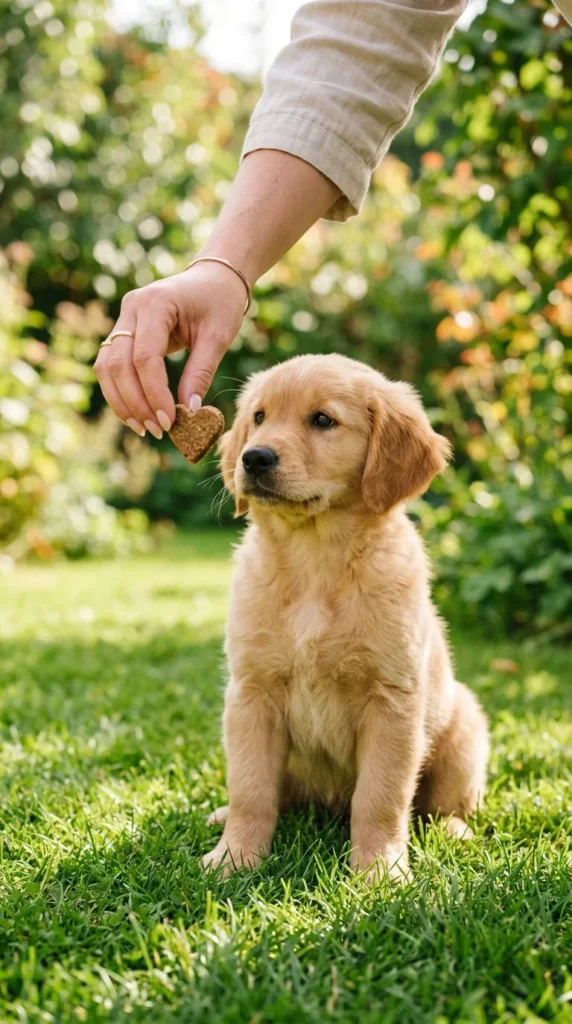
Generic kibble is fine for dinner, but for potty training, you need the “good stuff.” Keep a stash of high-value treats—like small bits of boiled chicken or freeze-dried liver—near the door. The moment your puppy finishes their business outside, reward them immediately. They need to associate the act of going outside with a jackpot.
5. Verbal Cues
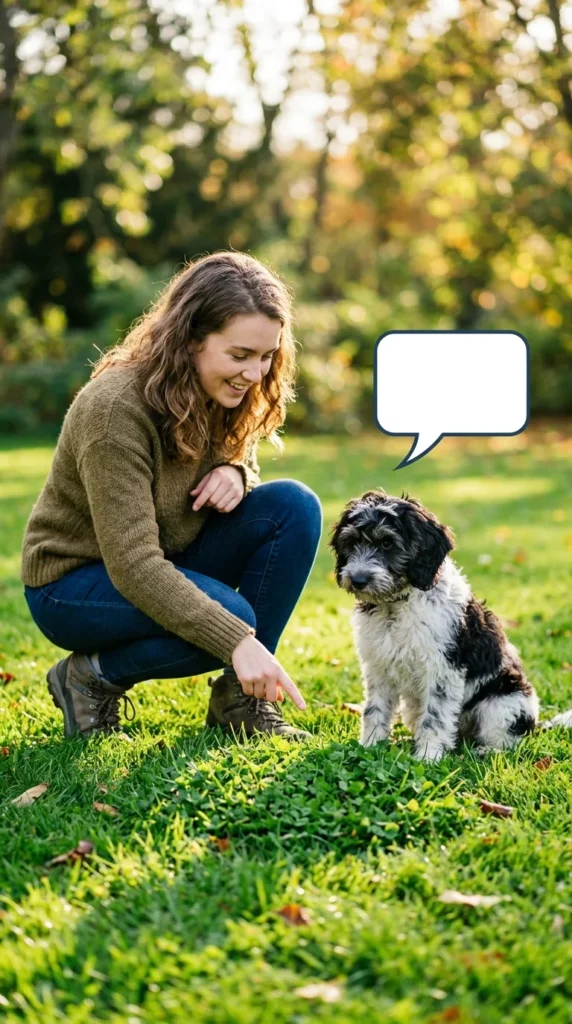
Communication is key. As your puppy begins to go, use a specific phrase like “Go potty” or “Do your business.” Eventually, the puppy will associate the verbal cue with the physical action. This becomes incredibly useful when you’re in a hurry or traveling and need them to go on command.
6. Frequent Breaks
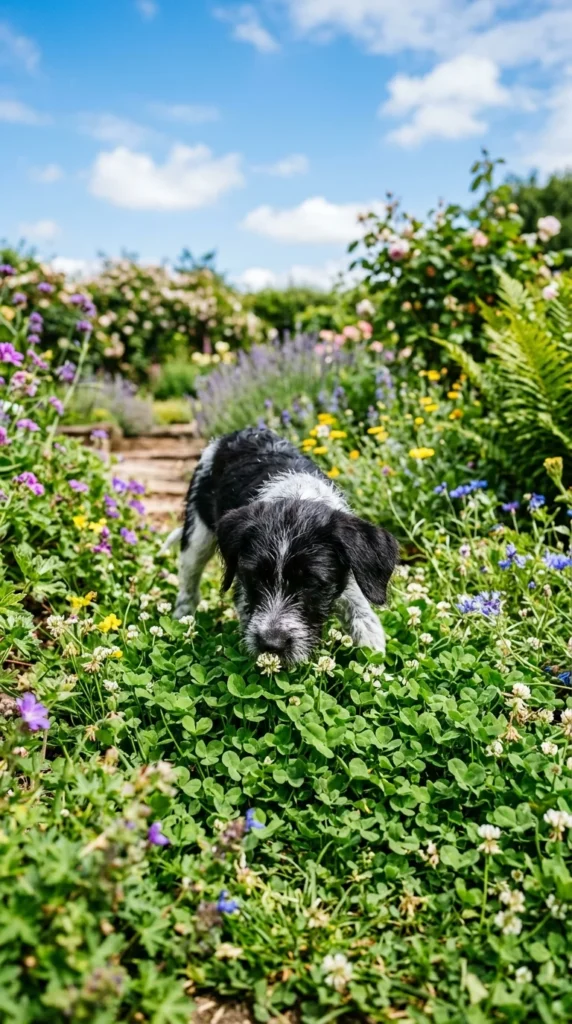
A puppy’s bladder capacity is tiny. A general rule of thumb is that a puppy can hold it for one hour for every month of age. However, during active training, you should take them out every 30 to 60 minutes when they are awake. Overestimating their bladder control is the fastest way to invite an accident.
7. Supervision
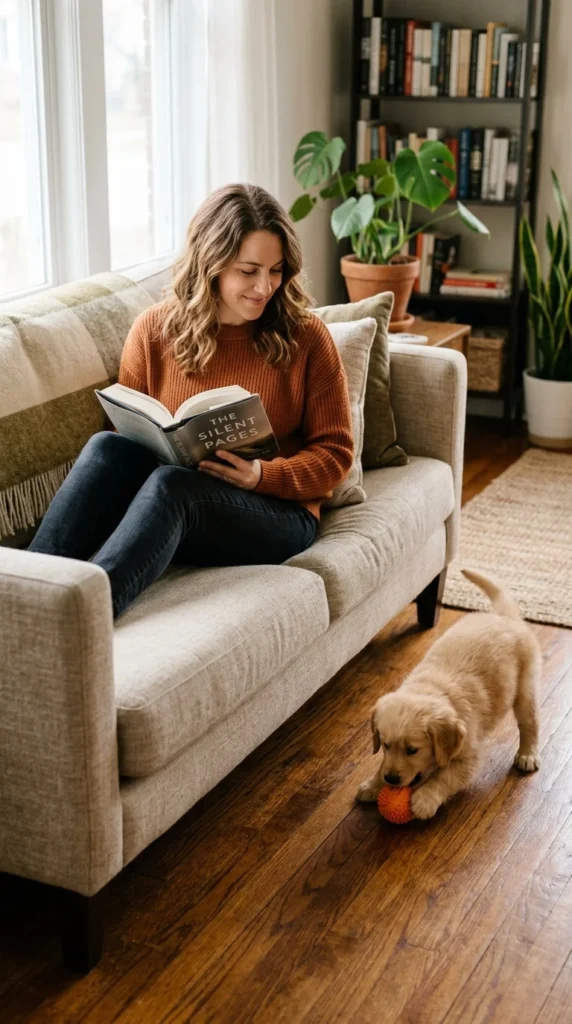
Until your puppy is fully house-trained, they should never have unsupervised “free roam” of the house. If you aren’t looking at them, they should be in their crate or a playpen. Constant supervision allows you to catch the subtle signs that they are about to go, allowing you to whisk them outside before it happens.
8. Body Language
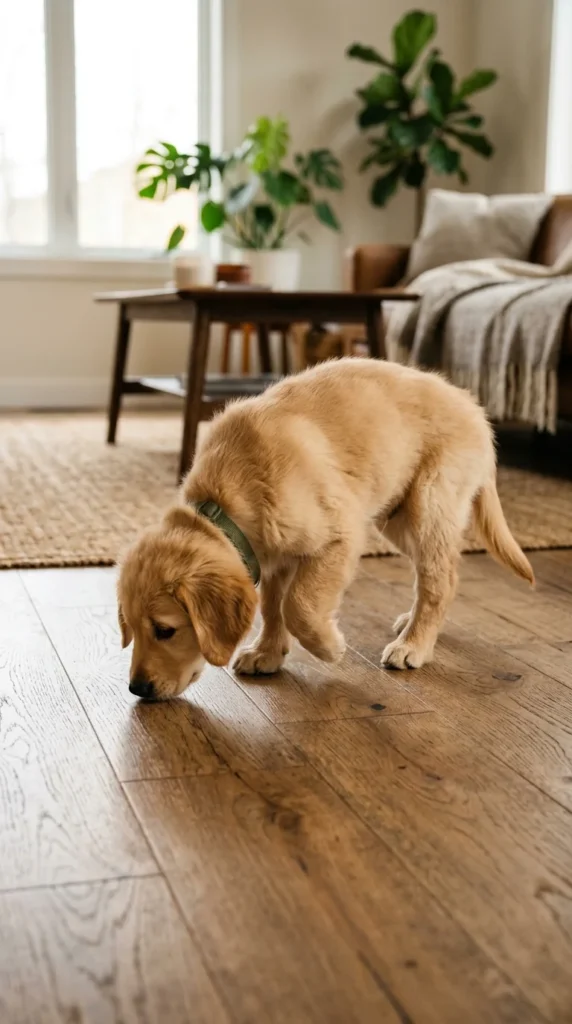
Puppies usually give off “tells” before they eliminate. Common signs include intense sniffing of the floor, circling, sudden restlessness, or heading toward a door or a room where they’ve had an accident before. When you see these behaviors, don’t wait—get them outside immediately.
9. Enzymatic Cleaners
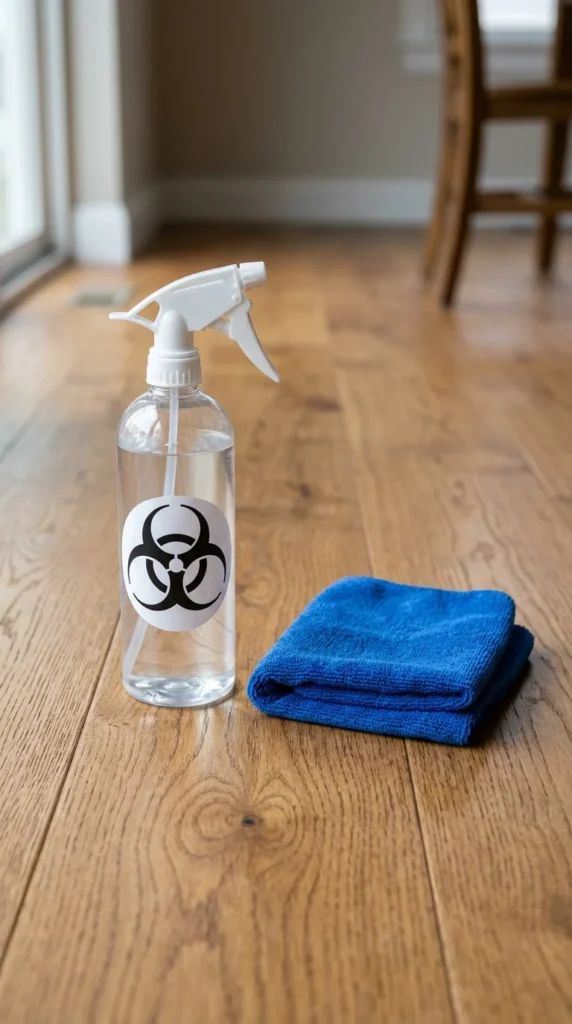
If an accident happens, regular household cleaners won’t cut it. Dogs have an incredible sense of smell and can detect traces of urine even if you can’t. These scents act as a “bathroom here” sign for the future. Use an enzymatic cleaner that specifically breaks down the proteins in pet waste to completely eliminate the odor.
10. The “Spot”

Try to take your puppy to the exact same spot in the yard every time. The scent of previous “successes” will linger there, acting as a powerful olfactory trigger that tells their brain, “This is the place where I go.”
11. Leash Control
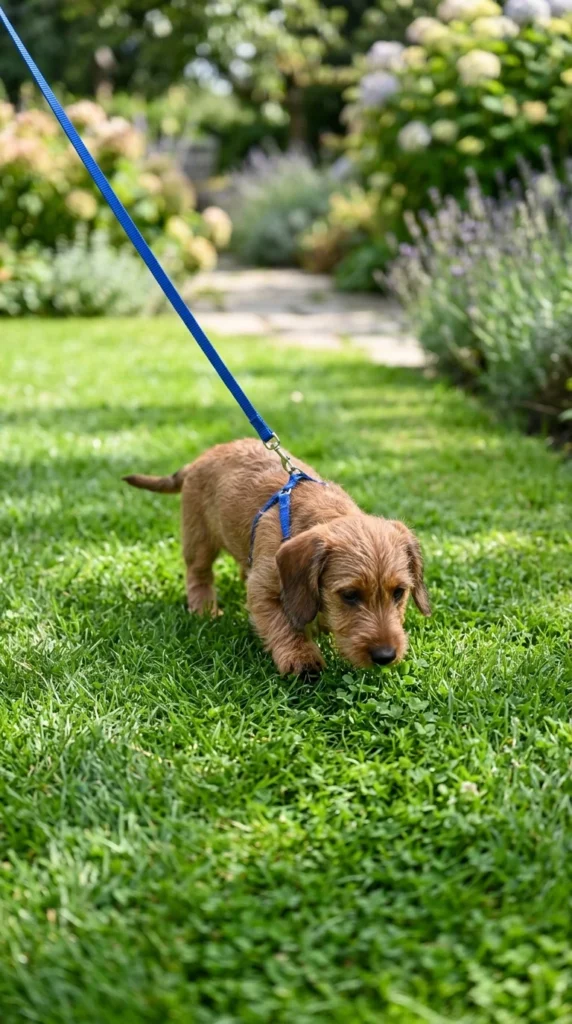
Even if you have a fenced-in yard, take your puppy out on a leash during the training phase. This keeps them focused on the task at hand rather than getting distracted by butterflies or squirrels. It also ensures you are right there to provide the treat and praise the second they finish.
12. Nighttime Trips
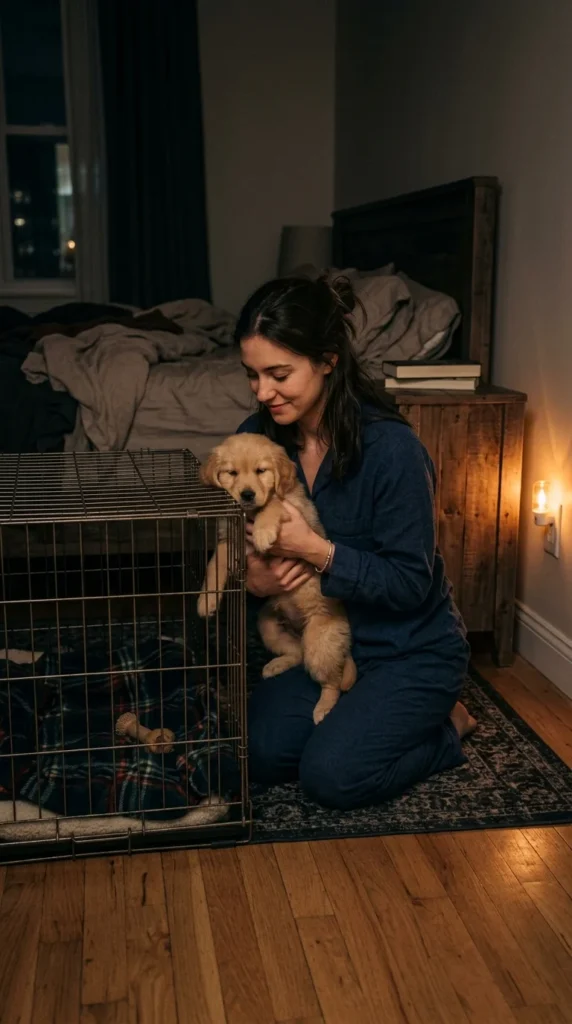
Most puppies under four months cannot make it through the night without a potty break. Set an alarm for the middle of the night to take them out. Keep these trips “all business”—no playing, no talking, and low light—so they learn that nighttime is for sleeping, with one quick exception for the bathroom.
13. Patience
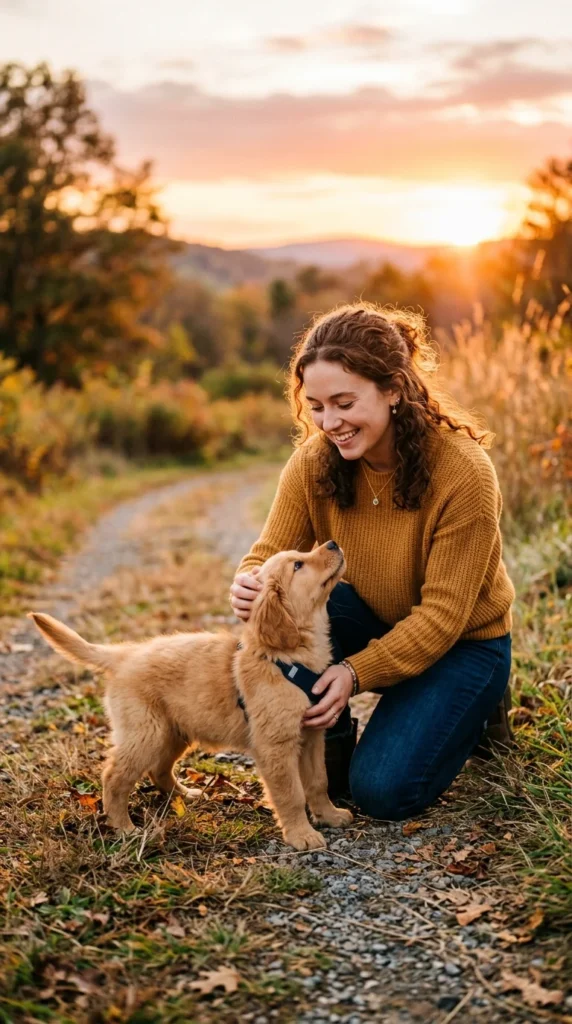
Potty training is a marathon, not a sprint. There will be setbacks and “accidents” just when you thought they had it figured out. Losing your temper will only make the puppy afraid of you, which can lead to them hiding their accidents in secret places like behind the sofa. Stay calm and stay the course.
14. Confinement
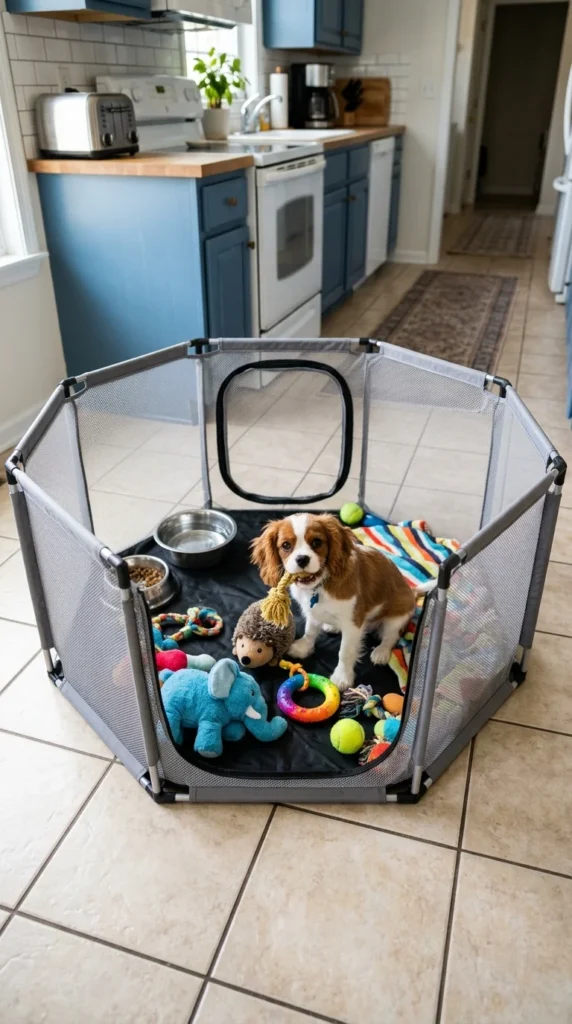
When you can’t give 100% of your attention to the puppy, use a playpen or an “umbilical cord” method (tethering the puppy to your waist with a leash). This limits their ability to sneak off to another room to soil the carpet.
15. Manage Water
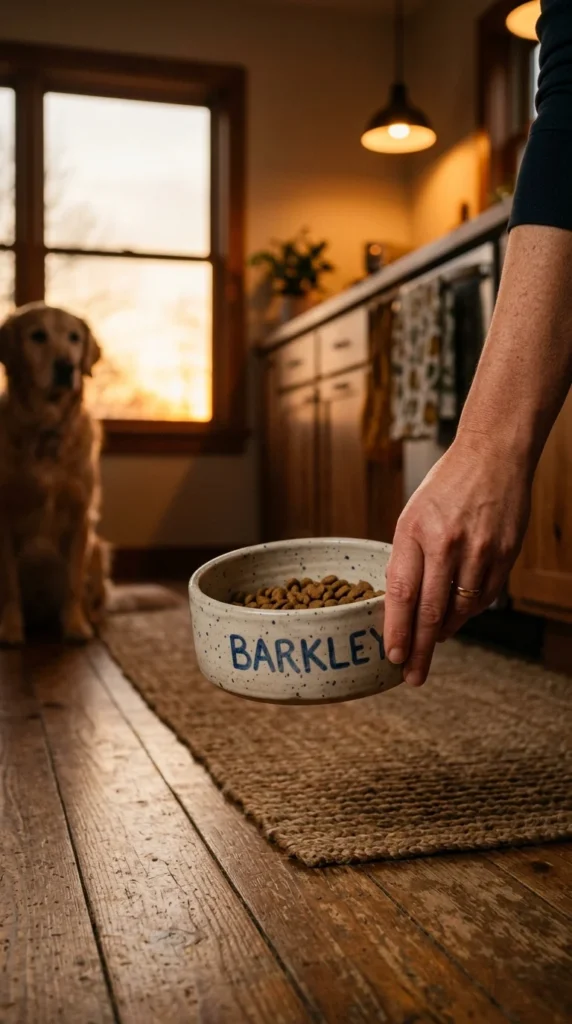
While puppies should always have access to fresh water during the day, it’s helpful to pick up the water bowl about two hours before bedtime. This reduces the pressure on their bladder overnight and helps them (and you) get a longer stretch of sleep.
16. Bell Training
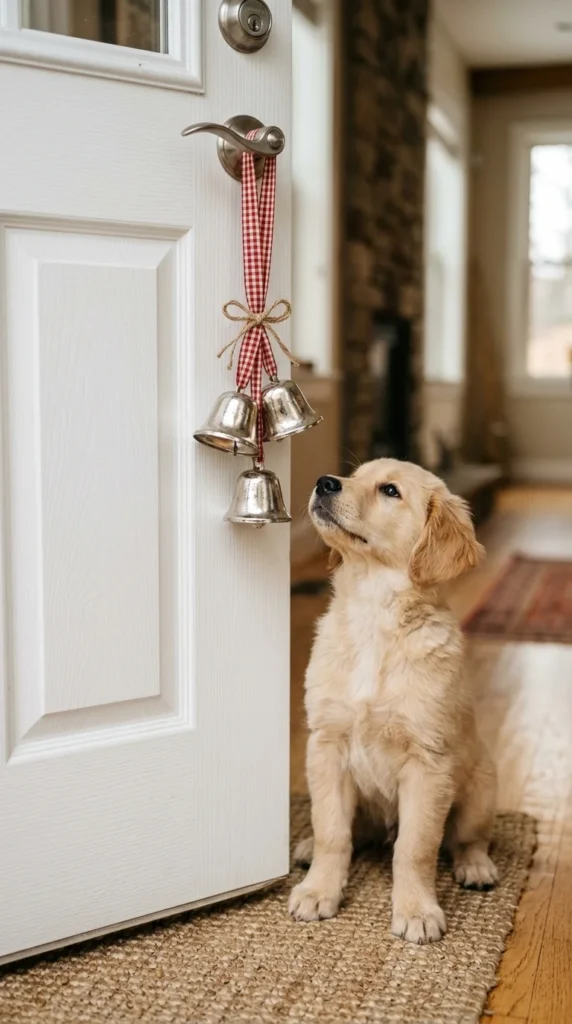
Give your dog a way to talk to you. Hang a bell on the door you use to go outside. Every time you take them out, tap their paw against the bell. Eventually, they will learn to ring the bell themselves to signal that they need to go.
17. Surface Transitions
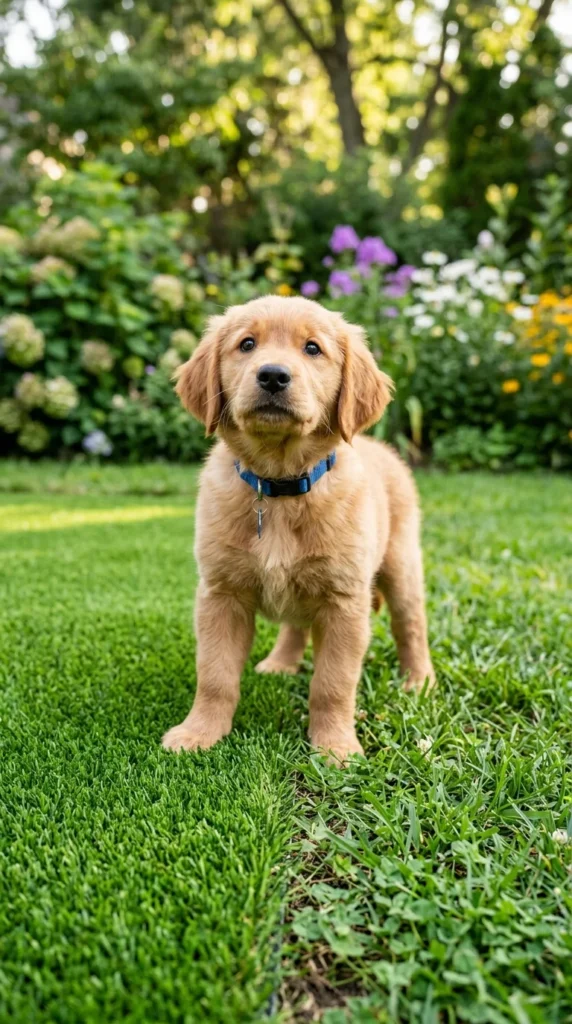
Be mindful of the surfaces your puppy gets used to. If they are trained only on puppy pads, they may struggle to understand that grass is the ultimate goal. If possible, prioritize outdoor grass training from day one to avoid confusing the puppy about which textures are “okay” for pottying.
18. Health Checks
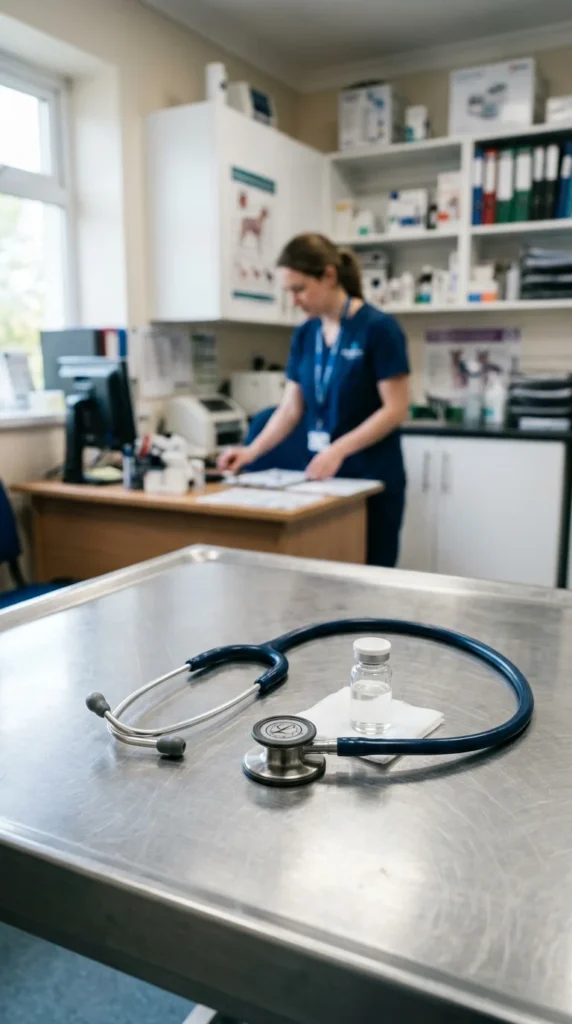
If your puppy is struggling significantly or having frequent accidents despite your best efforts, consult your vet. Urinary tract infections (UTIs) or parasites can make it physically impossible for a puppy to hold their bladder, regardless of how well-trained they are.
19. Documentation
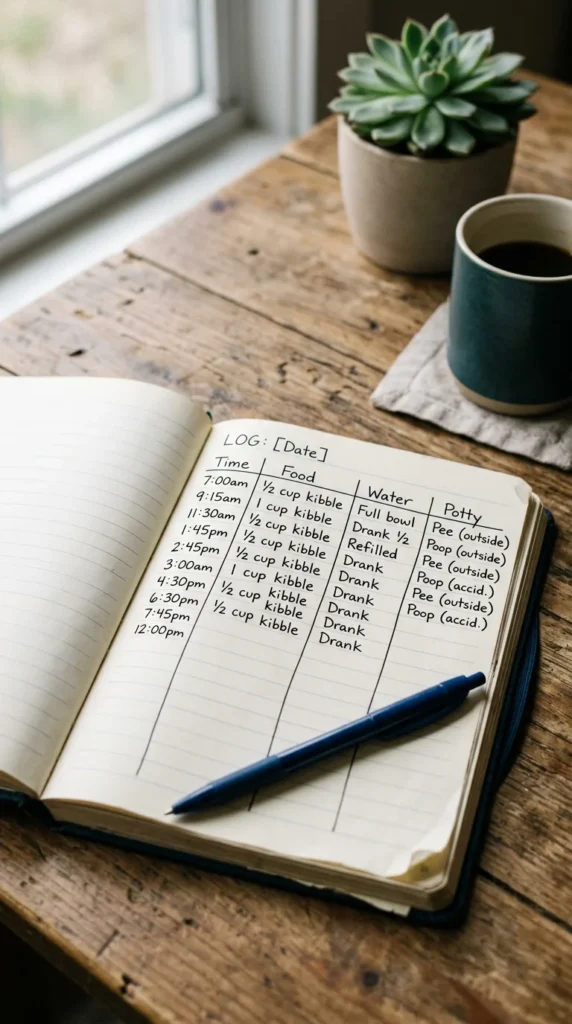
It might seem overboard, but keeping a log for just one week can reveal patterns you hadn’t noticed. You might realize they always need to go exactly 40 minutes after drinking water. This data allows you to be proactive rather than reactive.
20. Post-Play Breaks
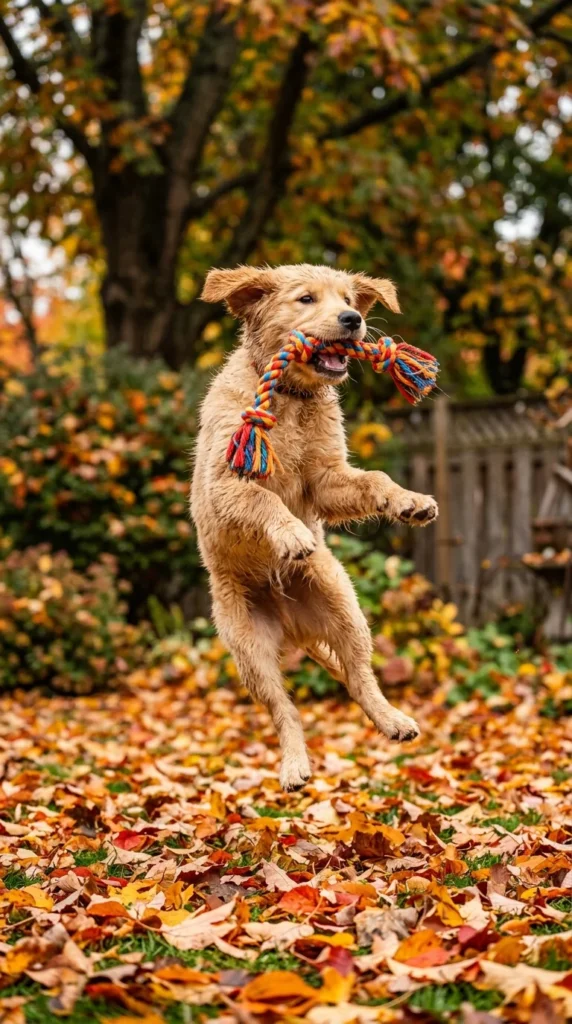
Excitement and physical activity stimulate the digestive system and bladder. A puppy who has just finished a vigorous session of “fetch” or “tug-of-war” will almost certainly need to go immediately afterward. Always transition from playtime to potty time.
21. Delayed Freedom
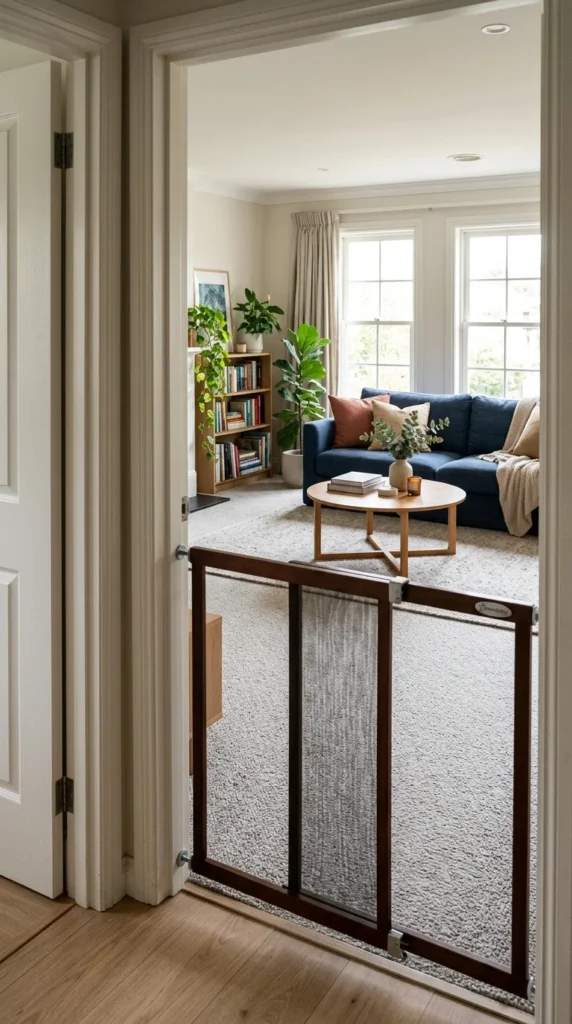
Don’t be in a rush to give your puppy the run of the house. Just because they haven’t had an accident in the kitchen for a week doesn’t mean they are ready for the carpeted master bedroom. Expand their boundaries slowly, one room at a time, only after they have proven themselves in smaller spaces.
22. Stay Calm During Accidents
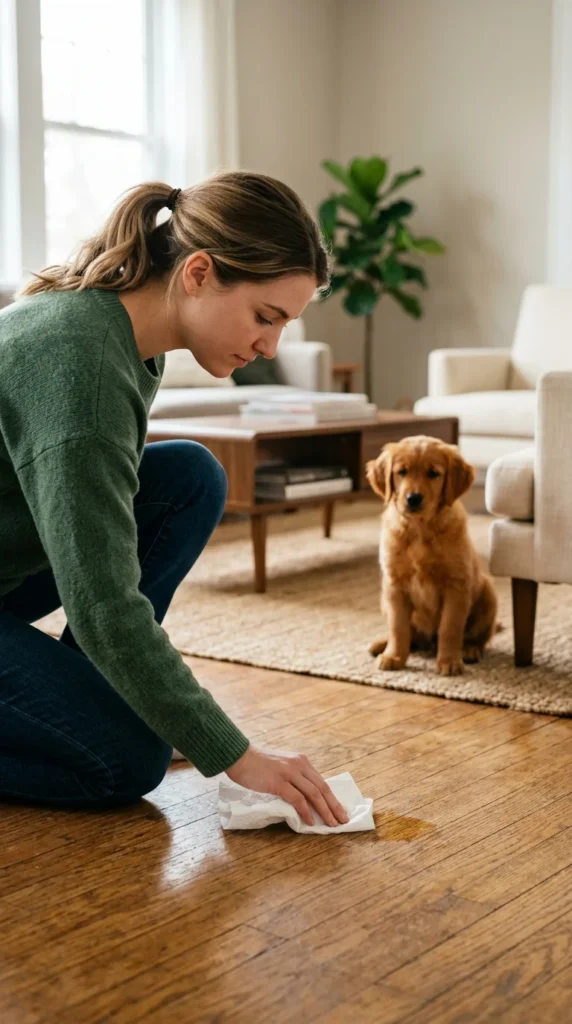
If you catch them in the act, a firm “Oops!” or “Outside!” is enough to interrupt them. Carry them outside immediately to finish. If you find a mess after the fact, do not punish them. They won’t connect the punishment to an event that happened minutes ago; they will only learn to fear you. Clean it up silently and resolve to supervise better next time.