
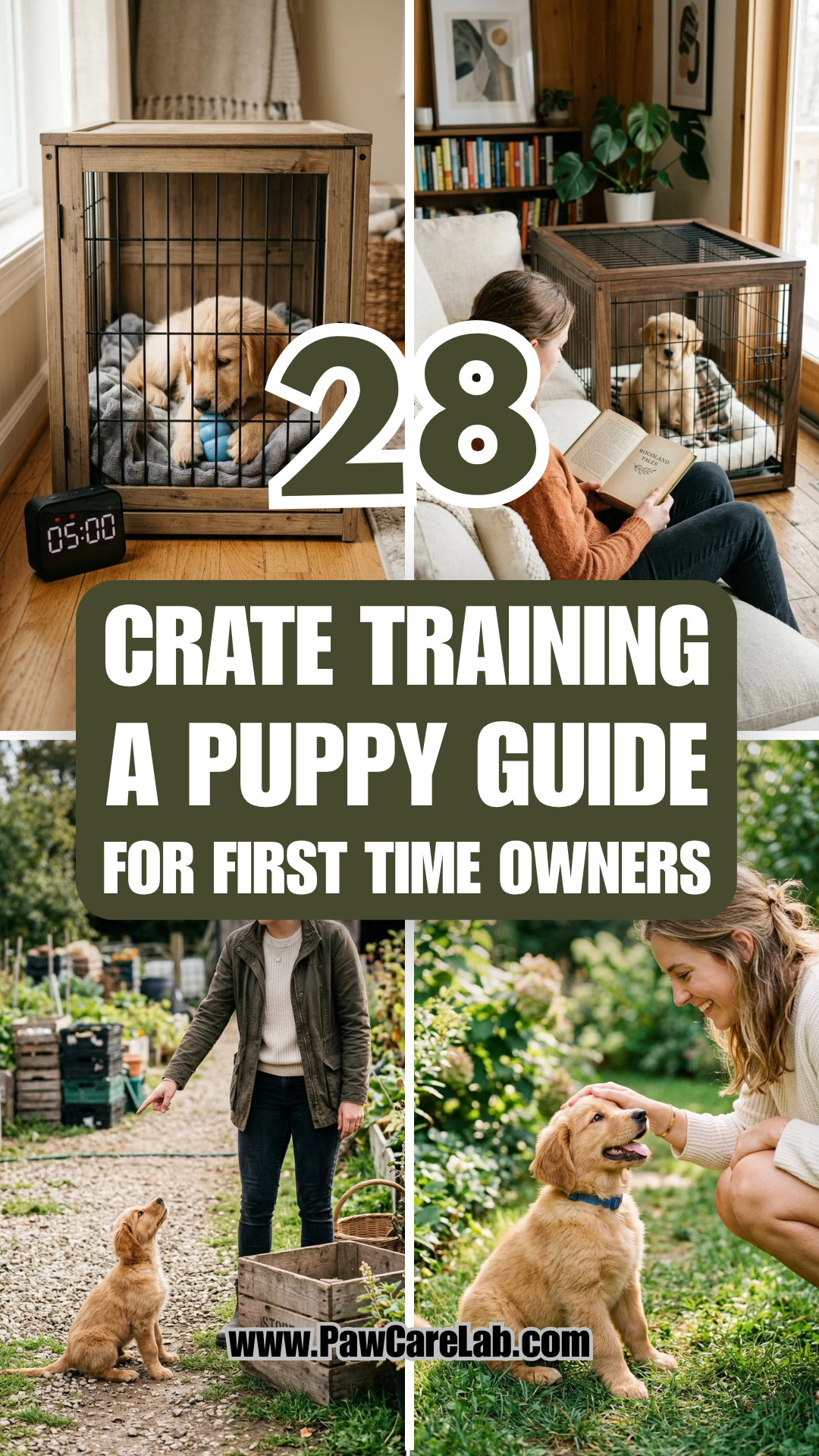
Crate training is one of the most vital skills you can teach your new puppy. While some first-time owners feel hesitant, viewing the crate as a “cage,” it is actually the opposite. In the wild, dogs are den animals. A crate provides a secure, private sanctuary where your puppy can feel safe, rest undisturbed, and stay out of trouble when you aren’t looking. Beyond comfort, it is an indispensable tool for potty training and preventing destructive chewing.
This comprehensive guide breaks down the process into 28 actionable steps to ensure your puppy loves their new home-within-a-home.
1. Right Size
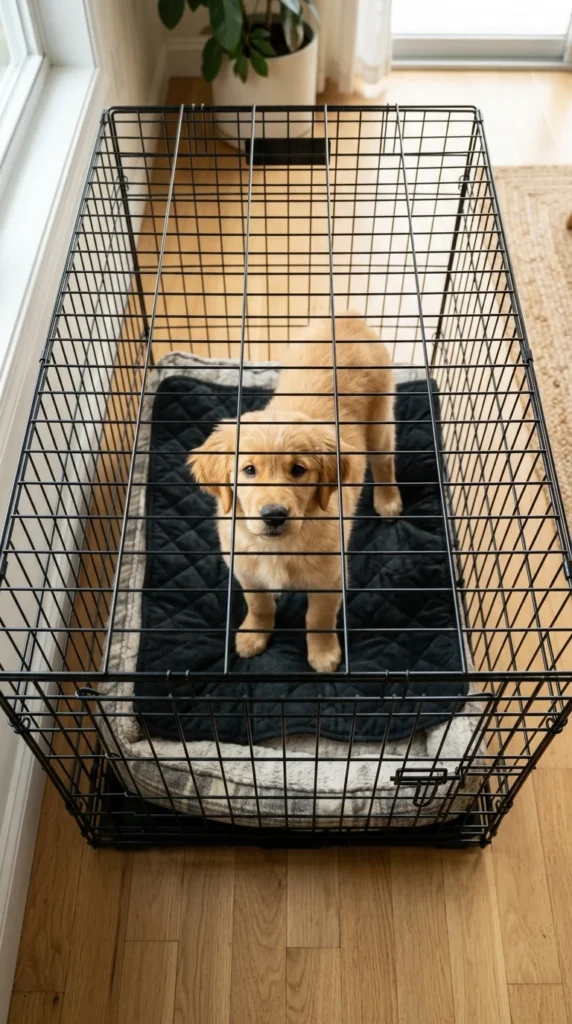
The most common mistake is buying a crate that is too large. If the crate is massive, your puppy will sleep in one corner and use the other as a bathroom. The ideal crate should only be large enough for the puppy to stand up, turn around, and lie down comfortably. Many crates come with “divider panels” so you can expand the space as your puppy grows.
2. Soft Bedding
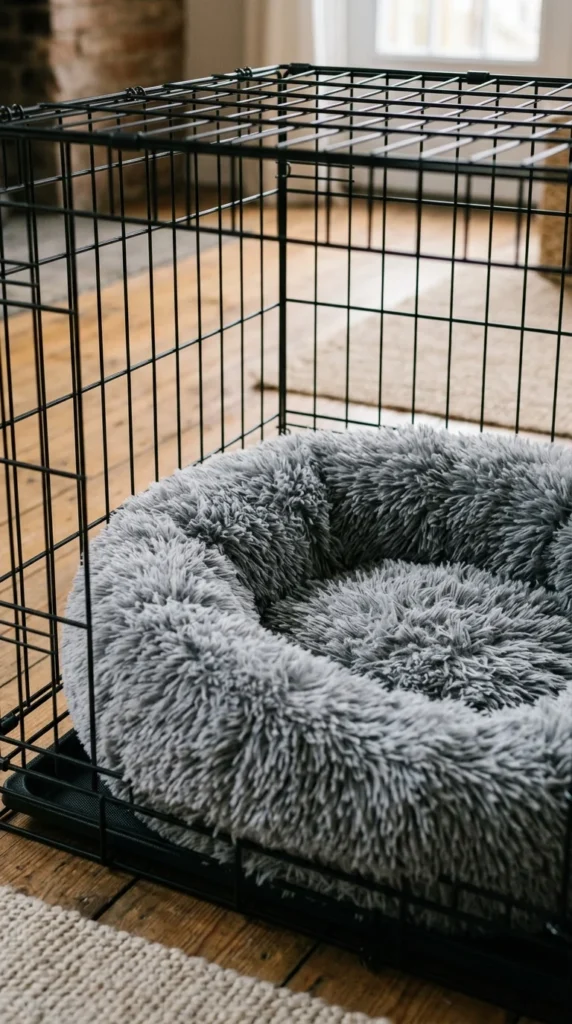
Make the crate inviting. Use a durable, washable bed or a thick fleece blanket. However, keep an eye on your puppy; if they begin to chew or shred the bedding, temporarily replace it with a more durable mat or a bare floor to prevent them from swallowing fabric.
3. Proper Placement
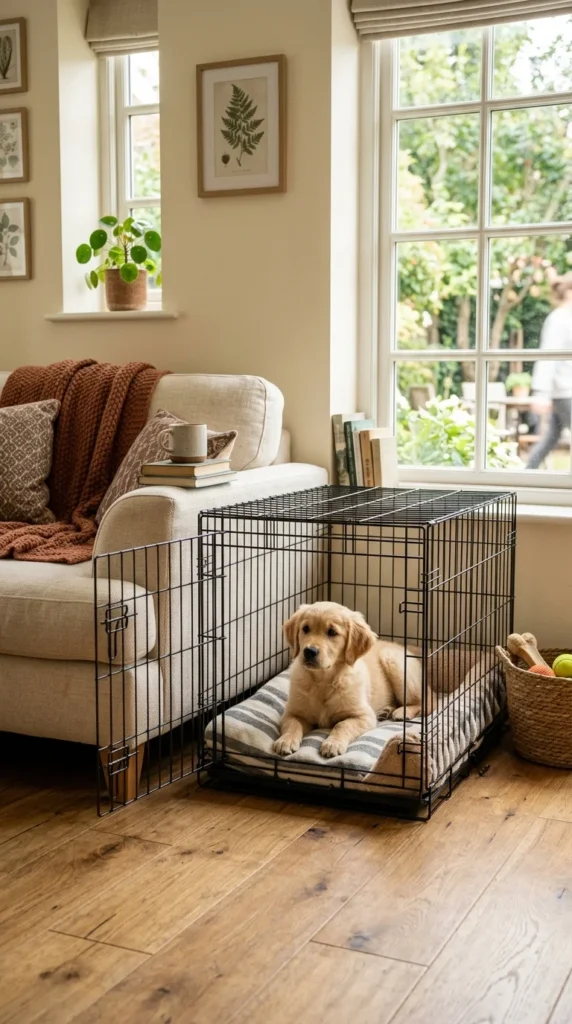
Puppies are social creatures. Place the crate in a high-traffic area, like the kitchen or living room, during the day. This prevents the puppy from feeling isolated or “sent away.” At night, you may want to move the crate into your bedroom so the puppy feels your presence.
4. Scented Items
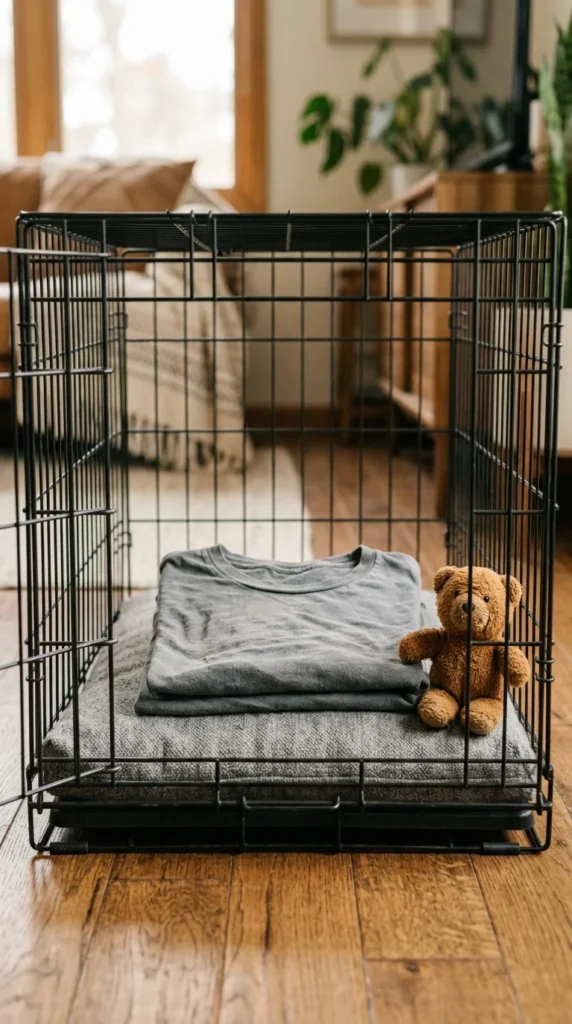
Puppies rely heavily on their sense of smell. Placing a t-shirt you’ve recently worn inside the crate can provide immense comfort. Your scent acts as a natural sedative, helping the puppy feel secure even when you are not in the immediate vicinity.
5. Treat Introduction
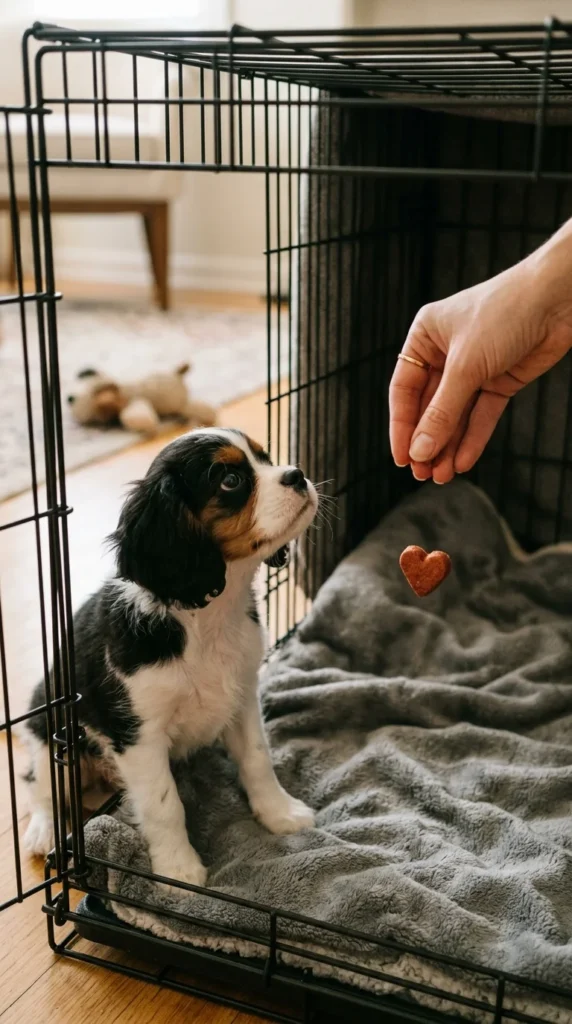
Never force your puppy into the crate. Instead, lure them in. Create a “treat trail” leading into the crate. Let them go in, eat the treat, and come back out freely. This builds a positive association: “Crate equals delicious snacks.”
6. Open Doorway
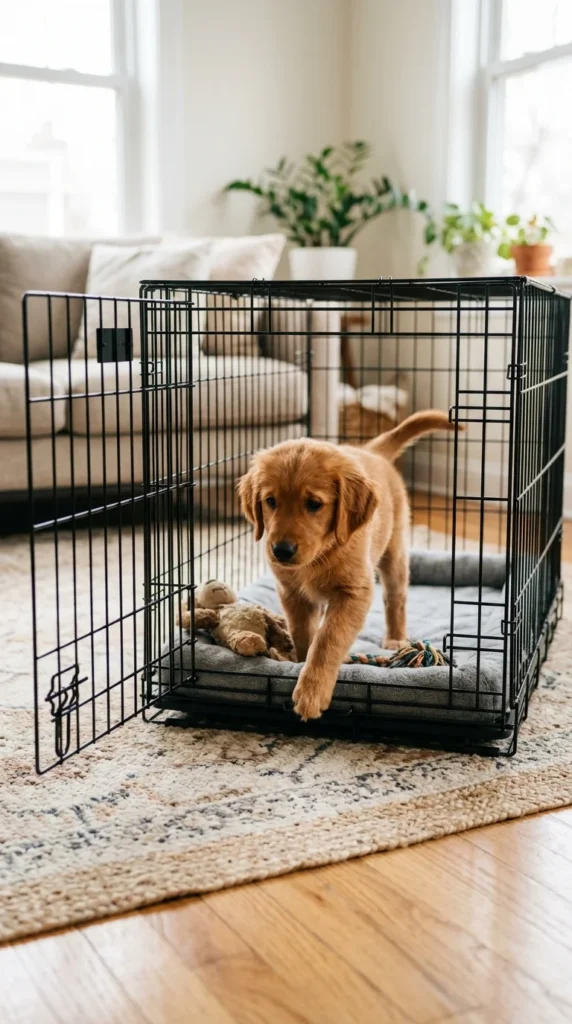
For the first few days, keep the crate door open at all times. Let your puppy explore it on their own terms. You can even hide “surprise” treats inside throughout the day so the puppy finds rewards every time they decide to check their den.
7. Meal Times
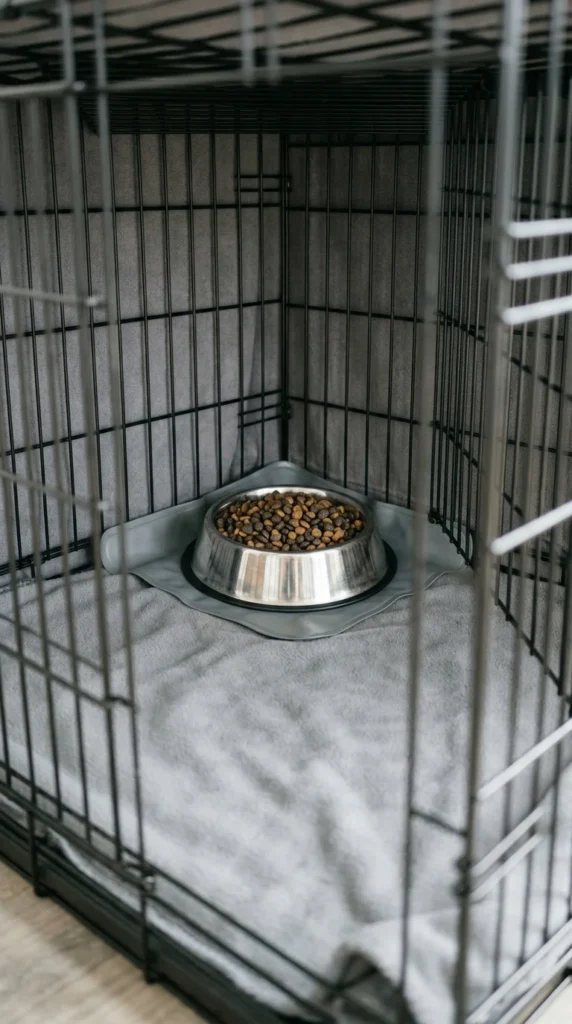
Feeding your puppy their regular meals inside the crate is a game-changer. This creates a powerful positive association. If your puppy is hesitant, start by placing the bowl just inside the door, then gradually move it further back over several feedings.
8. Verbal Cues
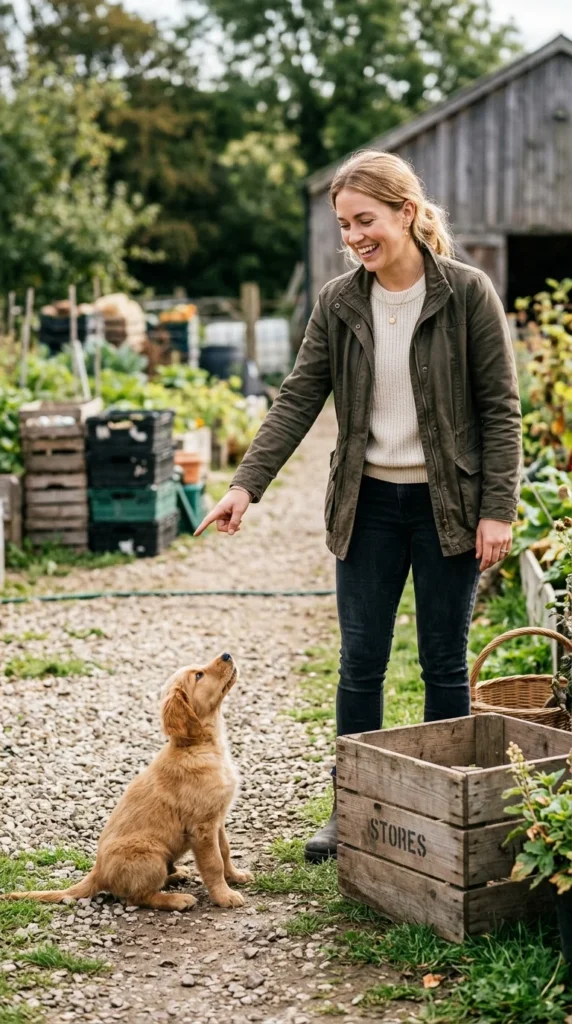
Introduce a specific command like “Crate up,” “Kennel,” or “Go to bed.” Say the word right as the puppy enters. Eventually, they will associate the word with the action, allowing you to direct them to their crate with ease.
9. Short Durations
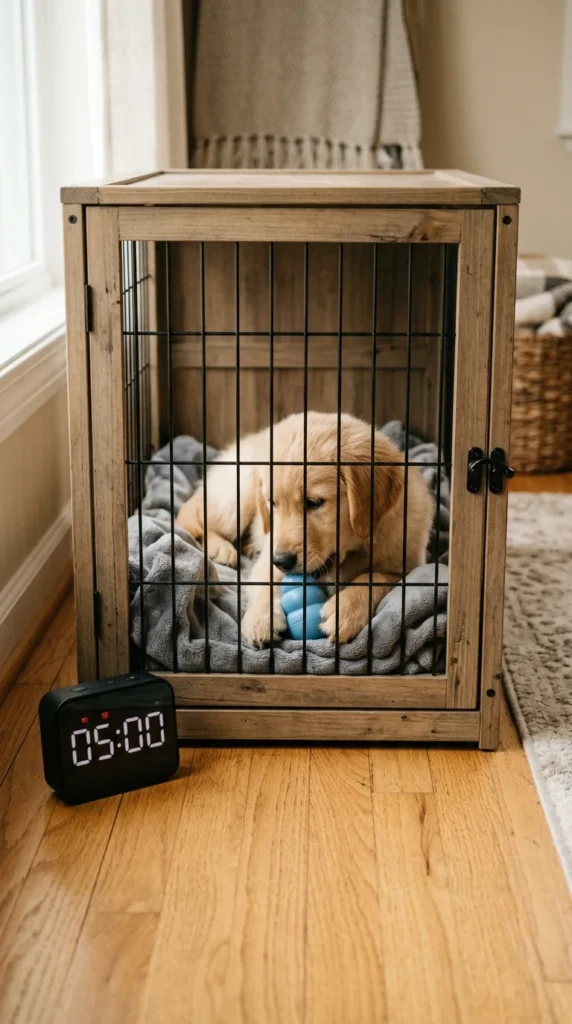
Once the puppy is comfortable eating inside, try closing the door for very short periods—just a minute or two while you stay in the room. Gradually increase the time as they remain calm, always rewarding them with praise when you let them out.
10. Toy Rotation
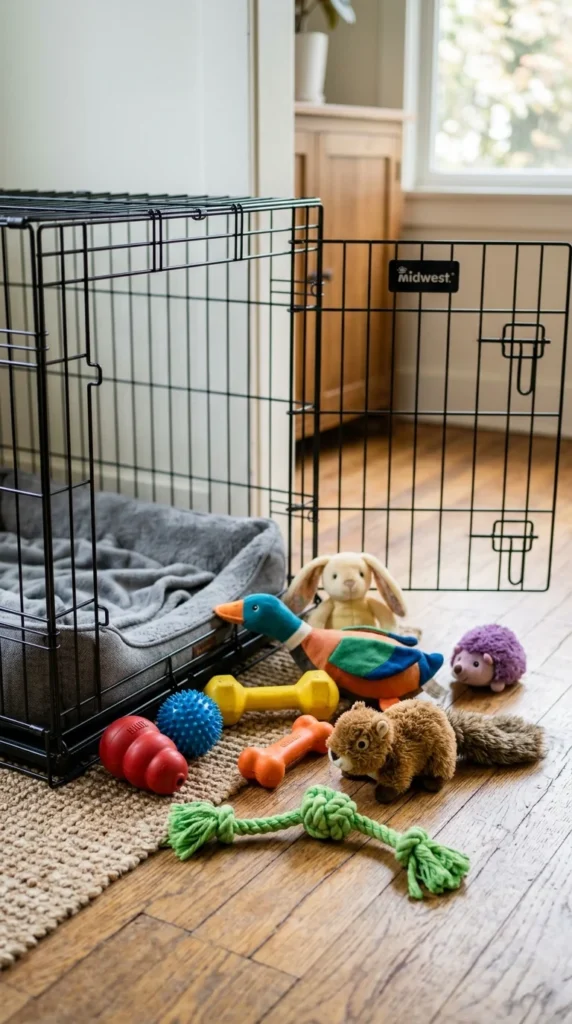
Keep specific, high-value toys exclusively for crate time. Durable rubber toys stuffed with puppy-safe peanut butter or wet food are perfect. These “puzzle toys” keep their minds occupied and make crate time something they look forward to.
11. Exercise Needs
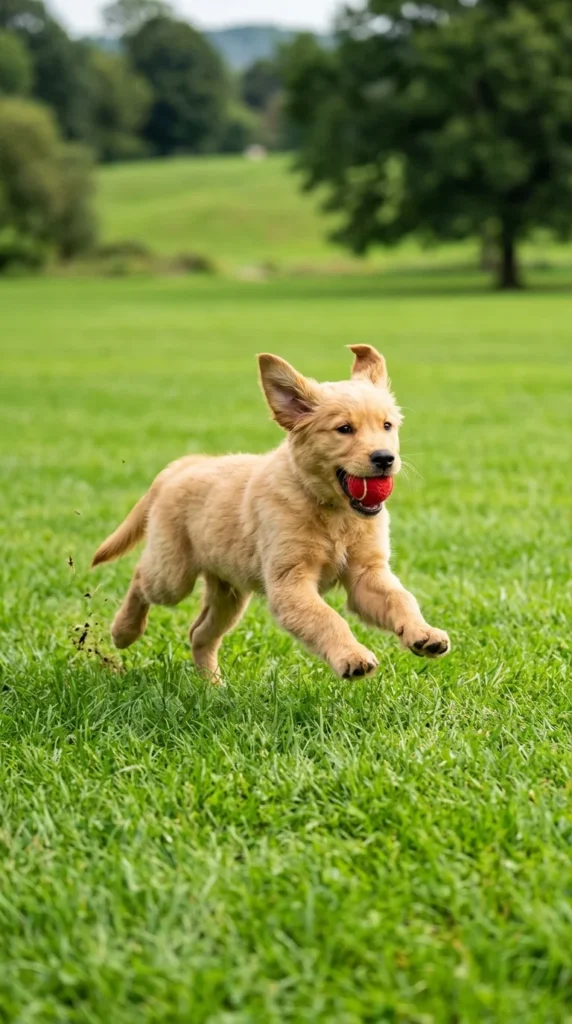
A tired puppy is a well-behaved puppy. Never put a high-energy puppy into a crate for a long period. Ensure they have had a good play session or a walk before crate time. This increases the likelihood that they will simply fall asleep once inside.
12. Potty Timing

Always take your puppy outside to eliminate right before putting them in the crate and immediately after letting them out. This reinforces the routine and prevents accidents inside their sleeping area.
13. Nighttime Strategy
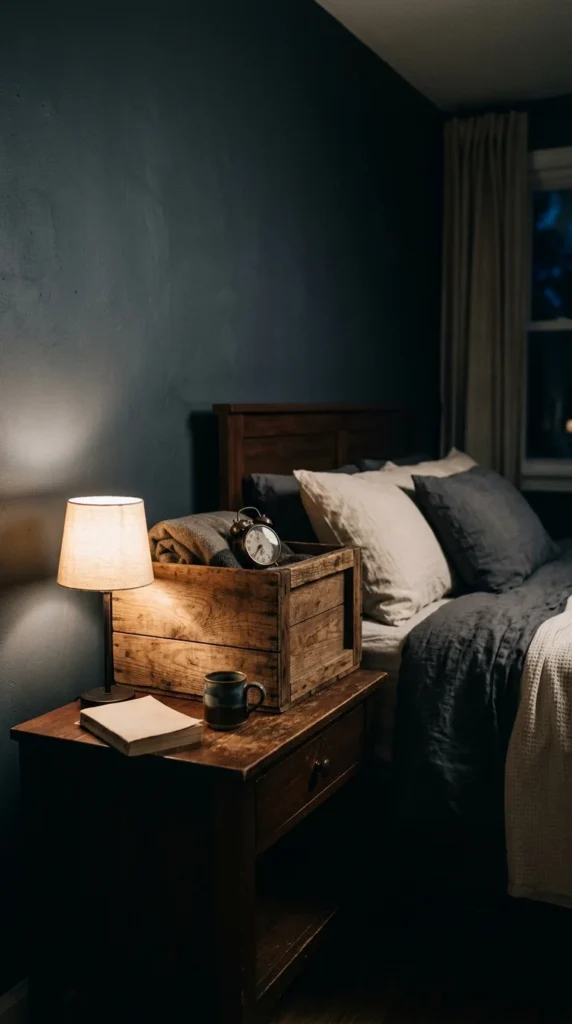
For the first few nights, keep the crate within arm’s reach of your bed. If the puppy whimpers, you can simply put your hand against the crate to reassure them. This prevents the “abandonment” fear that often leads to middle-of-the-night howling.
14. Crate Covers
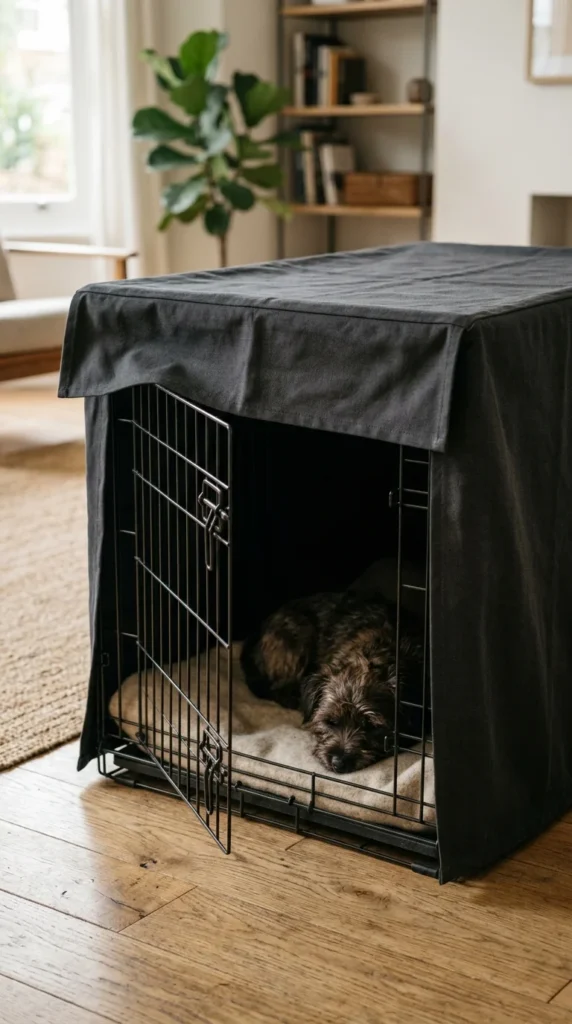
Some puppies get overstimulated by seeing everything happening around them. A crate cover (or a simple blanket draped over the top) can turn the crate into a dark, cozy cave, which helps many puppies settle down and sleep more soundly.
15. Quiet Music
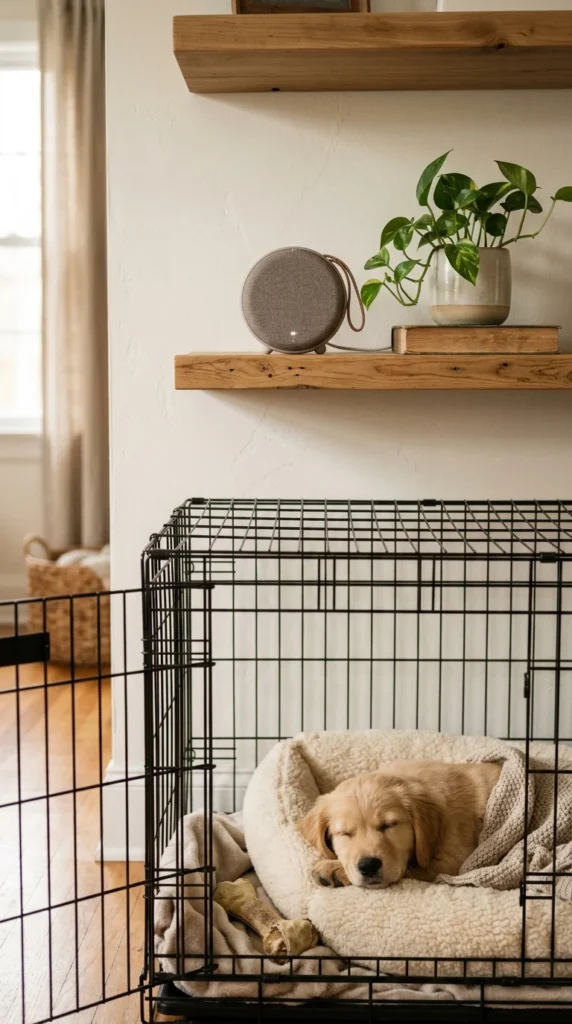
Playing soft classical music or white noise can help drown out household sounds that might startle or wake a sleeping puppy. This is especially helpful if you live in a noisy apartment or have a busy household.
16. Ignoring Whining
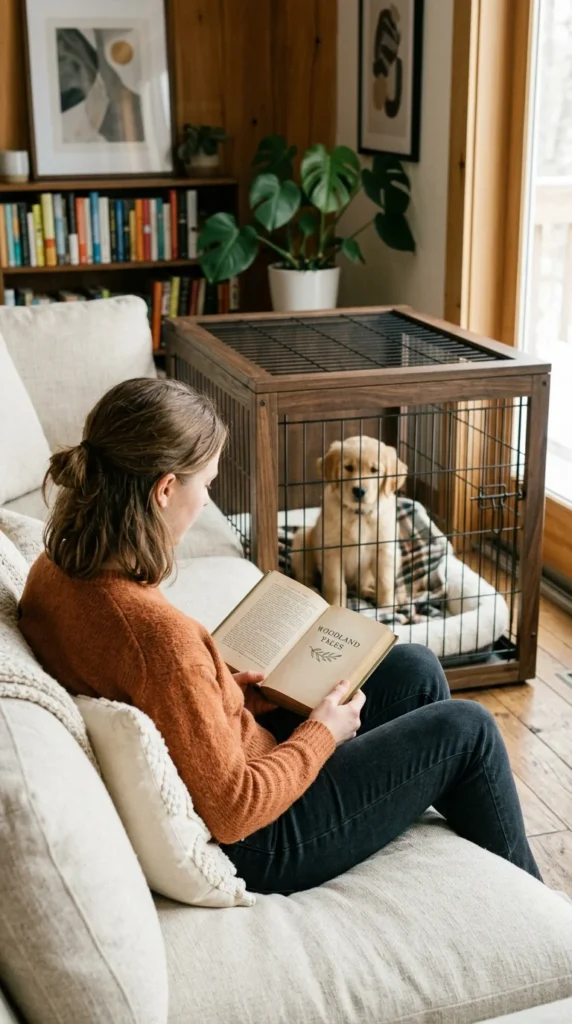
This is the hardest part for new owners. If the puppy whines to get your attention, do not let them out. If you open the door while they are crying, you teach them that whining is the key to freedom. Wait for at least five seconds of silence before opening the door.
17. Safe Collars
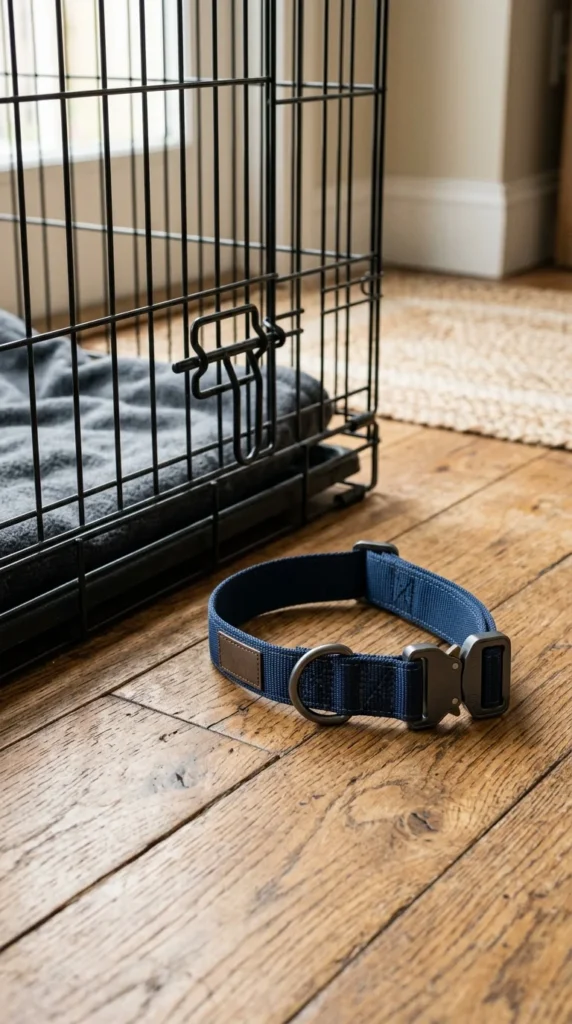
Safety first: remove your puppy’s collar or harness before putting them in the crate, especially if it has tags. Tags or loops can occasionally get caught in the wire mesh, which can lead to panic or injury.
18. Gradual Extension
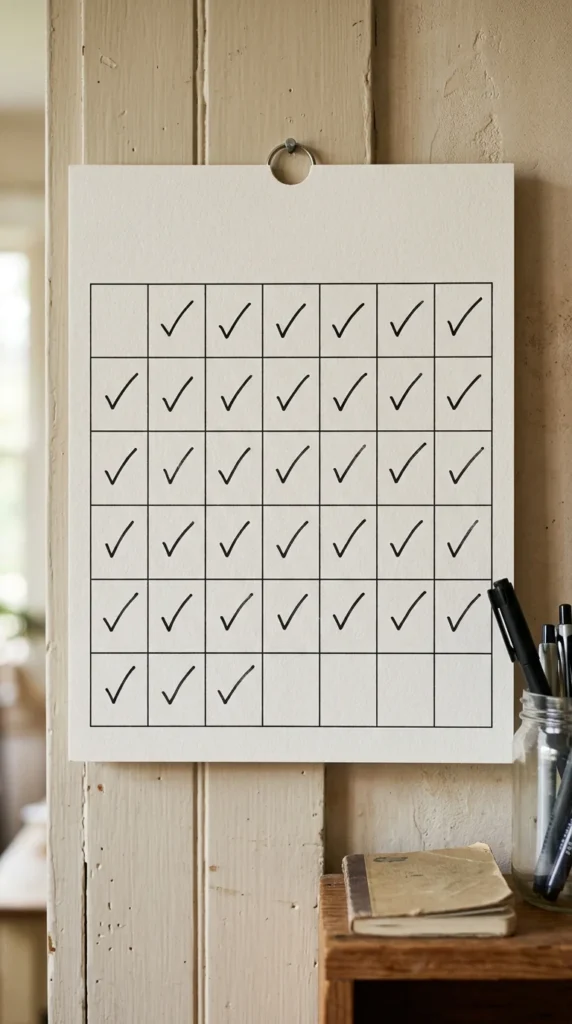
Don’t rush the process. Start with 10 minutes, move to 20, then an hour. It can take weeks for a puppy to be comfortable for several hours. Respect their pace to avoid creating a negative “trapped” feeling.
19. Calming Pheromones
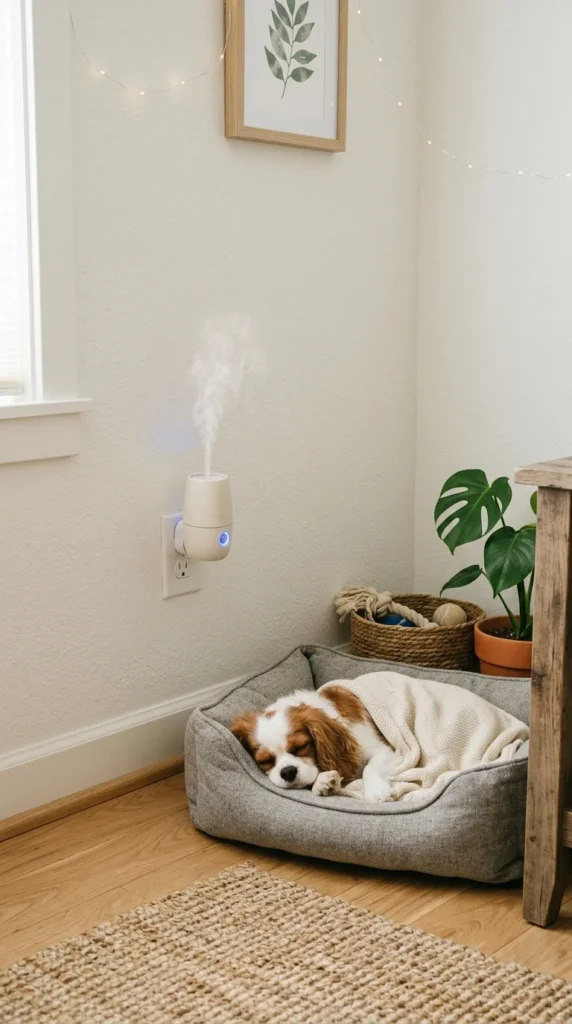
Consider using a synthetic pheromone diffuser (like DAP). These mimic the calming scents produced by a mother dog and can significantly reduce anxiety levels in young puppies during the training phase.
20. No Punishment
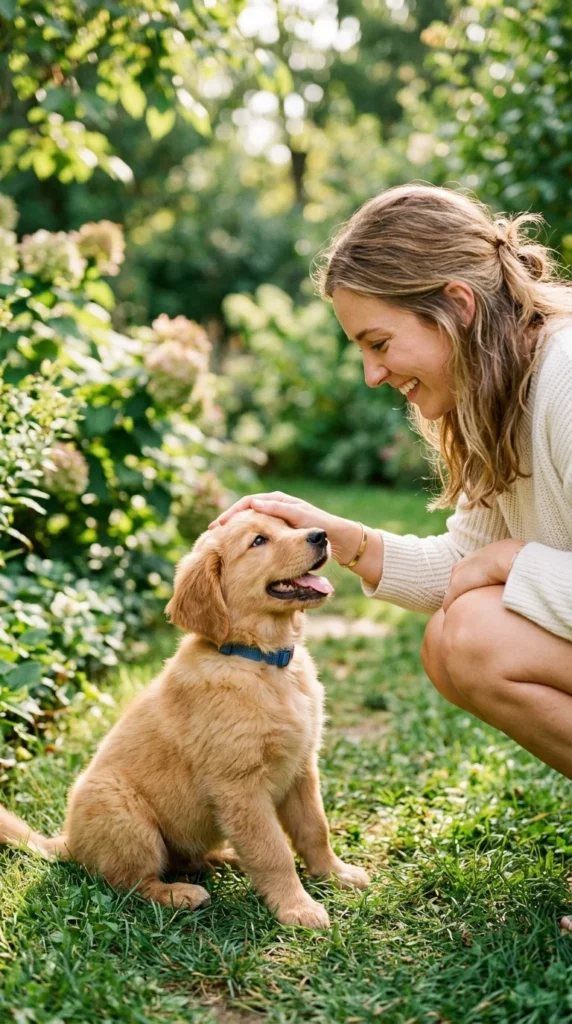
Never use the crate as a place for punishment or “time out” when you are angry. The crate must remain a “happy place.” If you use it as a penalty, the puppy will begin to fear it, undoing all your hard work.
21. Morning Routine
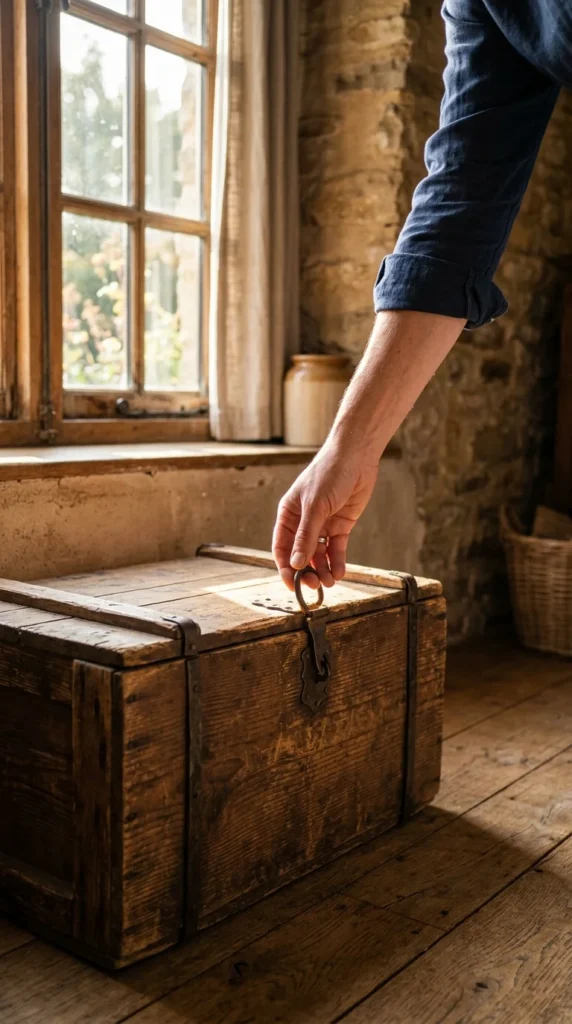
Establish a strict morning routine. Wake up, go straight to the crate, and take the puppy outside immediately without any fanfare. This teaches them that the day starts with potty time, not with frantic play inside the crate.
22. Water Management
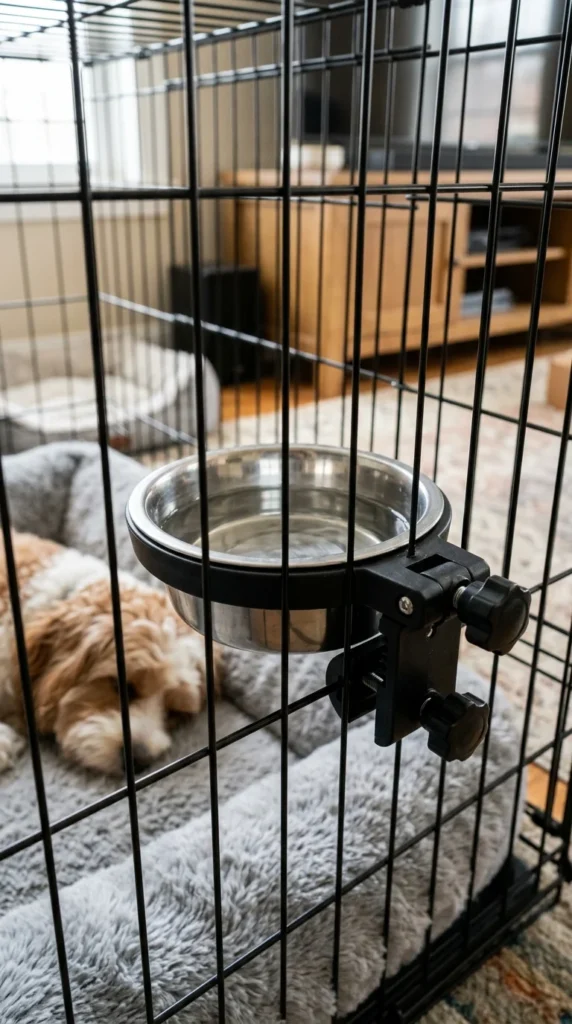
While you don’t want a full bowl of water that might lead to accidents, your puppy should have access to hydration if they are in the crate for more than an hour. Clip-on bowls or “licker” bottles are great options to prevent spills.
23. Separation Anxiety
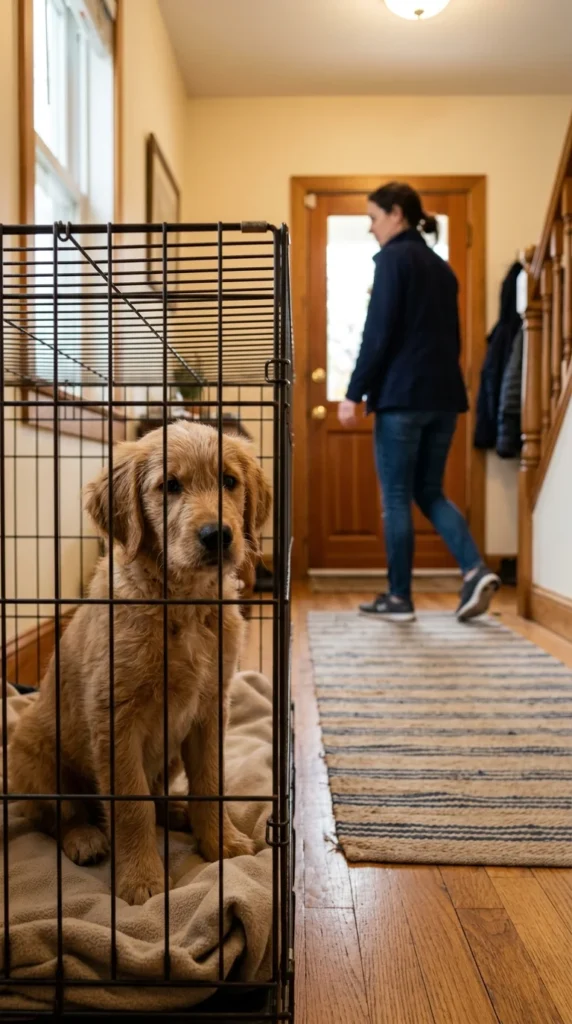
Practice leaving the room while the puppy is in the crate. Start by walking out for 30 seconds and coming back. This teaches the puppy that even if you leave, you always come back, which prevents separation anxiety from developing.
24. Monitoring Apps
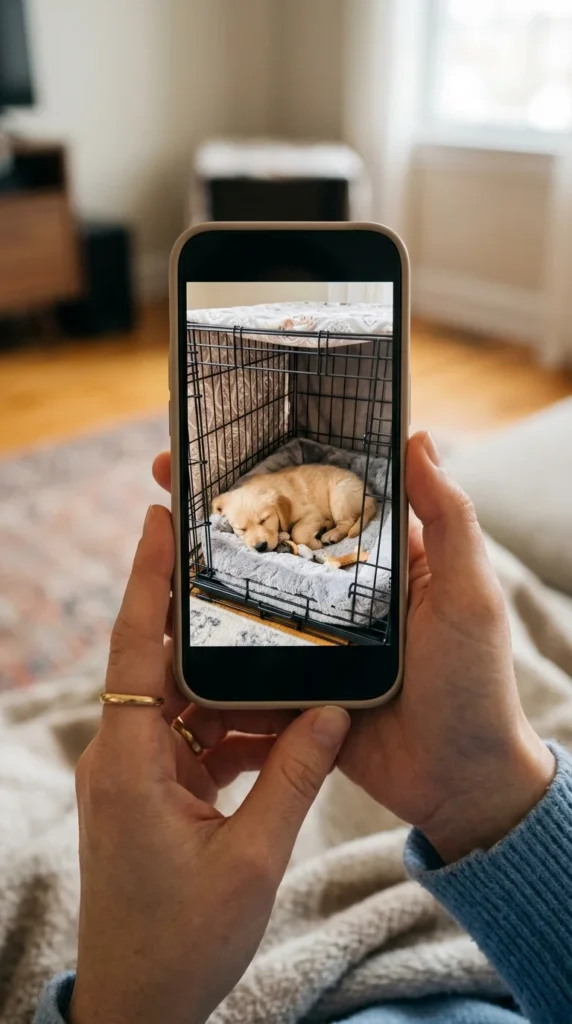
If you’re nervous about leaving your puppy alone, use a pet camera or a baby monitor. This allows you to check in and see if they are resting or if they are genuinely distressed, helping you adjust your training timing.
25. Positive Praise
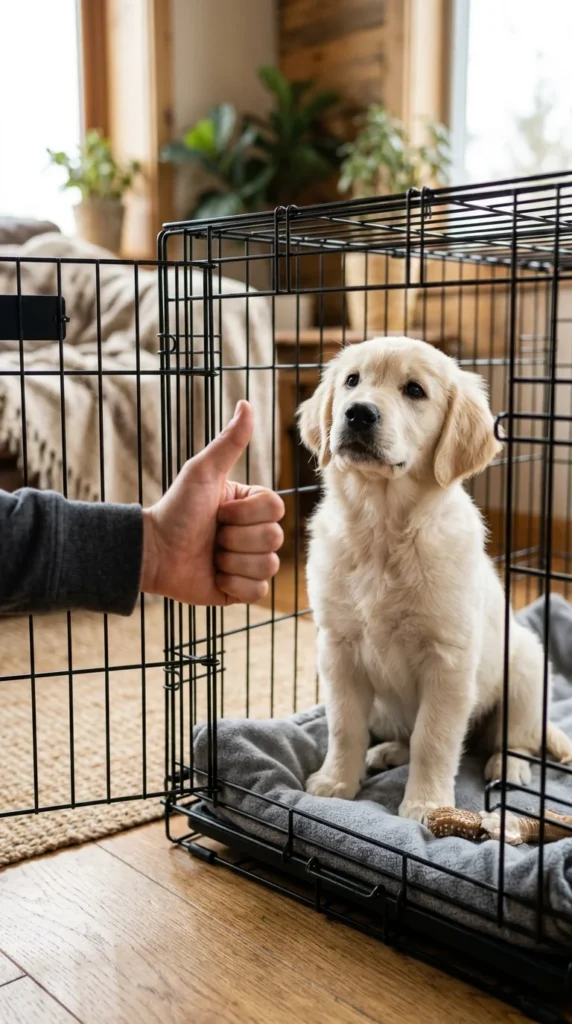
When your puppy goes into the crate on command or settles down quietly, use a calm, happy voice to praise them. Positive reinforcement is much more effective than correction in the world of puppy training.
26. Family Rules
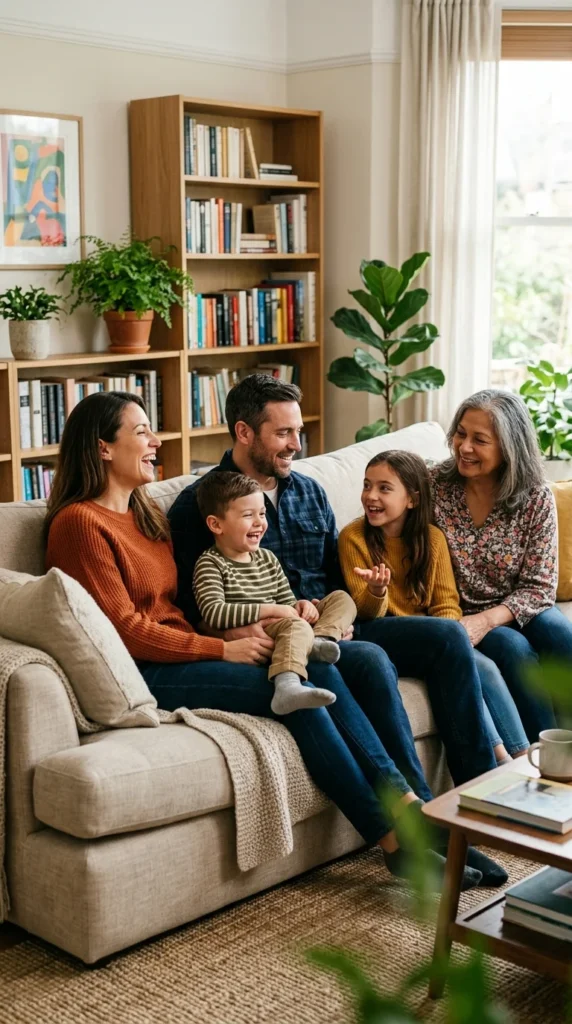
Ensure everyone in the household follows the same rules. If one person lets the puppy out when they cry and another doesn’t, the puppy will become confused. Consistency is the fastest way to success.
27. Travel Transition
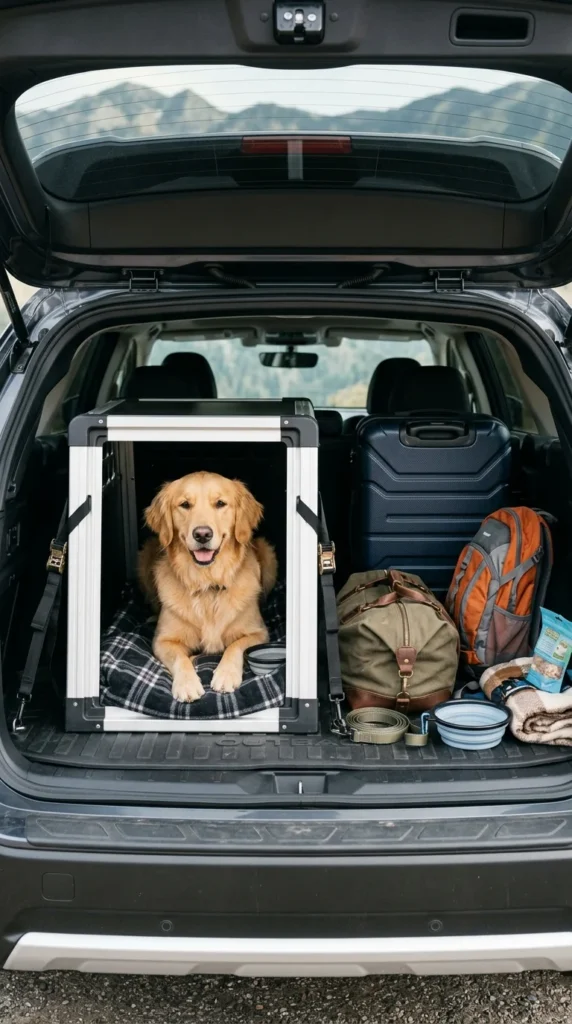
Once your puppy is crate trained at home, the crate becomes a portable “safe zone.” This makes traveling to the vet or going on road trips much less stressful for the puppy, as they have their familiar “bedroom” with them.
28. Patience Mastery

Every puppy is an individual. Some will take to the crate in two days; others may take two months. Stay patient, stay consistent, and keep it positive. Eventually, your puppy will start wandering into their crate on their own just to take a nap—the ultimate sign of crate training success.