
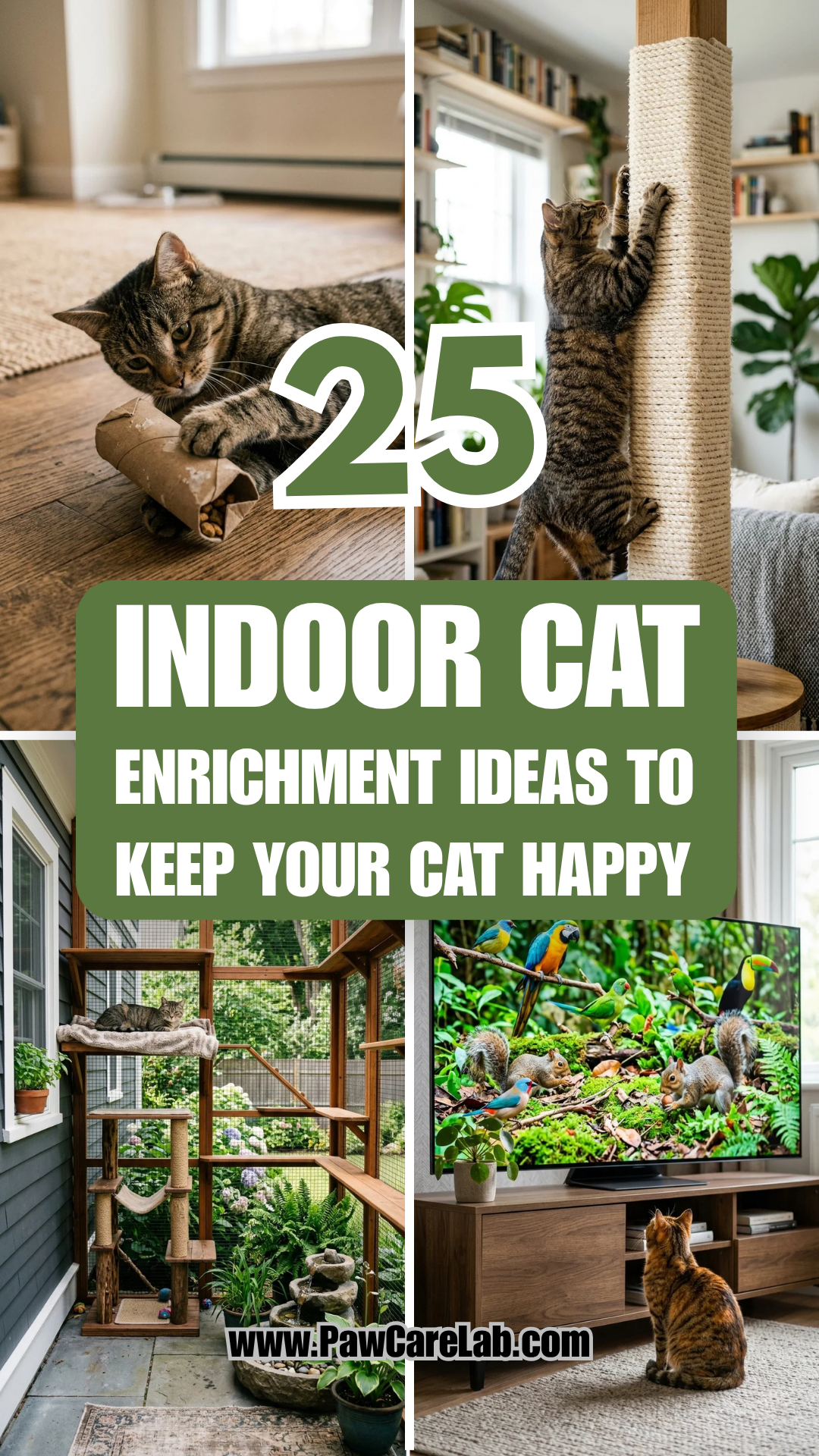
Keeping a cat indoors is the safest choice for their longevity, protecting them from traffic, predators, and disease. however, the indoor environment can quickly become stagnant. Without the thrill of the hunt or the sensory explosion of the outdoors, cats can become bored, leading to depression, obesity, and destructive behaviors. Enrichment is the bridge between a safe indoor life and a cat’s wild instincts. Here are 25 comprehensive ways to transform your home into a feline paradise.
1. Food Puzzles
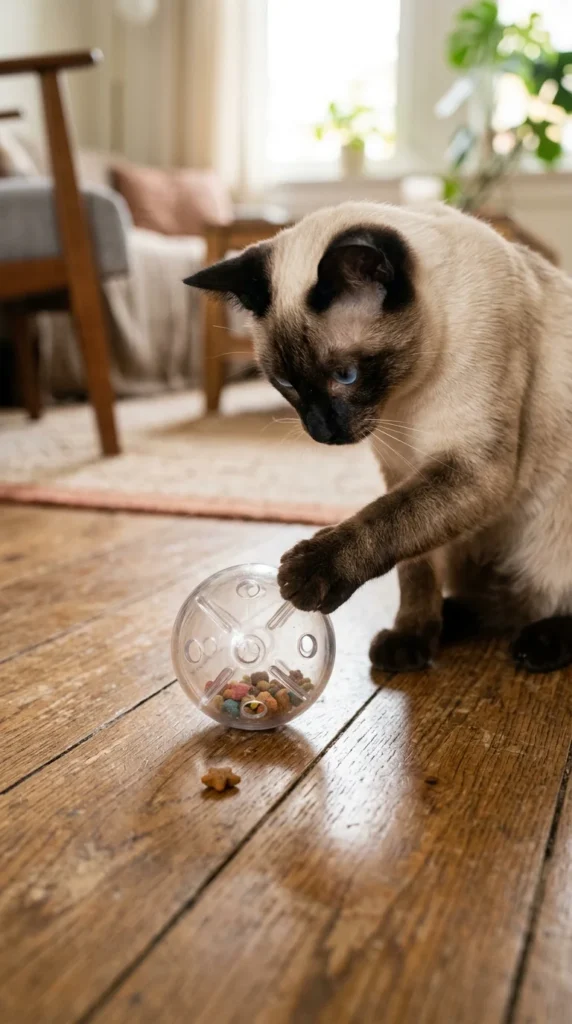
Wild cats spend a significant portion of their day searching for food. Modern domestic cats, however, are often “bowl-fed,” which removes the cognitive challenge of the hunt. Food puzzles require your cat to use their paws and brain to extract their meal. You can purchase intricate plastic mazes or create DIY versions using egg cartons or plastic bottles with holes cut into them. This slows down fast eaters and provides a rewarding mental workout.
2. Window Perches
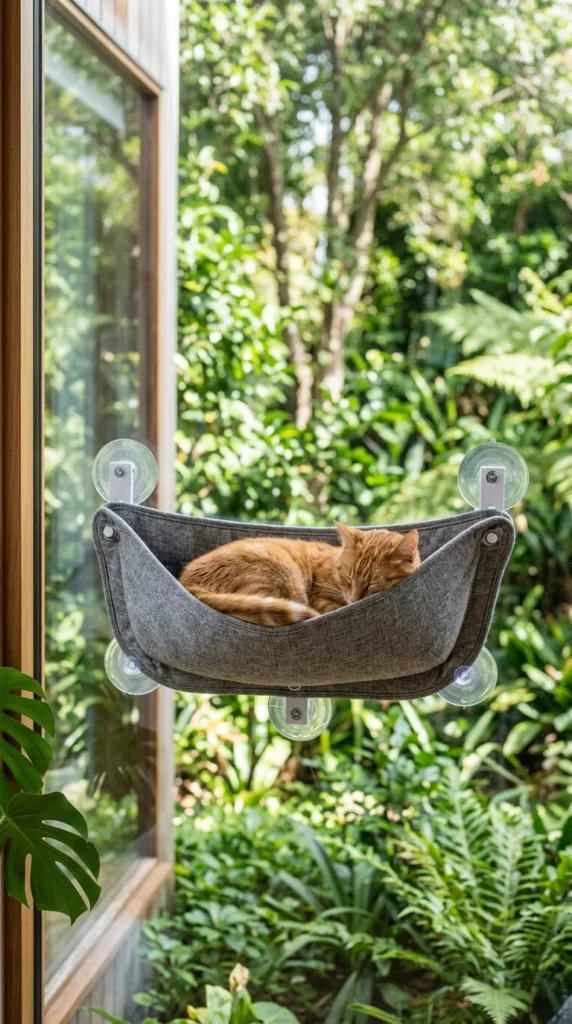
A window is “Cat TV.” Providing a dedicated perch—whether it’s a suction-cup hammock or a sturdy shelf—allows your cat to monitor the neighborhood. This visual stimulation is vital. They watch the movement of leaves, the flight of birds, and the arrival of neighbors. Positioning a perch in a spot that receives direct sunlight adds the bonus of a warm napping nook, catering to a cat’s love for heat.
3. Vertical Space
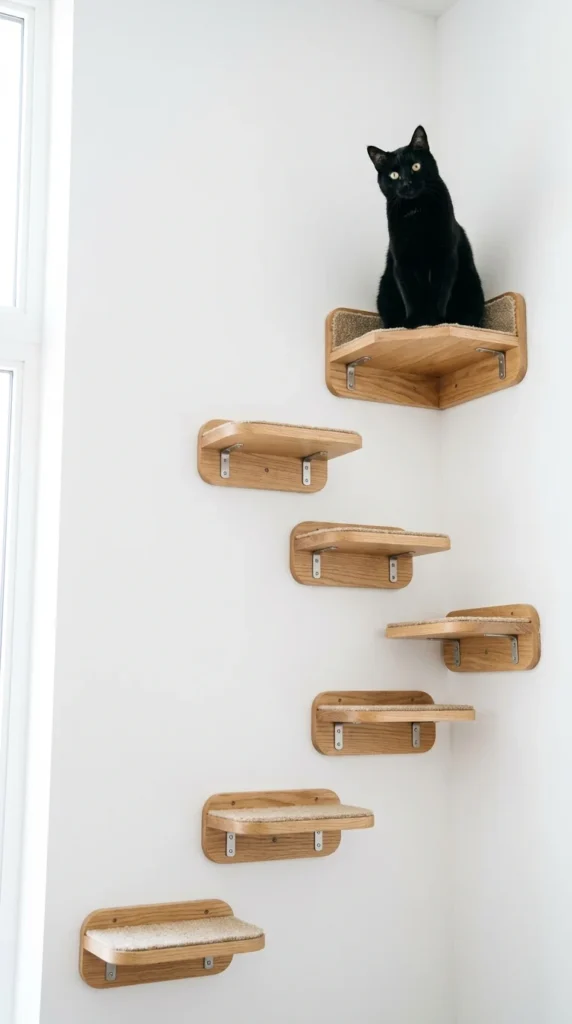
Cats live in a three-dimensional world. In the wild, height means safety and a better vantage point for hunting. By installing wall-mounted shelves, “cat-walks,” or tall cat trees, you double the usable square footage of your home for your cat. Vertical space allows multi-cat households to establish a hierarchy and gives anxious cats a place to retreat where they feel untouchable.
4. Scent Games
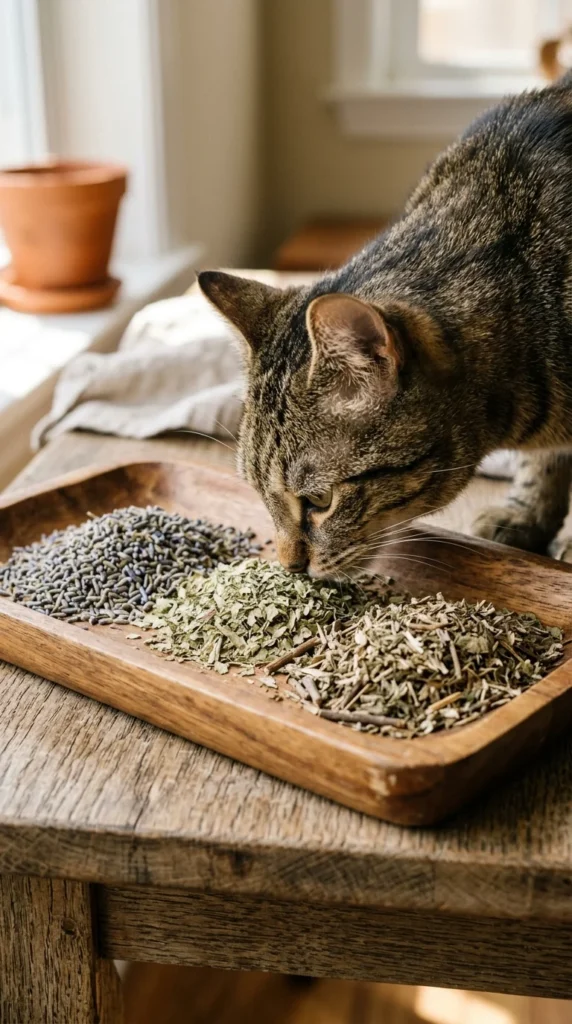
A cat’s sense of smell is roughly fourteen times stronger than a human’s. Scent enrichment is often overlooked. You can bring the outdoors in by introducing “safe” smells. Bring home a leaf from a park, a piece of driftwood, or use cat-safe herbs like valerian root, silvervine, or dried honeysuckle. Placing these scents inside a cardboard box encourages exploration and olfactory processing.
5. Cardboard Boxes
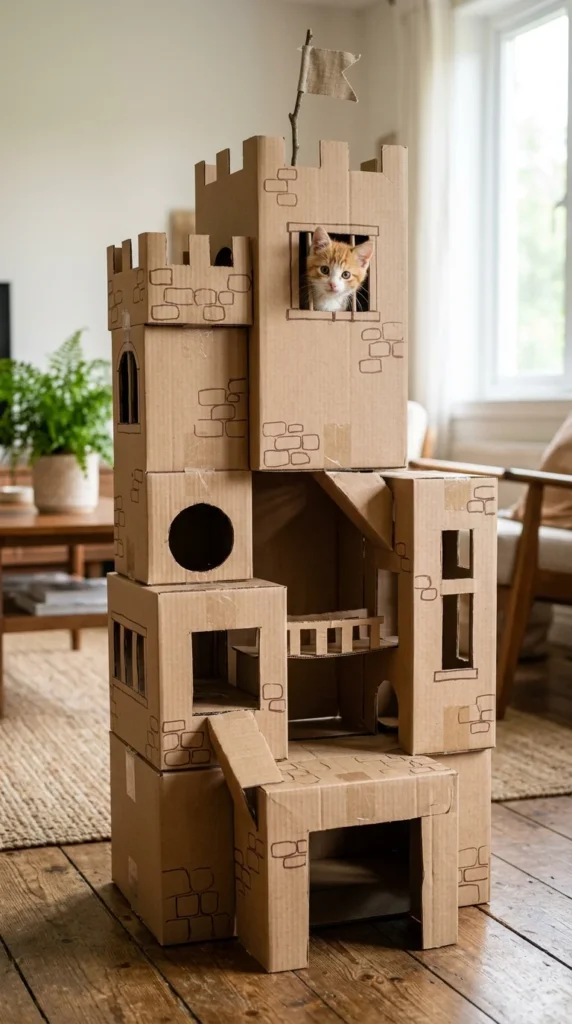
The humblest of enrichment tools is often the most effective. Cardboard boxes provide a sense of security and a perfect ambush point. The texture is ideal for rubbing cheeks against (scent marking) and light scratching. To keep it fresh, tape several boxes together to create a “kitty condo” or a tunnel system, and move them to different rooms every few days to pique their curiosity.
6. Cat Grass
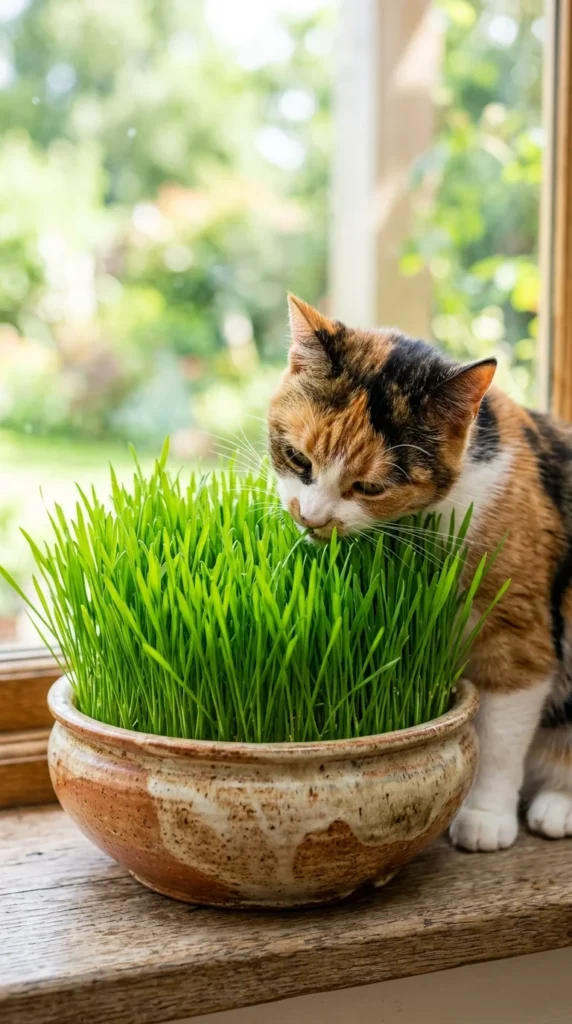
Many cats have a natural instinct to chew on greens to aid digestion or provide roughage. Rather than letting them munch on potentially toxic houseplants, provide a dedicated pot of cat grass (usually wheat, oat, or barley grass). It provides a safe tactile and taste experience that mimics the variety they would find in a meadow.
7. Wand Toys
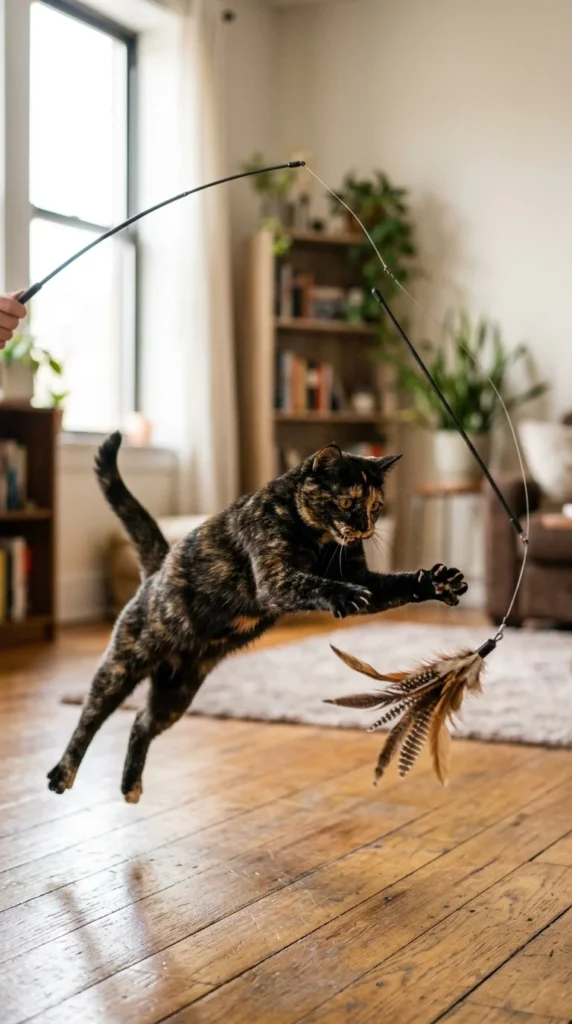
Interactive play is the gold standard for cat enrichment. A wand toy allows you to mimic the erratic movements of a bird or a mouse. The key is to let the “prey” hide behind furniture or “fly” away, forcing the cat to stalk, pounce, and eventually “kill.” Ending a wand session with a treat completes the biological “Hunt-Eat-Groom-Sleep” cycle, leaving the cat deeply satisfied.
8. Clicker Training
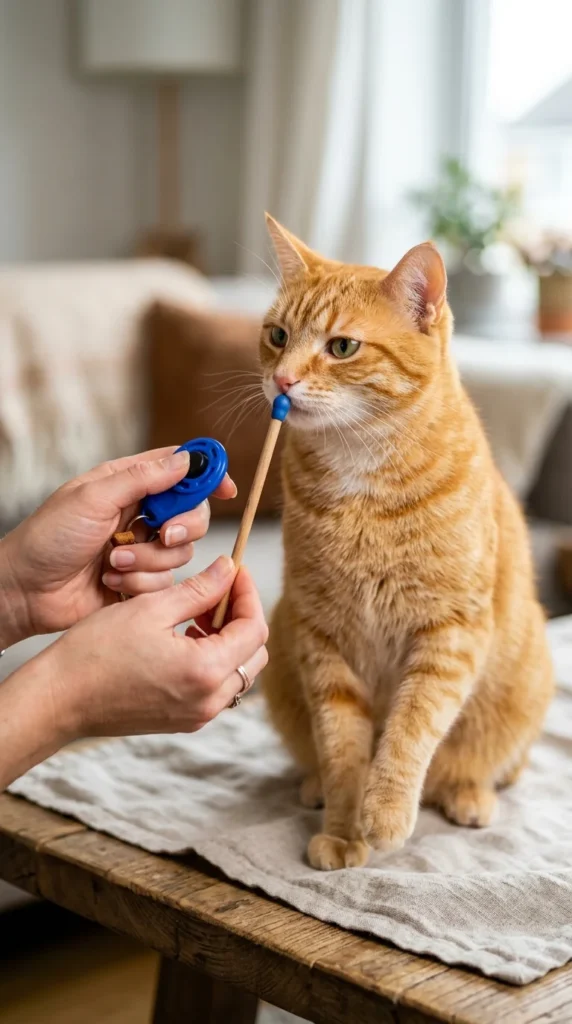
Cats are incredibly intelligent and can be trained just like dogs. Clicker training uses positive reinforcement to teach tricks like “sit,” “high five,” or “fetch.” More importantly, it provides intense mental stimulation and strengthens the bond between you and your pet. It challenges them to think about what behavior earns a reward, which is an excellent way to tire out a high-energy cat.
9. Foraging Mats
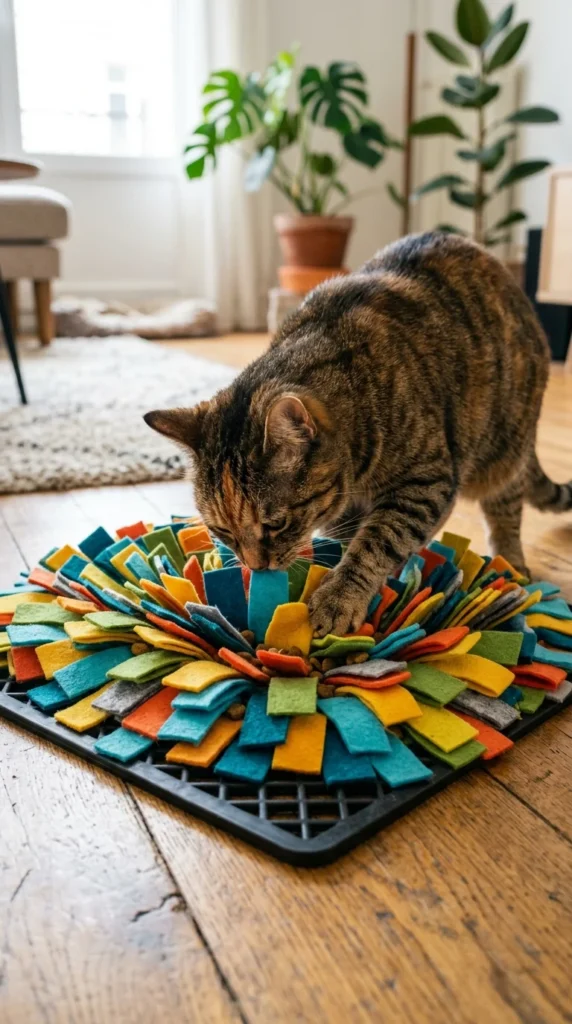
Also known as snuffle mats, these are typically made of fabric strips that create a “shag” surface. Hiding dry treats or kibble inside the mat forces the cat to use their nose and paws to forage. This mimics the natural behavior of searching through grass or leaves for insects or small prey, turning a ten-second snack into a ten-minute activity.
10. Cat TV
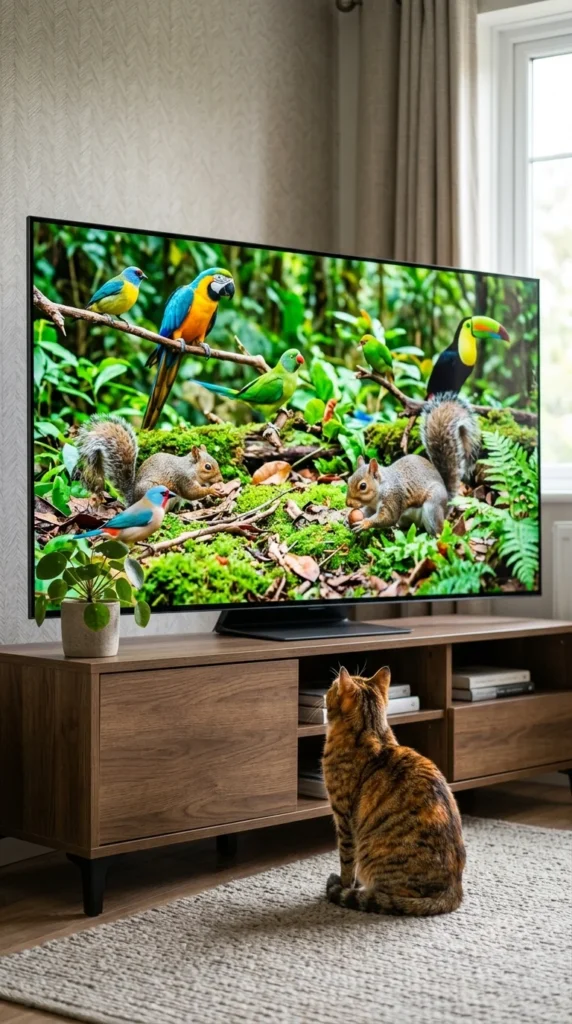
When you aren’t home, digital enrichment can fill the void. There are countless videos specifically designed for cats featuring birds, rodents, and fish. The high-contrast movements and chirping sounds capture their attention. While it shouldn’t replace physical play, it’s a great secondary source of stimulation for cats who spend long hours alone.
11. Catio Spaces
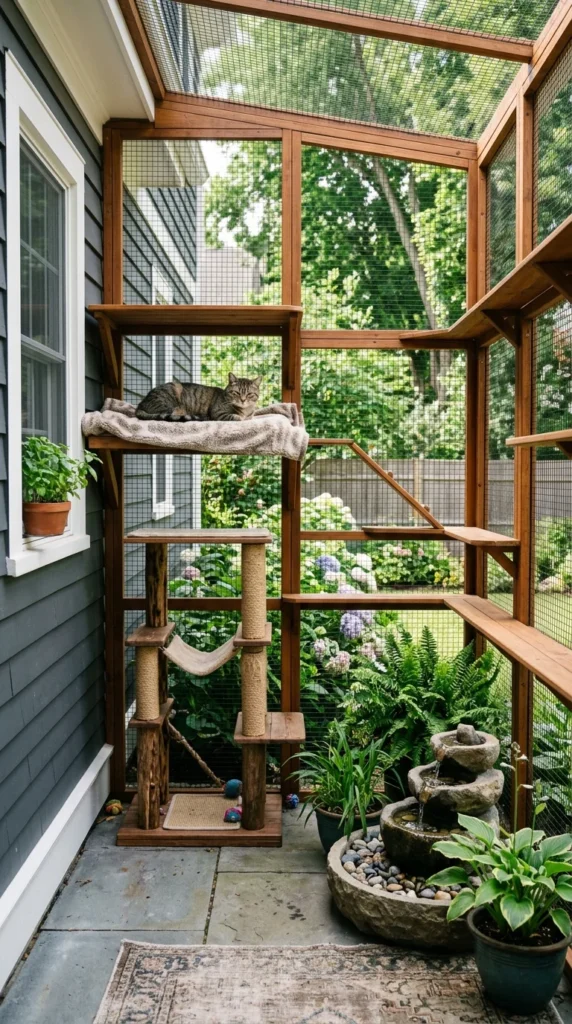
A “catio” (cat patio) is an enclosed outdoor space that allows cats to experience the fresh air, wind, and sounds of nature without the risks. These can be as small as a window-box cage or as large as a full walk-in room. Even a tiny, screened-in balcony can significantly improve an indoor cat’s quality of life by providing direct sensory contact with the outside world.
12. Silvervine Sticks
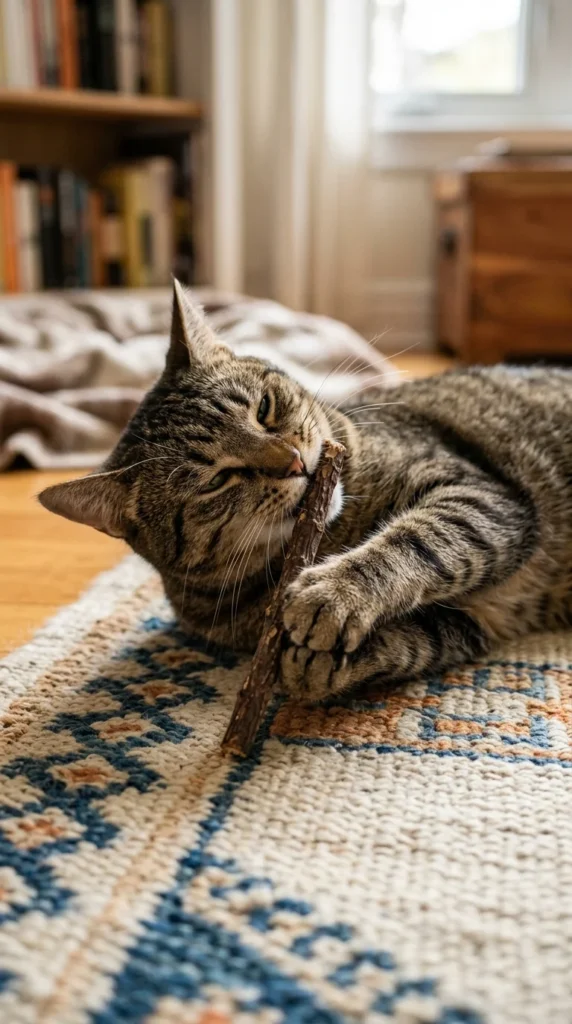
While catnip is famous, about 30% of cats don’t react to it. Silvervine is a potent alternative that often triggers a more intense euphoric response. Providing silvervine in the form of natural sticks gives the cat something to chew on (great for dental health) and rub against, providing both chemical and tactile enrichment.
13. Fetch Games
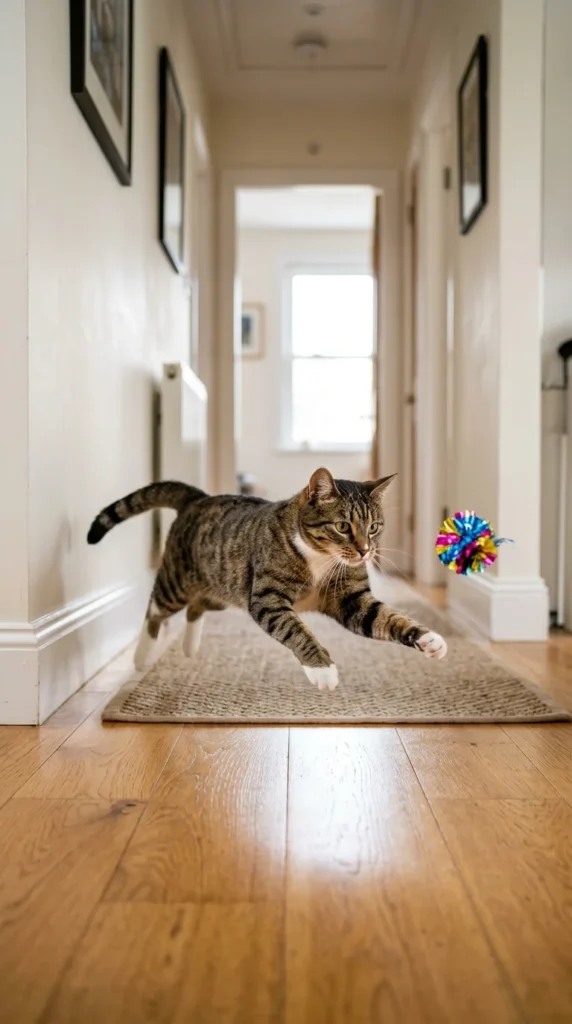
Many cats naturally enjoy fetching. Using lightweight toys like crinkle balls, felt mice, or even plastic springs allows the cat to carry the “prey” back to their “den.” It’s a high-cardio activity that taps into their retrieval instincts. If your cat doesn’t automatically bring the toy back, you can use clicker training to teach the behavior.
14. Hidden Treats
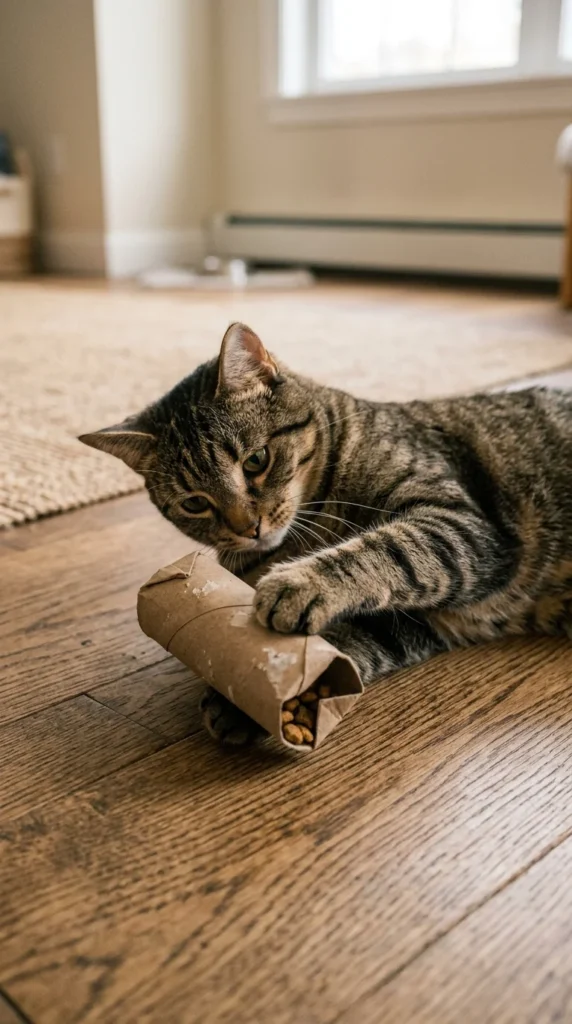
Instead of putting all the treats in one place, hide them around the house. Place a few on the cat tree, one behind a chair leg, and another on a windowsill. This encourages your cat to “patrol” their territory and stay active throughout the day, looking for “treasures” in their environment.
15. Bubbles
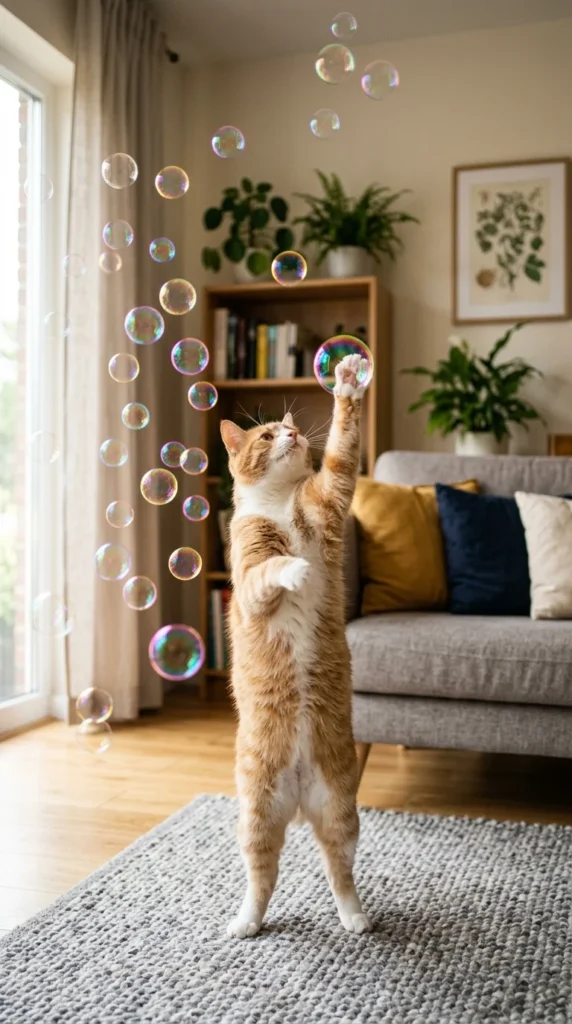
Catnip-infused bubbles are a fantastic way to encourage movement. The slow, drifting motion of the bubbles fascinates cats, and the scent of catnip provides an extra layer of interest. It’s a low-impact way to get a senior cat or a lazy cat moving, as they try to track and pop the floating “prey.”
16. Scratching Posts
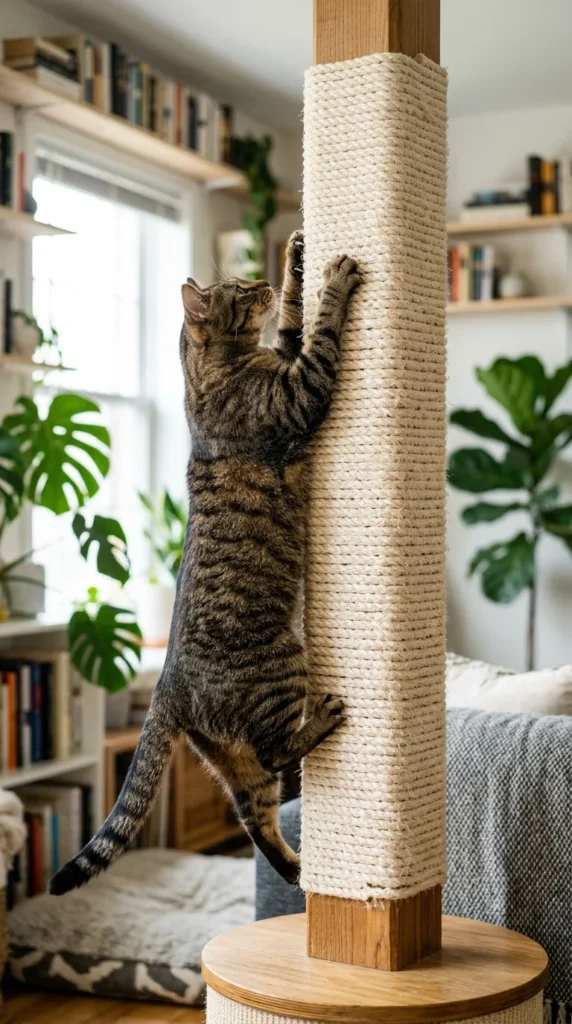
Scratching is a biological necessity, not a choice. It helps shed the outer layers of the claws, marks territory with scent glands in the paws, and provides a full-body stretch. To keep a cat happy, provide various textures—sisal rope, corrugated cardboard, and wood—and ensure the posts are tall enough for the cat to fully extend their spine.
17. Interactive Robotic Toys
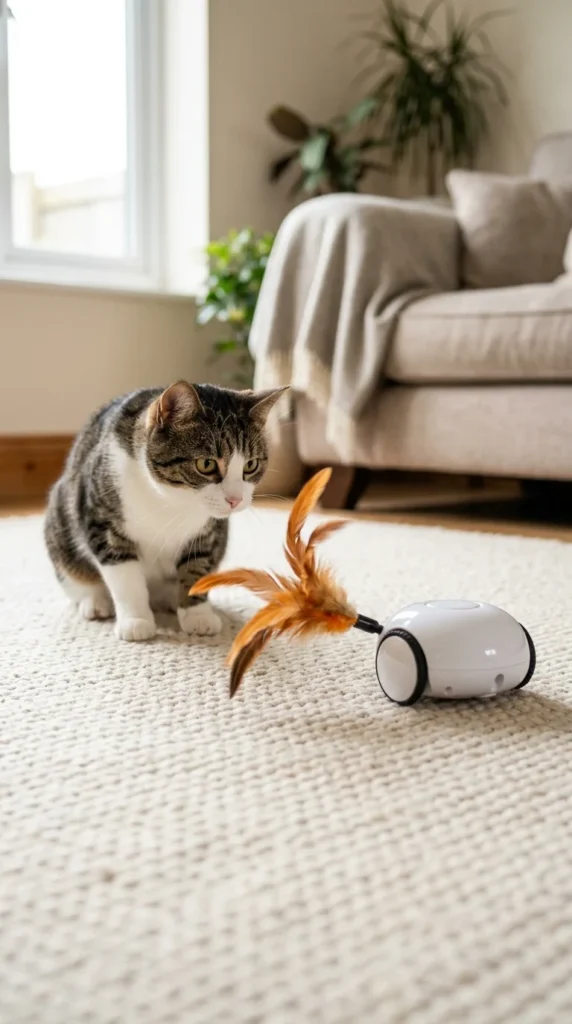
Technology has provided some great solo-play options. Robotic toys that move randomly, hide under covers, or react to touch can keep a cat engaged when you are busy. Look for toys that have an automatic “off” timer to prevent overstimulation and to ensure the cat doesn’t get bored with the movement pattern.
18. Music for Cats
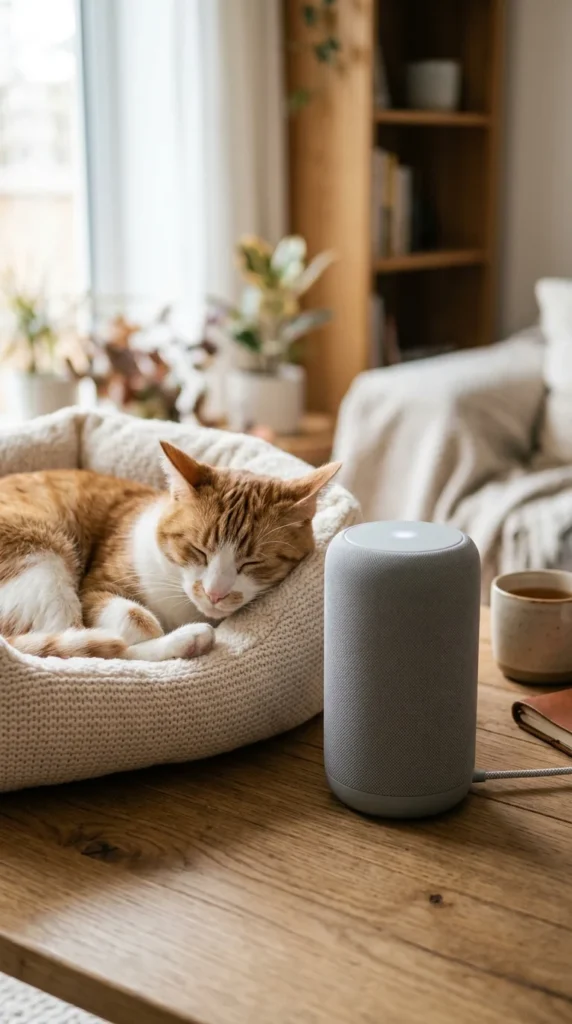
Recent studies have shown that cats respond positively to “species-appropriate” music. This isn’t just classical music; it’s music designed with frequencies and tempos that mimic purring or birdsong. Playing this soft music can help reduce anxiety, especially during thunderstorms or when the cat is left alone for the day.
19. Ice Cubes
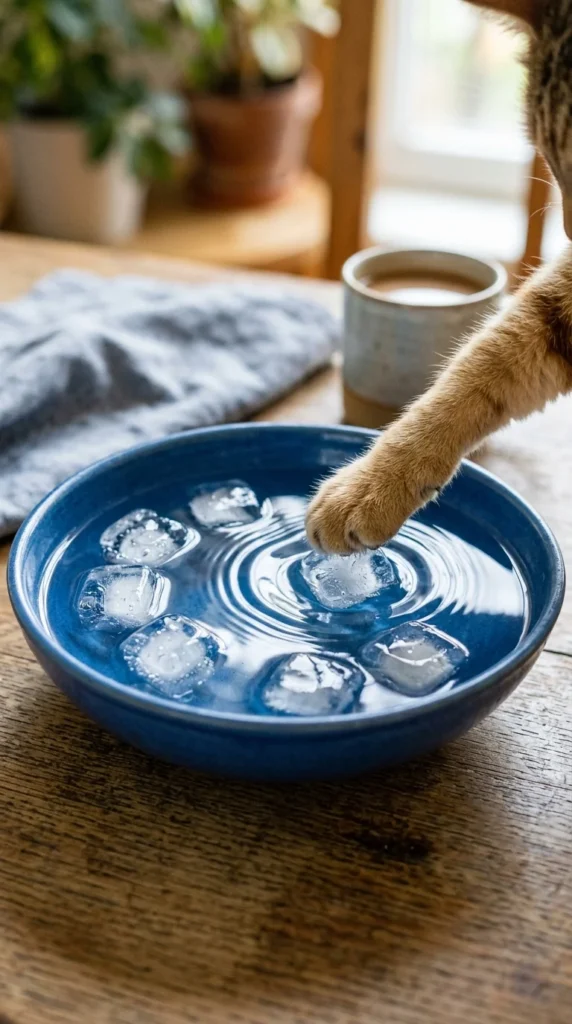
During warmer months, ice cubes can be a fascinating sensory toy. Dropping a few cubes into a water bowl or on a hard floor provides a cold, slippery, and moving target. Cats enjoy batting the ice around as it melts, which also encourages them to drink more water, supporting kidney health.
20. Grooming Sessions
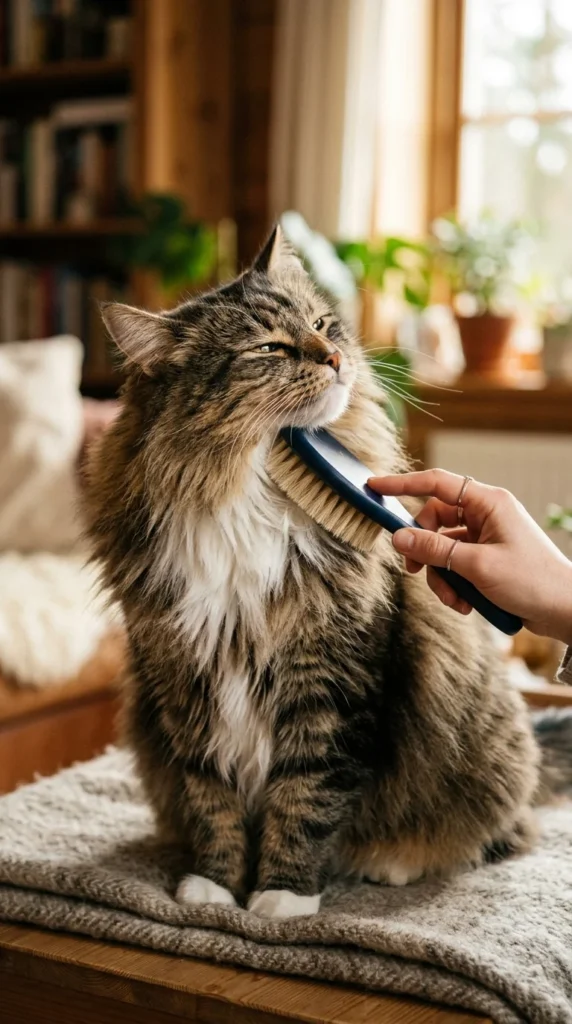
For many cats, grooming is a social activity. Using a soft brush or a grooming glove mimics the feeling of another cat licking them (allogrooming). This provides tactile enrichment and strengthens the emotional bond between the owner and the cat. It also allows you to check for any lumps, bumps, or skin issues while the cat is in a relaxed state.
21. Bird Feeders
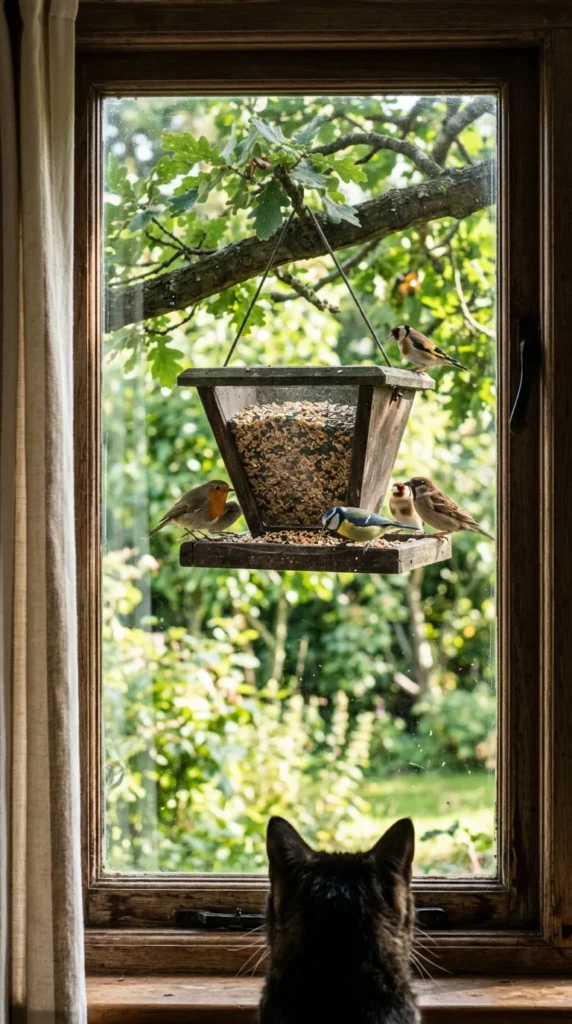
If you have the space, placing a bird feeder directly outside a window creates a high-definition, 3D experience for your cat. The sound of the birds chirping and the sudden movements of wings provide intense visual and auditory stimulation. Just ensure the window is securely closed so the “hunt” remains strictly visual for everyone’s safety.
22. Agility Courses
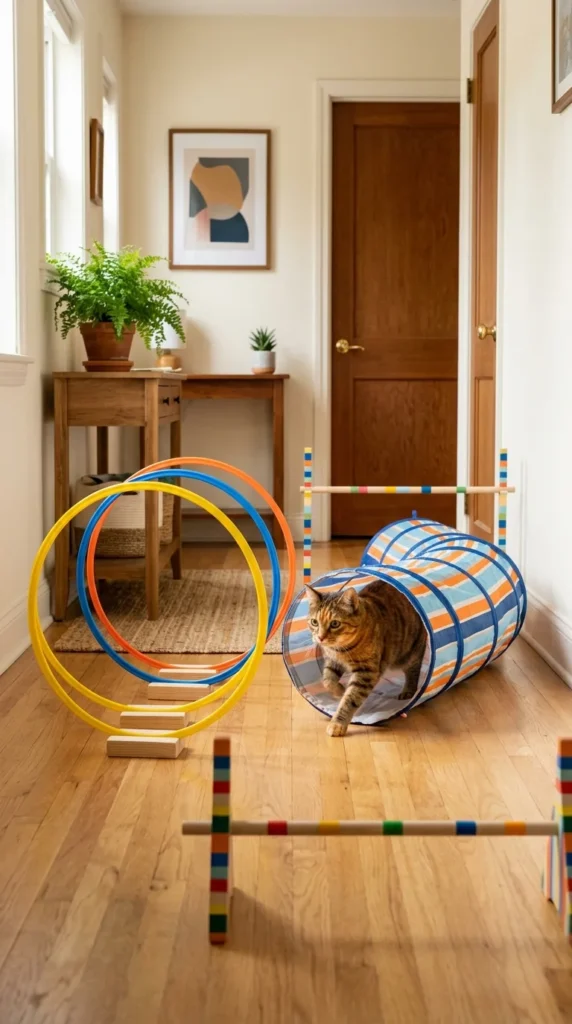
You don’t need a professional setup to create a cat agility course. Use household items like chairs, cushions, and pop-up tunnels to create a path. Guide your cat through the course using a wand toy or a treat. This is excellent for physical coordination and provides a structured way for the cat to burn off excess energy.
23. Paper Bags
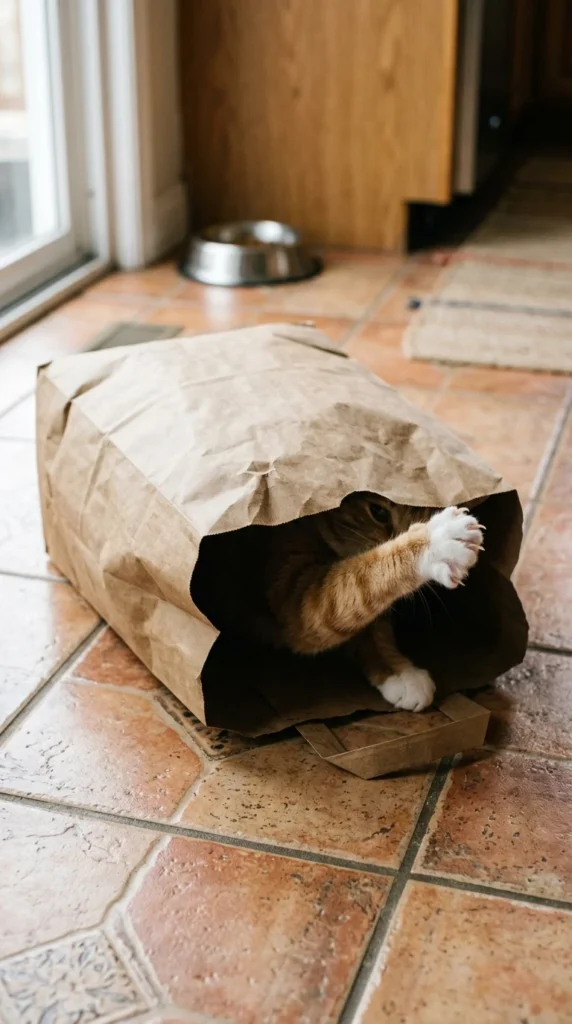
Similar to cardboard boxes, paper bags (with handles removed for safety) are an instant hit. The “crinkle” sound of the paper mimics the sound of small prey moving through dry leaves or grass. Cats love to hide inside and wait for a toy (or a passing human’s ankles) to go by, providing a perfect “hidey-hole” for ambush play.
24. New Textures
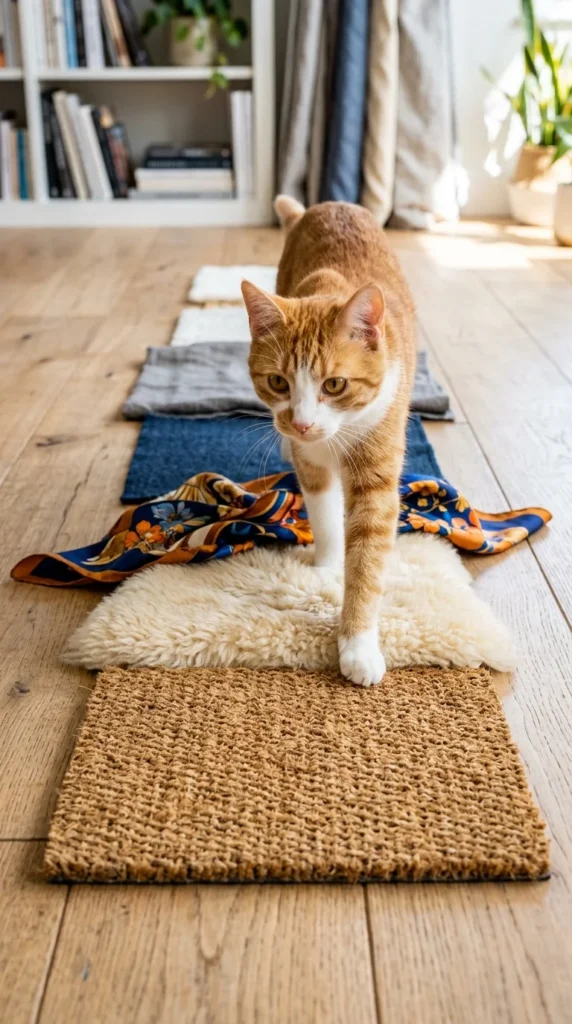
Cats explore the world through their paws. Introducing new textures can be a subtle but effective form of enrichment. You can place a piece of bubble wrap (supervised), a tile, a piece of carpet, or a soft fleece blanket on the floor. Watching a cat navigate and “test” these new surfaces with their paws is a sign of an active, curious mind.
25. Rotating Toys
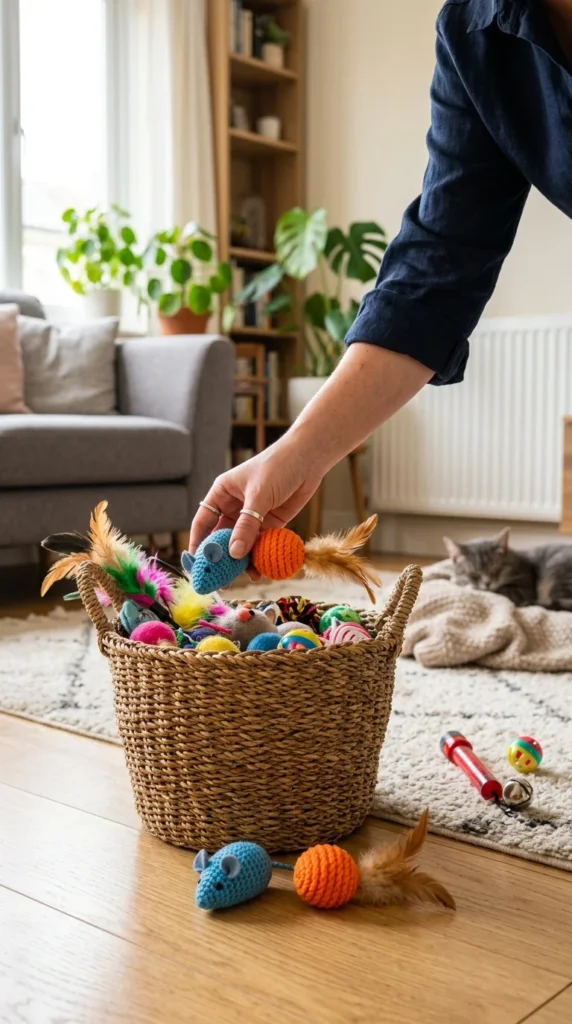
The fastest way for a cat to lose interest is through over-exposure. Instead of leaving all 50 toys on the floor, keep most of them in a closed bin. Every few days, take out three “new” toys and hide the old ones. This maintain a sense of novelty and ensures that when a toy “reappears” two weeks later, the cat treats it like a brand-new discovery.