
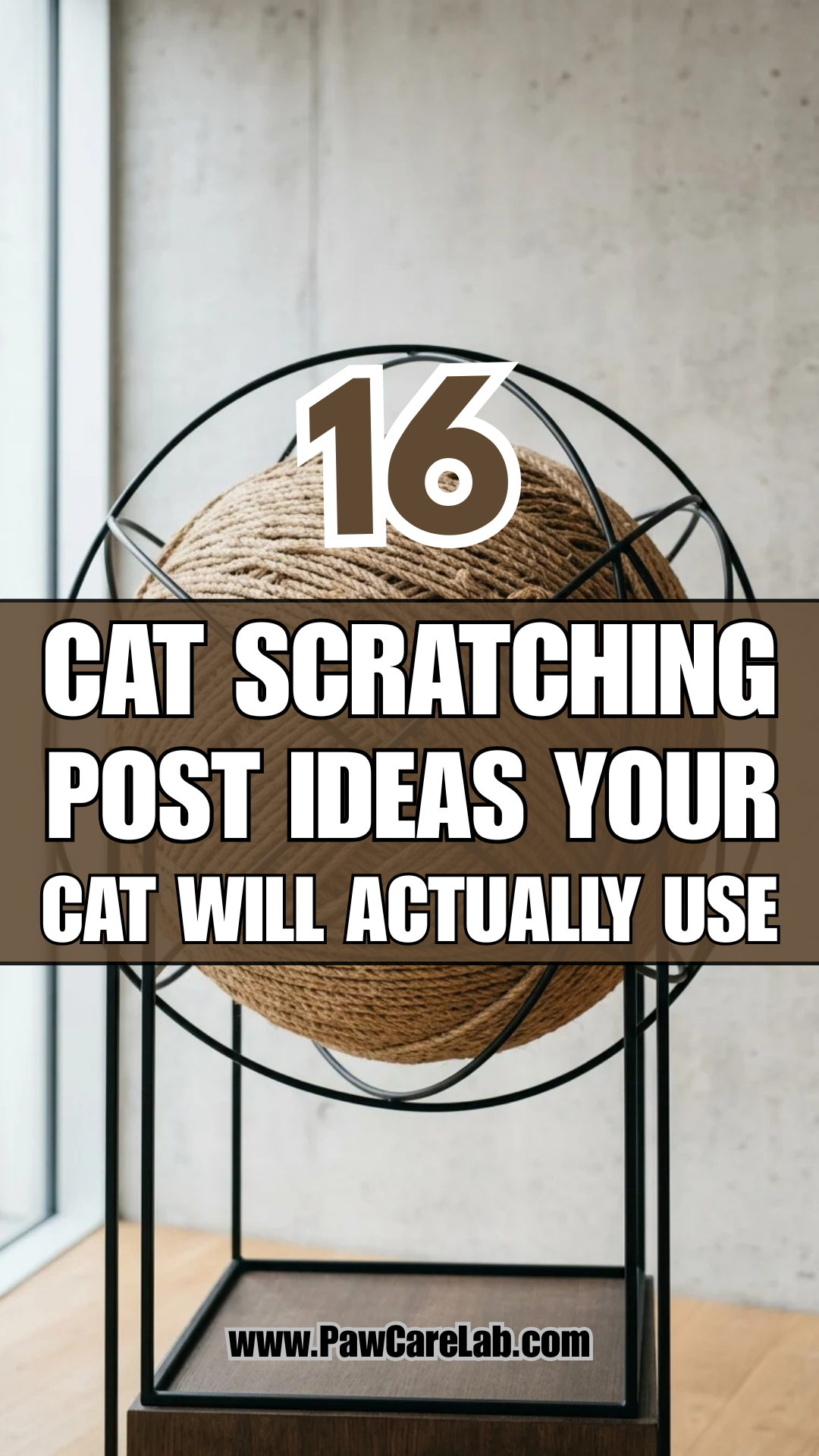
Every cat owner knows the distinctive sound of claws meeting fabric. It usually happens right on the corner of your brand-new velvet sofa or the edge of an expensive rug. Before you despair, it’s important to understand that scratching isn’t a behavioral problem—it’s a biological necessity. Cats scratch to stretch their muscles, mark their territory with scent glands in their paws, and shed the outer layers of their claws.
The secret to saving your furniture isn’t stopping the scratching; it’s redirecting it. If your cat isn’t using the post you bought, it’s likely because the texture, height, or stability doesn’t meet their specific feline standards. To help you turn your home into a cat-friendly sanctuary that still looks great, we’ve rounded up 16 scratching post ideas that cater to every type of “scratcher.”
1. Sisal Pole
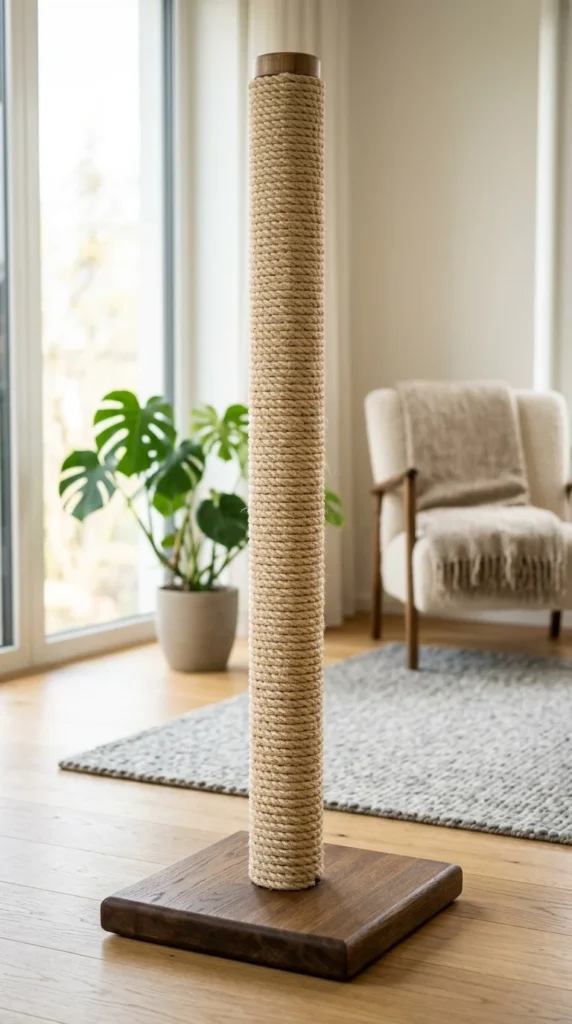
The vertical sisal pole is the gold standard of cat furniture. The primary reason cats ignore cheaper versions of this is because they are too short or too wobbly. A cat needs to be able to fully extend its body while scratching. Look for a pole that is at least 30 inches tall with a heavy base that won’t tip over when a ten-pound cat lunges at it. Sisal is highly durable and provides that satisfying “shred” that cats crave.
2. Cardboard Lounger
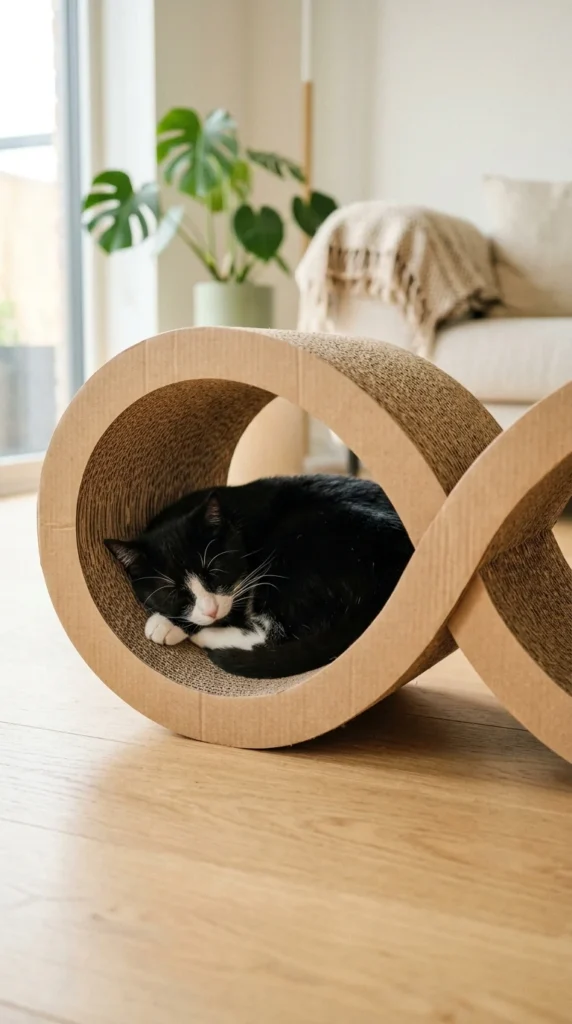
Many cats prefer scratching horizontally rather than vertically. Corrugated cardboard offers a unique texture that many cats find irresistible. The “lounger” style is particularly effective because it doubles as a bed. Since cats love to sleep where they scratch (and vice versa), the ergonomic curves of a cardboard lounger provide a comfortable place to nap after a vigorous grooming session.
3. Wall-Mounted Steps
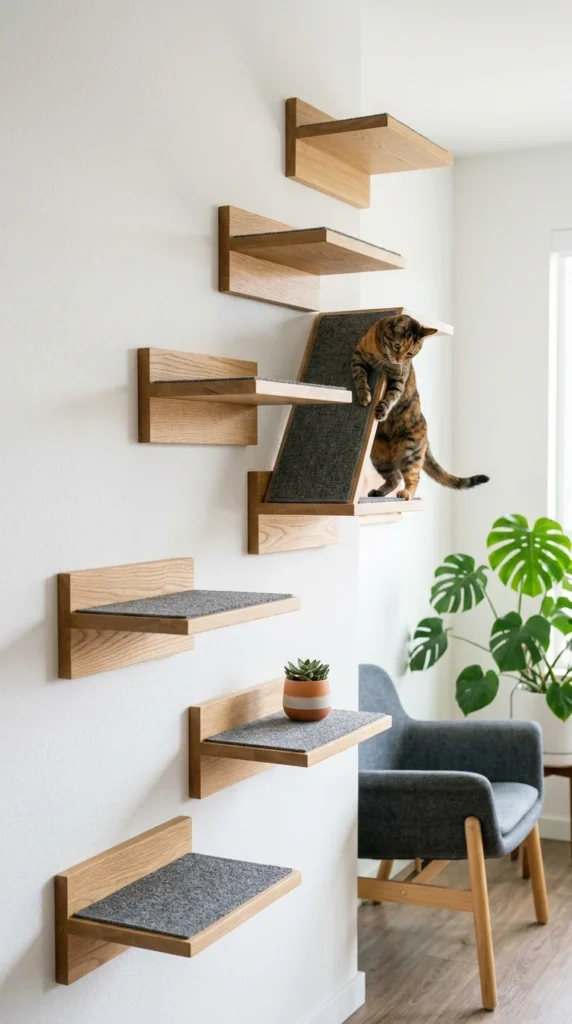
If you are tight on floor space, look to the walls. Wall-mounted scratching steps allow your cat to climb and scratch simultaneously. This mimics the natural behavior of climbing trees in the wild. By installing these at varying heights, you create a “cat highway” that keeps them active and off your kitchen counters.
4. Natural Log
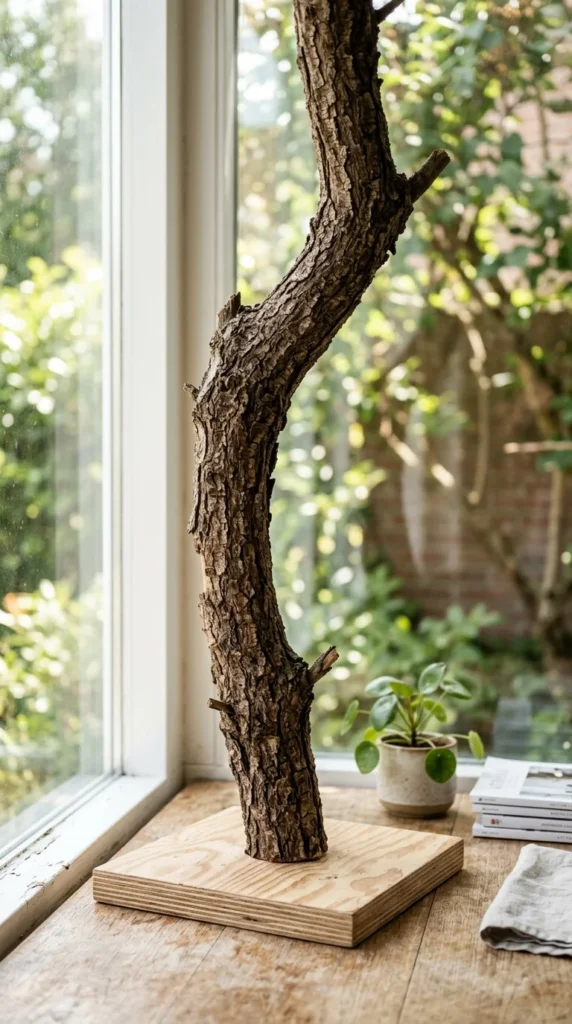
For the cat that dreams of the great outdoors, nothing beats the real thing. A natural wood log provides varying textures of bark that commercial ropes simply can’t replicate. You can DIY this by safely anchoring a kiln-dried, pesticide-free log to a heavy base. It adds a rustic, organic aesthetic to your home while providing your cat with a truly primal scratching experience.
5. Cactus Design
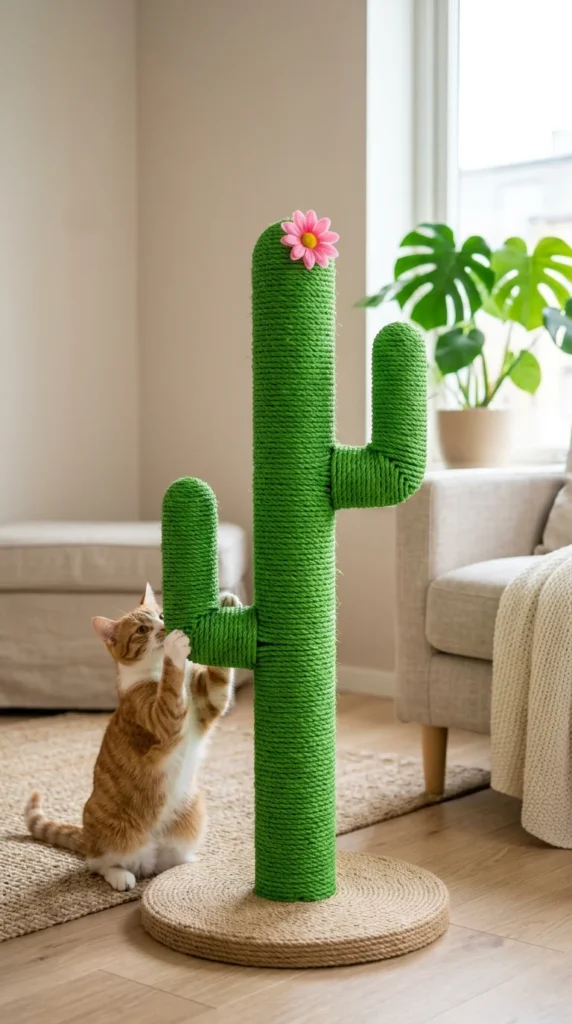
Who says cat furniture has to be an eyesore? The cactus scratching post has become a cult favorite for a reason. Its unique shape provides multiple angles for scratching—cats can go vertical on the trunk or horizontal on the “arms.” It adds a pop of color and a whimsical touch to any room while remaining fully functional.
6. Corner Guard
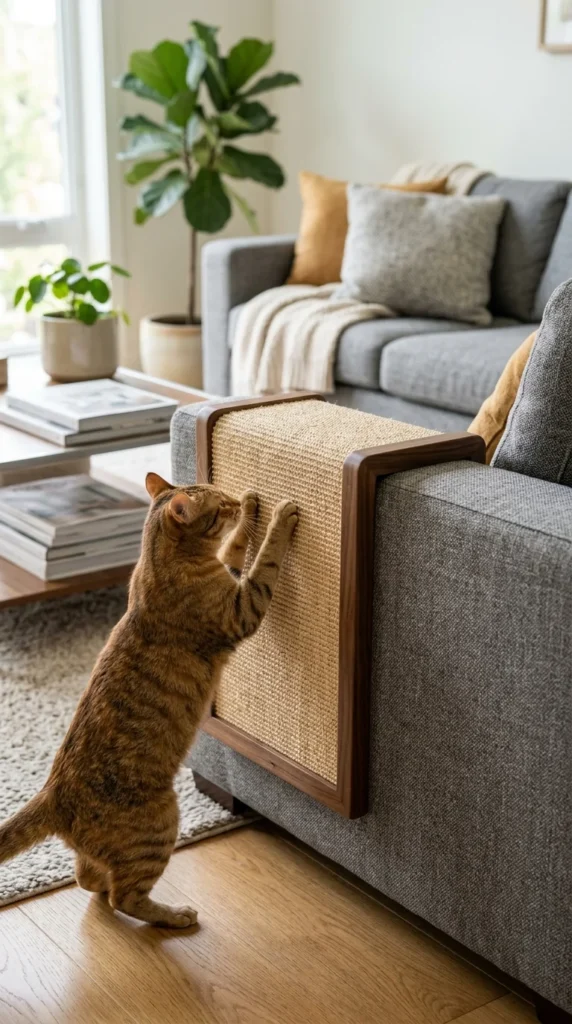
If your cat has already claimed a specific corner of your couch, don’t try to fight it—arm it. Corner guards are designed to lean or wrap around the corners of upholstered furniture. This protects your investment while giving the cat exactly what they want: a scratching surface in a high-traffic area of the home.
7. Incline Scratcher
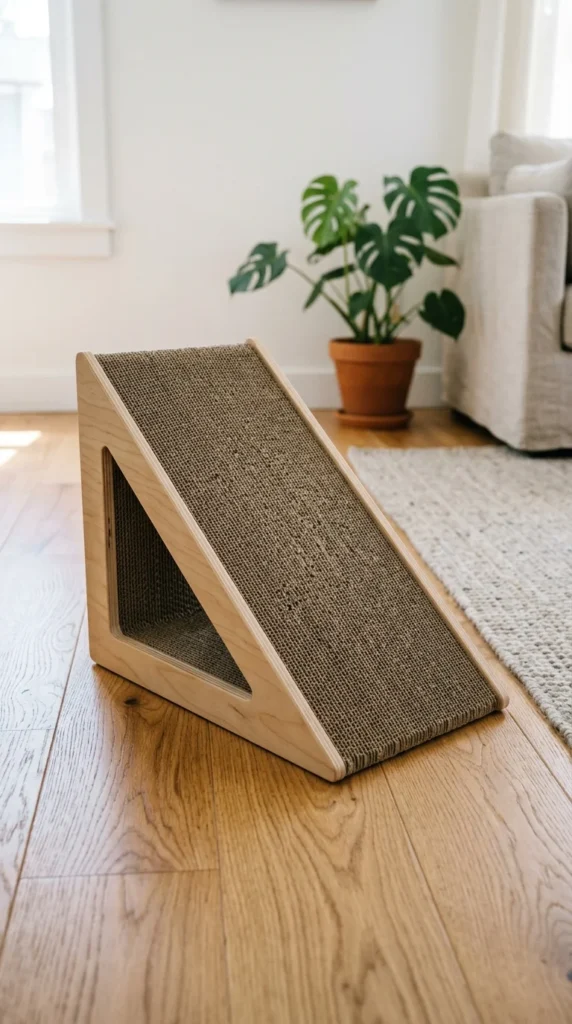
Some cats find vertical posts too tall and horizontal mats too flat. The incline scratcher provides a happy medium. The 45-degree angle allows for a deep stretch and works particularly well for older cats who might have stiff joints and find full vertical stretching uncomfortable. Many incline models also feature a hollow center, creating a fun “tunnel” for hide-and-seek.
8. Under-Table Wrap
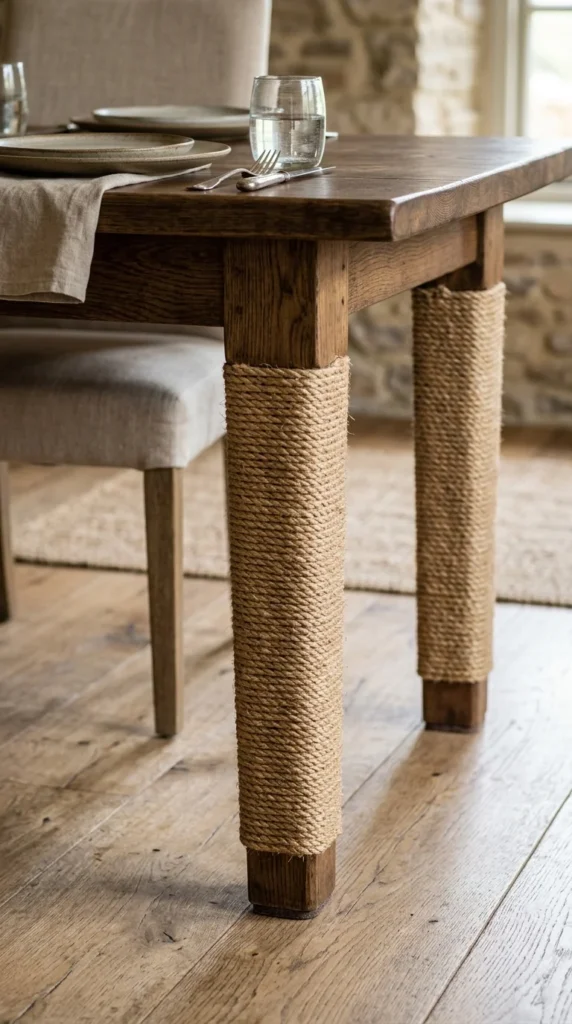
This is the ultimate space-saving hack. By wrapping the legs of your existing furniture in sisal or jute rope, you turn a functional household item into a cat’s playground. This works best on sturdy dining tables or heavy desks. It’s discreet, budget-friendly, and utilizes “dead space” that your cat is likely already hanging out in.
9. Modern Sphere
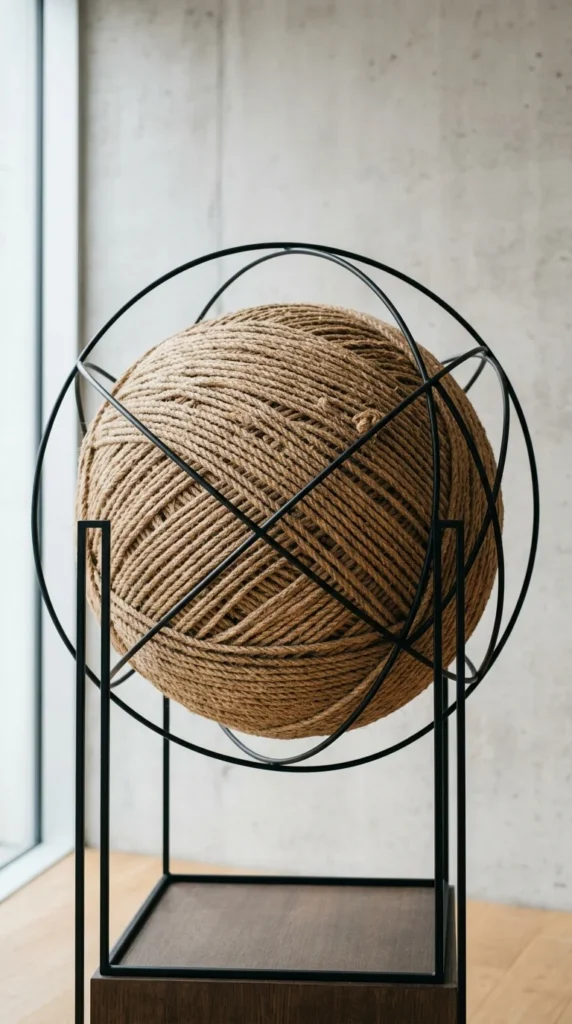
Geometric shapes are a big trend in modern pet furniture. A scratching sphere allows cats to roll the ball slightly or reach over the top, engaging different muscle groups than a standard post. It acts as both a toy and a grooming tool, and its sculptural look fits perfectly in a contemporary living room.
10. Hanging Door Slate
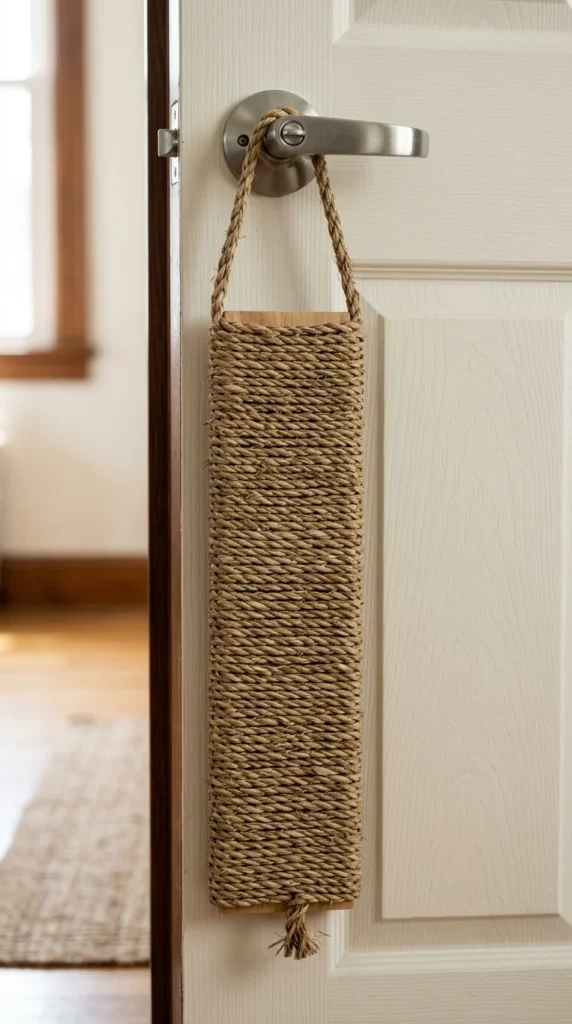
Perfect for small apartments, hanging scratchers utilize the back of doors. These are often made of woven seagrass or sisal carpet. Because they dangle, they provide a bit of movement that can entice a playful cat. Just ensure the board is long enough so it doesn’t just swing wildly when the cat tries to use it; some versions come with adhesive strips to keep the bottom flush against the door.
11. Multi-Level Tower
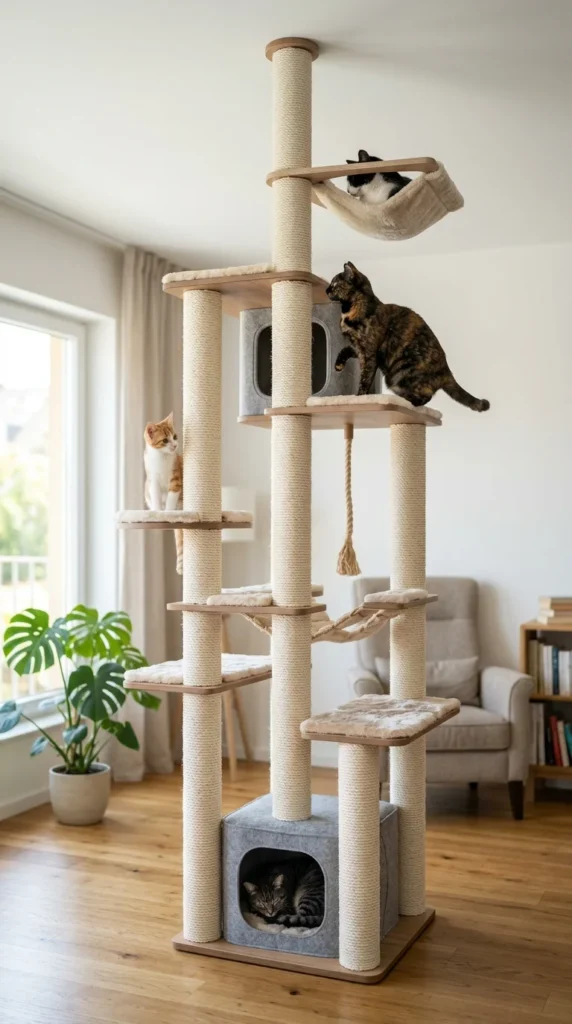
For households with multiple cats, a single post often isn’t enough. A multi-level tower provides various scratching surfaces at different heights, allowing cats to establish their own “territory” on different levels. Look for towers that use a mix of carpet and sisal to provide a variety of tactile experiences.
12. Seagrass Mat
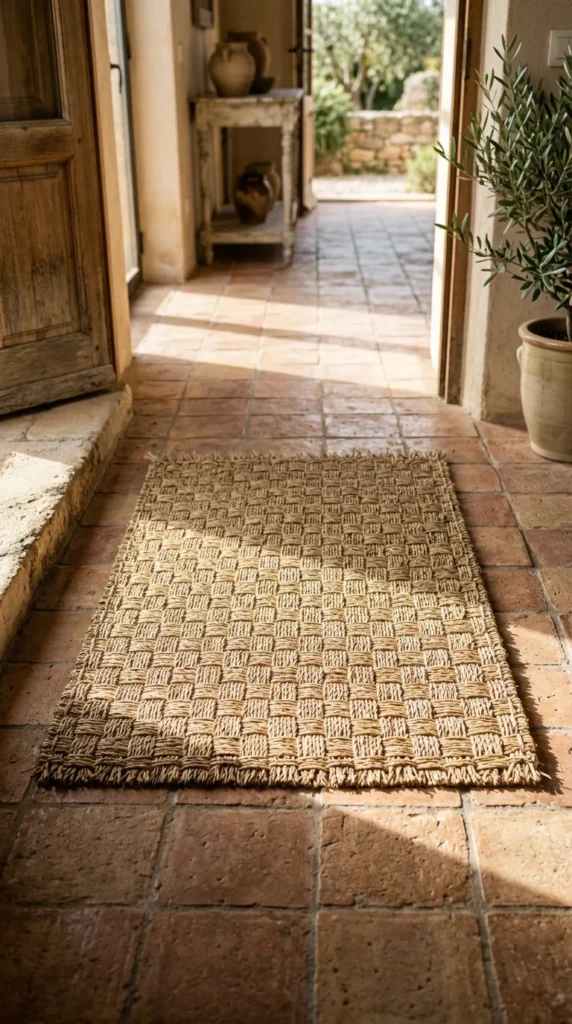
Seagrass has a different “crunch” than sisal. It’s smoother and less prickly, which some sensitive-pawed cats prefer. A simple seagrass mat can be placed over a spot on the carpet where the cat has started to scratch. It’s an inexpensive way to test if your cat prefers a softer fiber over a rough rope.
13. Hidden End Table
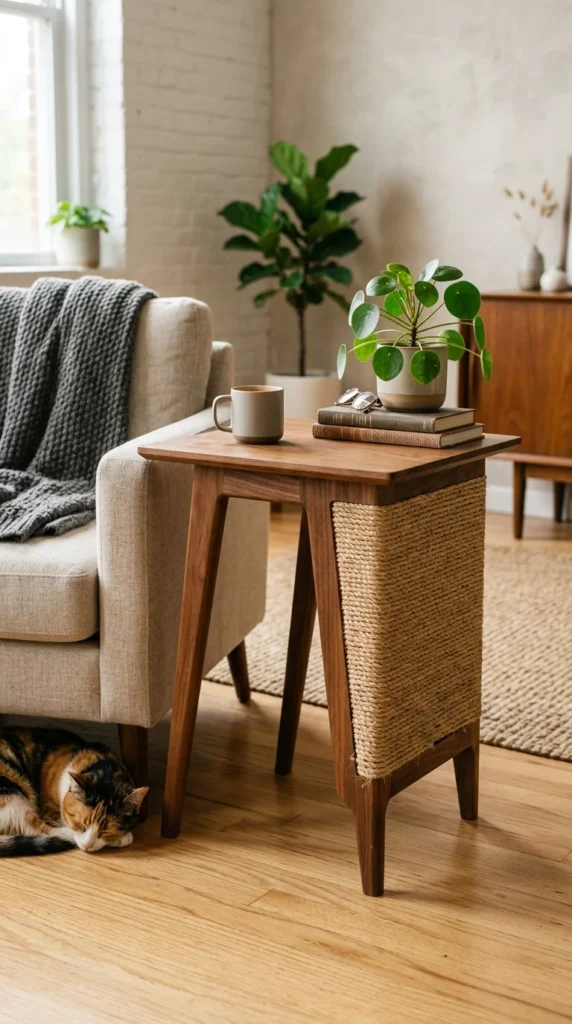
Functional decor is the best way to hide pet gear in plain sight. These end tables look like high-end furniture but feature a hidden or integrated scratching panel on one side. Your cat can scratch away while your coffee sits undisturbed on the top. It’s the perfect compromise between a “cat house” and a “human house.”
14. Pyramid Shape
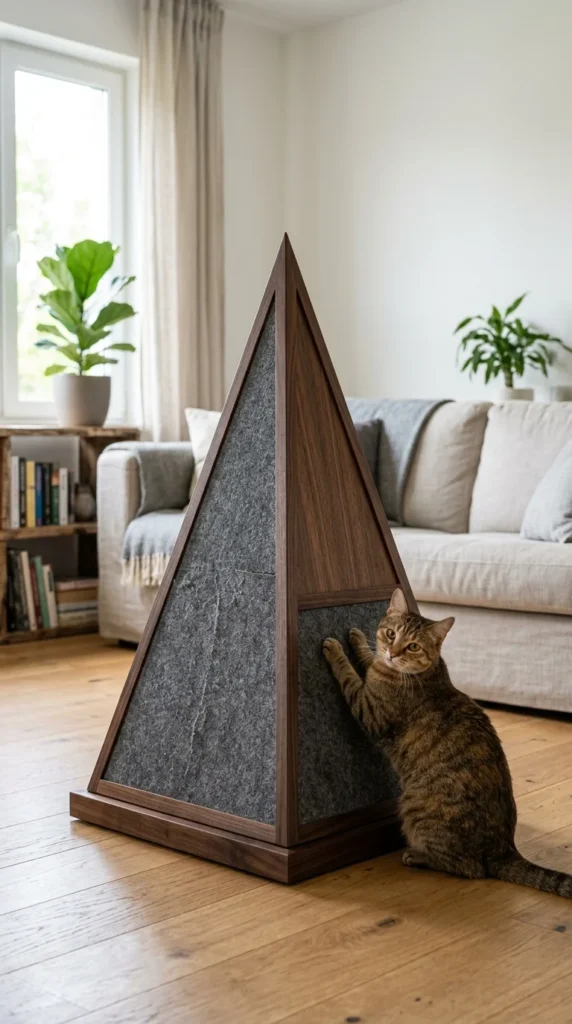
The pyramid design is incredibly stable. Because of its wide base and tapering top, it is almost impossible for a cat to knock over, even during a “zoomie” session. Many pyramids offer different surfaces on each side—carpet on one, sisal on another, and perhaps a cork surface on the third—giving your cat a choice of textures.
15. Window Perch Combo
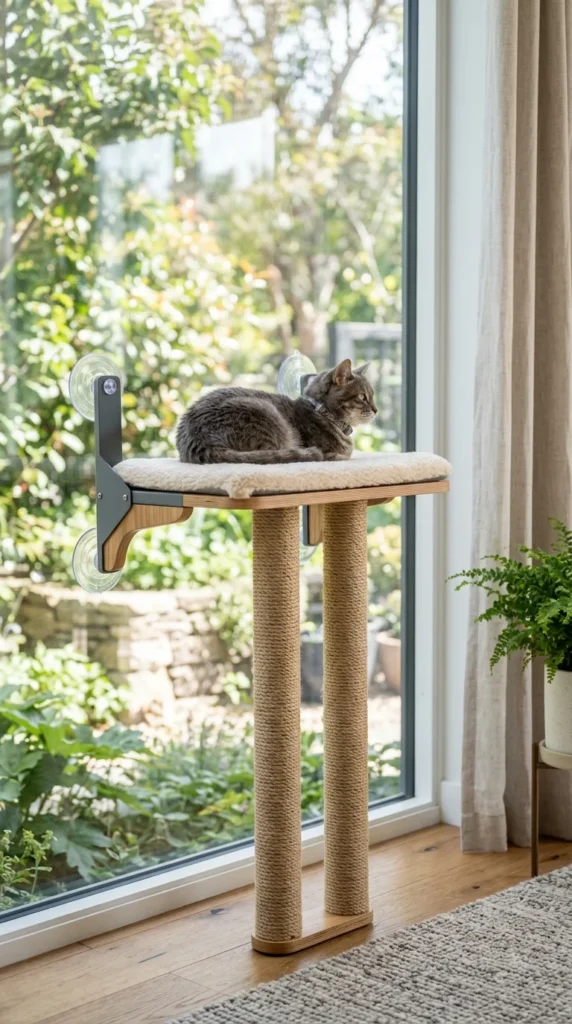
Cats love to watch birds, and they love to scratch. Combining these two interests is a winning strategy. A window-mounted scratching post allows the cat to get a good stretch while keeping an eye on the neighborhood. The height also provides a sense of security, as cats generally feel safer when they are elevated.
16. Interactive Toy Post
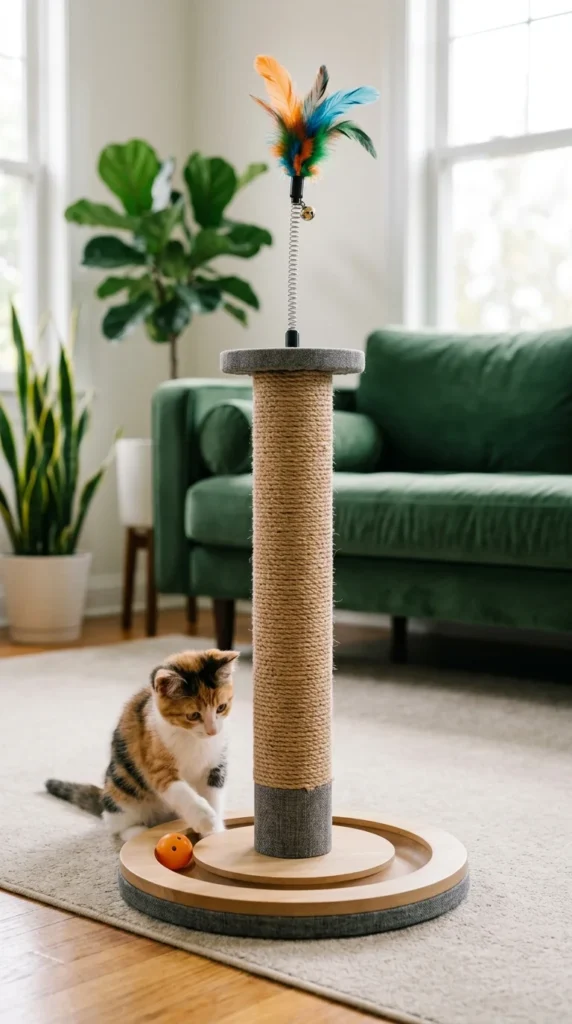
If you have a kitten or a high-energy cat, an interactive post is the way to go. These posts incorporate dangling toys, bells, or ball tracks into the base. The toy lures the cat to the post, and once they are there, they are more likely to engage their claws on the textured surface. It’s a great way to build positive associations with the scratching post from a young age.
How to Make Your Cat Use the New Post
Even the best scratching post might be ignored if it’s placed in the wrong spot. To ensure success, follow these three tips:
- Location is Everything: Don’t hide the post in a back room. Cats scratch to mark their territory, so place the post in “high-traffic” areas or right next to the furniture they are currently targeting.
- Use Catnip: Rub a little dried catnip or spray a catnip silvervine blend onto the fibers of the post to pique their interest.
- The “No-Go” Zone: While encouraging the new post, make the old “illegal” spots unattractive by using double-sided pet tape or a citrus-scented spray (which cats dislike) on the corners of your sofa.