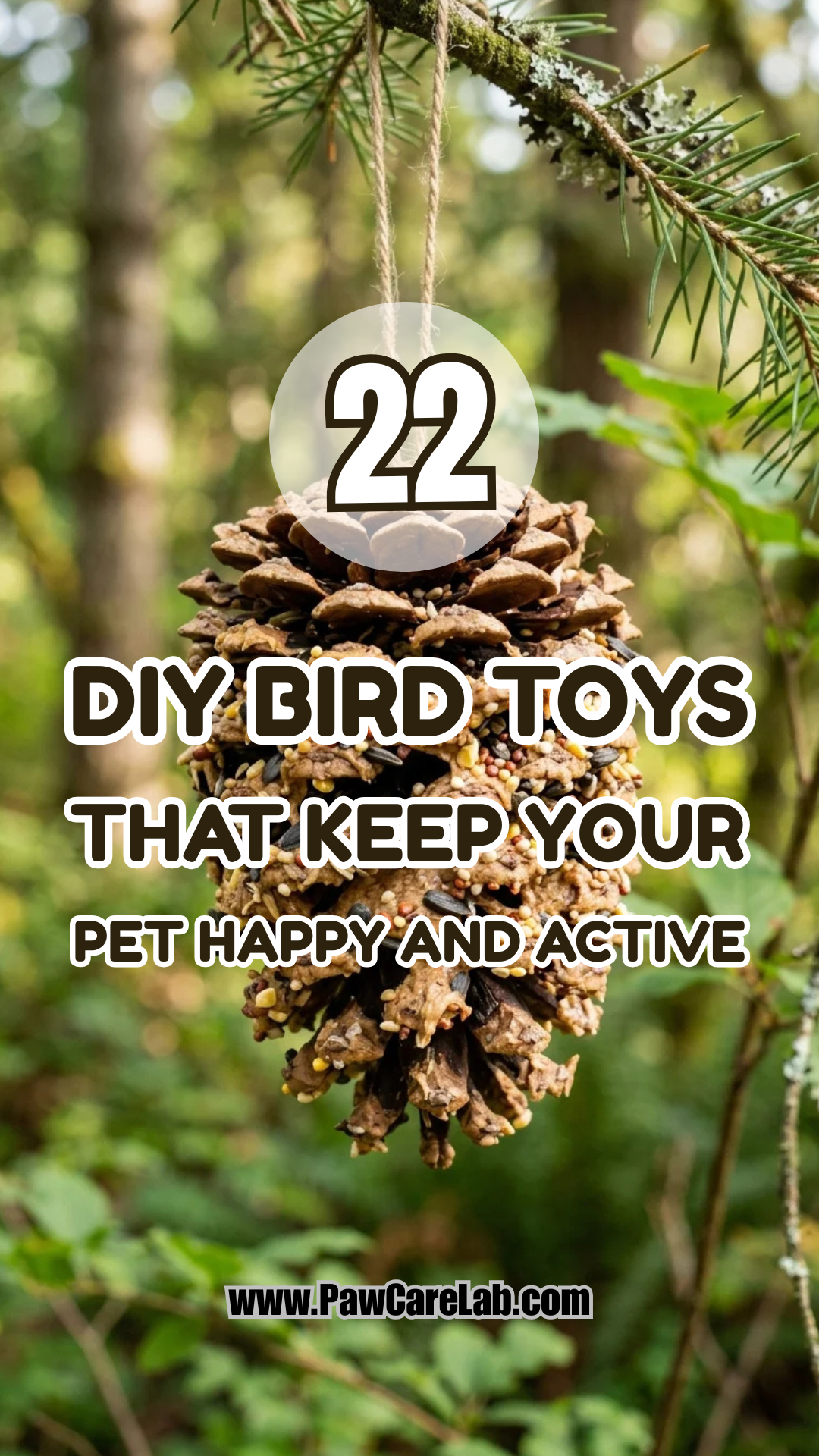
Birds are among the most intelligent pets on the planet. In the wild, they spend the majority of their day foraging for food, navigating complex environments, and interacting with their flock. When we bring them into our homes, that innate drive for activity doesn’t disappear. Without proper mental and physical stimulation, birds can quickly succumb to boredom, which leads to destructive behaviors like feather plucking, excessive screaming, or aggression.
Commercial bird toys are fantastic, but they can be expensive, and a high-energy parrot can destroy a twenty-dollar toy in minutes. This is where DIY bird toys become a game-changer. By using safe, household materials, you can create an endless supply of enrichment that keeps your feathered friend engaged, healthy, and happy.
1. Cardboard Rolls
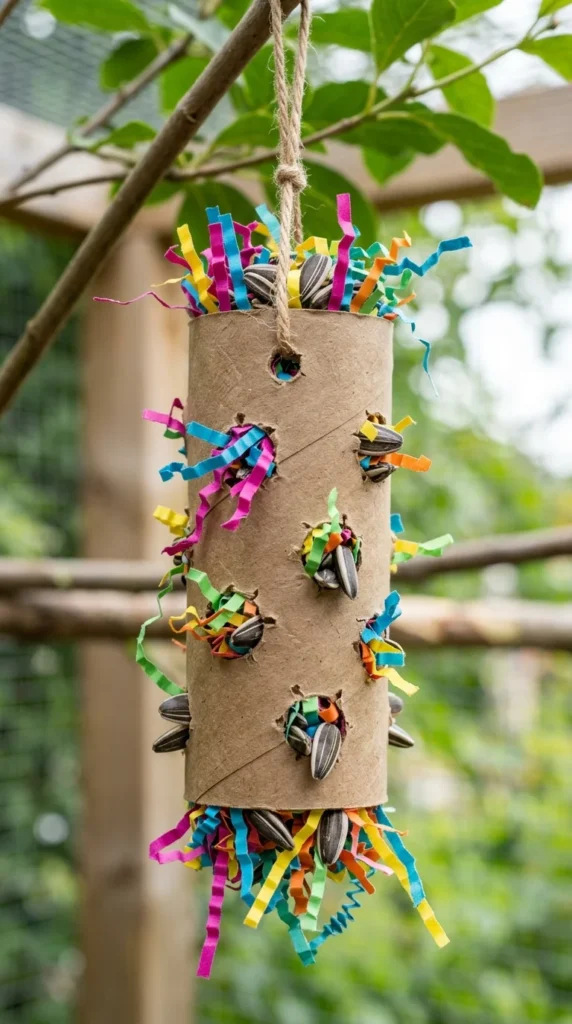
The humble toilet paper or paper towel roll is the gold standard of DIY bird toys. For a bird, cardboard is the perfect texture for shredding. To make this toy, ensure the roll is free of any excess glue. You can poke holes in the sides and pull strips of paper or fabric through them. For an added challenge, fold the ends of the roll inward to trap some healthy treats inside, forcing your bird to chew their way to the prize.
2. Paper Plates

Paper plates are essentially giant shredding discs. To create this toy, take a stack of small, uncoated paper plates and poke a hole through the center of each. String them onto a piece of bird-safe sisal or hemp rope, alternating with large wooden beads or plastic gears. Your bird will love “peeling” the plates apart and ripping the edges into confetti.
3. Finger Traps
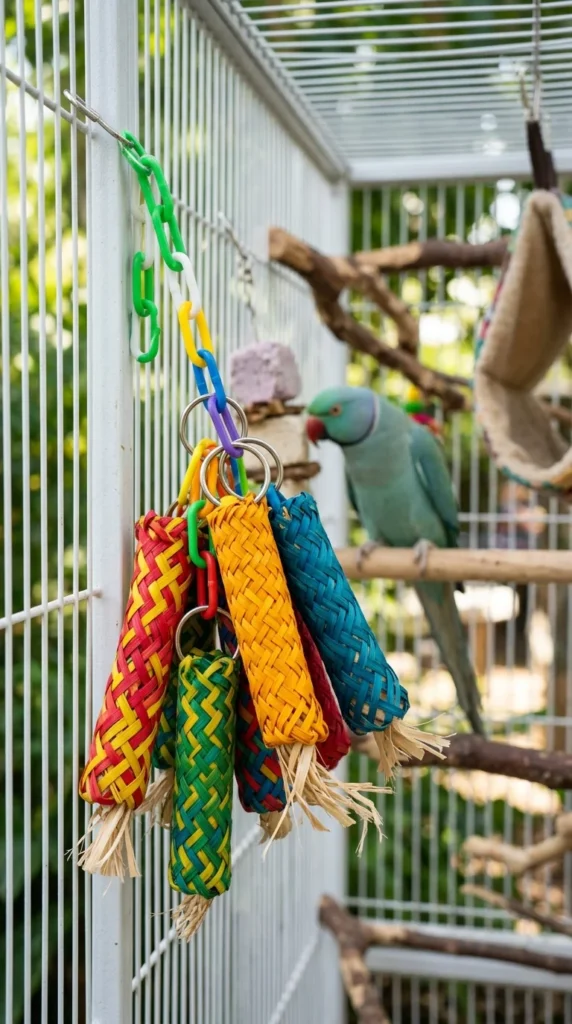
Chinese finger traps are cheap, colorful, and made from woven bamboo, making them entirely safe for birds to chew. You can hang them individually or stuff them with treats like almond slivers or dried fruit. Large parrots enjoy the crunch of the bamboo, while smaller birds like cockatiels love to unravel the weave.
4. Popsicle Sticks
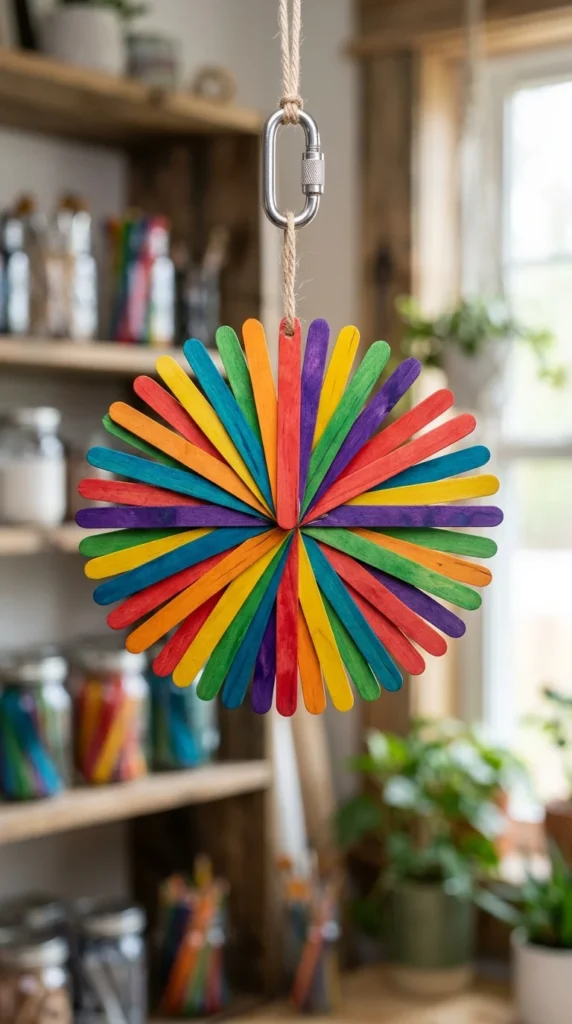
Popsicle sticks are versatile building blocks. You can drill small holes in the ends and string them together to make a ladder, or use non-toxic, bird-safe glue to create “rafts” that your bird can dismantle. For extra fun, dye the sticks yourself using food coloring and water to make them visually stimulating.
5. Plastic Straws
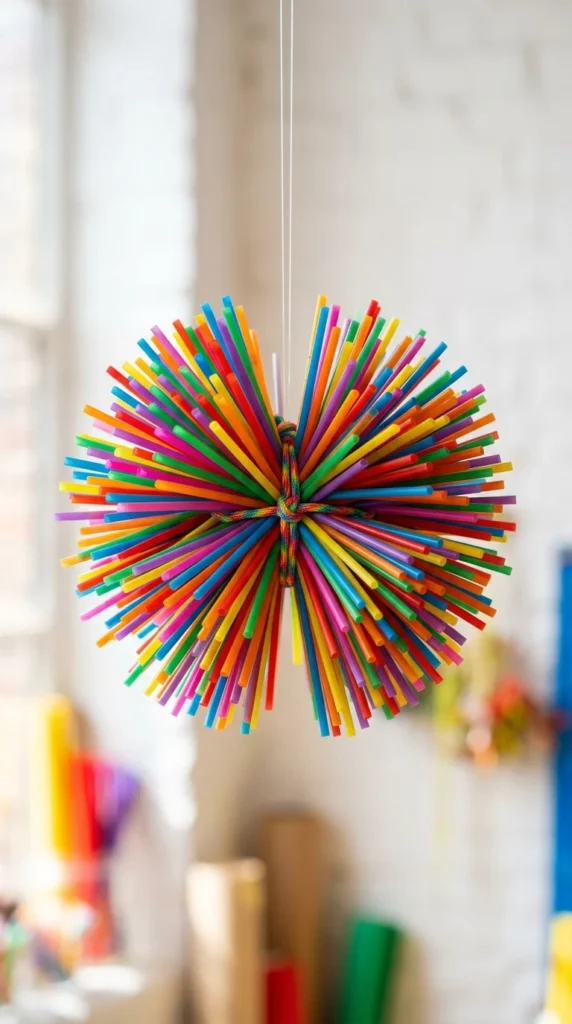
Plastic straws provide a unique texture that many birds find irresistible. By cutting straws into two-inch pieces and stringing them onto a wire or rope, you create a “fidget” toy. Birds love to slide the pieces back and forth or crunch down on the plastic to hear the satisfying “pop” it makes.
6. Coffee Filters
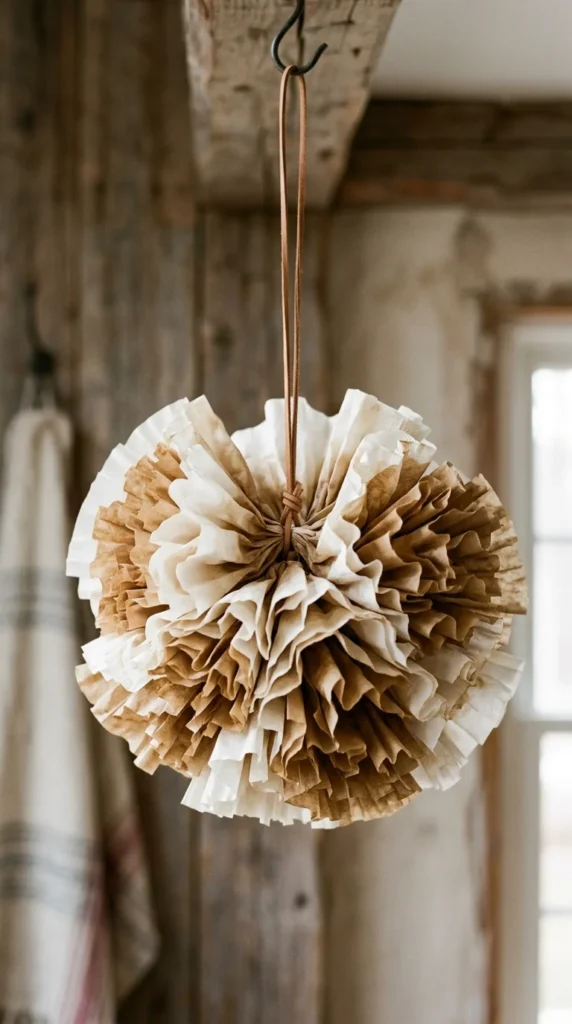
Coffee filters are lightweight and offer a very low resistance for shredding, making them ideal for smaller birds like budgies or finches. You can stack them, fold them into “flowers,” or hide seeds inside the folds. Because they are so thin, birds can spend hours delicately tearing them into tiny pieces.
7. Wine Corks

If you use natural cork (not synthetic plastic “corks”), you have a fantastic foot toy. Cork is soft enough for birds to dig their beaks into but firm enough to provide a workout. Ensure the corks are thoroughly cleaned and have no residual alcohol scent. You can toss them on the bottom of the cage as foot toys or string them up for a chewing marathon.
8. Egg Cartons
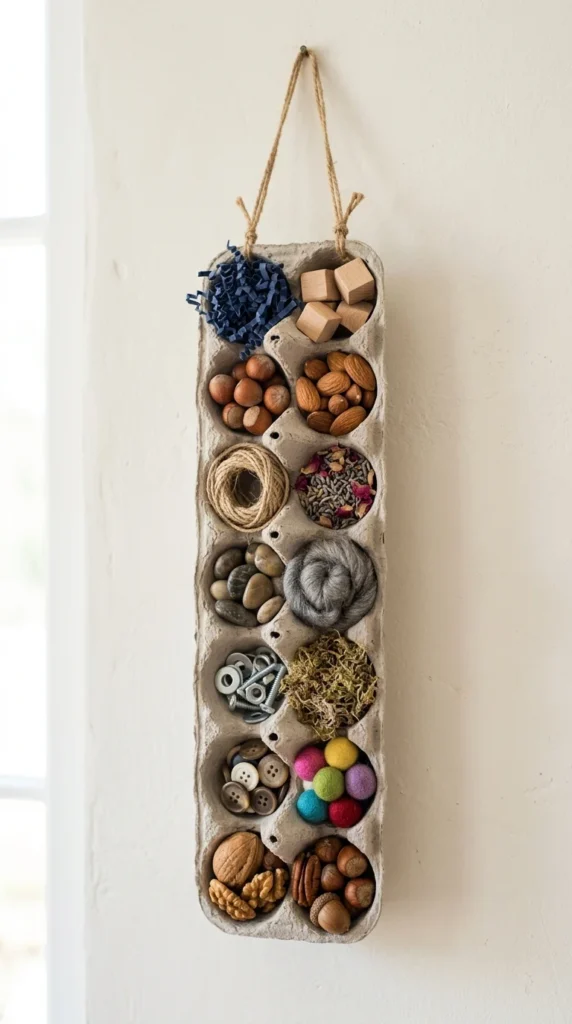
Empty cardboard egg cartons are the ultimate foraging boxes. Place a different treat in each “cup” and cover it with shredded paper. Your bird will have to lift the lid or chew through the top to find what’s inside. This mimics their natural behavior of searching for food in tree hollows or under foliage.
9. Vegetable Kabobs
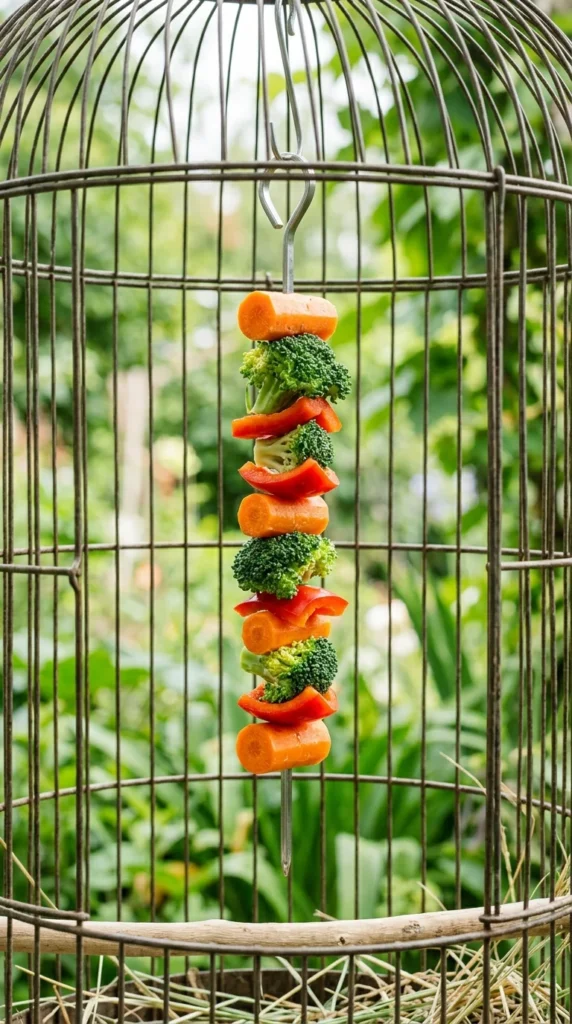
Who says toys can’t be delicious? A vegetable kabob provides nutritional value while also acting as an interactive toy. Use a stainless steel bird skewer (available at most pet stores) and load it with chunks of corn on the cob, kale, squash, and apple. The effort required to pull the food off the skewer keeps them busy during mealtime.
10. Cupcake Liners
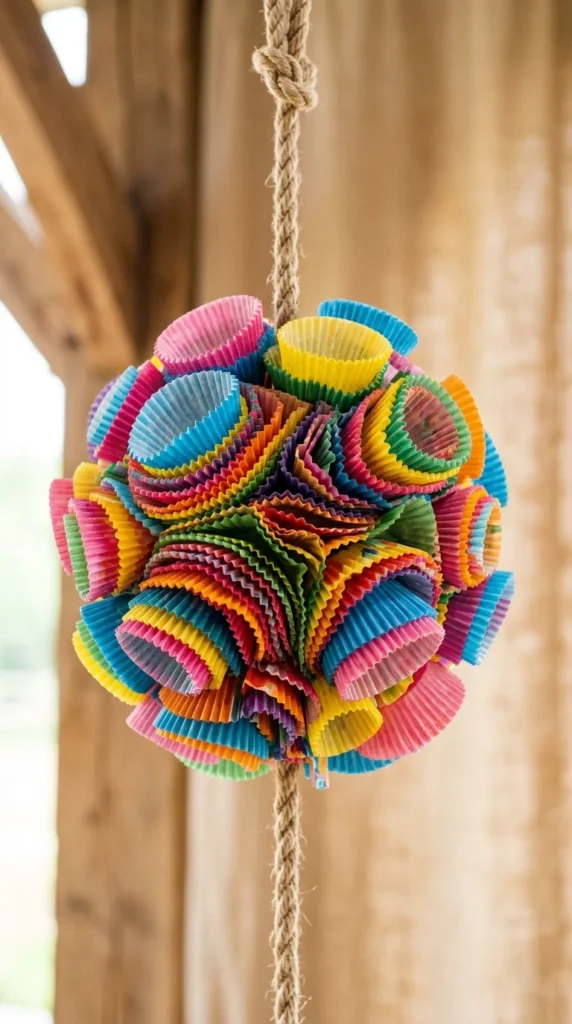
Similar to coffee filters but much more colorful, cupcake liners are excellent for “busy work.” Stringing a hundred liners together creates a dense, ruffled toy that birds love to preen. It’s a great way to discourage feather picking, as the texture of the paper mimics the feeling of feathers.
11. Pine Cones
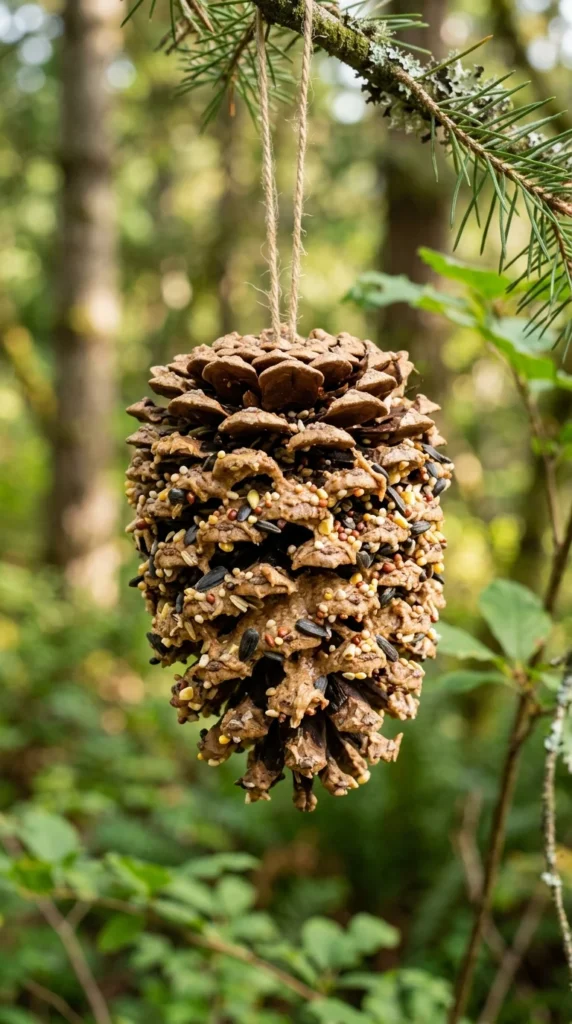
Pine cones are nature’s bird toys. Before using them, bake them in the oven at a low temperature (200°F) for about 20 minutes to kill any bugs or bacteria. Once cooled, you can wedge seeds or nut pieces between the scales. It’s a natural, rustic way to keep your bird’s beak busy.
12. Cotton Rope

Knots are a bird’s best friend. Using 100% natural cotton rope (avoid synthetic ropes which can cause crop impaction if swallowed), tie a series of intricate knots. Birds love to spend time untying them or preening the frayed ends of the rope. Just be sure to trim any long loose threads to prevent entanglement.
13. Wiffle Balls
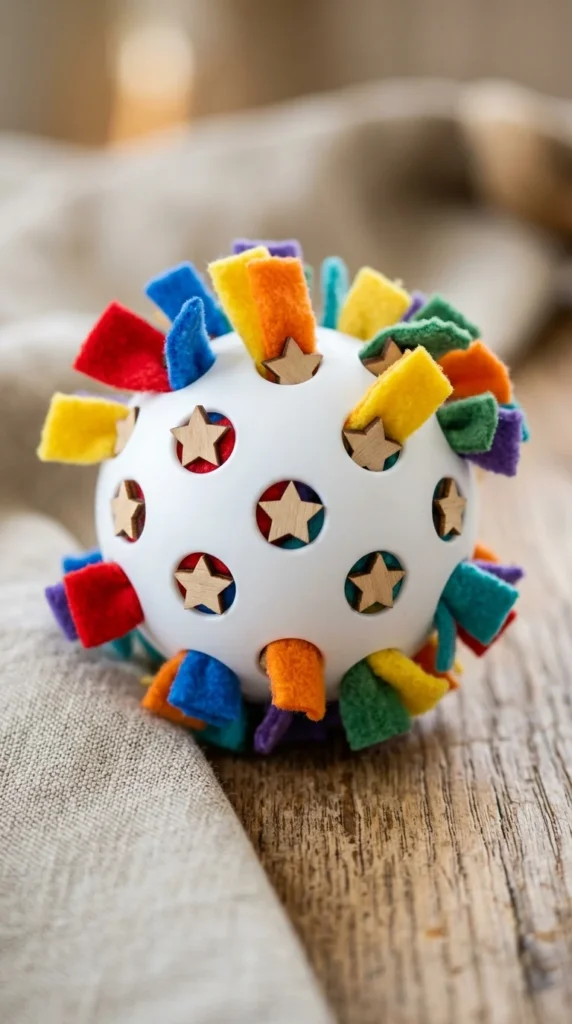
Wiffle balls are the perfect “chassis” for a DIY toy. The pre-existing holes make it incredibly easy to stuff things inside. You can thread ribbon through them, stuff them with treats, or hang them from the top of the cage. They are durable, easy to clean, and very lightweight.
14. Loofah Slices
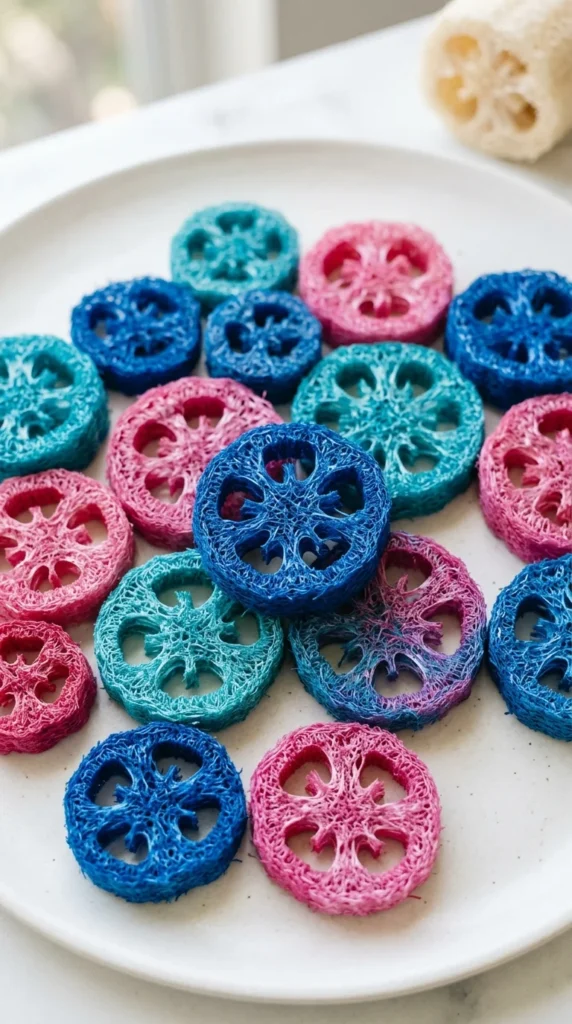
Natural loofah (the dried fruit of the luffa plant) is a fantastic shredding material. It has a spongy, fibrous texture that is very satisfying for a bird to tear apart. You can buy whole dried loofahs, slice them into “donuts,” and hang them from a quick-link for a shredding party.
15. Bamboo Skewers
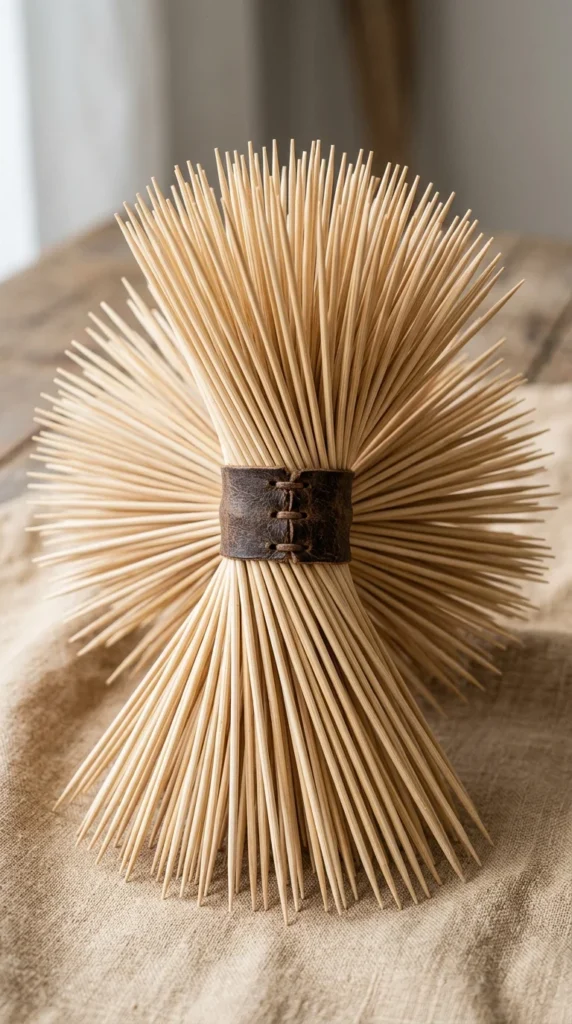
Bamboo skewers (with the sharp tips cut off!) can be used to create “preening” toys. By bundling them together and hanging them, you provide a series of thin wooden sticks that birds can nibble on. This is especially popular with medium-sized parrots like Conures or Quakers.
16. Leather Strips
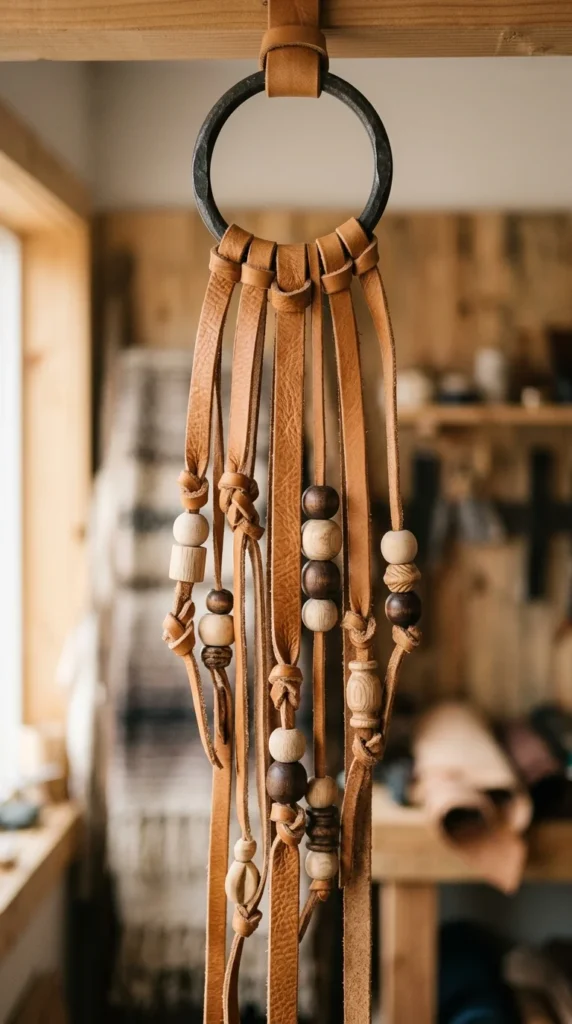
Leather is a tough, durable material that stands up well to larger beaks. Always use vegetable-tanned leather to ensure it’s free of toxic chromium. You can tie leather strips onto the cage bars or use them as the “string” for other toy components. The chewy texture is a great alternative to wood.
17. PVC Pipes
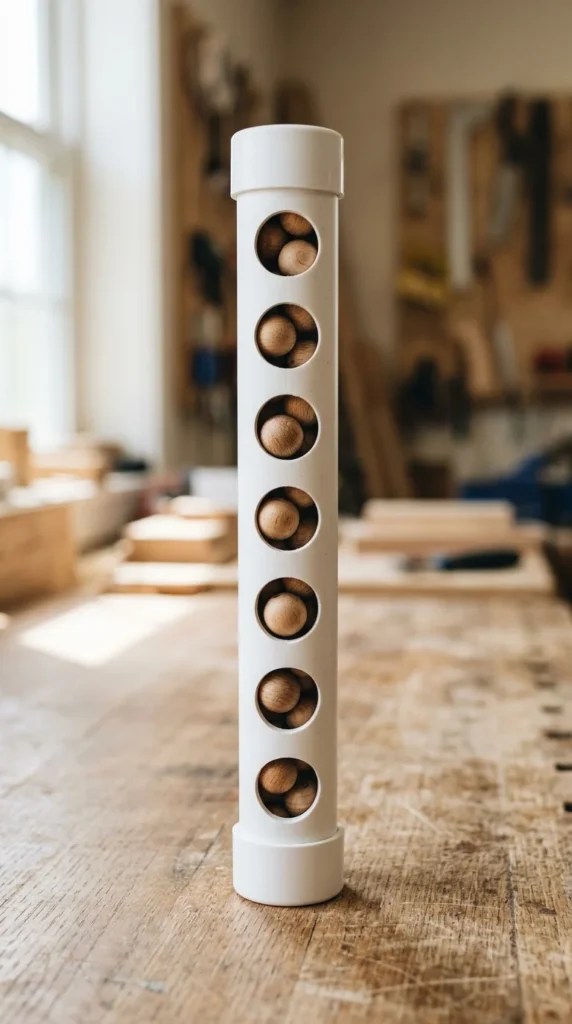
For the “destructive” bird, PVC pipe is a nearly indestructible base. You can drill holes into a short length of pipe and hide treats inside. The bird can see and smell the treat but has to manipulate the pipe or use a “tool” (like a stick) to get the treat out. This is high-level cognitive enrichment.
18. Plastic Beads
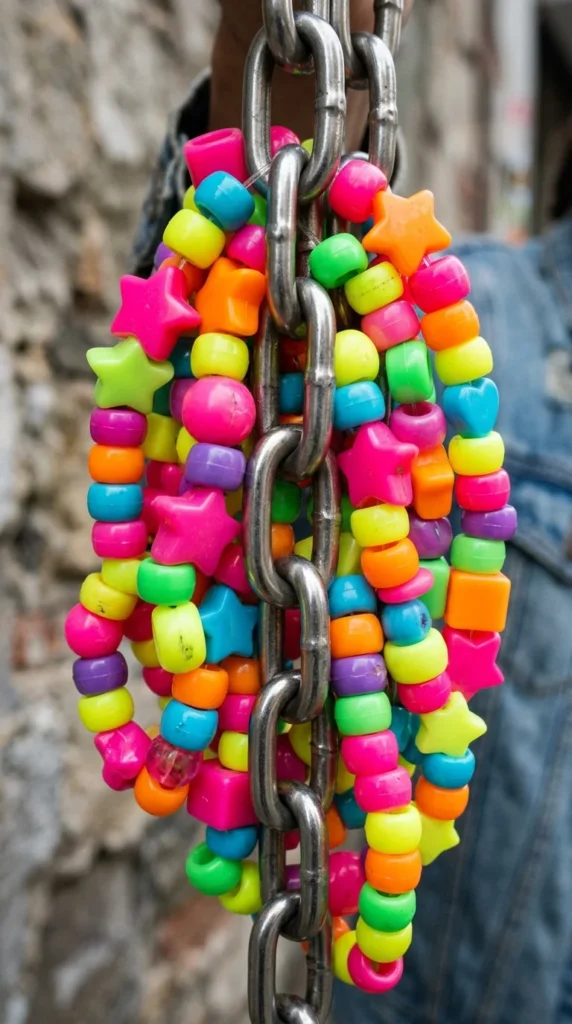
Beads are the “jewelry” of the bird world. They provide color and movement. When choosing beads, make sure they are large enough that your bird cannot swallow them and made of non-toxic plastic. Stringing them on a chain creates a “clacker” toy that makes noise when the bird thrashes it around.
19. Dried Corn Husks
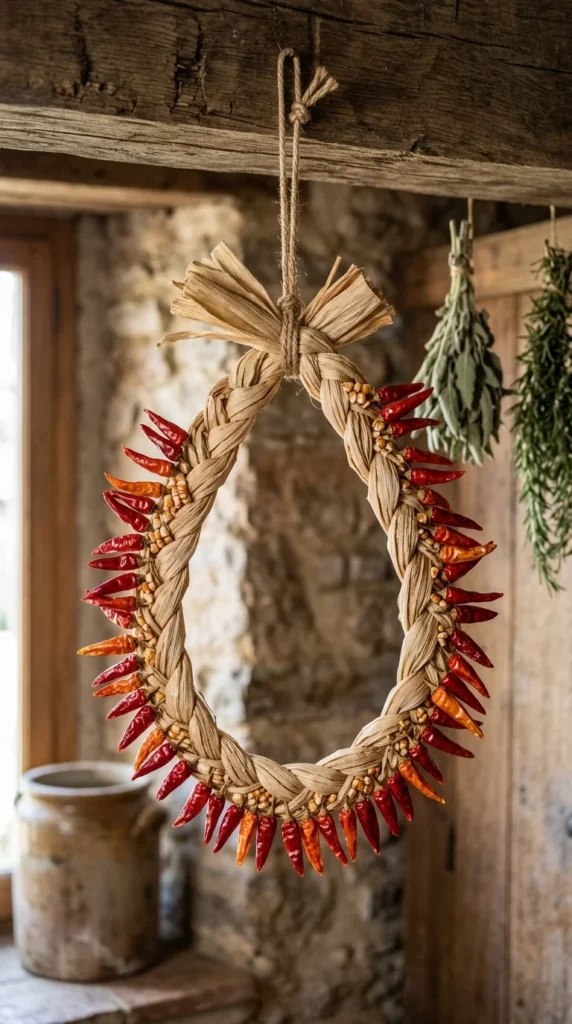
Corn husks are often discarded, but they make excellent weaving material. You can braid them into ropes or fold them into little squares. They have a rough texture that is great for birds to rub their beaks against, and they are 100% edible and safe.
20. Old Magazines
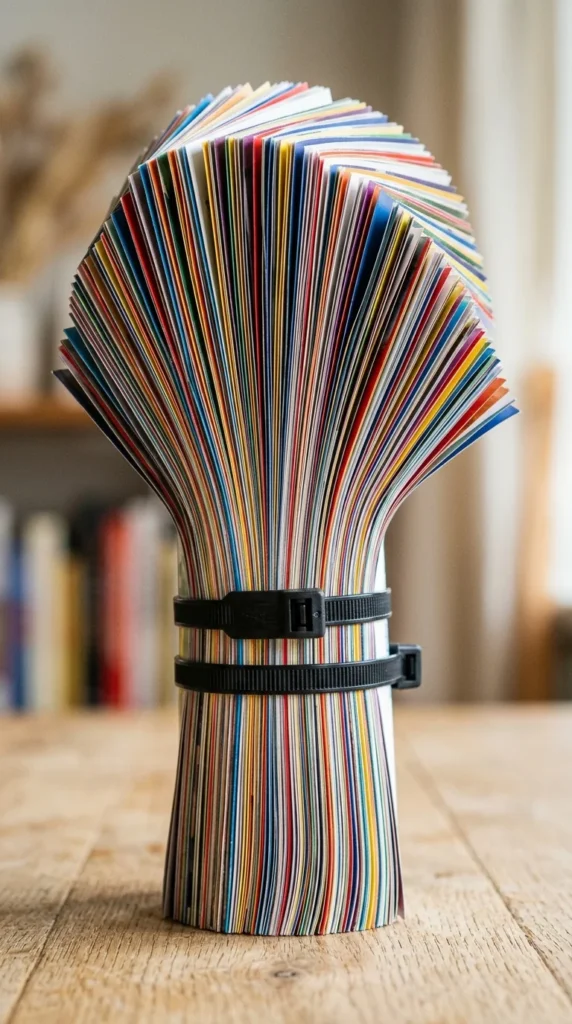
If you have old magazines (printed with non-toxic soy-based ink), they can be turned into a “shredder ball.” Roll the pages up and tie them tightly in the middle. The bird will spend days peeling back the layers and ripping the pages into bits. It’s a great way to recycle!
21. Finger Brush
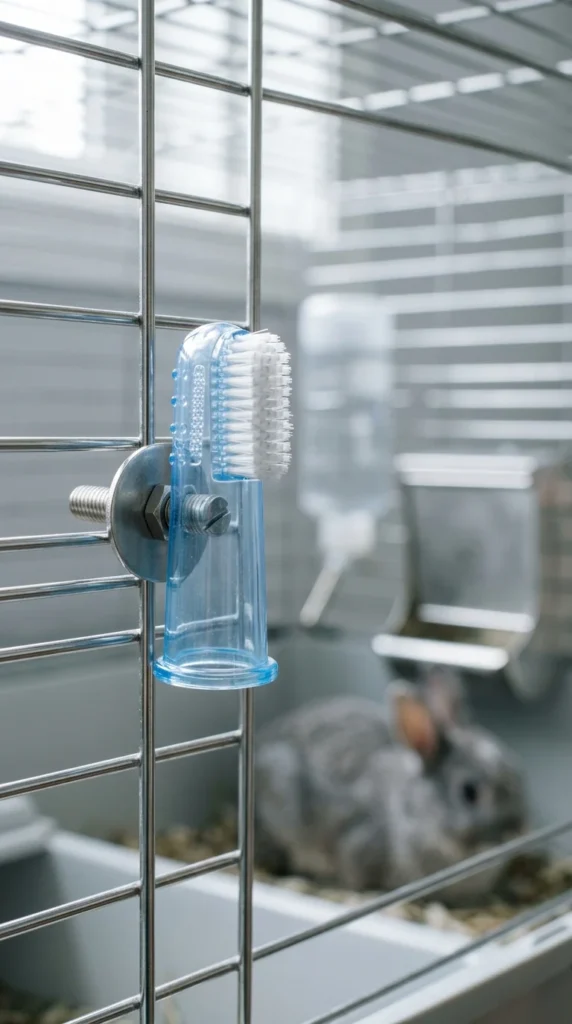
Sometimes birds just need a good scratch. A soft-bristled plastic finger brush (the kind used for babies or pets) can be mounted to the side of the cage. Many birds will learn to walk up to it and rub their heads against the bristles, providing self-grooming and comfort when you aren’t around to give scritches.
22. Bamboo Foraging Mats
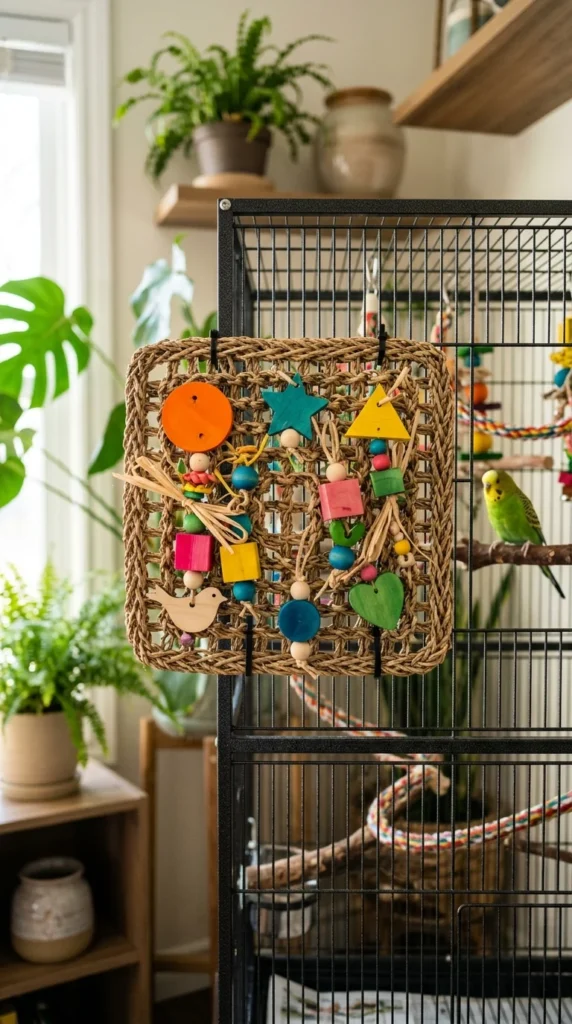
A woven bamboo or seagrass mat serves as a “vertical playground.” By attaching it to the cage wall, you create a surface where you can tuck treats, hang other small toys, or simply let the bird climb. It’s a space-saving way to add a lot of interaction to a small area.
A Note on Bird Toy Safety
While DIY toys are a wonderful way to bond with your pet and save money, safety must always come first. Always observe these rules:
- Avoid Toxic Metals: Never use lead, zinc, or galvanized steel. Only use stainless steel or nickel-plated hardware.
- No Small Parts: Ensure any beads or components are too large for your bird to swallow whole.
- Check for Loops: Avoid creating loops of rope or wire where a bird could get its head or foot stuck.
- Clean Materials: Only use clean, chemical-free cardboard and wood. Avoid anything that had contact with detergents or pesticides.
- Supervise First Use: Always watch your bird play with a new toy for the first time to ensure they don’t find a way to hurt themselves.
By rotating these 22 toys, you ensure that your bird’s environment is ever-changing and stimulating. A busy bird is a happy bird!