
Leopard geckos are often cited as the perfect “entry-level” reptile, but don’t let that label fool you. These charismatic desert dwellers have complex needs that, when met, allow them to live for twenty years or more. Whether you are a first-time owner or a seasoned herpetologist, mastering the nuances of leopard gecko husbandry is the key to a thriving, happy lizard. Here are 22 essential tips to ensure your scaly friend has the best life possible.
1. Healthy Selection
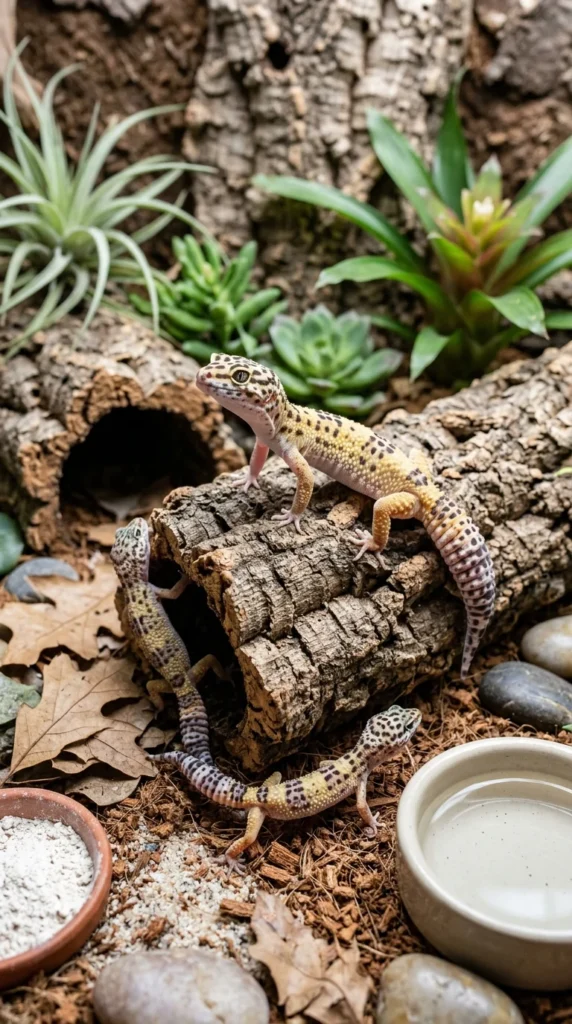
Before you even bring a gecko home, you must know how to spot a healthy one. Look for clear, bright eyes, a thick tail (which indicates fat storage), and a clean vent. Avoid geckos that appear lethargic or have “stuck shed” on their toes. A healthy start is the foundation of long-term success.
2. Enclosure Size
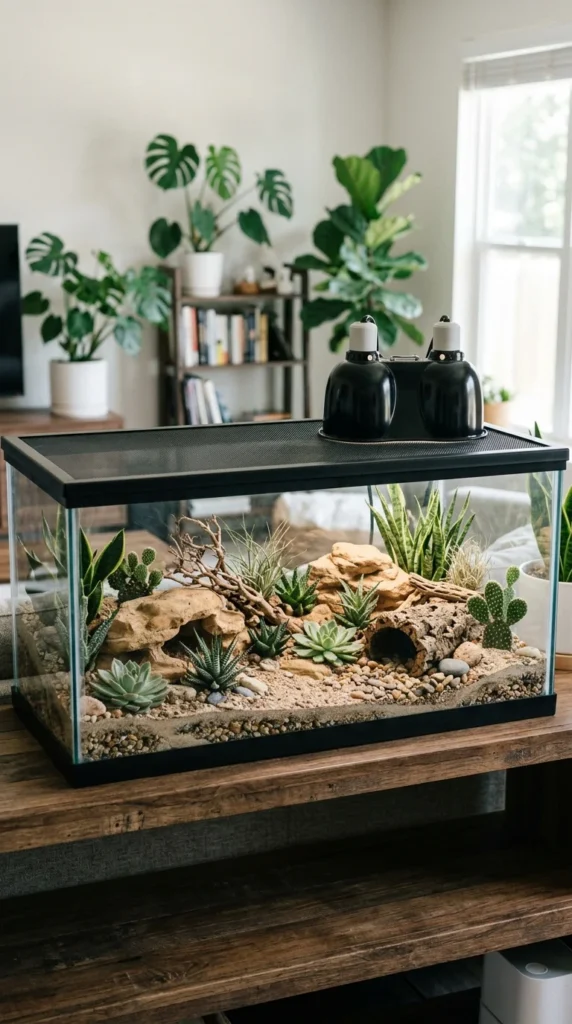
While a 20-gallon tank used to be the standard, the modern consensus is that a 40-gallon breeder tank (36″ x 18″ x 18″) is the gold standard. This extra space allows for a better thermal gradient and more room for the gecko to explore and exercise.
3. Safe Substrate

Avoid loose sand at all costs, especially calcium sand, which can cause fatal impaction if swallowed. The safest options are slate tiles, paper towels, or a bioactive mix of 70% organic topsoil and 30% play sand. This provides a natural feel without the risk of a digestive blockage.
4. Thermal Gradient
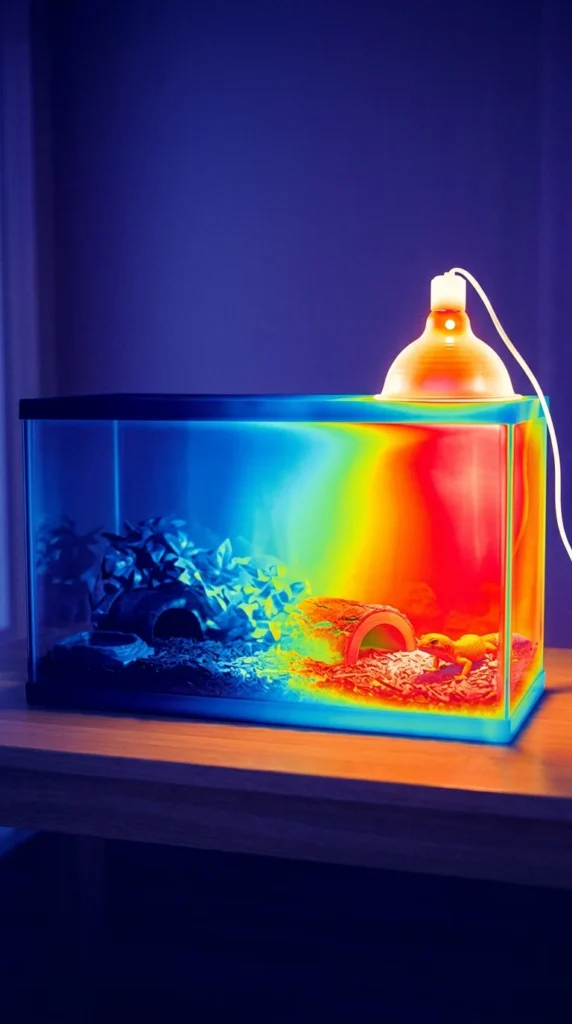
Leopard geckos are ectothermic, meaning they rely on their environment to regulate body temperature. Create a gradient with a “hot side” (88-92°F) and a “cool side” (75°F). This allows your gecko to move back and forth to digest food or cool down as needed.
5. Overhead Heating

While heat mats were popular for years, overhead heating like Deep Heat Projectors (DHPs) or Halogen Flood lamps is superior. These emit Infrared-A and Infrared-B, which penetrate deep into the muscle tissue, mimicking the sun and aiding in more efficient digestion.
6. Triple Hides
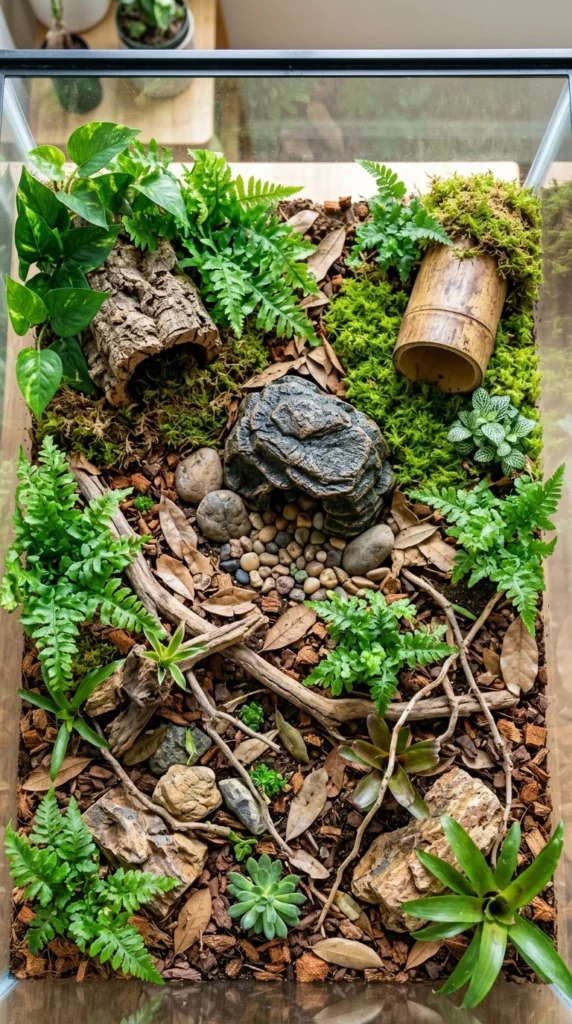
Your gecko needs at least three hides: one on the warm side, one on the cool side, and a “humid hide.” This variety ensures they feel secure regardless of where they are in their thermal cycle. A stressed gecko is a gecko that won’t eat.
7. Humid Hide
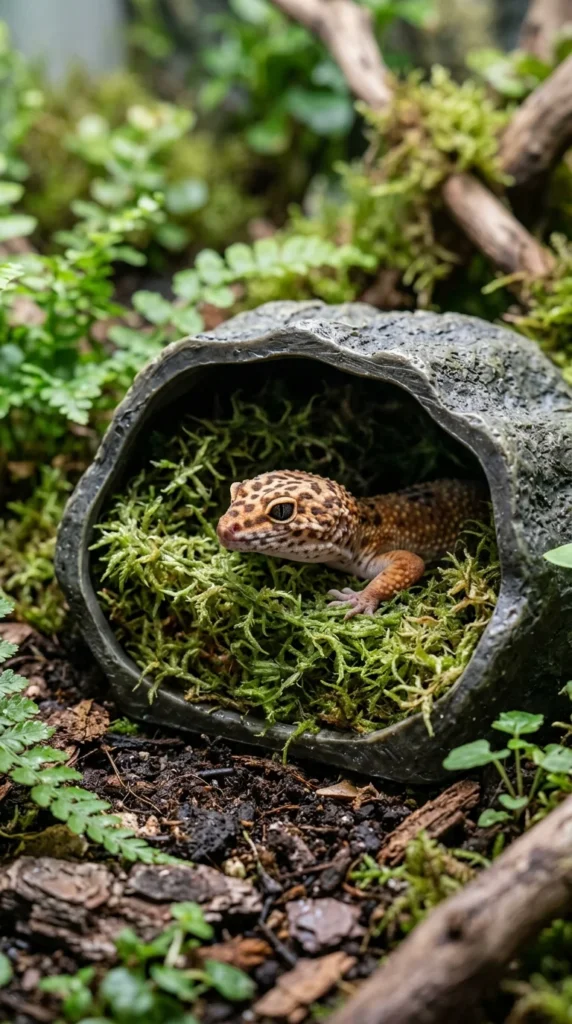
The humid hide is non-negotiable. Fill a container with damp sphagnum moss or wet paper towels. This micro-climate is essential for a clean shed, particularly for the delicate skin on their toes and the tip of their tail.
8. UVB Lighting
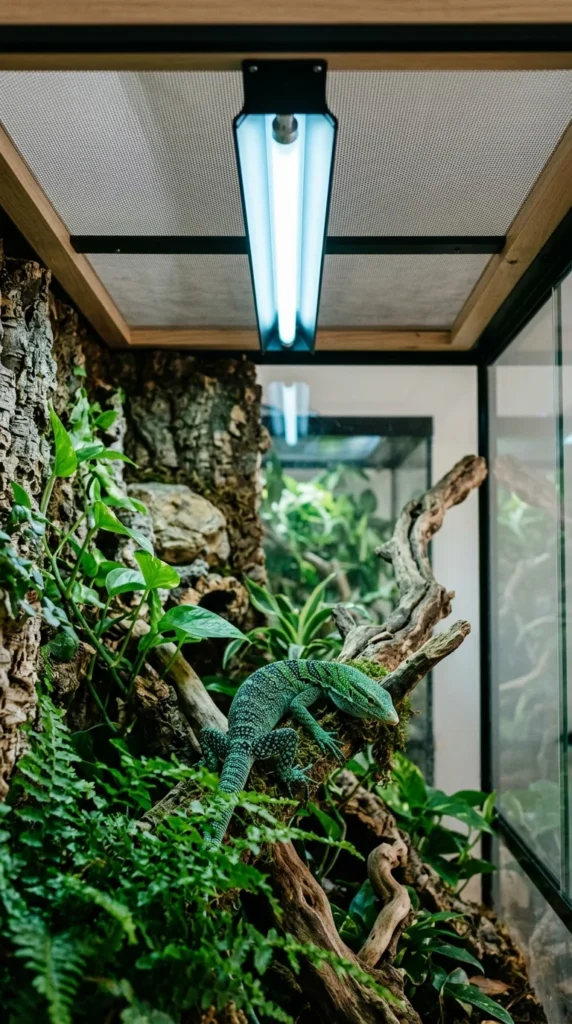
Though leopard geckos are crepuscular (active at dawn and dusk), they benefit immensely from low-level UVB lighting (typically a 5-7% T5 tube). This helps them synthesize Vitamin D3 naturally, which is crucial for bone health and preventing Metabolic Bone Disease (MBD).
9. Insect Variety
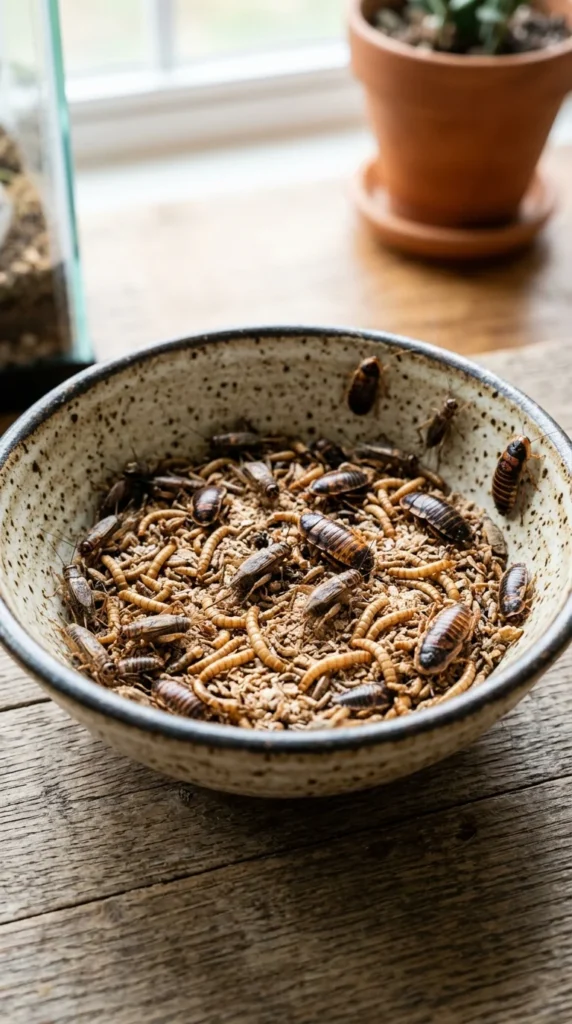
Don’t just stick to mealworms. A healthy diet consists of a rotation of dubia roaches, crickets, silkworms, and the occasional hornworm. Variety prevents “hunger strikes” and ensures a broader spectrum of nutrients.
10. Gut Loading
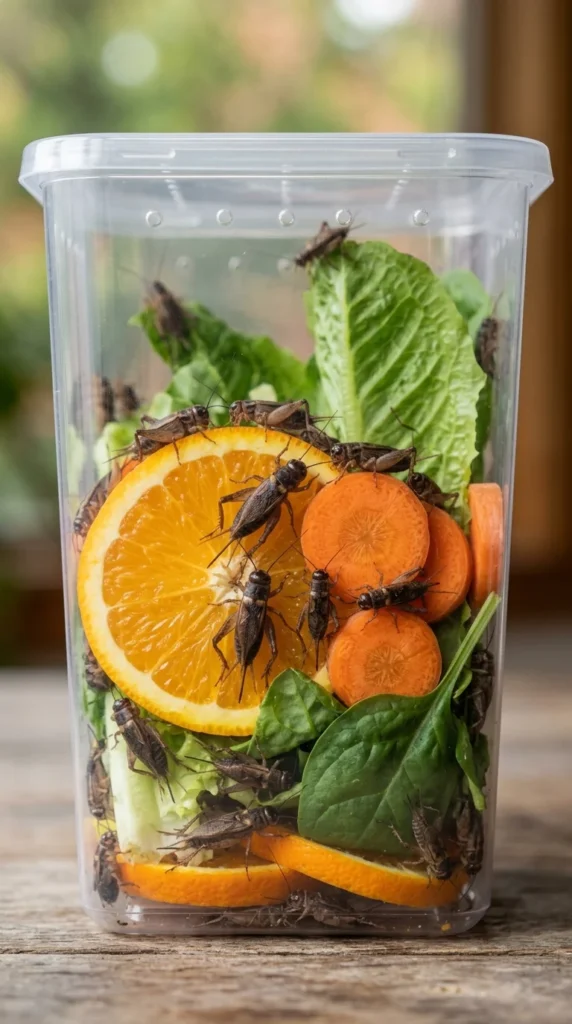
Your gecko is what its food eats. Always “gut load” your feeder insects for 24 hours before offering them to your gecko. Feed the insects high-quality vegetables like squash, carrots, and sweet potatoes to pass those vitamins on to your reptile.
11. Calcium Supplementation
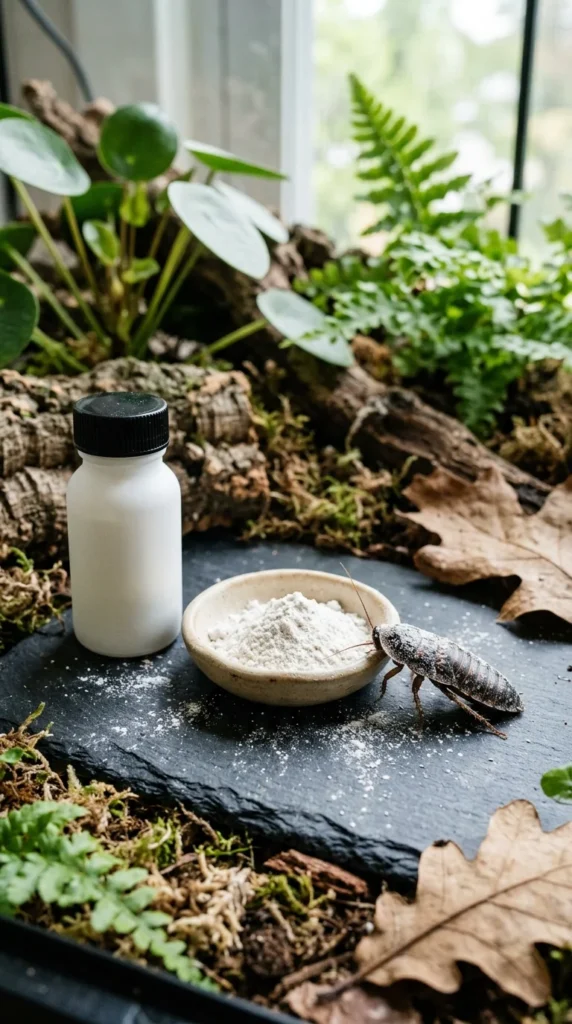
Leopard geckos need calcium with and without Vitamin D3. Keep a small, shallow dish of pure calcium (no D3) in the tank at all times. Additionally, dust their insects with calcium + D3 every other feeding to ensure their skeletal structure remains strong.
12. Feeding Frequency
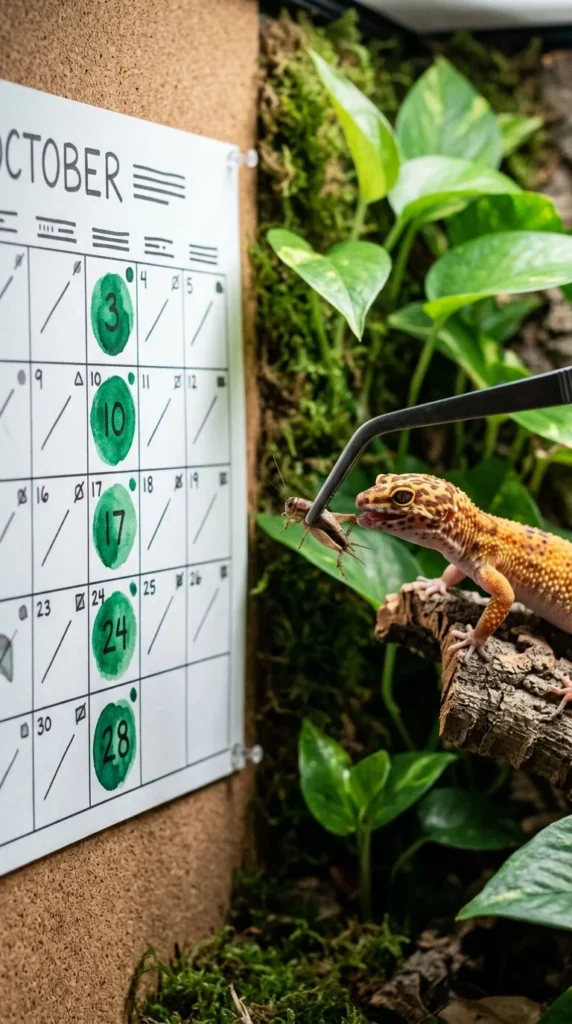
Juvenile geckos need to eat every day to support their rapid growth. However, adults (over a year old) only need to be fed 2-3 times a week. Overfeeding adults is a common mistake that leads to obesity and lethargy.
13. Tail Monitoring
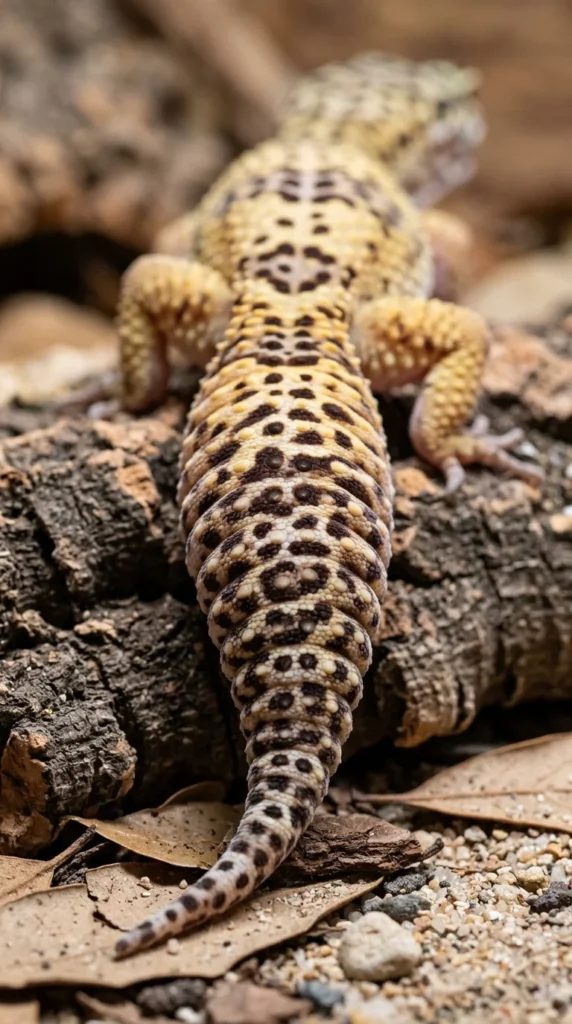
The tail is a leopard gecko’s gas tank. It should be plump—ideally as wide as the neck—but not overly bloated. If the tail starts to look thin or “pencil-like,” it is a sign of illness, parasites, or malnutrition that requires immediate attention.
14. Shedding Assistance
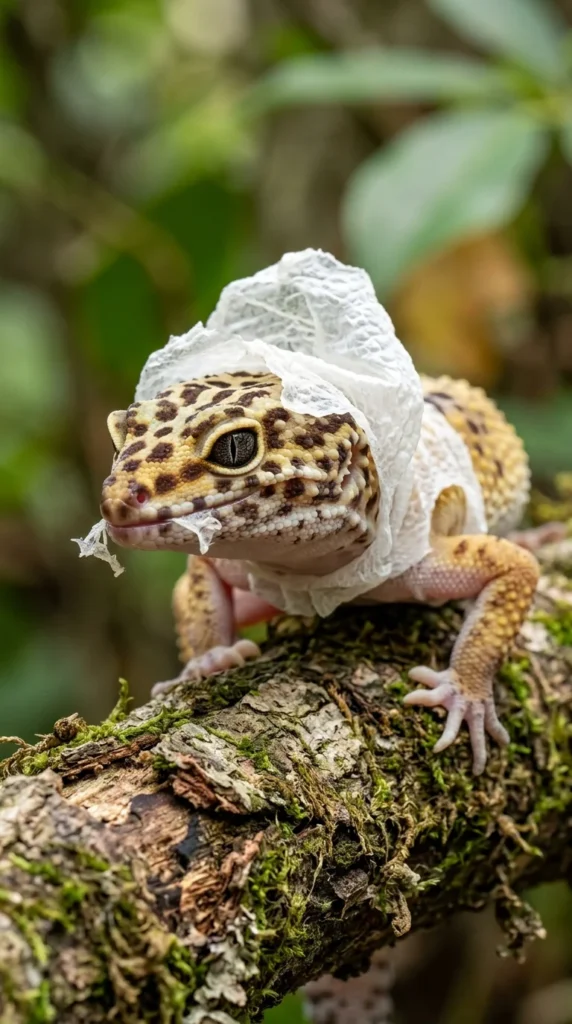
When your gecko turns ghost-white, they are about to shed. Most will eat their own shed skin (a natural behavior to reclaim nutrients and hide their scent). After the shed, check their toes carefully. If skin stays stuck, it can constrict blood flow and cause the toe to fall off.
15. Handling Protocol
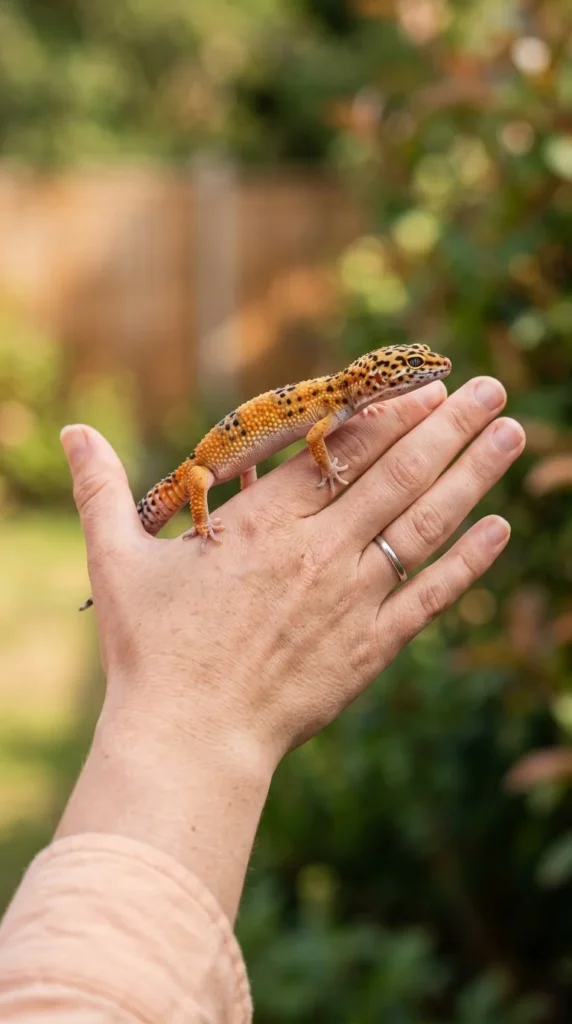
Never grab a leopard gecko by the tail, or they may drop it as a defense mechanism. Instead, let them walk onto your hand. Keep handling sessions short (10-15 minutes) and close to the ground, as these geckos have poor depth perception and may jump.
16. Solitary Living

Leopard geckos are not social animals. Housing two or more together—even females—often leads to bullying, resource guarding, and physical injury. For the safety and mental well-being of your pet, keep them in their own individual enclosures.
17. Sanitation Schedule

Spot-clean waste daily. Every month, perform a deep clean where you remove all decor and sanitize the substrate and walls with a reptile-safe disinfectant. This prevents the buildup of harmful bacteria and parasites like Coccidia.
18. Brumation Awareness
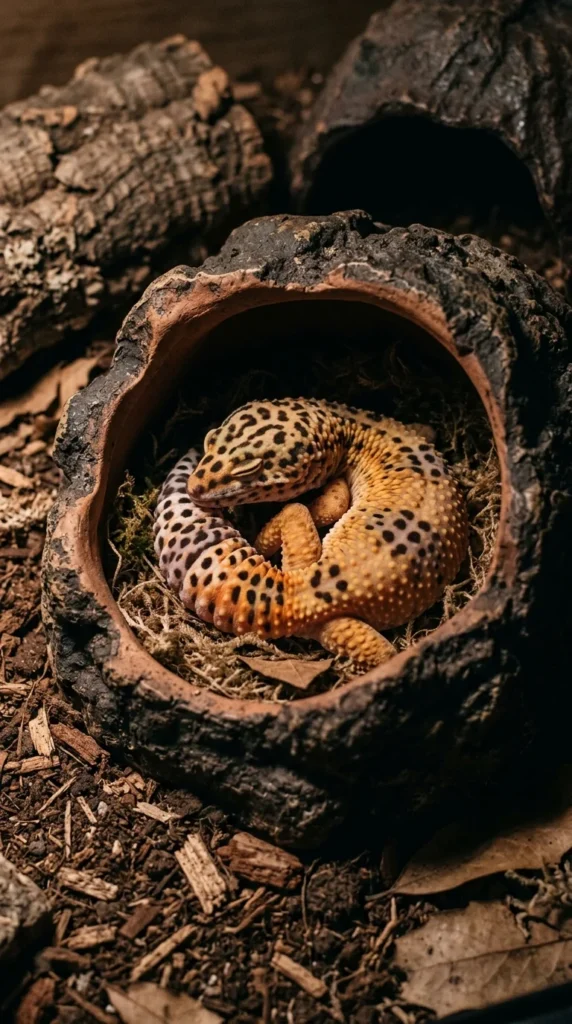
During winter, your gecko might eat less and sleep more. This is a semi-hibernation called brumation. As long as they aren’t losing significant weight, this is a natural process triggered by shorter daylight hours and cooler ambient room temperatures.
19. Vertical Enrichment
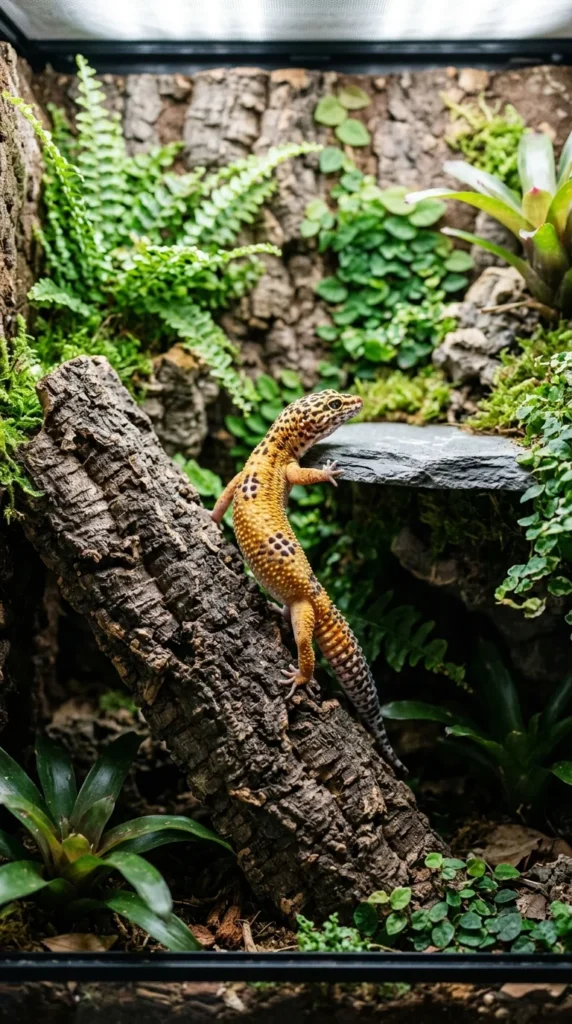
Even though they aren’t arboreal like Crested Geckos, leopard geckos love to climb. Provide low-profile branches, stacked slate, or magnetic ledges. This increases their usable living space and provides much-needed mental stimulation.
20. Eye Inspection
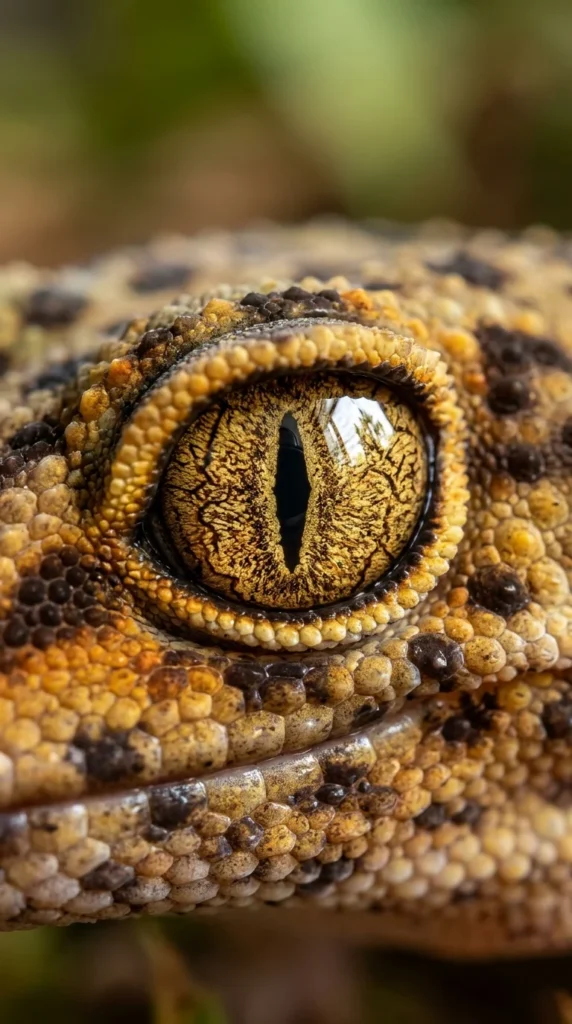
Keep an eye out for “cloudy” eyes or discharge. Leopard geckos are prone to Vitamin A deficiencies, which can manifest as eye infections or “plugs” of debris under the eyelid. If the eye looks irritated, a vet visit is necessary.
21. Poop Checks
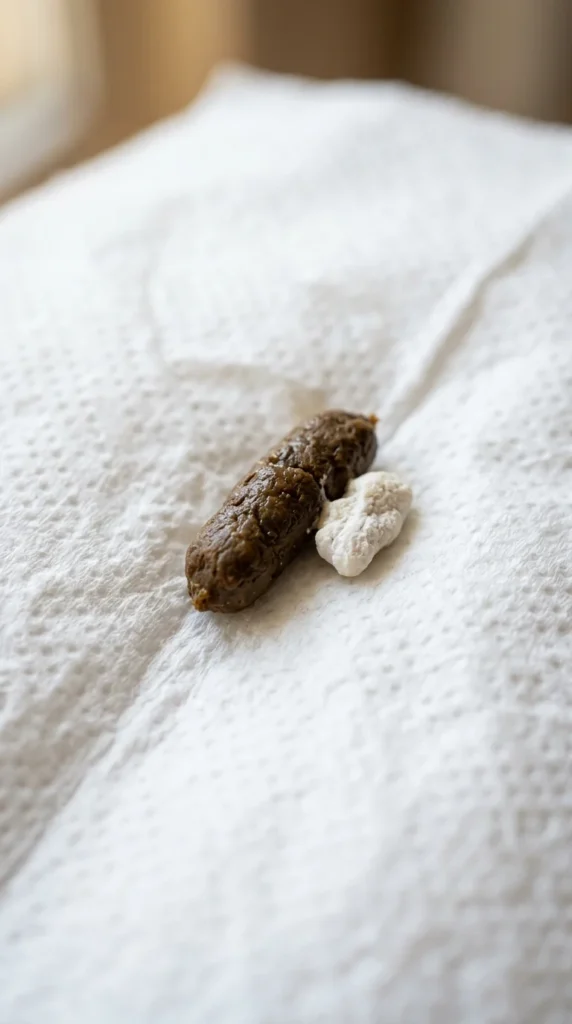
Healthy gecko waste consists of two parts: the dark fecal matter and a white “uralite” (solid urine). If the waste is runny, bloody, or contains many undigested insects, it could indicate an internal parasite load or improper basking temperatures.
22. Specialized Vet Care

Not all vets treat reptiles. Before an emergency happens, locate a qualified “Exotic Animal Veterinarian” in your area. An annual check-up and a fecal exam are the best ways to catch “silent killers” like parasites before they become life-threatening.