
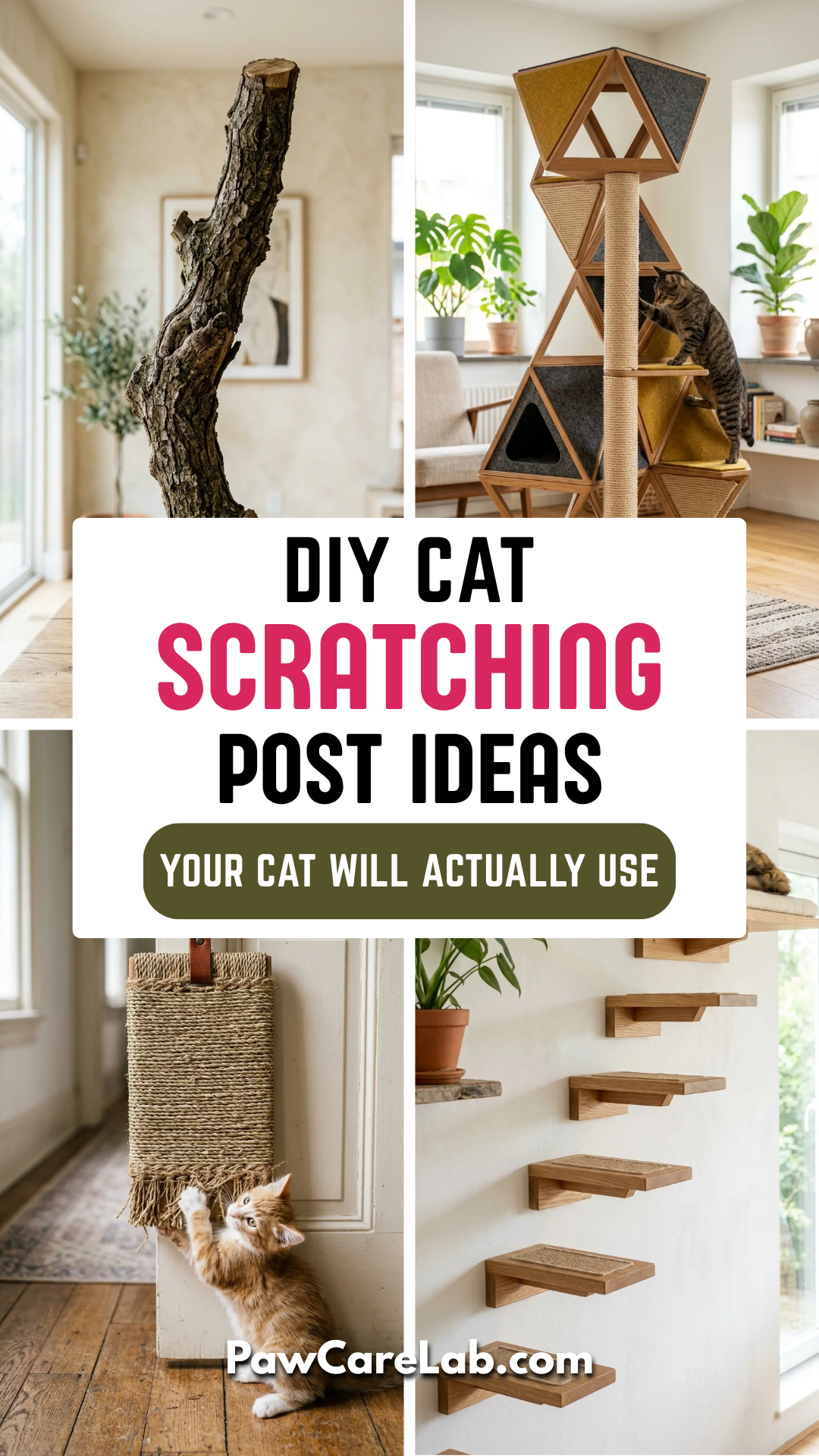
Every cat owner knows the struggle: you bring home a brand-new, expensive scratching post, and your feline friend spends the next hour playing with the box it came in while sharpening their claws on your velvet sofa. Scratching is an essential, instinctive behavior for cats—it helps them shed the outer layers of their claws, stretch their muscles, and mark their territory with scent glands in their paws.
Instead of fighting nature, it’s time to lean into it. By crafting your own scratching post, you can tailor the texture, height, and stability to your cat’s specific preferences while matching your home decor. From rustic natural wood to modern geometric designs, here are 20 DIY cat scratching post ideas that are as functional as they are beautiful.
1. Sisal Pillar
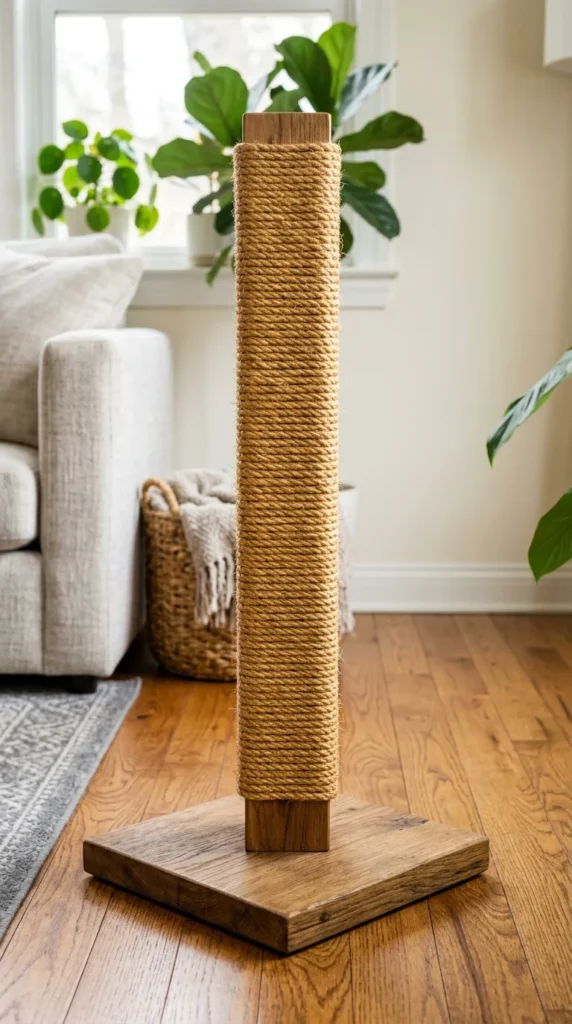
The sisal pillar is the gold standard of cat furniture. To make this, you simply need a sturdy wooden beam (a 4×4 works best), a heavy base to prevent tipping, and a roll of high-quality sisal rope. The key to success is ensuring the rope is pulled extremely tight and glued down with non-toxic wood glue as you wrap. A tall pillar allows your cat to get a full-body stretch, which is often what they are looking for when they target the arms of your chairs.
2. Ombre Rope
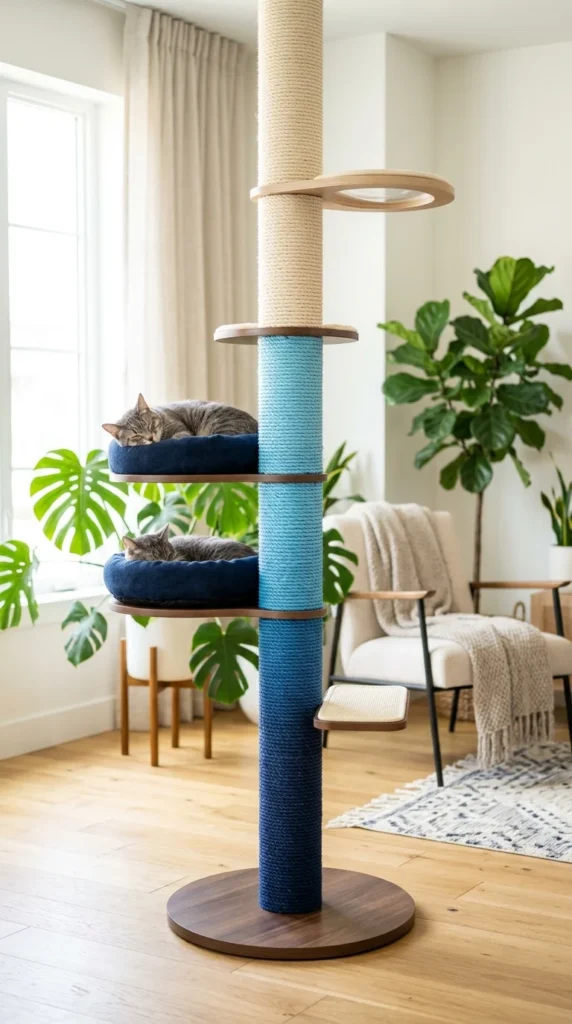
If you want your cat’s furniture to look like a piece of art, try an ombre effect. You can dye sections of your sisal rope using cat-safe, organic dyes before wrapping the post. Start with the darkest shade at the bottom and transition to lighter hues as you move upward. This adds a pop of color to your room while providing the rough texture cats crave.
3. Cactus Post

The cactus scratching post is a viral favorite for a reason. By using PVC pipes and T-junctions, you can create a multi-armed structure that mimics a desert cactus. Wrap the entire structure in green-dyed sisal. Not only does it provide multiple angles for scratching, but it also serves as a whimsical conversation piece in your living room.
4. Wall Mounted
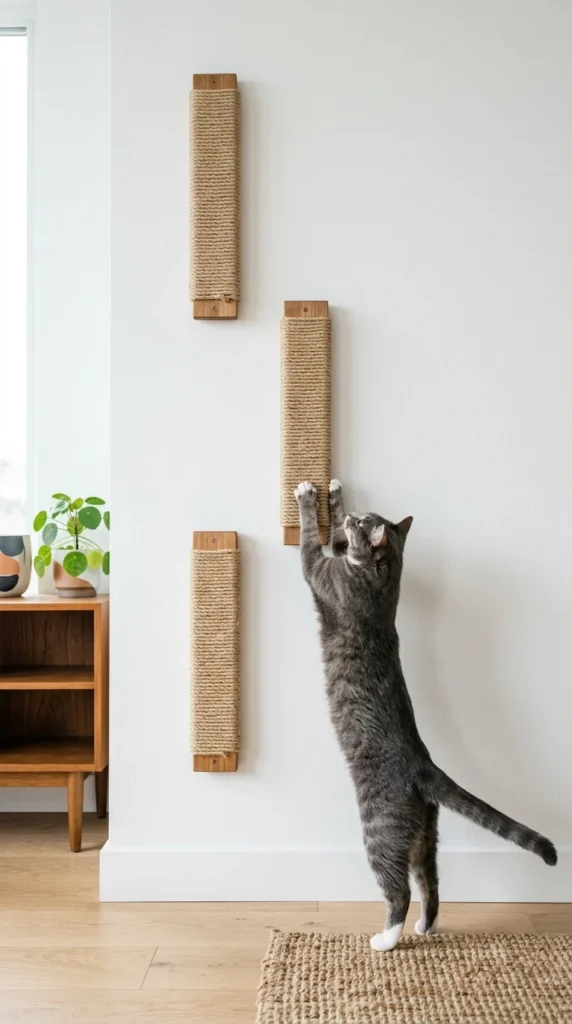
Wall-mounted scratchers are perfect for small apartments where floor space is at a premium. By bolting a rope-wrapped plank directly into a wall stud, you create a rock-solid surface that won’t wobble. Cats love the stability of the wall, and you can mount them at the exact height your cat prefers to stretch.
5. Corner Protector
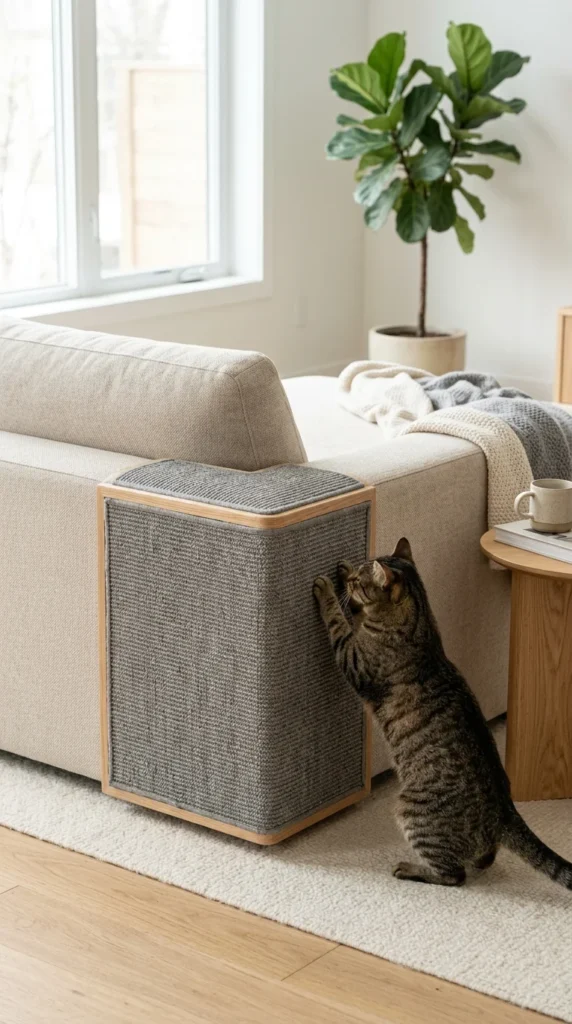
If your cat has already claimed a specific corner of your sofa, don’t try to change their mind—just protect the spot. Create an L-shaped wooden frame that fits snugly against the corner of your furniture. Cover it in sisal fabric or heavy carpet scraps. This “sacrificial” surface allows the cat to keep their favorite spot without ruining your upholstery.
6. Traffic Cone
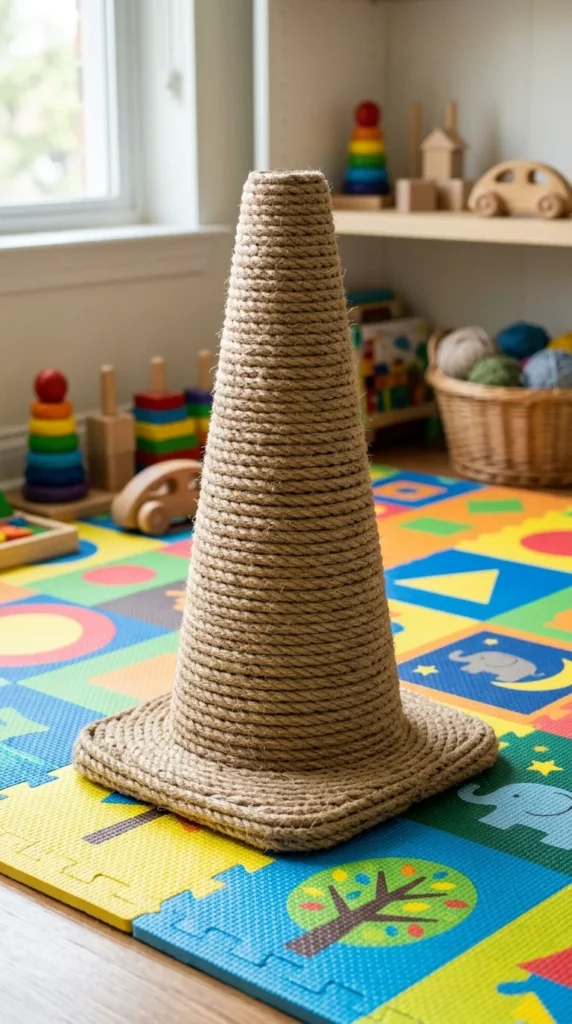
This is one of the easiest and most stable DIY projects. A standard traffic cone provides a wide, weighted base and a tapered shape that cats find intriguing. Simply clean the cone and wrap it from bottom to top with rope. The height is usually perfect for adult cats to get a satisfying stretch.
7. Cardboard Layers
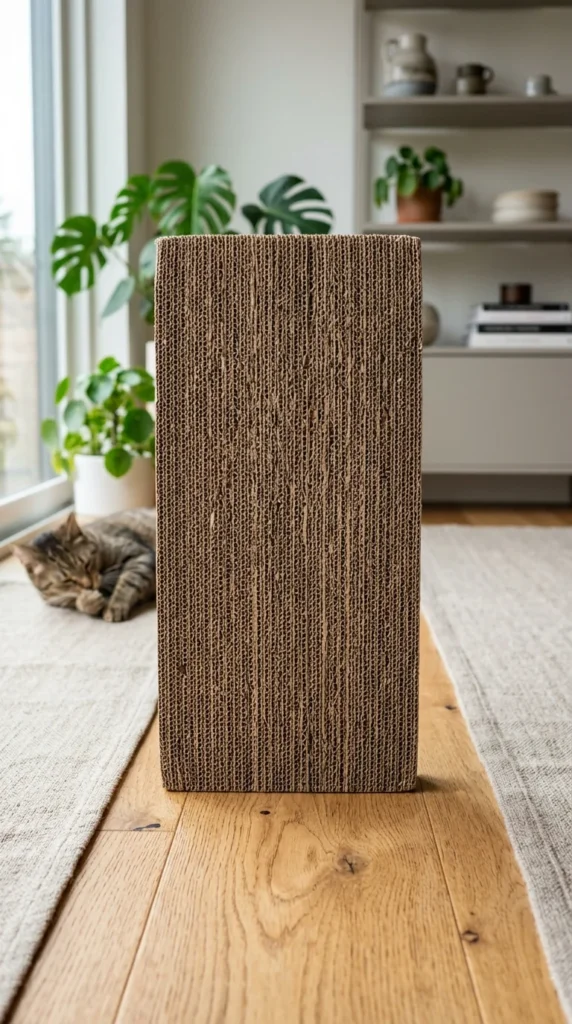
Many cats actually prefer the “shredding” feel of cardboard over the “hooking” feel of rope. You can make a premium cardboard scratcher by cutting strips of old shipping boxes and gluing them together with the corrugated edges facing up. Frame the block with a simple wooden box to keep the cardboard bits contained and to give it a sleek, finished look.
8. Natural Log
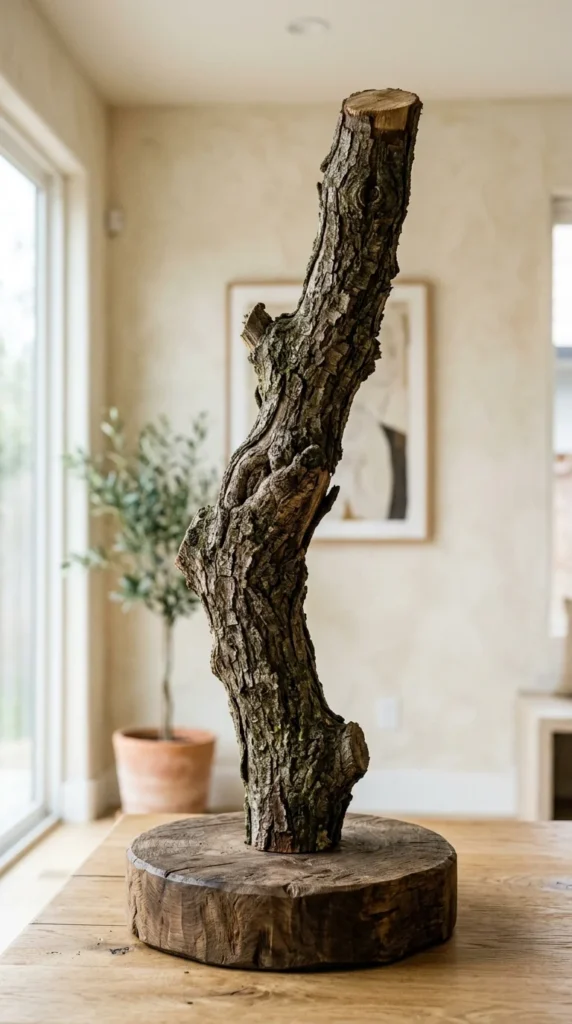
Nature knows best. Find a sturdy, fallen log or a thick branch from a non-toxic tree (like oak or maple). Ensure the wood is dry and pest-free. By mounting it to a heavy base, you provide your cat with the exact texture their ancestors used in the wild. The varied texture of the bark is excellent for claw health.
9. Step Stool
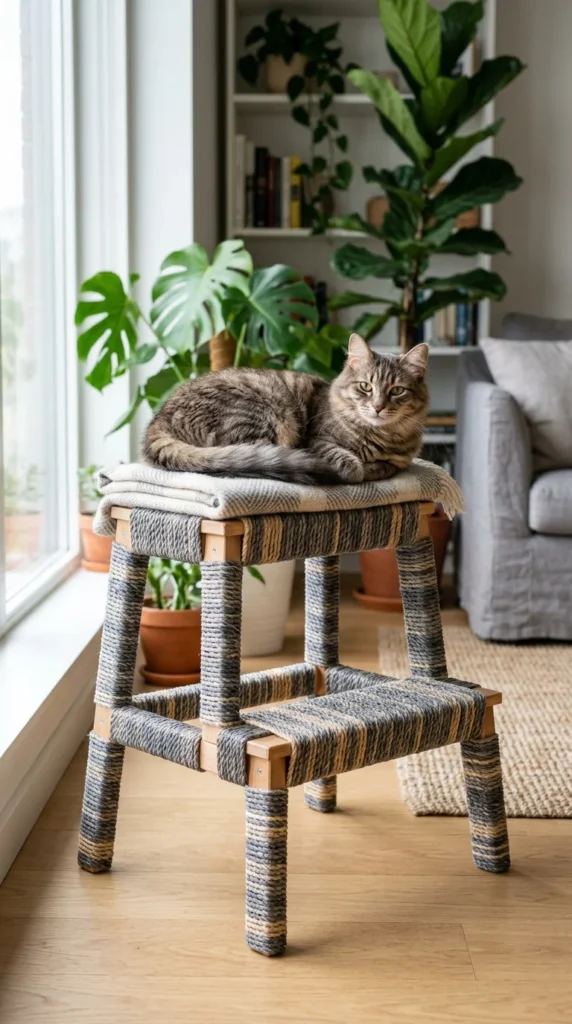
Transform a basic wooden step stool into a multi-functional cat station. Wrap the legs in rope for scratching and add a soft cushion to the top step for lounging. This gives the cat different heights to explore and a sense of ownership over a piece of furniture that usually just takes up space.
10. Color Pop
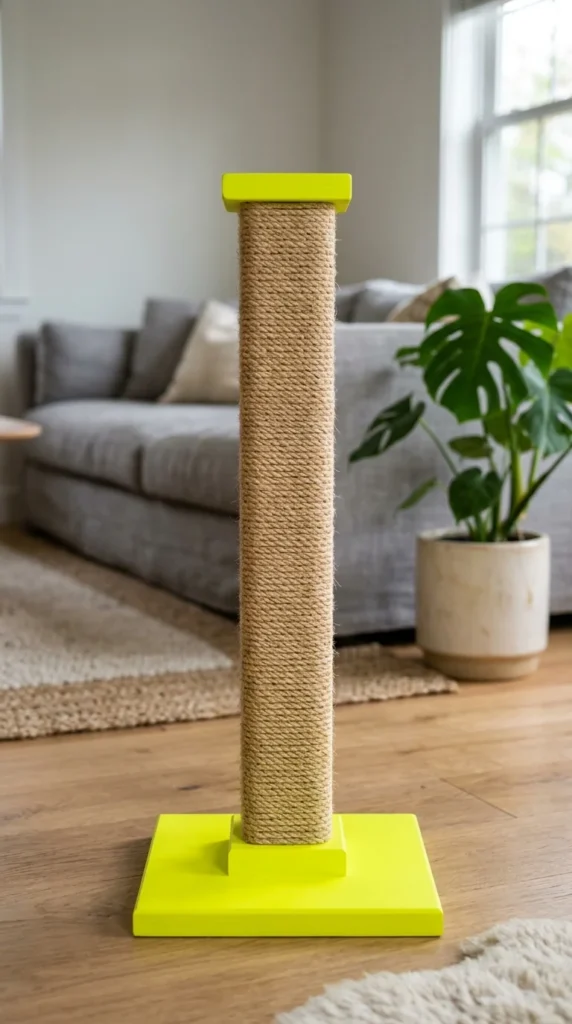
Sometimes all a DIY project needs is a little paint. Use low-VOC, pet-safe paint to color the base and the top cap of a standard post. This allows you to coordinate the scratcher with your room’s accent colors, making it look like a high-end designer purchase rather than a weekend project.
11. Hanging Door

If your cat likes to scratch while standing on their hind legs but you don’t have room for a floor post, a hanging scratcher is the answer. Use a leather or nylon strap to hang a rope-covered board from a doorknob. This creates a slightly swinging target that adds an element of play to the scratching session.
12. Mid-Century Modern
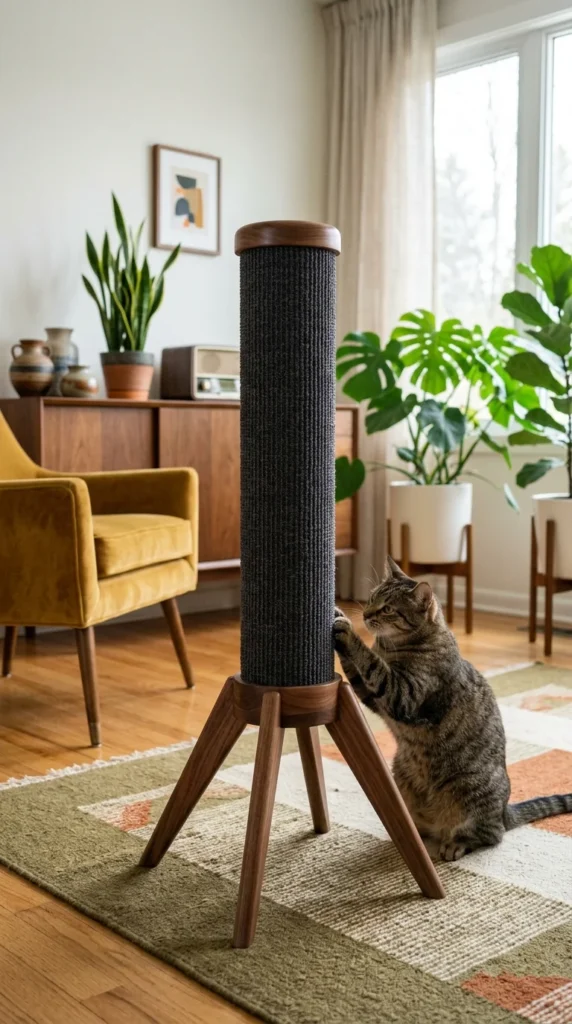
For those with a specific interior design aesthetic, a mid-century modern post is a must. Use tapered furniture legs for the base and a slim, fabric-wrapped cylinder. The use of sisal fabric instead of rope gives it a smoother, more “upholstered” look that blends seamlessly with high-end furniture.
13. Floating Shelves
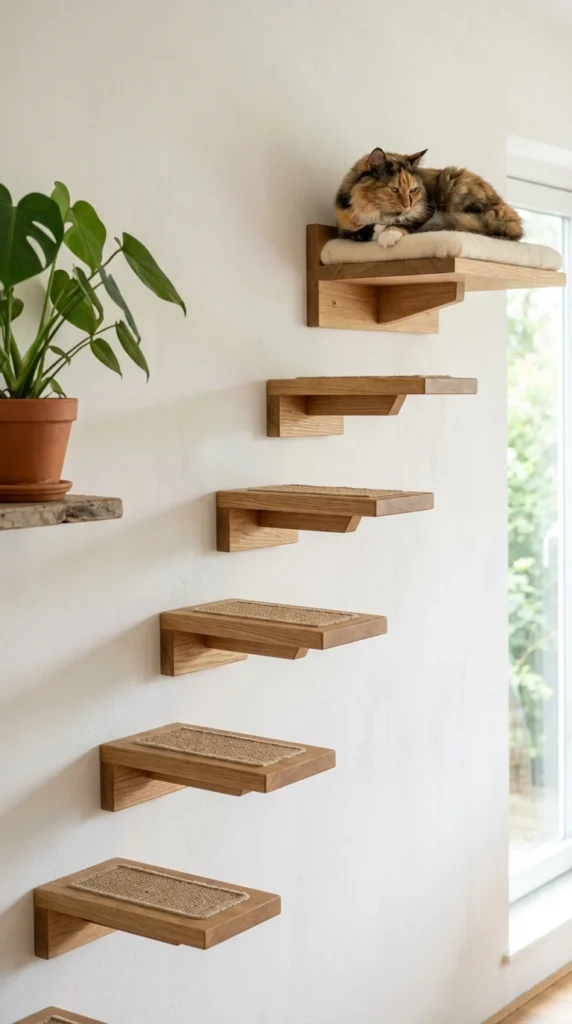
Combine exercise with scratching by creating a wall-mounted cat tree. Each “step” can be a mini scratching post. By using sisal or carpet on the horizontal surfaces, you give your cat a place to sharpen their claws as they climb to their favorite high-altitude nap spot.
14. PVC Pipe
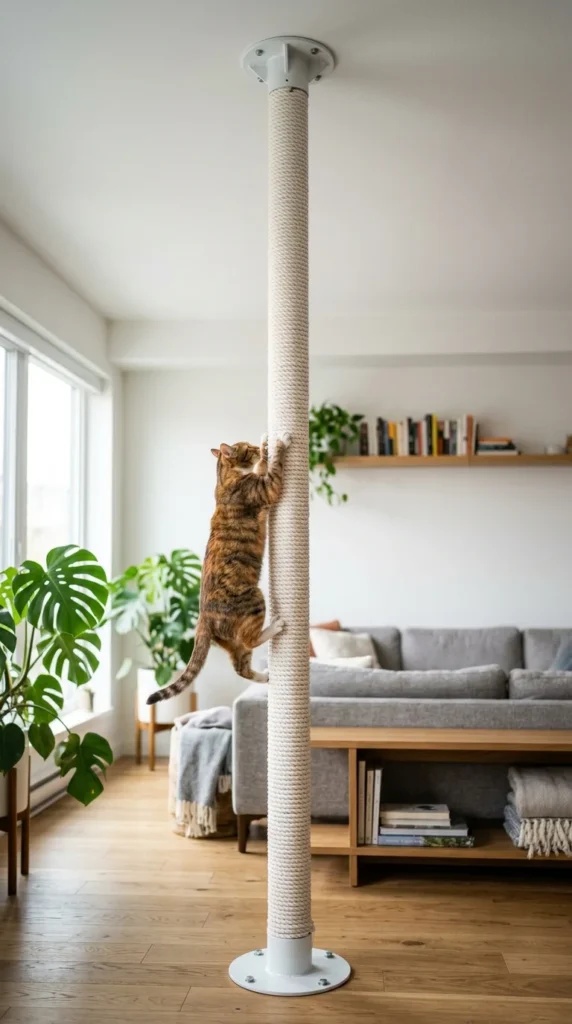
PVC pipe is an excellent material because it is lightweight yet incredibly strong. You can create an extra-tall post that reaches from floor to ceiling, secured with a tension rod system. Wrap it in cotton rope for a soft, clean look that provides a massive scratching surface area.
15. Wine Crate
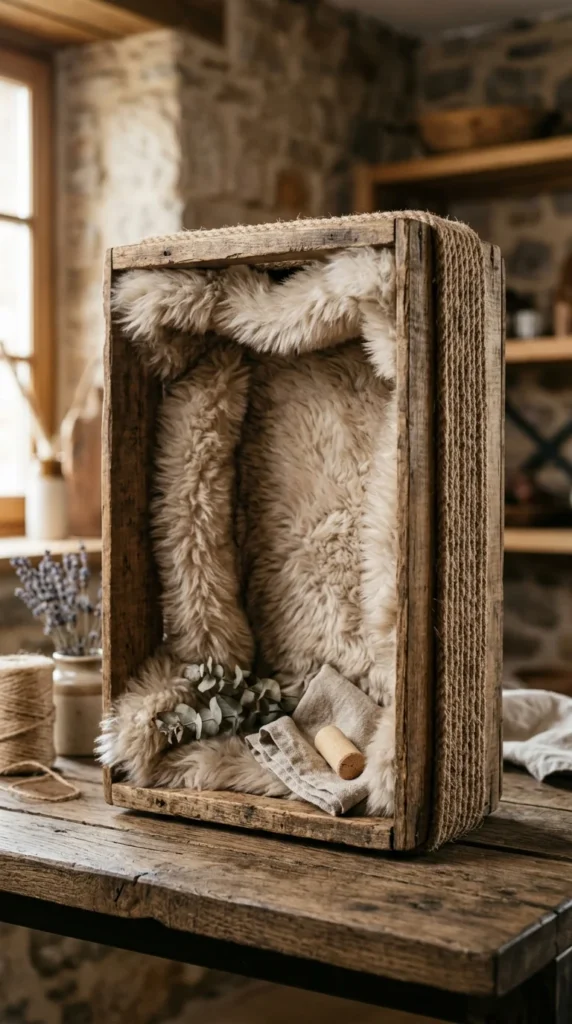
Upcycle an old wine crate into a “scratch and snooze” station. The exterior of the crate can be covered in different textures—one side with rope, another with carpet—while the interior provides a cozy, enclosed hideaway for a post-scratching nap.
16. Bookshelf Wrap
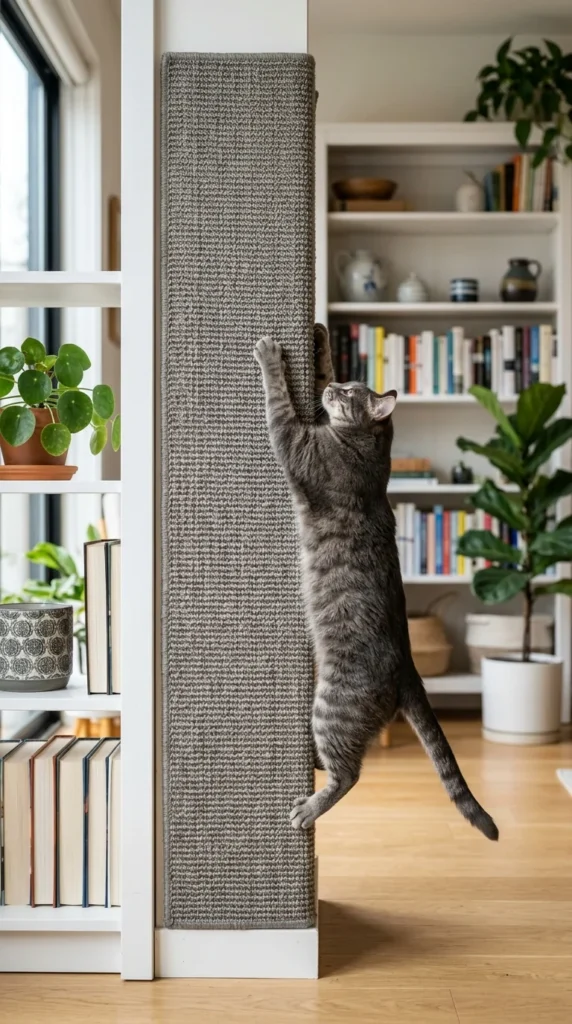
If your cat is already targeting the side of your bookshelf, give in. Measure the side panel and cut a piece of sisal matting to fit. Attach it using heavy-duty hook-and-loop strips (like Velcro). This makes the scratcher replaceable once it gets worn out without damaging the underlying furniture.
17. Geometric Design
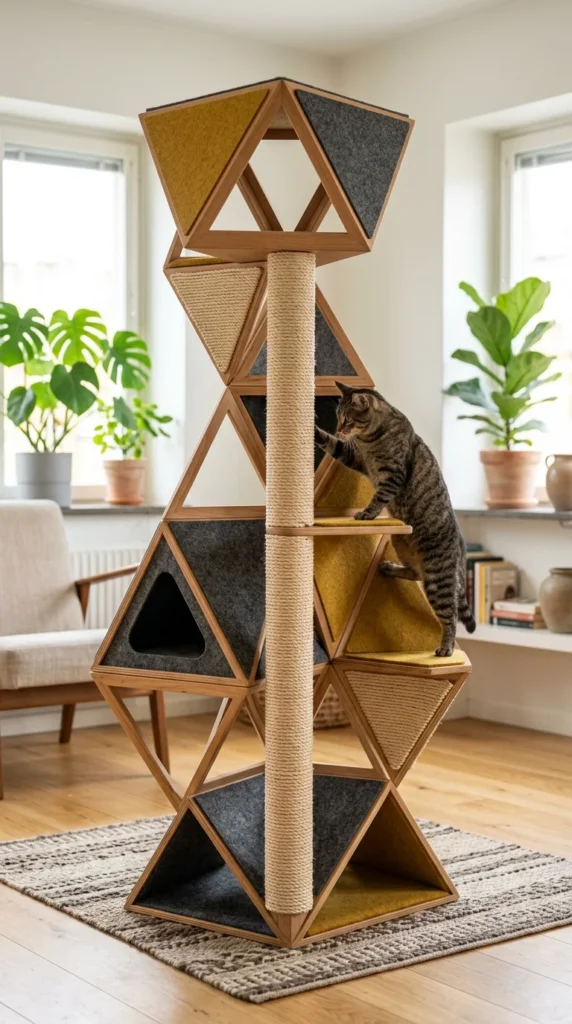
For the DIYer who loves a challenge, a geometric scratcher is a stunning project. By assembling wooden triangles or hexagons into a 3D sculpture, you create multiple surfaces at different angles. This is great for cats who like to scratch at diagonal or horizontal angles rather than just vertical ones.
18. Real Branch
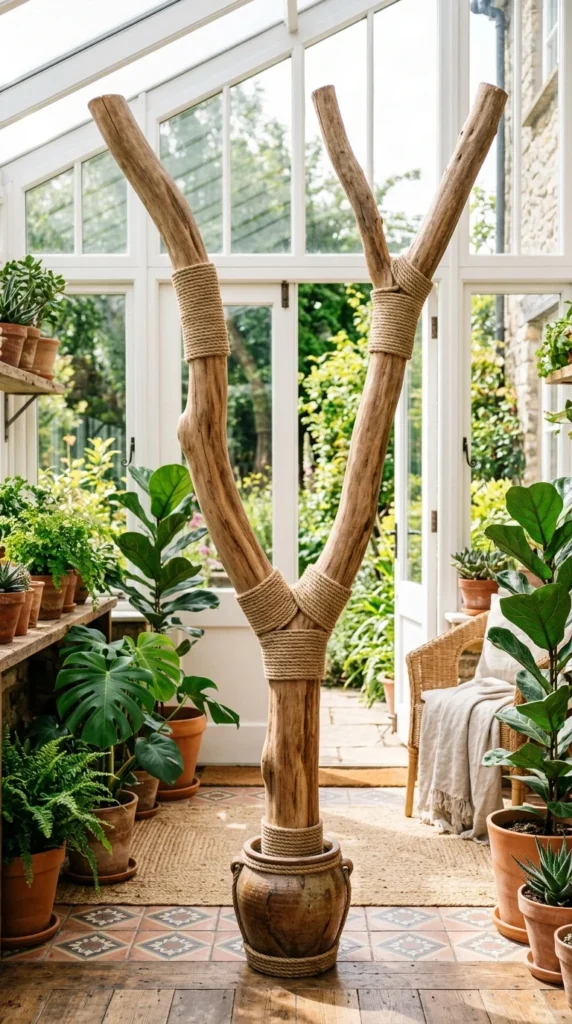
Find a large branch with an interesting “Y” shape. Wrap only certain sections with rope, leaving the natural wood exposed in others. This provides a variety of textures and mimics the experience of a cat climbing and scratching in a real tree. It’s an organic, beautiful addition to any home.
19. Basket Weave
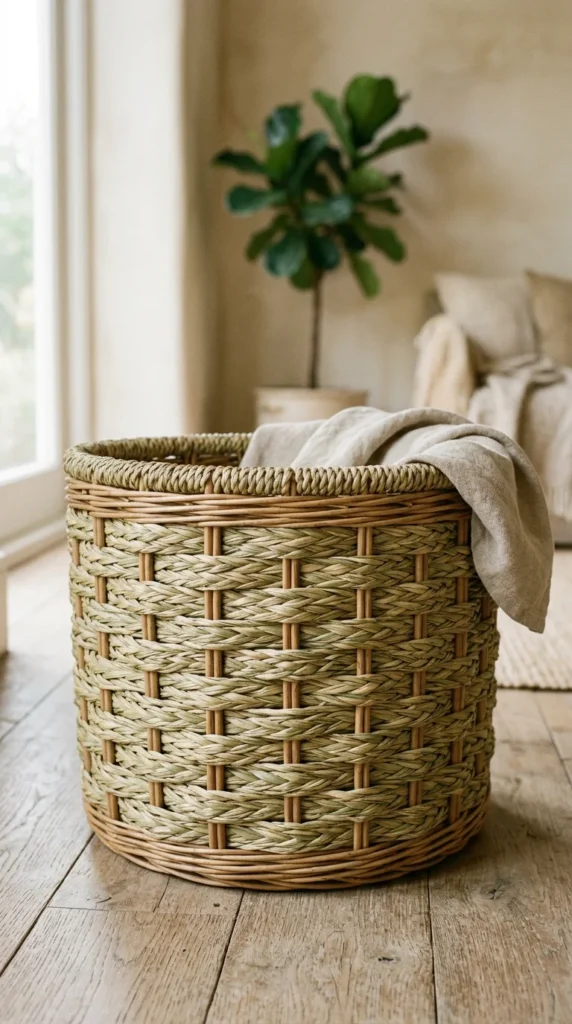
Take a heavy, low-profile wicker basket and reinforce the bottom with a piece of plywood for weight. Wrap the exterior in seagrass or flat hemp braid. The weaving creates a different “catch” for the cat’s claws compared to round rope, which some cats find much more satisfying.
20. Play Center
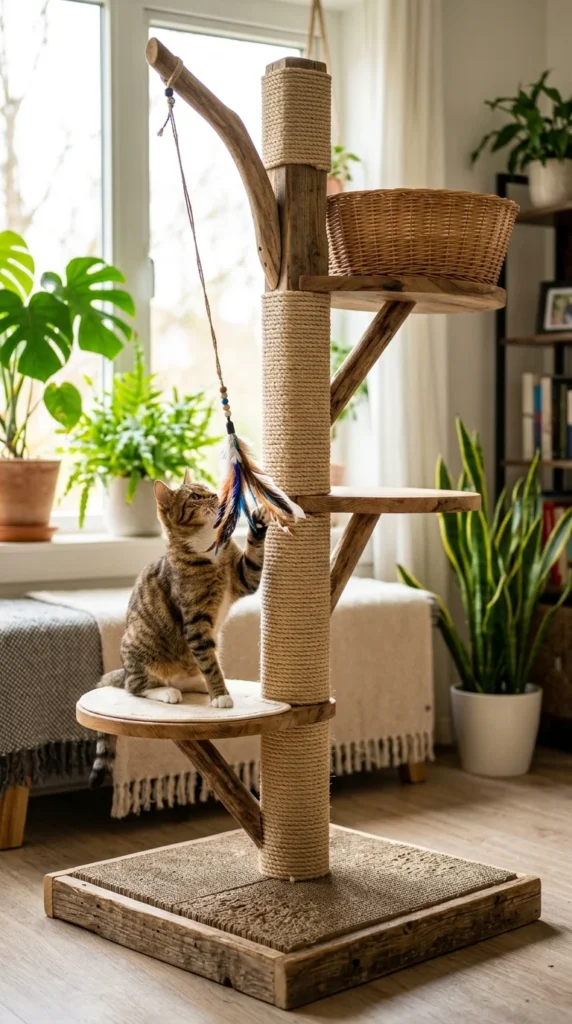
Why stop at just a post? Create an all-in-one activity center. Attach a spring-mounted toy to the top of a rope-wrapped post and add a cardboard scratching base. This encourages the cat to associate the scratching post with play and rewards, making it much more likely they will choose it over your furniture.