
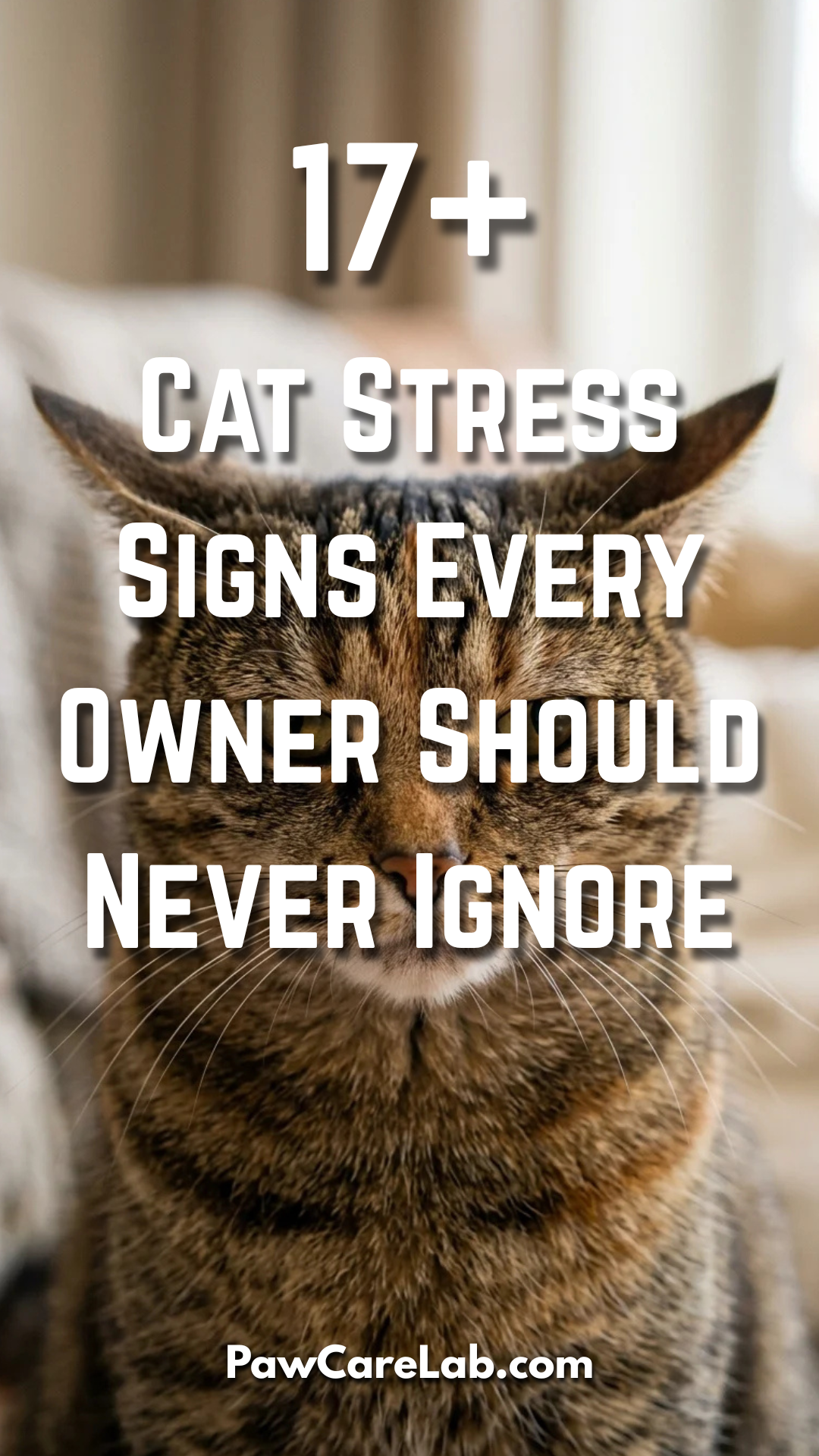
Cats are often perceived as the masters of zen—independent, stoic, and seemingly unbothered by the chaos of the world. However, beneath that cool exterior lies a highly sensitive nervous system. Unlike dogs, who often wear their hearts on their sleeves, cats are evolutionary experts at hiding vulnerability. In the wild, showing weakness or “stress” makes a small predator a target. In your living room, this means your feline friend might be suffering in silence.
Chronic stress in cats isn’t just a mood issue; it can lead to severe physical ailments, including feline idiopathic cystitis, skin infections, and a weakened immune system. Recognizing the subtle shifts in their behavior is the first step toward ensuring a happy, healthy life for your pet. Here are 17 critical signs of stress that every cat owner should be able to identify.
1. Improper Elimination
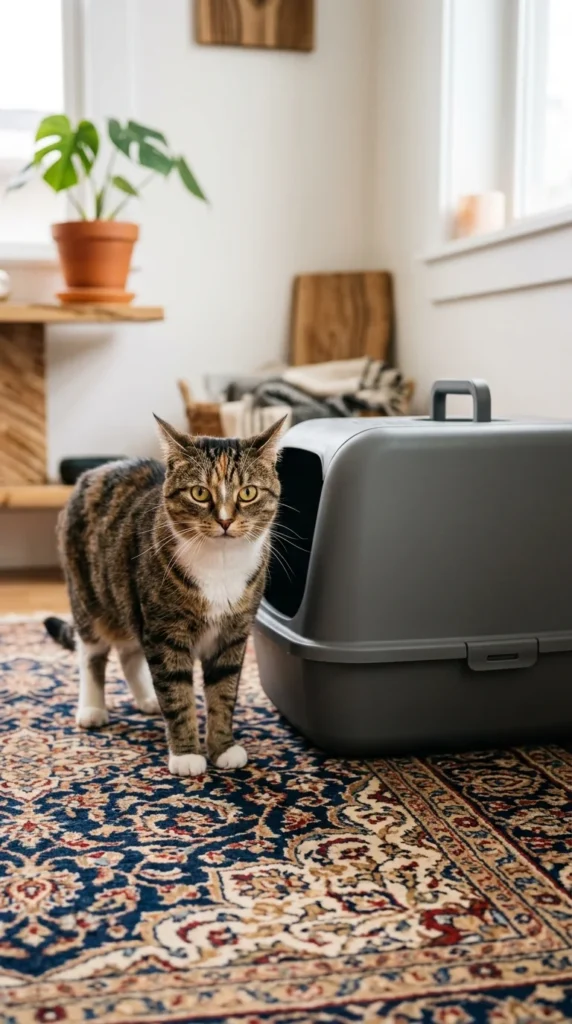
One of the most common—and frustrating—signs of a stressed cat is “missing” the litter box. While owners often mistake this for spite, cats don’t do anything out of spite. Urinating on your bed, the laundry, or the rug is often a “self-soothing” mechanism. By mixing their scent with yours, they feel more secure. It can also be a sign that the litter box itself has become a source of stress, perhaps due to its location, a new type of litter, or a lack of cleanliness.
2. Excessive Grooming
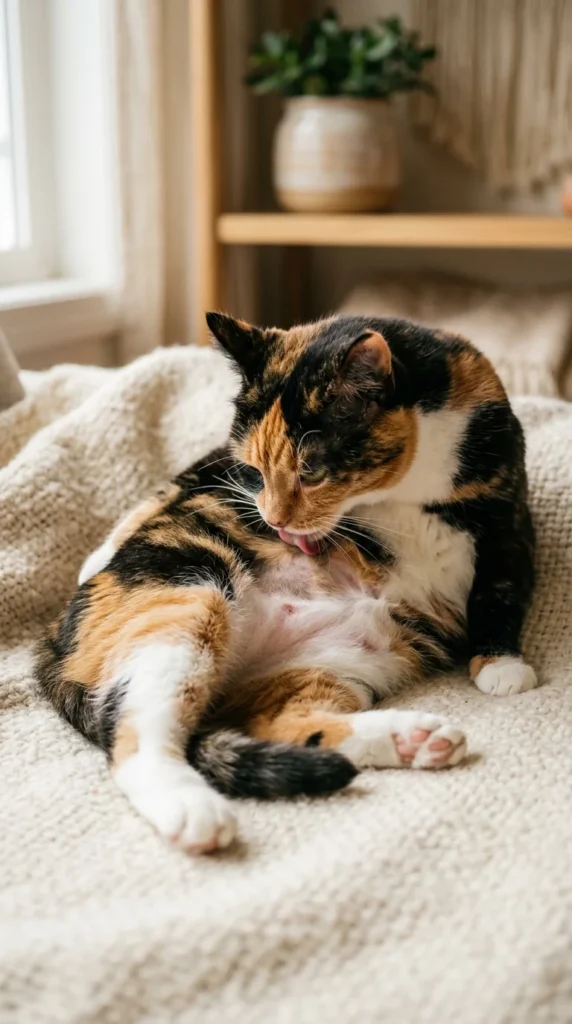
Cats are meticulous about hygiene, but when grooming turns into a compulsion, it’s a red flag. This is known as psychogenic alopecia. The act of licking releases endorphins in a cat’s brain, helping them calm down. If you notice your cat focusing on a specific area—usually the belly, inner thighs, or front legs—to the point of creating bald spots or skin sores, they are likely trying to “wash away” their anxiety.
3. Persistent Hiding
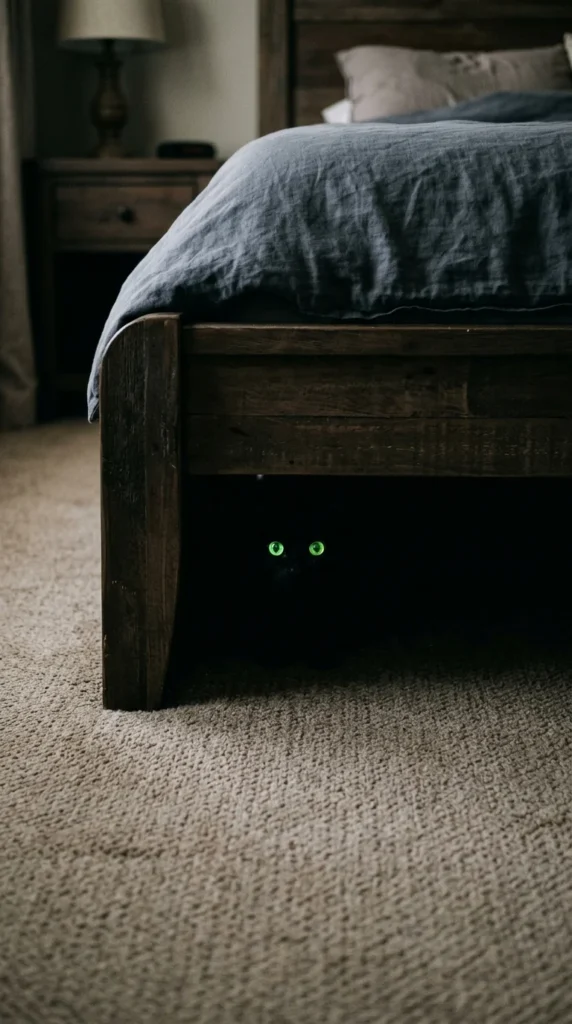
It is perfectly normal for a cat to enjoy a nap in a quiet closet. However, if your social cat suddenly becomes a ghost, spending hours or days under the bed or behind the sofa, something is wrong. Hiding is a primary defense mechanism. A stressed cat feels that their environment is no longer safe, and staying out of sight is the only way they feel they can protect themselves from a perceived threat.
4. Sudden Aggression
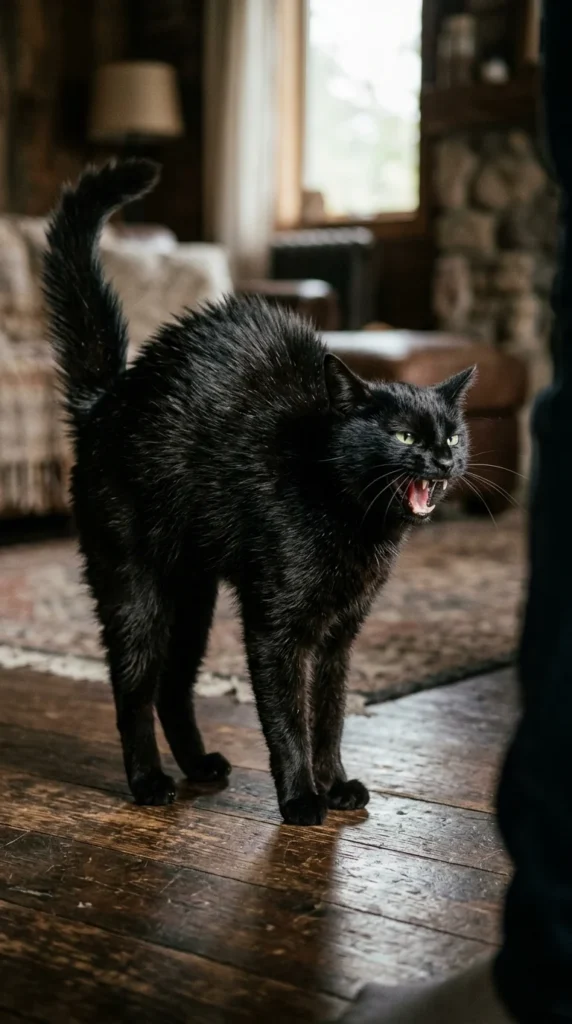
If your usually cuddly companion begins hissing, swatting, or biting, they aren’t “turning mean.” Aggression is a classic “fight or flight” response. When a cat feels cornered by stress—whether it’s due to a new pet, a loud renovation, or even a medical issue causing pain—they may lash out to create distance between themselves and the source of their discomfort.
5. Reduced Appetite
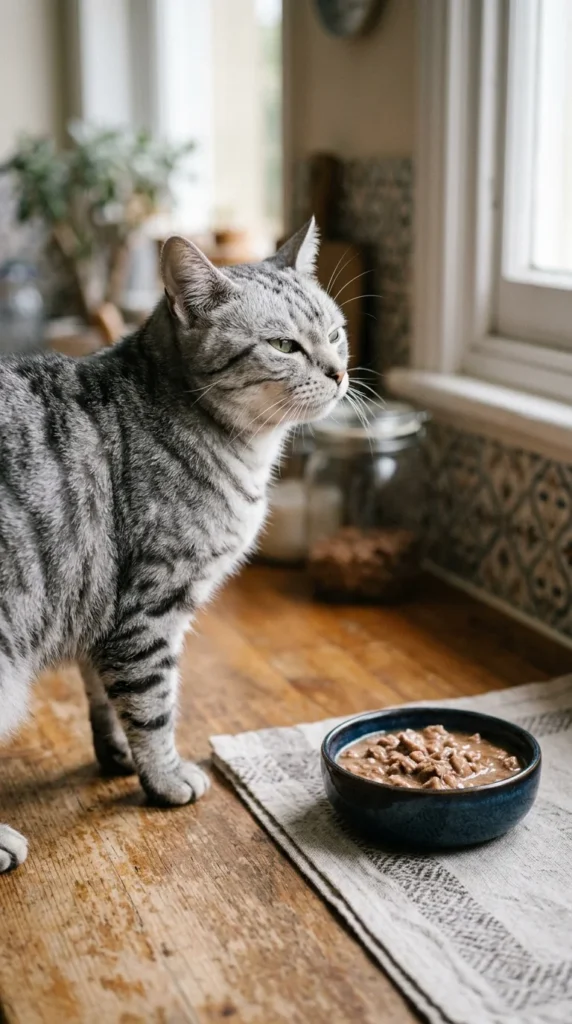
A healthy cat usually looks forward to mealtime. A sudden lack of interest in food, or even their favorite treats, is a significant indicator of psychological or physical distress. Stress can shut down a cat’s digestive drive. Note that a cat refusing to eat for more than 24 to 48 hours is a medical emergency, as it can quickly lead to a dangerous condition called hepatic lipidosis (fatty liver disease).
6. Increased Vocalization
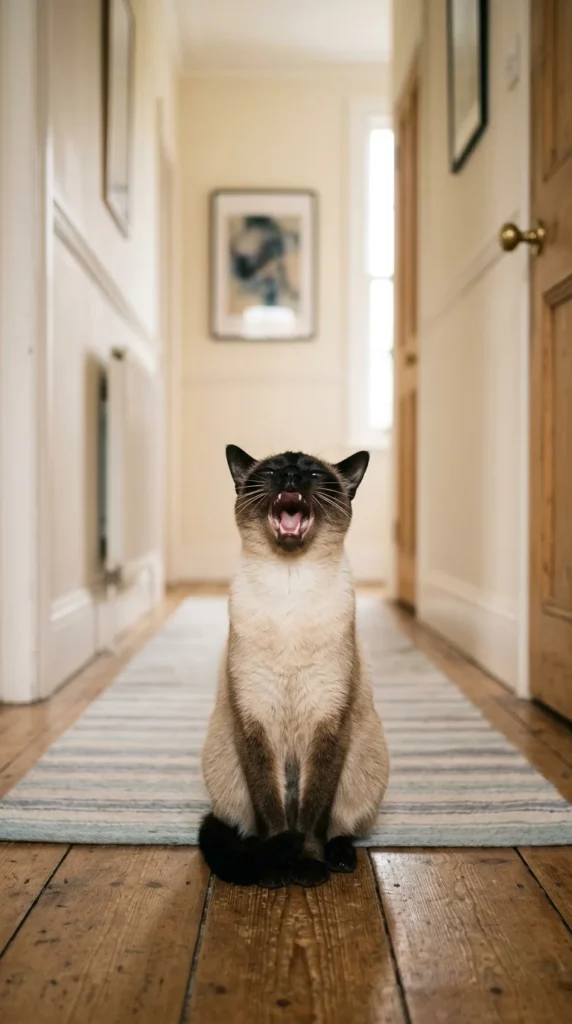
Is your cat “talking” more than usual? While some breeds like Siameses are naturally chatty, a sudden increase in yowling, especially at night or in a repetitive tone, can be a cry for help. This is often seen in cats experiencing separation anxiety or senior cats suffering from cognitive dysfunction. They are literally vocalizing their disorientation and unease.
7. Digestive Issues
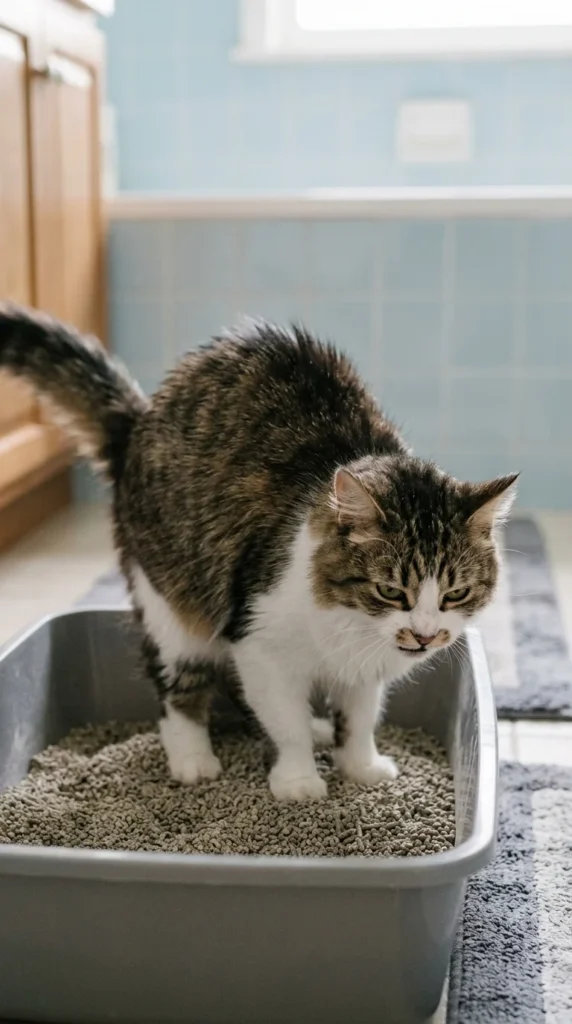
Just like humans get “butterflies” or an upset stomach when nervous, cats experience gastrointestinal distress due to stress. Chronic diarrhea or constipation can be triggered by a change in the household, such as a move or a new baby. If your vet has ruled out parasites and food allergies, the culprit is likely an overactive stress response affecting their gut health.
8. Unusual Lethargy
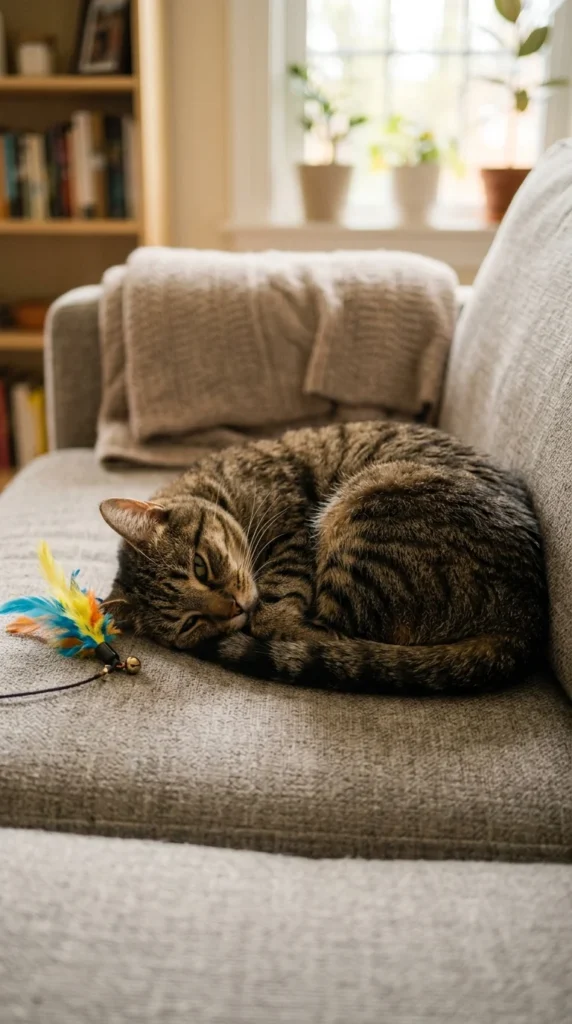
Cats sleep a lot—sometimes up to 16 hours a day. However, there is a difference between a peaceful nap and lethargy. A stressed or depressed cat will show no interest in play, grooming, or interaction. They may stay in one spot for an entire day, appearing “shut down.” This total withdrawal is a sign that the cat’s internal resources are exhausted.
9. Tense Posture
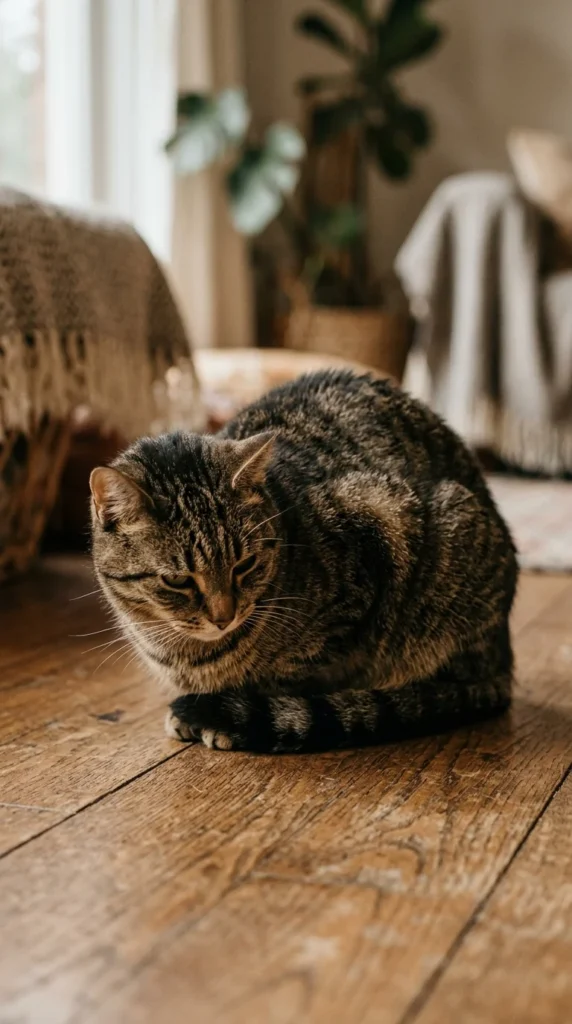
Body language is a cat’s primary way of communicating. A relaxed cat has a loose, fluid body. A stressed cat looks like a coiled spring. Look for “the crouch”: the cat stays low to the ground, paws tucked under, and muscles tight, ready to bolt at a moment’s notice. This “hyper-ready” state is exhausting for a feline and indicates they don’t feel they can relax in their own home.
10. Constant Restlessness
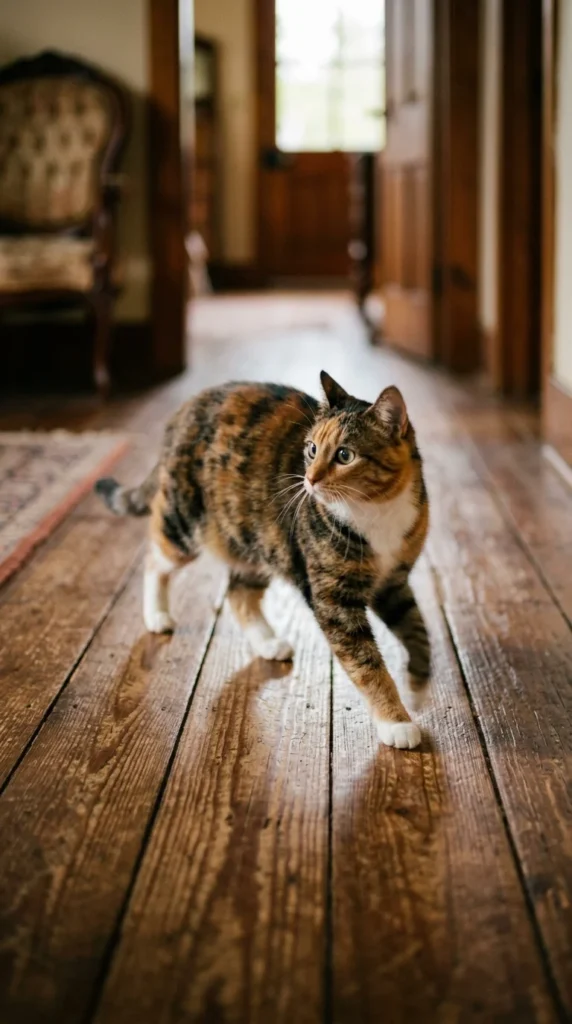
On the opposite end of lethargy is restlessness. If your cat is pacing, moving from room to room, and unable to settle down for a nap, they are likely in a state of high alert. This is often seen when there are outdoor “intruders,” like a neighborhood cat visible through the window, which makes the indoor cat feel their territory is under siege.
11. Dilated Pupils

Unless your cat is in a dark room or hunting a toy, their pupils should be relatively thin slits. “Saucer eyes”—where the pupils remain wide and black even in bright light—are a physiological sign of an adrenaline surge. If your cat’s eyes are constantly dilated while they are just sitting in the living room, they are in a state of chronic “high alert” and fear.
12. Ear Positioning
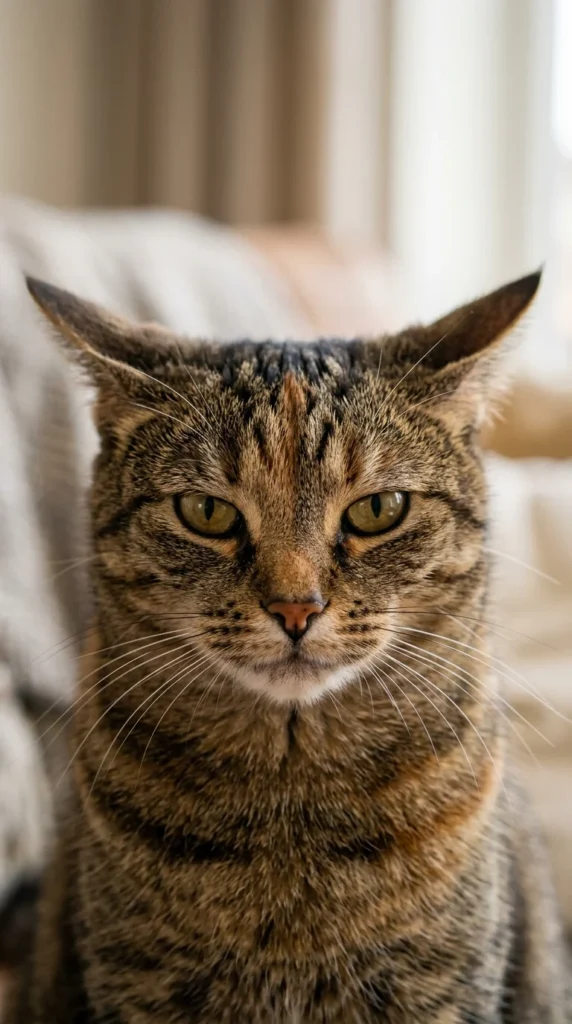
A cat’s ears are like satellite dishes for their emotions. Ears that are constantly swivelled back, flattened against the head (“airplane ears”), or twitching nervously indicate that the cat is sensing a threat. When the ears are pinned back, it’s a sign of extreme defensive stress; the cat is trying to protect its ears from a potential fight.
13. Destructive Scratching
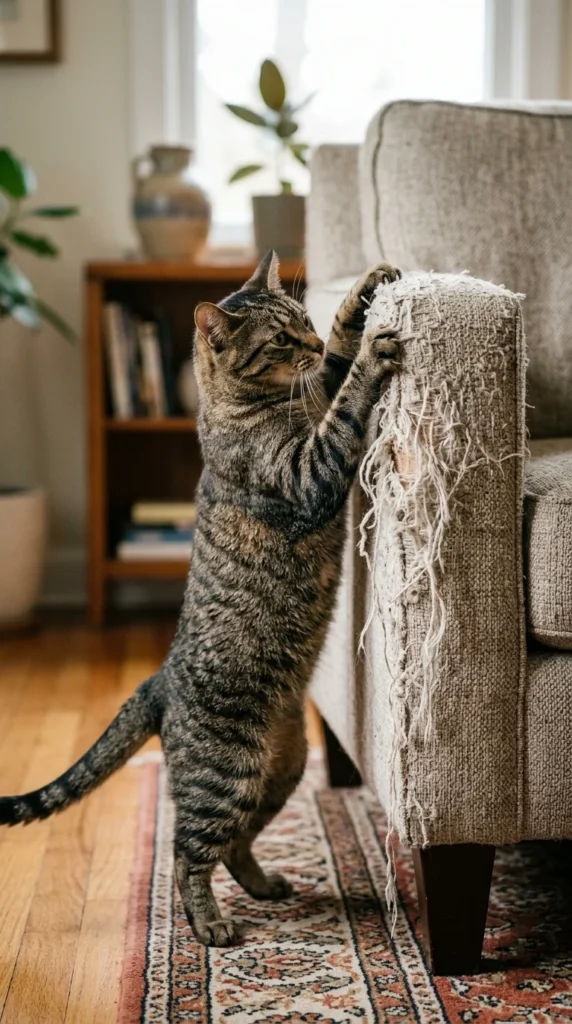
Scratching is a natural behavior, but a sudden increase in intensity or a shift to scratching high-traffic areas (like the front door or the middle of the carpet) is a territorial claim. When a cat feels insecure, they use the scent glands in their paws to “mark” the house more aggressively. It’s their way of saying, “I live here, and I’m trying to feel safe.”
14. Frequent Nose Licking
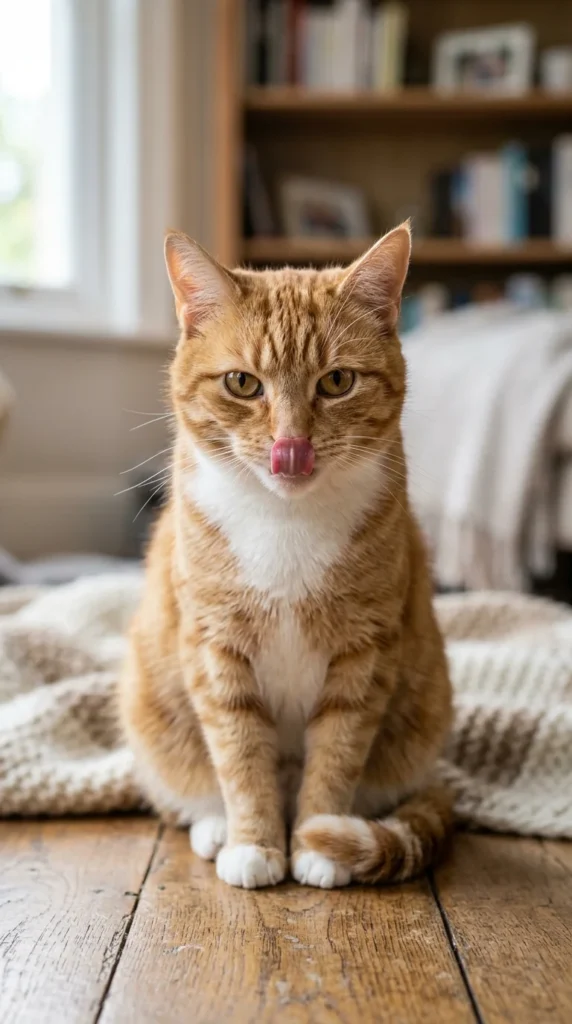
In the absence of food, frequent nose licking or “lip smacking” is a subtle displacement behavior. It’s a quick, repetitive action that cats do when they are feeling a moment of conflict or mild anxiety. You might see this when you pick them up when they don’t want to be held, or when a loud noise happens nearby.
15. Avoiding Contact
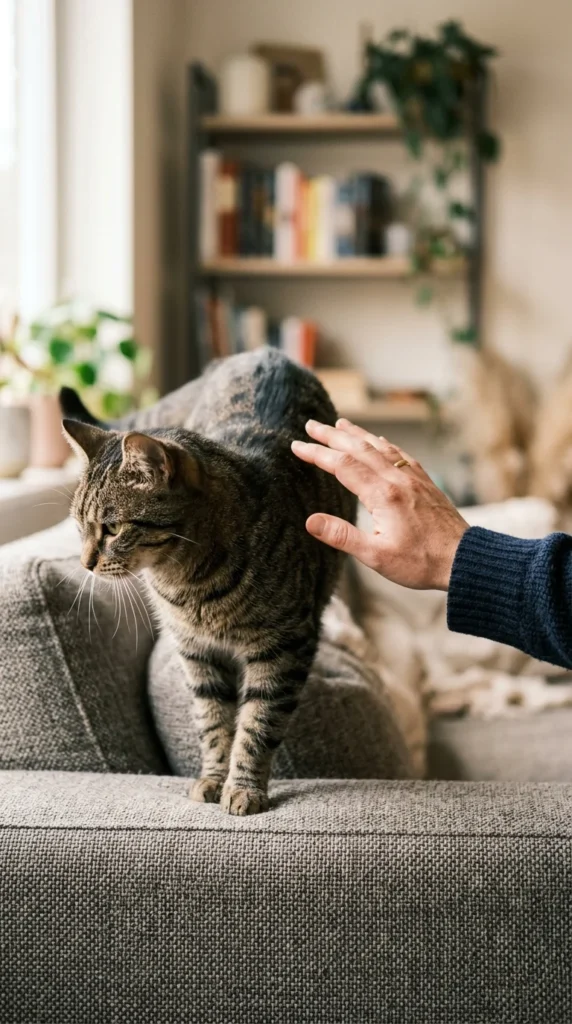
If your once-affectionate “lap cat” suddenly avoids your touch or moves away when you sit next to them, don’t take it personally. Stress often makes cats hypersensitive to touch (hyperesthesia). Physical contact might feel overwhelming or even painful to a cat whose nervous system is already overloaded.
16. Startling Easily
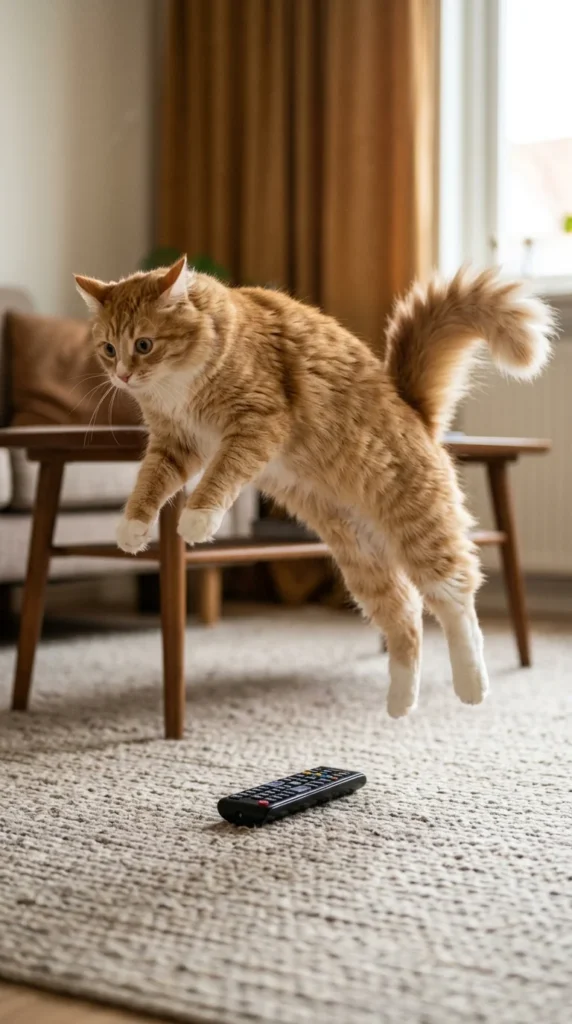
An “edgy” cat is a stressed cat. If the sound of a closing door, a sneezing human, or a falling leaf outside the window sends your cat flying across the room in a panic, their baseline stress level is far too high. This hyper-vigilance means they are no longer able to distinguish between a normal household sound and a genuine threat.
17. Vertical Spraying
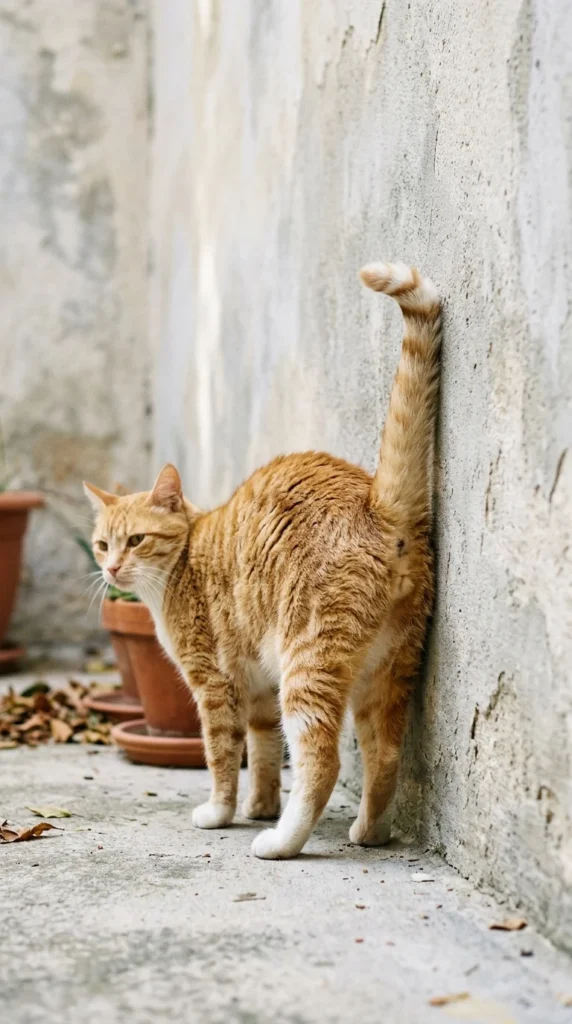
Unlike improper urination on the floor, spraying is usually done against vertical surfaces (walls, doors, curtains). Both males and females can do this, and even neutered cats can spray when under intense stress. This is the ultimate “security fence.” By spraying urine at nose level, the cat is trying to create a pungent wall of their own scent to keep “enemies” away and bolster their own confidence.