
Maintaining a pristine aquarium is about more than just aesthetics; it is a vital part of ensuring the health and longevity of your aquatic pets. However, for many fish, “cleaning day” is a source of immense terror. The sudden movement, changing water chemistry, and invasive tools can trigger a stress response that weakens their immune systems. To keep your underwater ecosystem thriving, you must master the art of the “stealth clean.” Here are 20 expert tips on how to clean your fish tank while keeping your fish calm, cool, and collected.
1. Small Changes
The golden rule of stress-free maintenance is consistency over intensity. Instead of performing a massive 50% water change once a month, aim for a 10% to 15% change every week. Smaller, frequent updates prevent drastic shifts in water chemistry and temperature, which are the primary causes of “osmotic shock” in fish. By keeping the environment stable, your fish will barely notice the maintenance occurring.
2. Siphon Vacuum
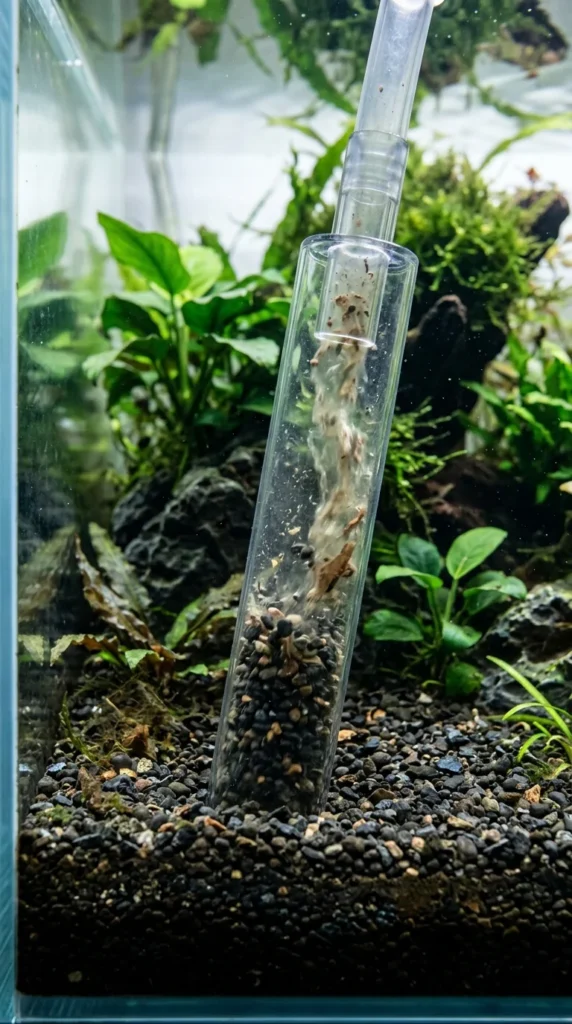
A gravel vacuum is your best friend. It allows you to remove waste (detritus) from the substrate without having to stir up the entire bottom of the tank. When using the siphon, move it slowly. Fast, jerky movements can mimic the behavior of a predator, causing your fish to dart away in fear. Slow, methodical plunging allows the fish to realize the tool is not a threat.
3. Magnetic Scrapers
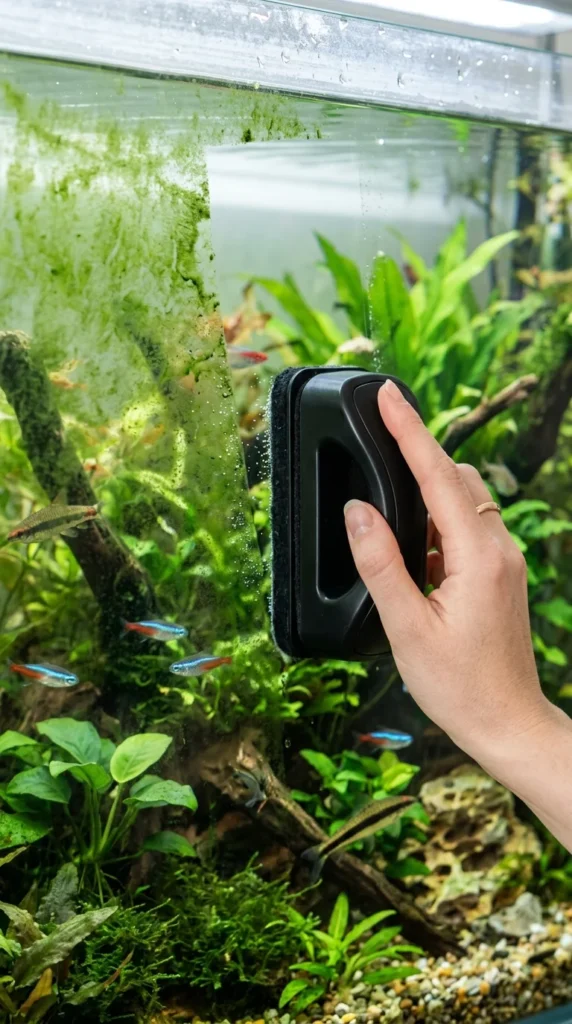
To clean the glass, avoid sticking your entire arm into the tank whenever possible. Magnetic scrapers allow you to clean the algae from the outside. The gentle gliding motion is much less invasive than a hand scrubbing with a sponge. Just be careful not to trap a piece of sand between the magnet and the glass, as this can scratch your tank.
4. Temperature Matching
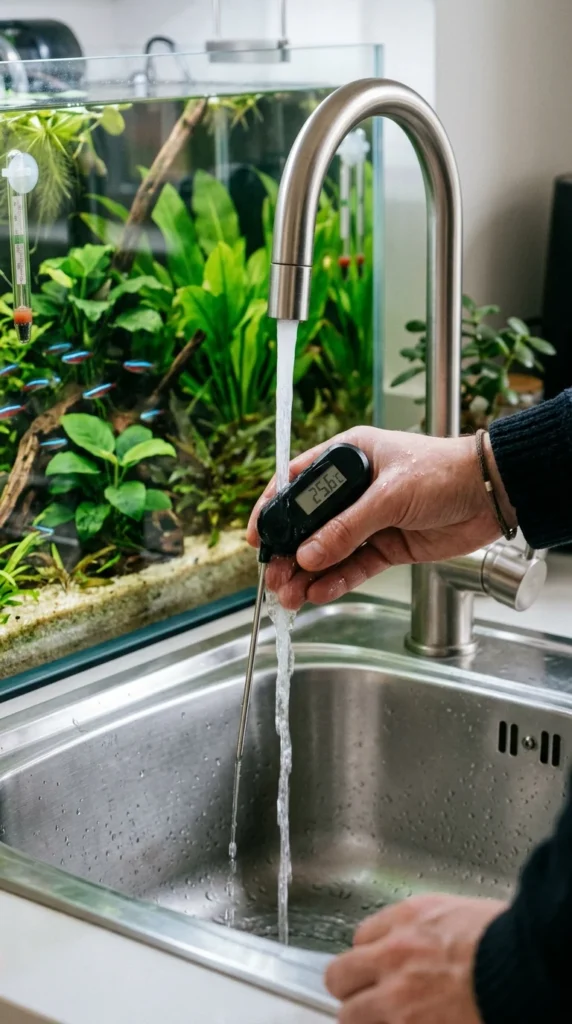
Fish are ectothermic, meaning their body temperature is regulated by their environment. Adding water that is even a few degrees colder or warmer than the tank water can shock their systems. Use a reliable thermometer to ensure the replacement water is within one degree of the current tank temperature. This simple step eliminates one of the biggest physical stressors during cleaning.
5. Dechlorinate First
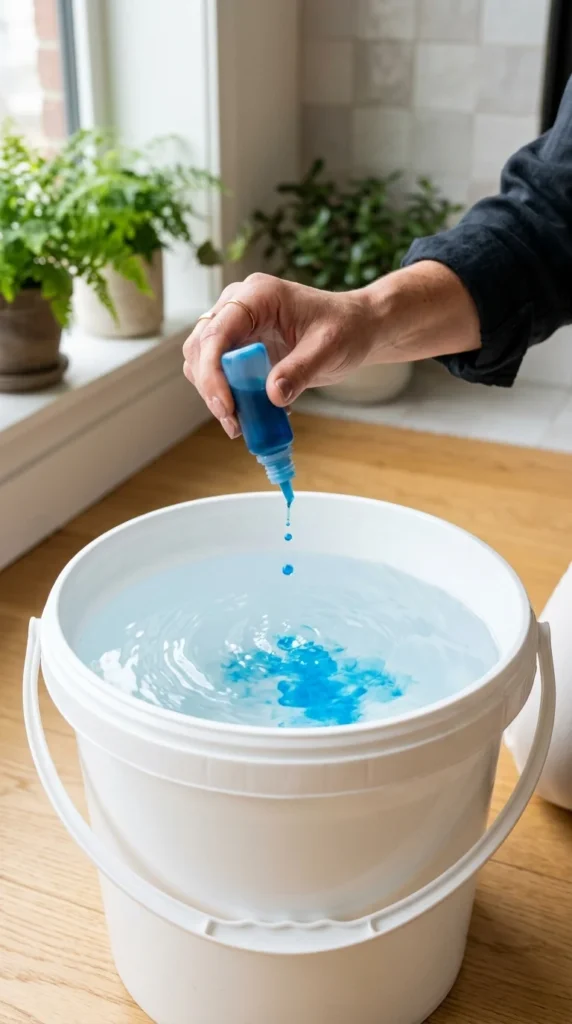
Never add tap water directly to your tank. Chlorine and chloramines are toxic to fish and can burn their gills. Always treat your replacement water in a separate bucket with a high-quality conditioner before it ever touches your aquarium. This ensures that the water is safe and chemically neutral by the time it reaches your fish.
6. Tank Water Rinse
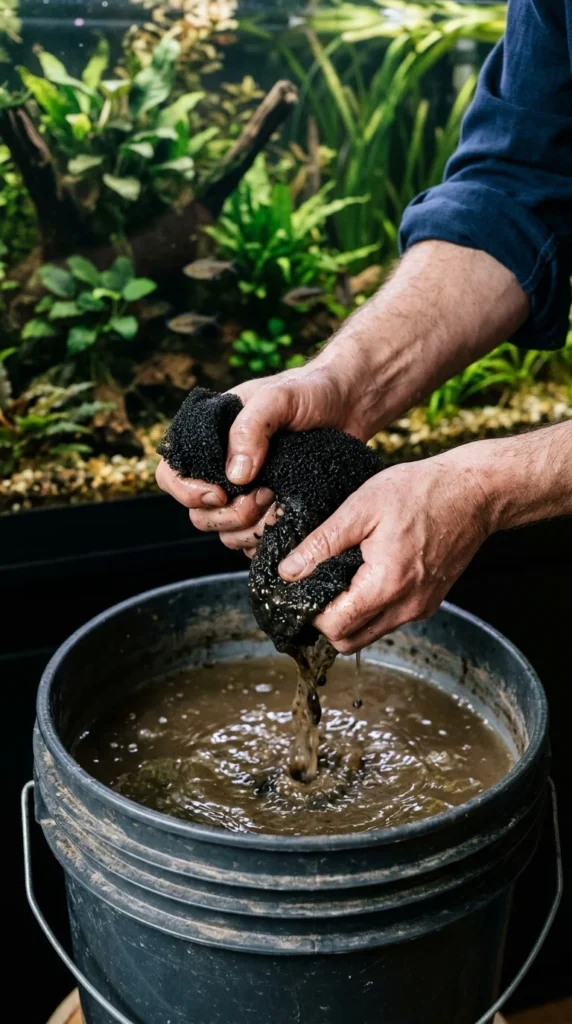
When it is time to clean your filter media, never use tap water. The chlorine will kill the beneficial bacteria living in the sponge, which are responsible for keeping your nitrogen cycle stable. Instead, rinse the media in a bucket of the old water you just siphoned out of the tank. This removes the gunk without destroying the life-saving bacterial colony.
7. Stay Put
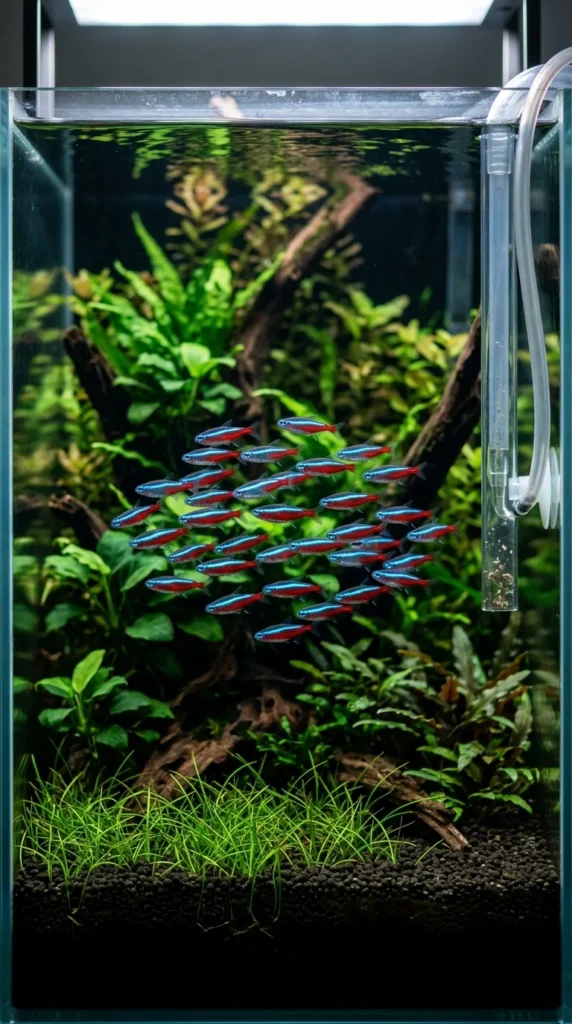
One of the biggest mistakes beginners make is removing the fish from the tank during cleaning. Netting a fish is a high-stress event that can damage their protective slime coat. Unless you are doing a 100% breakdown (which should be rare), leave the fish in the tank. They are much safer and calmer staying in their home while you work around them.
8. Low Lighting
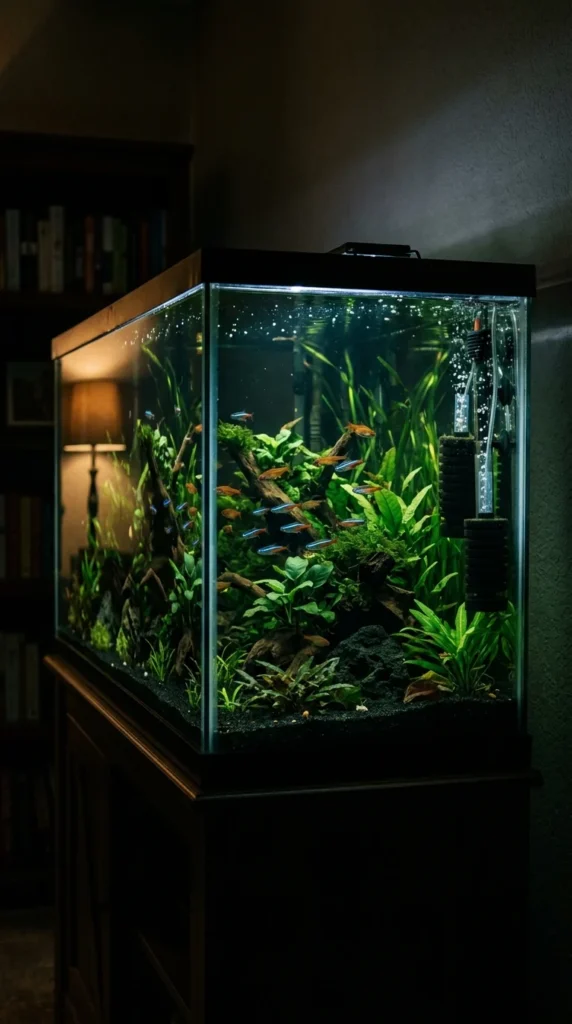
Bright lights can make fish feel exposed and vulnerable. Before you start your cleaning routine, turn off the aquarium lights. Working in a dimly lit environment mimics the natural “twilight” hours where many fish feel more secure. This reduces their activity levels and keeps them from panicking when you move decorations or vacuum the substrate.
9. Gentle Refilling
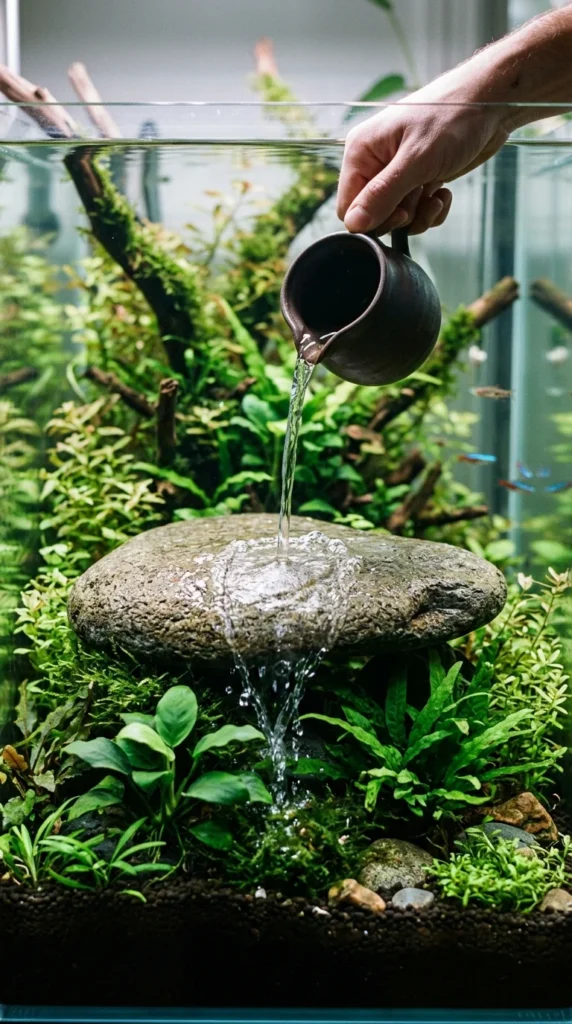
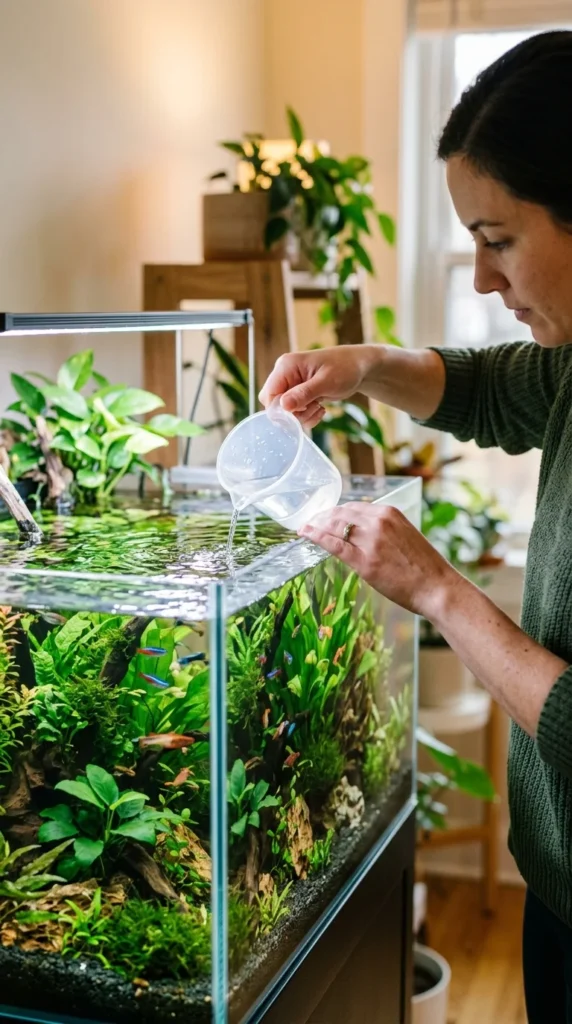
When adding new water, do not just dump the bucket in. The resulting “waterfall” creates turbulent currents that can toss small fish around and uproot plants. Use a small bowl or pour the water over a decoration or your hand to diffuse the flow. This creates a gentle rise in the water level rather than a chaotic whirlpool.
10. Manual Scrubbing
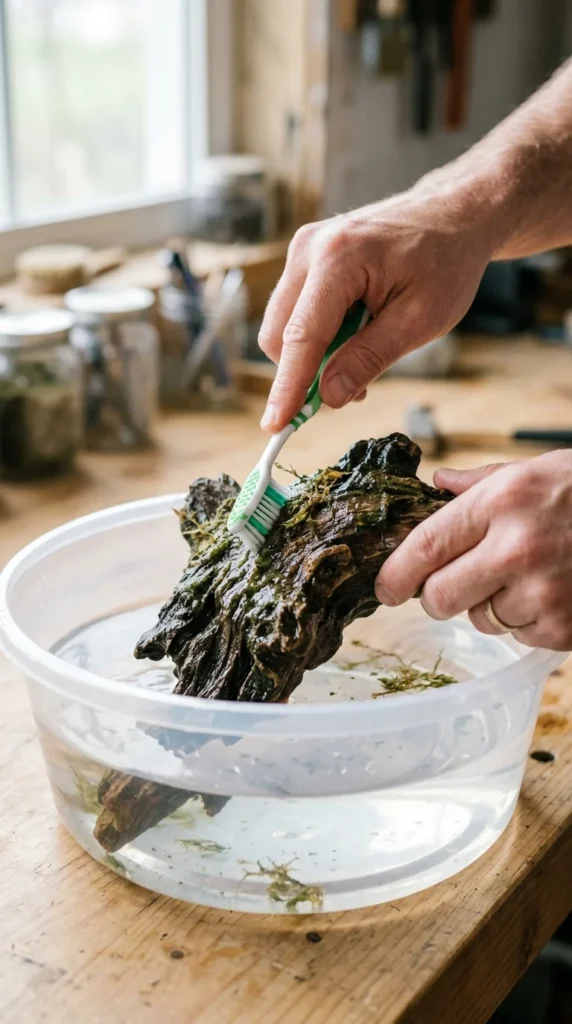
If your decorations are covered in stubborn algae, remove them from the tank to scrub them. This prevents you from having to use force or chemicals inside the water. Use a dedicated “aquarium only” toothbrush and plain warm water. Once clean, gently place the items back in their original spots so the fish don’t get disoriented by a changing landscape.
11. Zero Chemicals
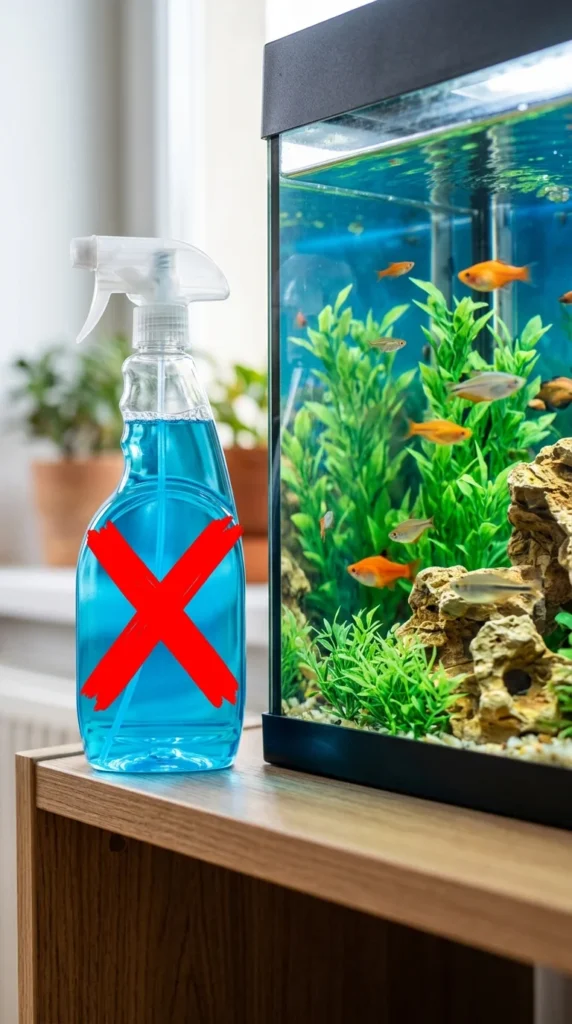
Never use household soaps, detergents, or glass cleaners near your tank. Even the fumes from a spray bottle can be fatal to fish if they drift into the water. If you must clean the outside of the glass, use a damp microfiber cloth or a vinegar-and-water solution, applying it directly to the cloth away from the tank before wiping.
12. Plant Pruning
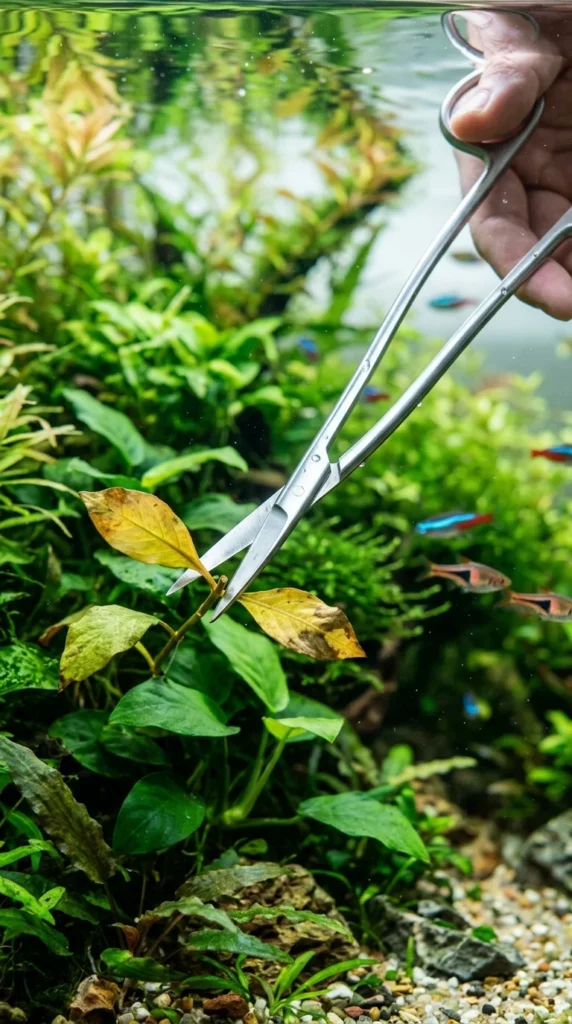
Decaying plant matter contributes to ammonia spikes. Part of your cleaning routine should involve “deadheading” or pruning your live plants. Use long aquascaping tools so you can reach the bottom of the tank without submerging your entire arm. This keeps the water cleaner for longer and keeps the environment looking natural.
13. Equipment Check
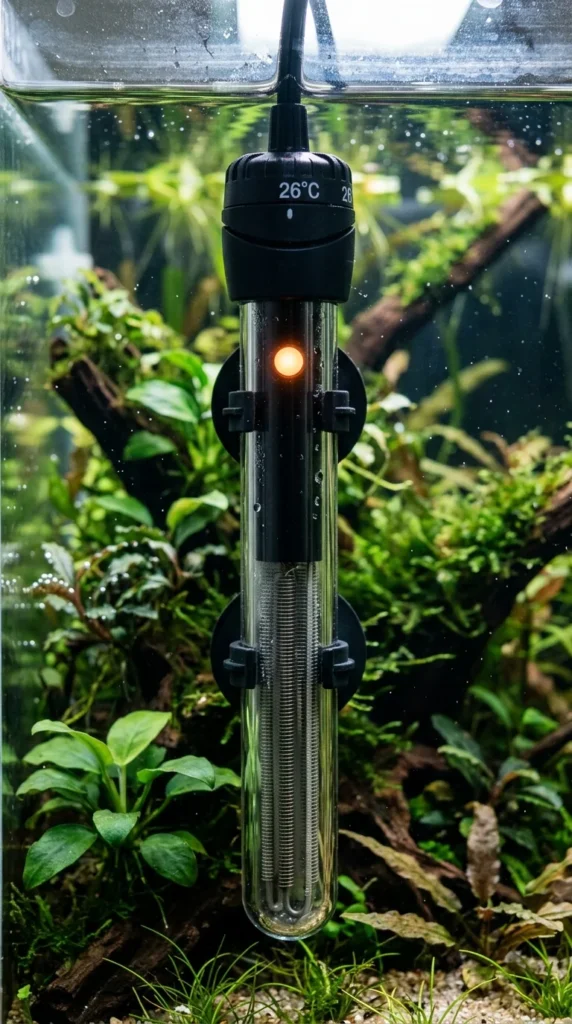
While cleaning, take a moment to inspect your equipment. Is the heater cracked? Is the filter intake clogged? Sometimes a noisy filter is vibrating against the glass, creating a constant “hum” that stresses fish. Ensuring all equipment is functioning quietly and efficiently is a major part of a low-stress environment.
14. Routine Consistency

Fish have surprisingly good internal clocks. If you clean the tank at the same time and on the same day every week, they will eventually become accustomed to the routine. They may even become curious rather than fearful. Predictability is a powerful tool in reducing animal anxiety.
15. Silence Please
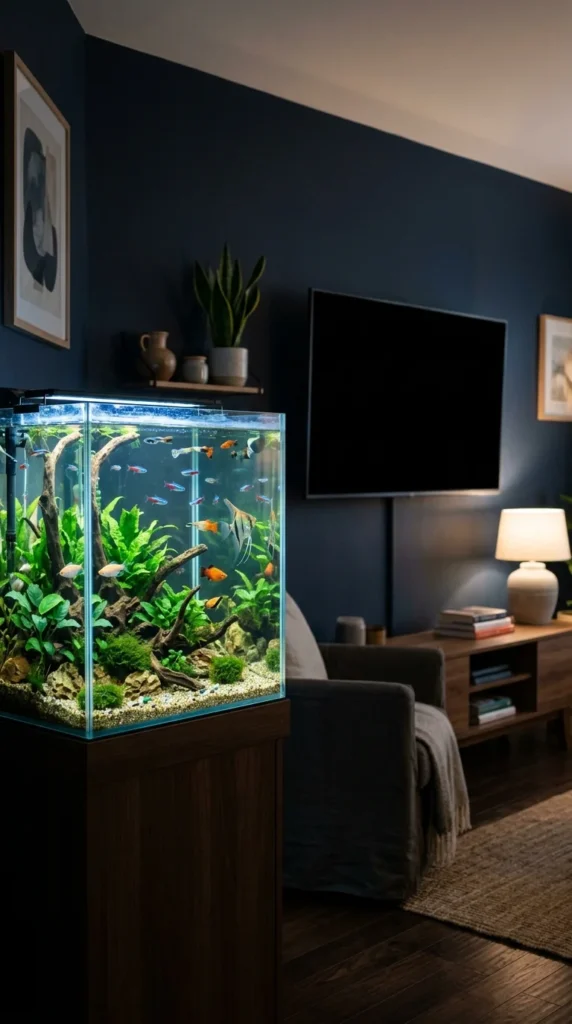
Fish are highly sensitive to vibrations. During your cleaning session, turn off the TV, stop playing loud music, and avoid heavy footsteps around the tank. The less “noise” (both audible and vibrational) they have to process, the more they can focus on simply staying calm while you work.
16. Water Testing
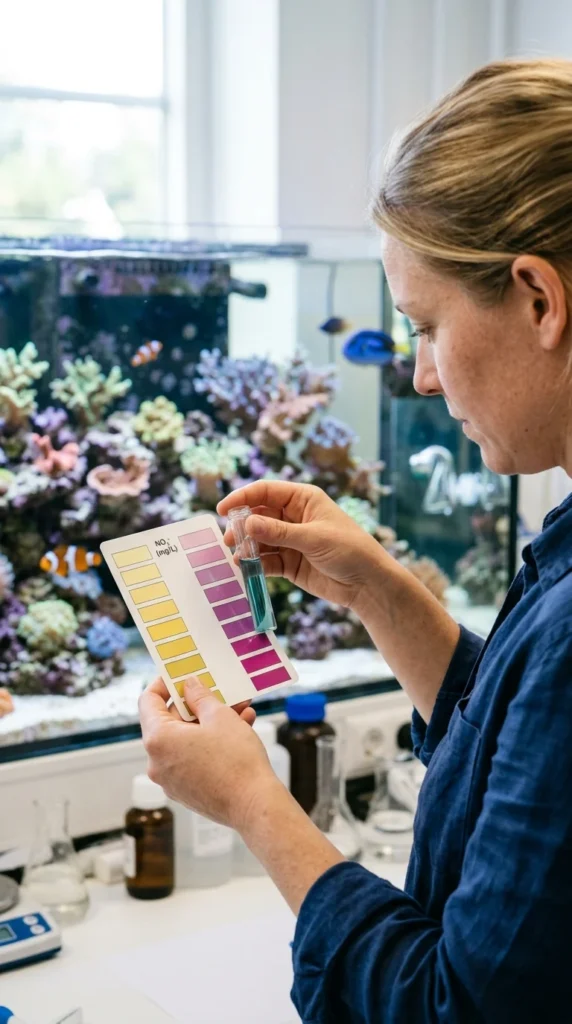
You cannot manage what you do not measure. Use a liquid test kit to check your ammonia, nitrite, and nitrate levels before and after cleaning. Knowing your parameters allows you to clean with a purpose. If your nitrates are low, you can afford a very light clean; if they are climbing, you know you need to be more thorough with the gravel vacuum.
17. Minimal Contact
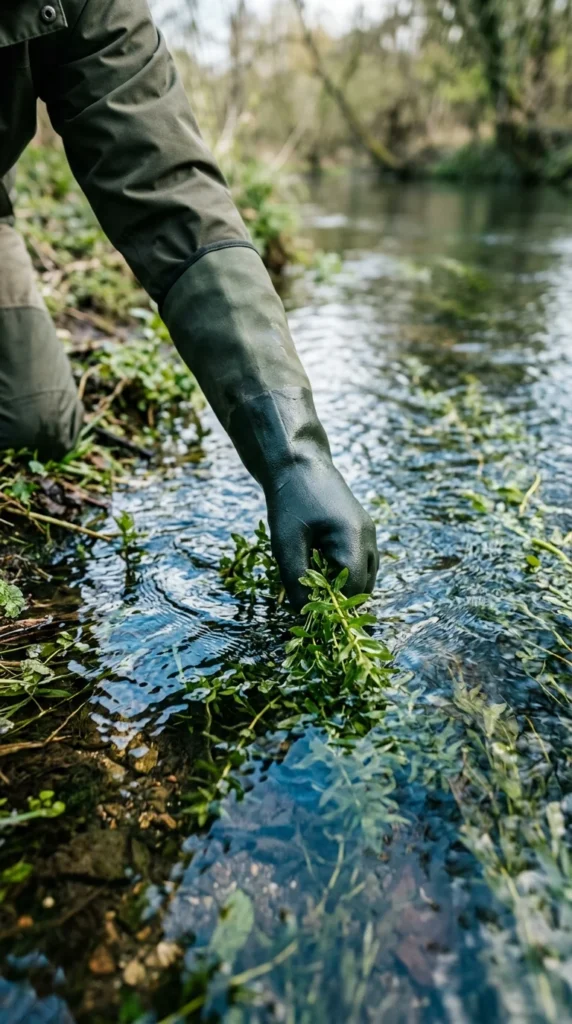
Your skin contains oils, lotions, and soaps that can be harmful to the water chemistry. Furthermore, the physical touch of a human hand can strip a fish of its slime coat—its primary defense against infection. If you must reach into the tank, wash your hands thoroughly with water only, or wear aquarium-safe gloves that reach up to the shoulder.
18. Delayed Feeding
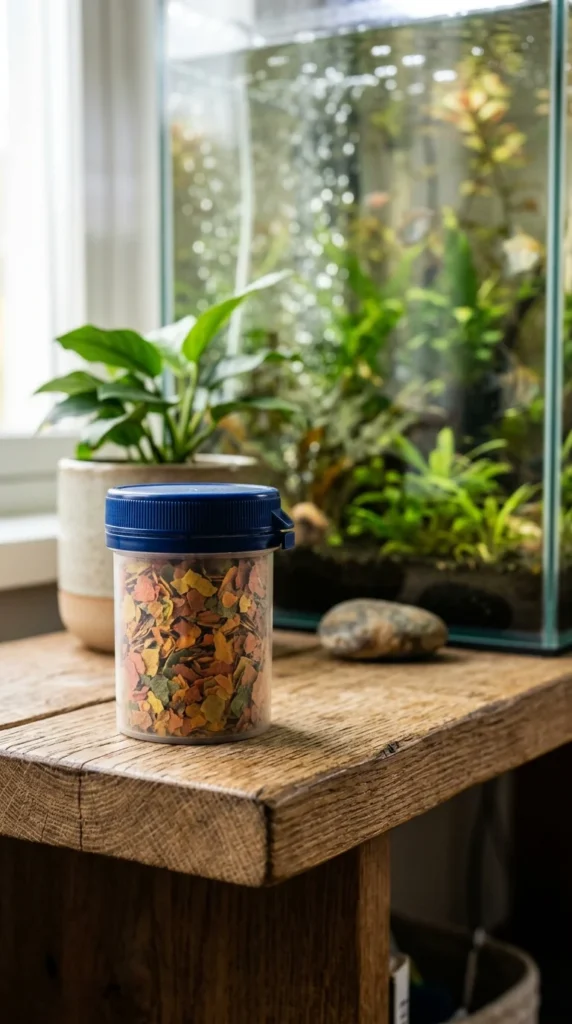
Never feed your fish immediately before or during a cleaning. The activity usually causes them to lose their appetite, and uneaten food will simply sink and rot, negating your cleaning efforts. Wait about 30 to 60 minutes after the cleaning is finished and the lights are back on before offering food. This serves as a “reward” and helps them associate the end of cleaning with a positive experience.
19. Visual Inspection
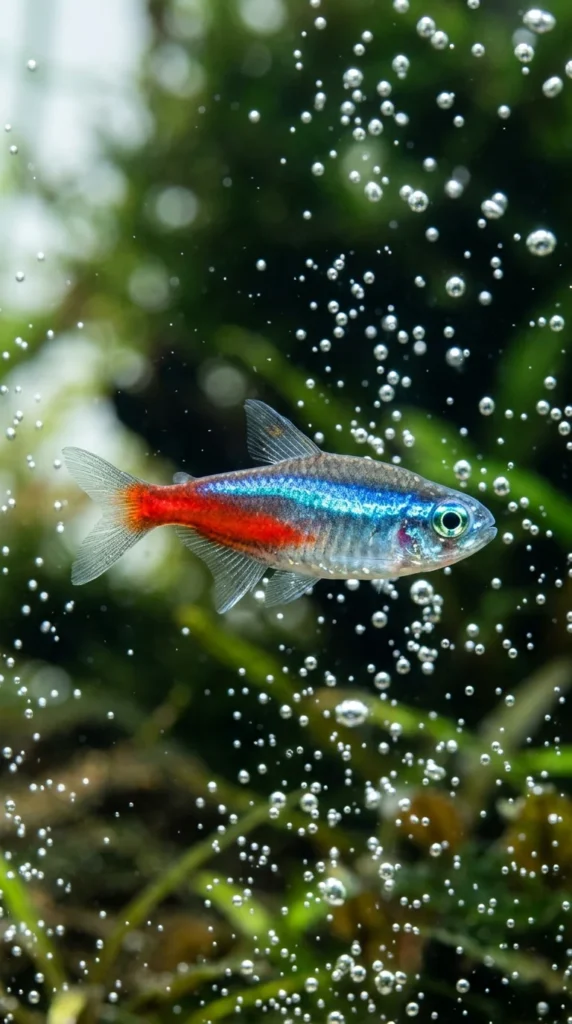
Use cleaning time as an opportunity to perform a “health check” on every inhabitant. Look for signs of “Ich” (white spots), clamped fins, or labored breathing. Stress during cleaning is often exacerbated if a fish is already feeling unwell. If you notice a sick fish, you may need to adjust your cleaning technique to be even more gentle.
20. Slow Motion

The most important tip is simply to slow down. Fast movements create pressure waves in the water that fish feel through their lateral lines. By moving your hands and tools in “slow motion,” you minimize these pressure changes. When you move slowly, you become a predictable part of the environment rather than a fast-moving predator.