Guinea pigs are social, active, and surprisingly intelligent creatures that require more than just a simple box to live in. A “happy and healthy” guinea pig starts with an environment that encourages natural behaviors like foraging, running, and hiding. If you are looking to upgrade your piggy’s palace, these 21 setup ideas will help you create a stimulating and safe sanctuary for your furry friends.
1. C&C Cages
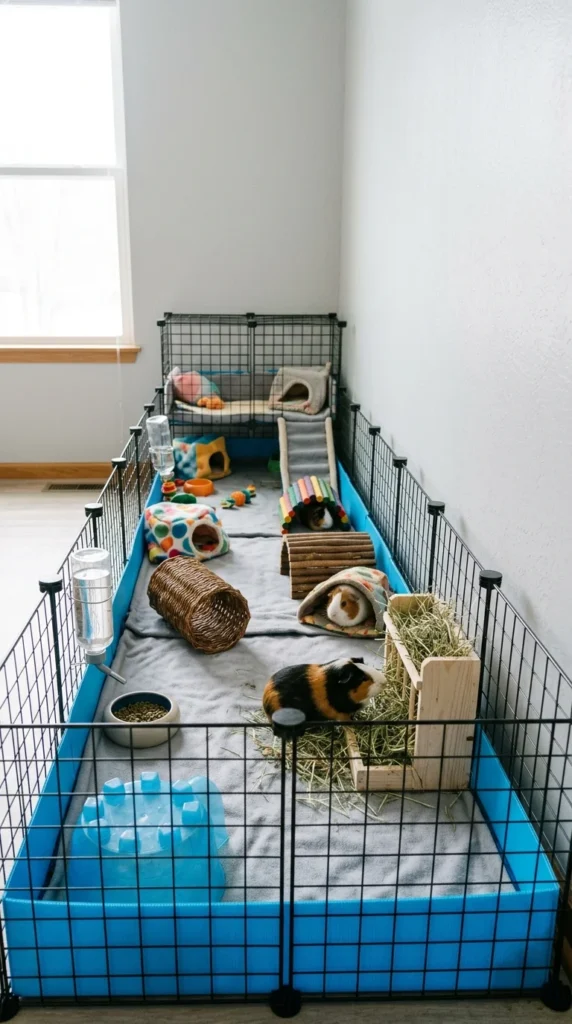
Cubes and Coroplast (C&C) cages are the gold standard for guinea pig enthusiasts. These cages utilize modular wire shelving grids and a corrugated plastic base. The primary benefit is customization; you can build them as large as your room allows, providing far more square footage than standard pet store cages. A larger footprint is essential for preventing obesity and keeping your pigs mentally stimulated.
2. Fleece Bedding
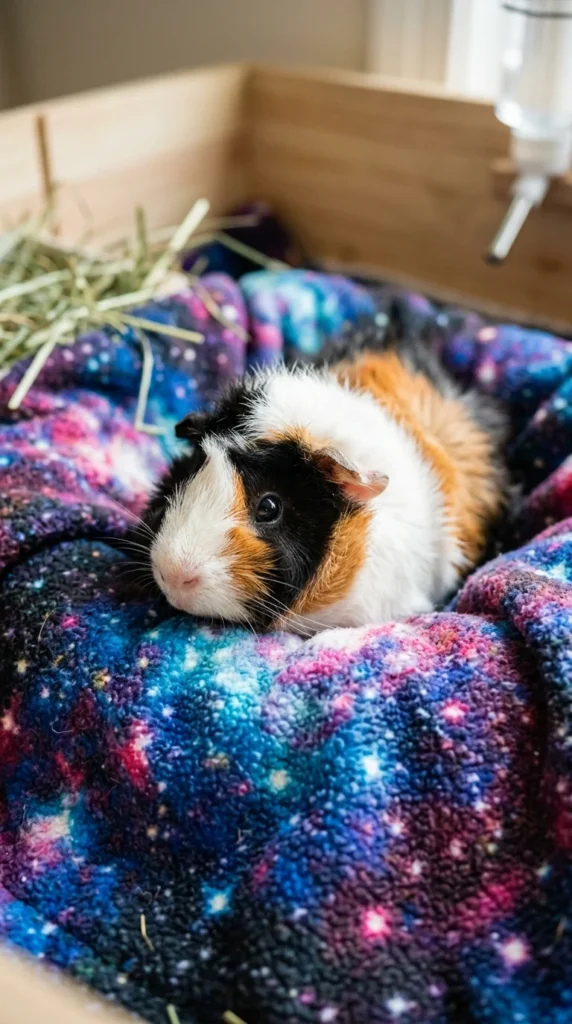
Switching from wood shavings to fleece liners is a game-changer for many owners. Fleece is soft on sensitive guinea pig feet, reusable, and comes in endless patterns to match your home decor. To make this work, use an absorbent layer (like U-Haul pads or mattress protectors) underneath the fleece to wick away moisture, keeping the surface dry and your pets comfortable.
3. Multi-Level Lofts
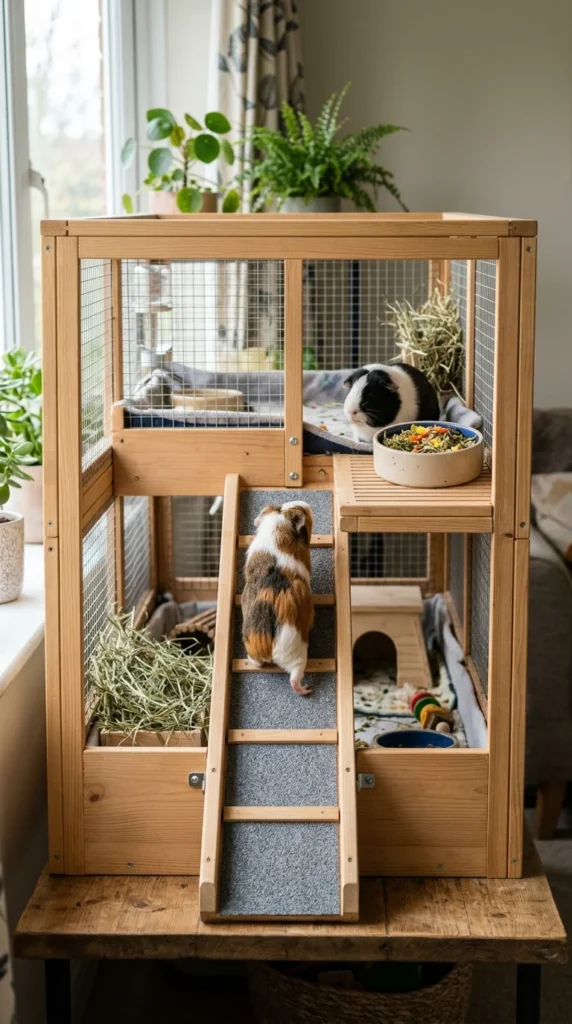
While guinea pigs aren’t climbers like rats, they do enjoy a gentle slope. Adding a loft or a second story provides extra room for exercise without taking up more floor space in your house. Ensure the ramp is wide, has high sides for safety, and isn’t too steep, as guinea pigs have poor depth perception.
4. Litter Trays
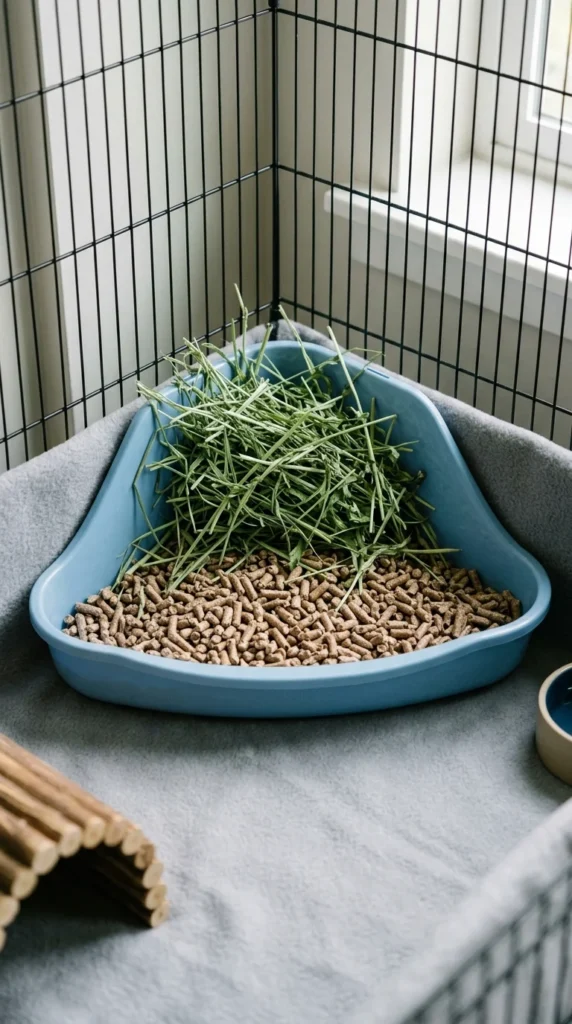
Believe it or not, many guinea pigs can be litter trained—or at least “area trained.” By placing a litter tray filled with paper-based bedding under their hay rack, you can catch about 80% of their waste. This keeps the rest of the fleece bedding cleaner for longer and makes daily spot-cleaning significantly easier.
5. Willow Tunnels
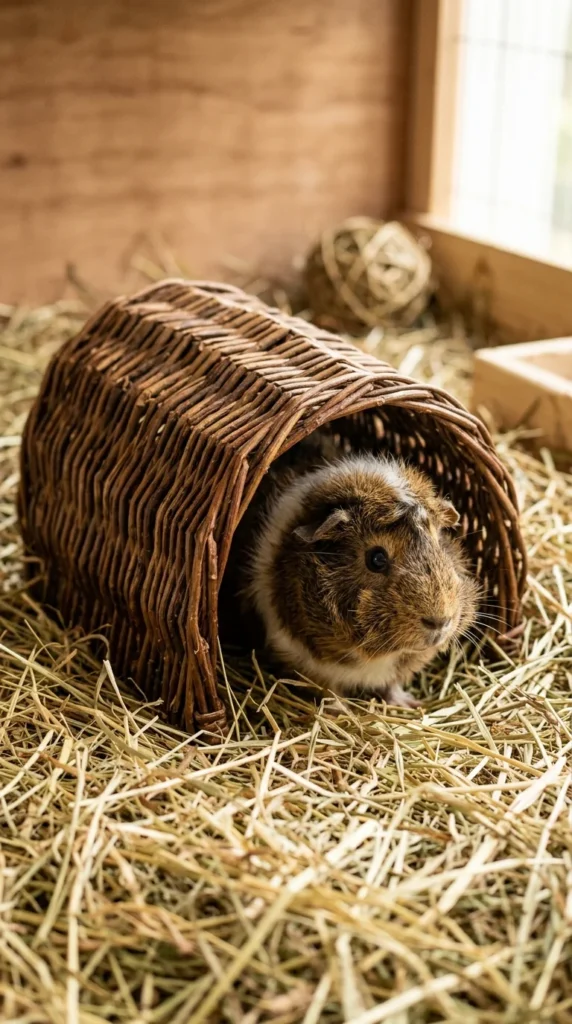
Guinea pigs are prey animals and feel most secure when they have a roof over their heads. Natural willow tunnels serve a dual purpose: they provide a safe place to hide and a healthy outlet for their constant need to chew. Chewing on willow helps wear down their ever-growing teeth naturally.
6. Piggy “Kitchens”
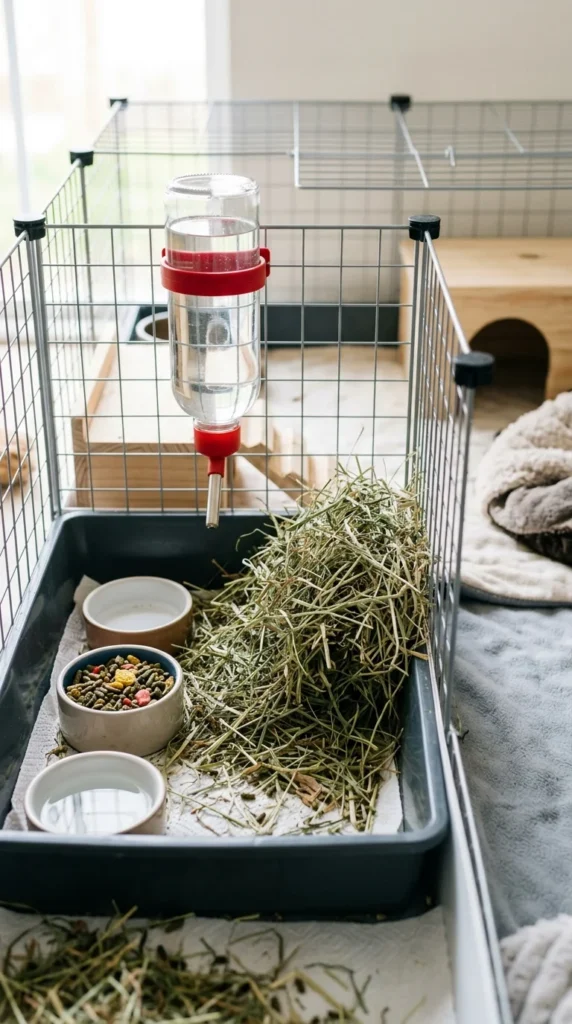
A “kitchen” area is a contained space within the cage where all the messy activities happen. By keeping hay, water, and fresh veggies in one specific tray or corner, you prevent hay from spreading across the entire cage. This organizational trick is a favorite for owners who use fleece bedding.
7. Corner Curtains
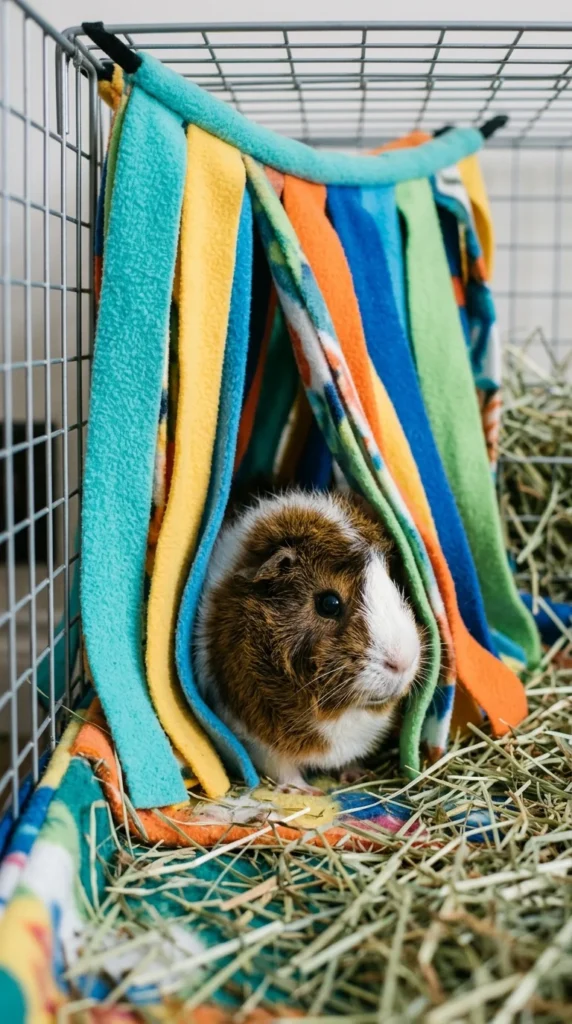
Sometimes a bulky house takes up too much running room. Fleece curtains or “forests” are a great alternative. By hanging strips of fleece from the top of the cage corner, you create a private zone where your guinea pigs can feel hidden while still being able to run through the area easily.
8. Foraging Mats
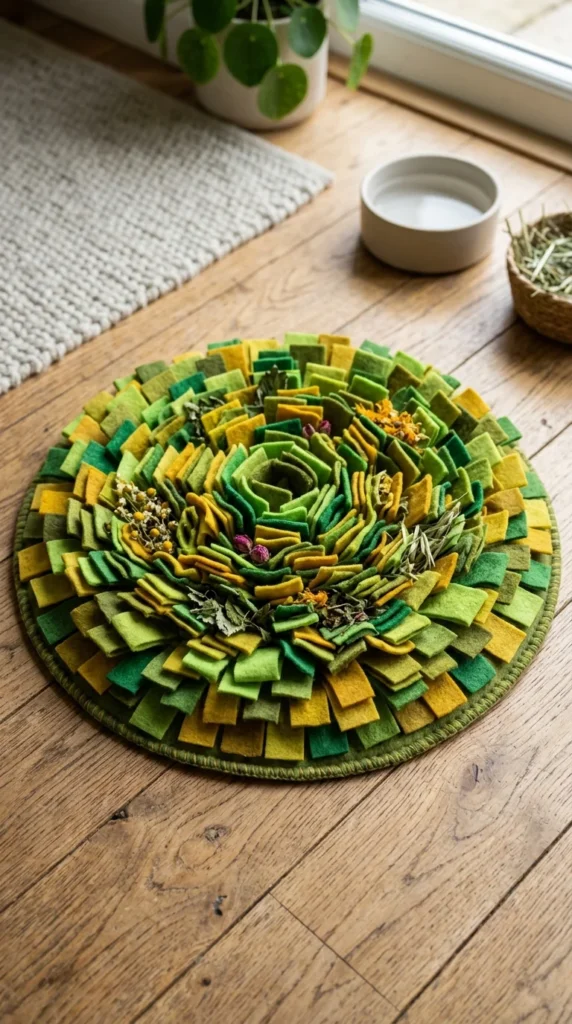
In the wild, guinea pigs spend most of their time searching for food. You can replicate this behavior with a snuffle mat or foraging mat. Hide dried herbs, pea flakes, or small vegetable bits inside the fabric folds to encourage your pets to use their noses and brains to find their treats.
9. Modular Storage Cubes
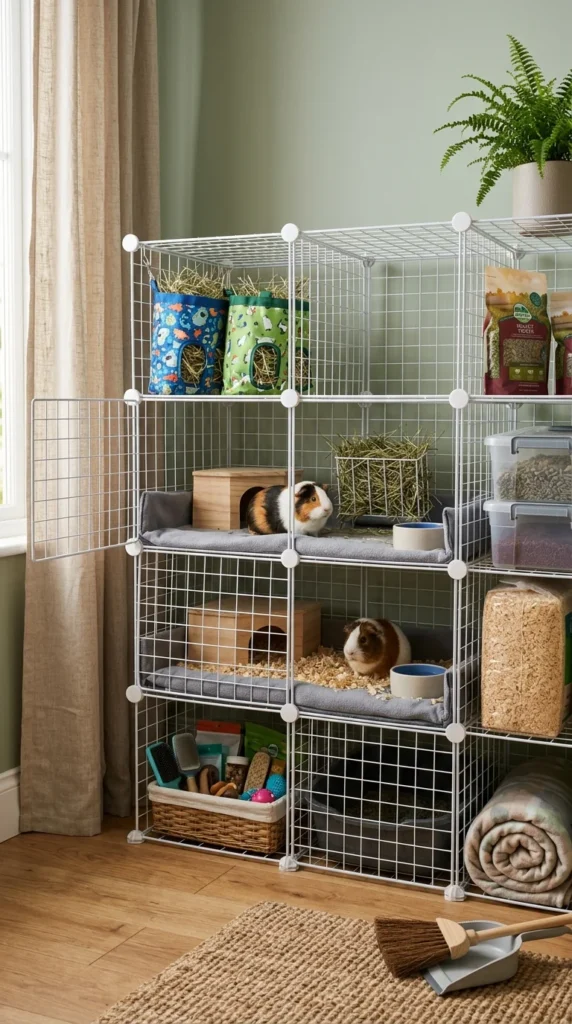
Using the same grids from a C&C cage, you can build storage units directly beneath the habitat. Raising the cage off the floor makes it easier to interact with your pets without bending over and provides a perfect place to store bags of hay, pellets, and cleaning supplies, keeping everything in one neat footprint.
10. Cuddle Cups
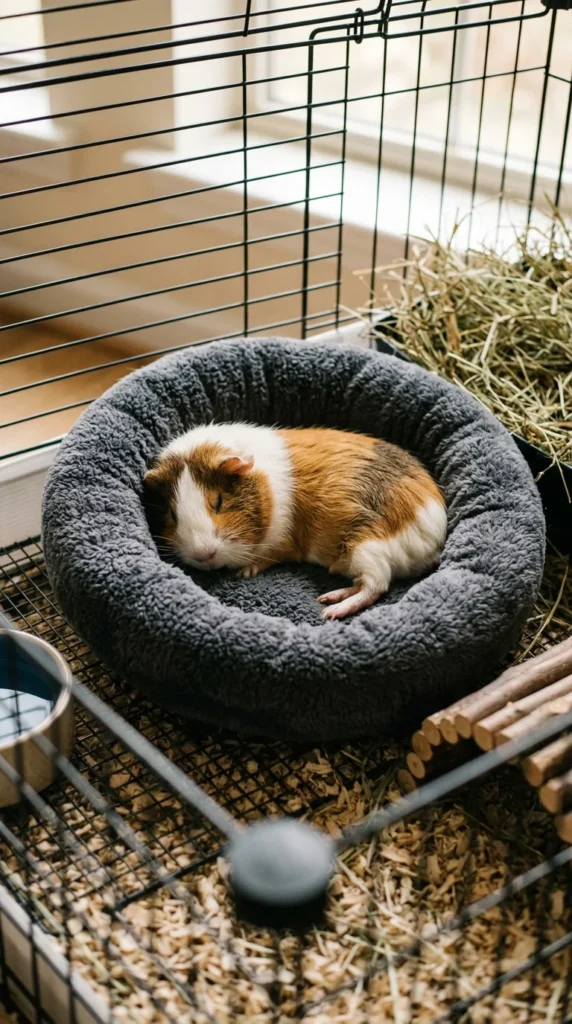
Guinea pigs love to be cozy. Cuddle cups are small, round, fabric-filled beds that provide a warm place for a nap. Because they are machine washable, they are a practical way to add luxury to the cage. Most owners find that their guinea pigs have “favorite” beds, often leading to adorable “popcorning” when a fresh bed is placed in the cage.
11. Cardboard Castles
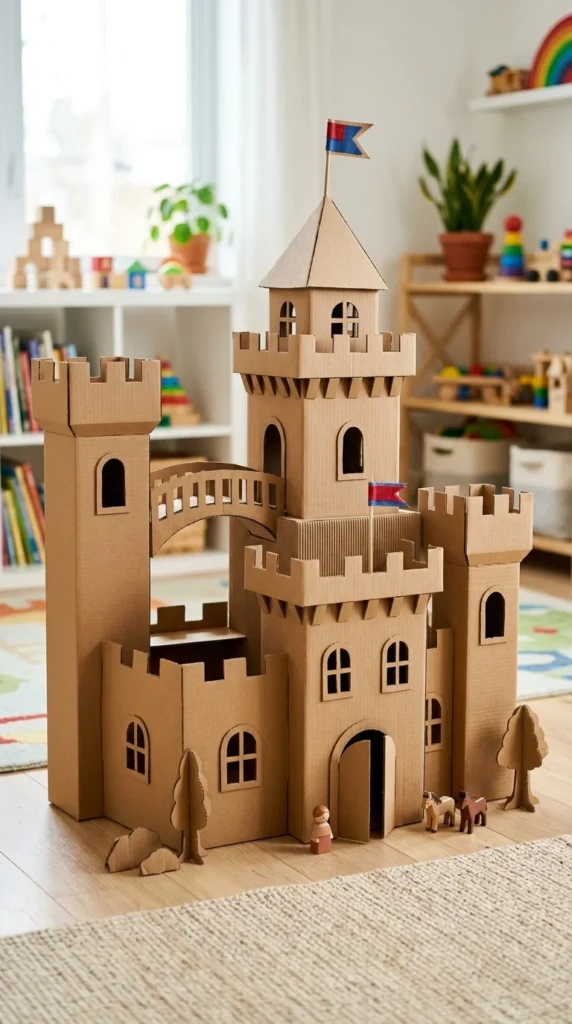
You don’t need to spend a fortune to keep your guinea pigs happy. Clean, tape-free cardboard boxes can be transformed into elaborate castles. The best part? When the pigs eventually chew them or soil them, you can simply recycle the boxes and build a new layout, providing a “new” environment for them to explore.
12. Bridge Overpasses
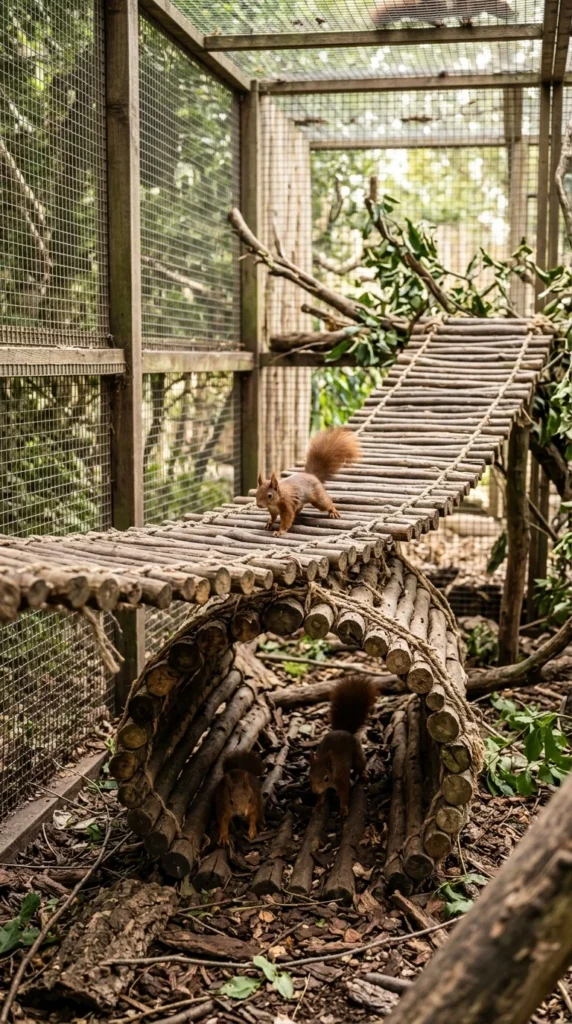
Using flexible log bridges (often called “fiddle sticks”) allows you to create dynamic topography. You can arch them to create a tunnel or flatten them to create a ramp or a divider between different sections of the cage. They are excellent for dental health and add a rustic, natural look to the setup.
13. Hanging Hay Racks
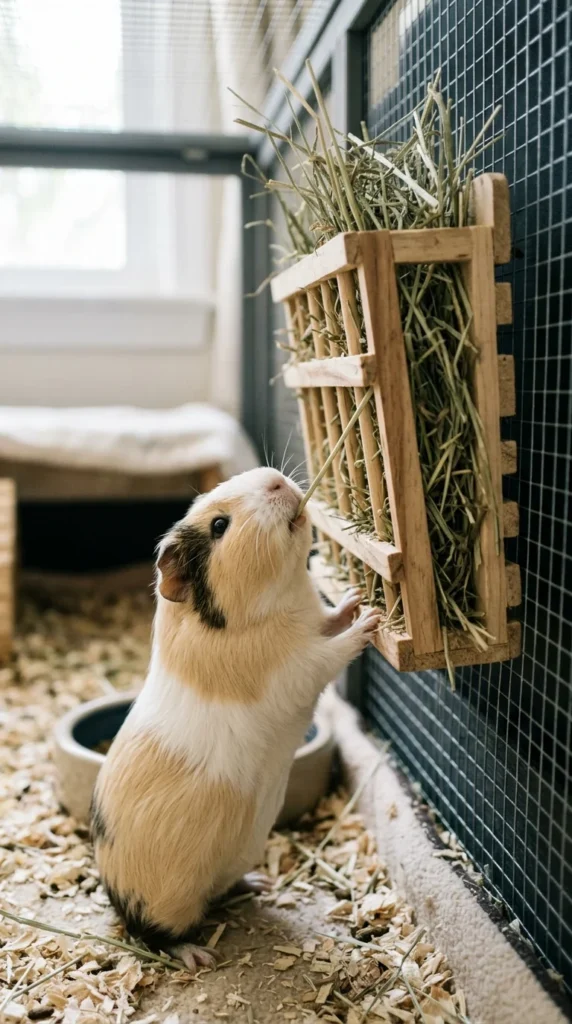
To keep hay fresh and off the floor, a hanging rack is essential. Look for designs made of wood or cloth rather than wire, as wire racks can sometimes pose a trapping hazard if a guinea pig tries to jump inside. A well-placed hay rack ensures they always have access to their primary food source in a clean manner.
14. Vegetable Skewers
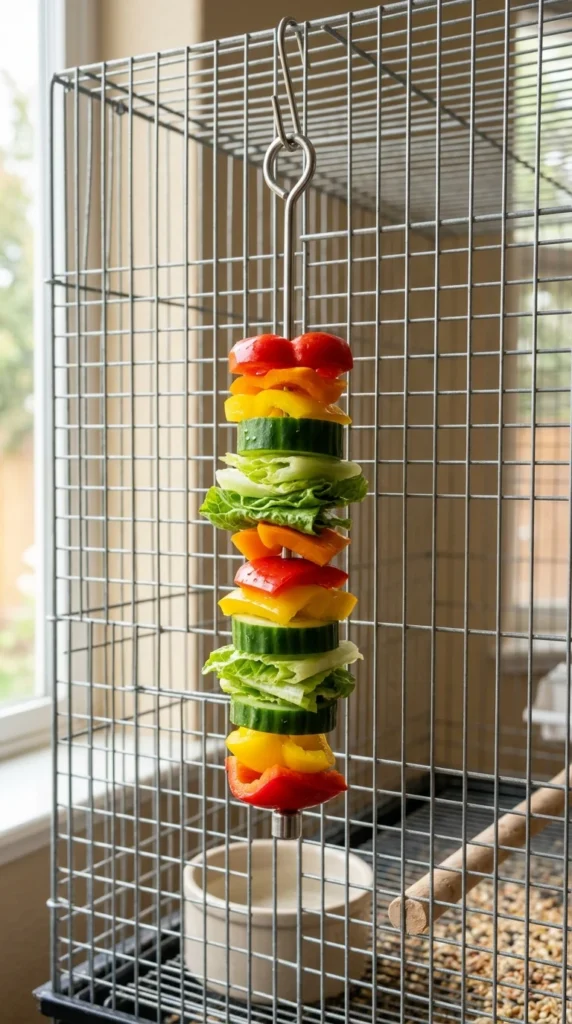
To turn mealtime into a game, use a bird-safe vegetable skewer. By hanging their daily fresh greens, you force the guinea pigs to stretch and work a bit for their food. This provides physical exercise and prevents them from simply dragging their vegetables into a dirty corner.
15. The “L” Shape Layout
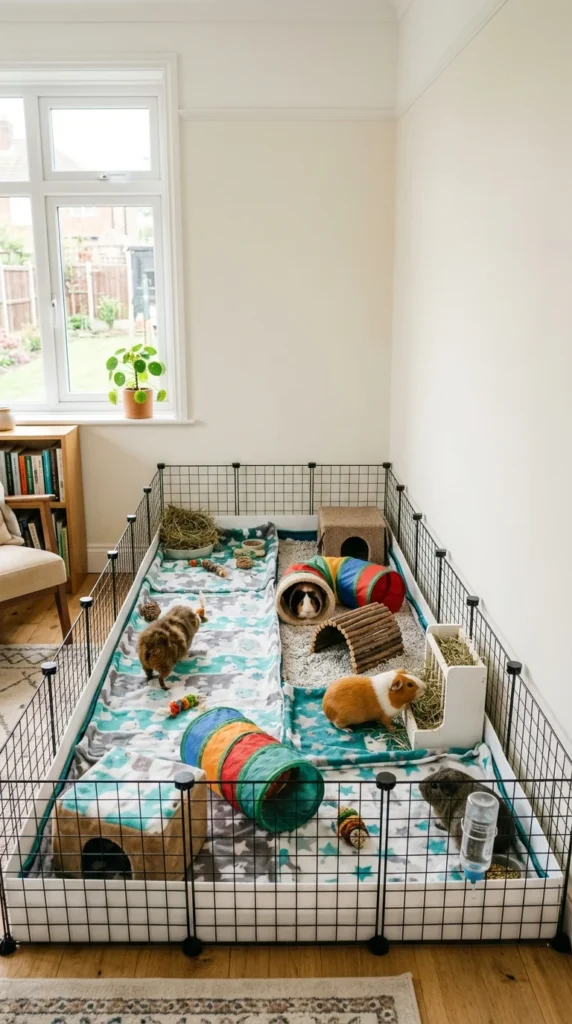
If you have a corner of a room available, an L-shaped cage offers a unique advantage. It provides a long “sprint track” for guinea pigs to perform their famous “zoomies.” This layout maximizes floor space and allows for a clear distinction between the “bedroom” at one end and the “dining room” at the other.
16. Soft Landing Pads
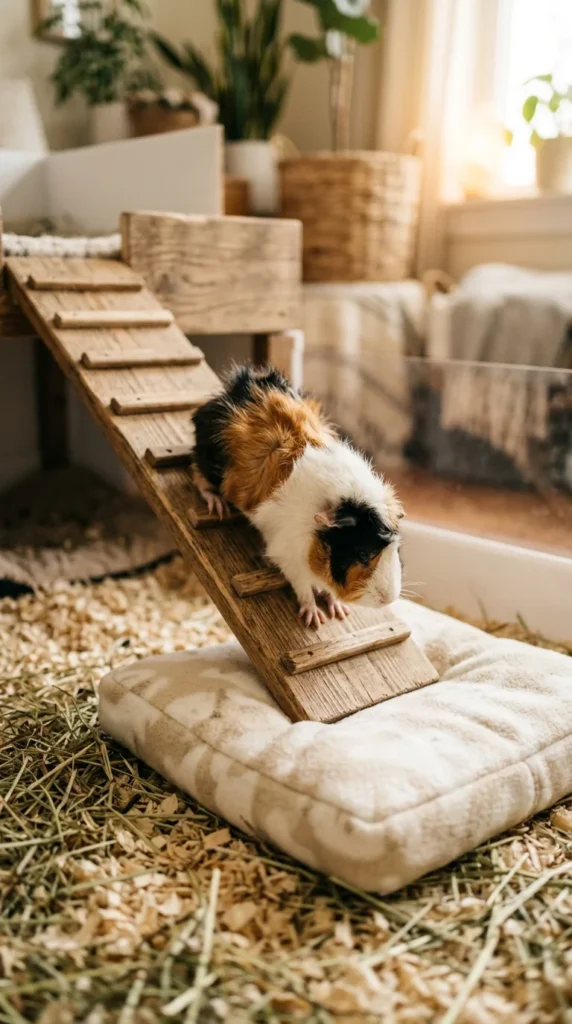
If your cage has multiple levels or ramps, placing a “landing pad” (a small, thick piece of fleece or a soft bed) at the base of the ramp is a great safety feature. It protects their joints as they hop off the ramp and provides a transition zone that keeps the rest of the cage’s fleece cleaner.
17. Edible Log Cabins
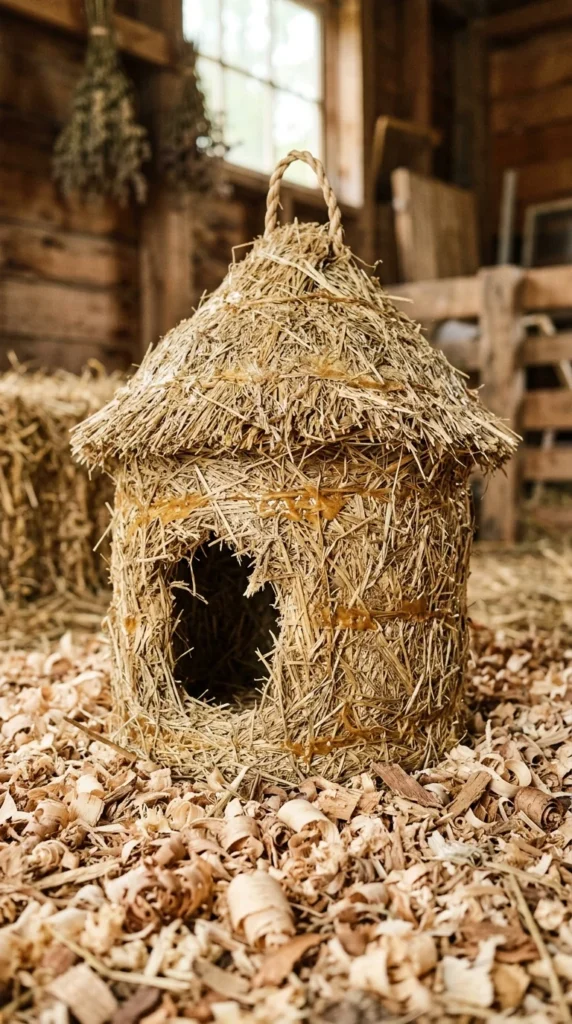
Edible hidey-holes are perfect for pigs who love to chew. These houses are made from compressed hay or wood fibers and are completely safe for consumption. It gives them a sense of security while satisfying their natural urge to forage and gnaw, effectively acting as a “snack and a shack.”
18. Glass Water Bottles
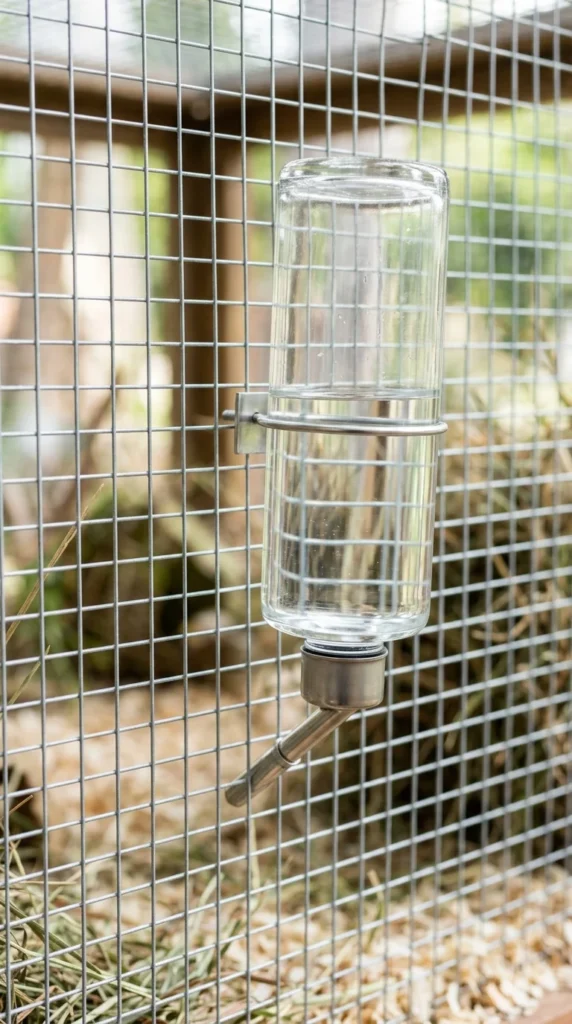
Upgrade from plastic to glass water bottles. Glass is more hygienic, easier to sanitize in the dishwasher, and doesn’t retain odors or bacteria like plastic can. Plus, they are chew-proof! Placing a small ceramic dish under the nozzle can catch any drips, keeping your bedding dry.
19. The “Outdoor” Indoor Look
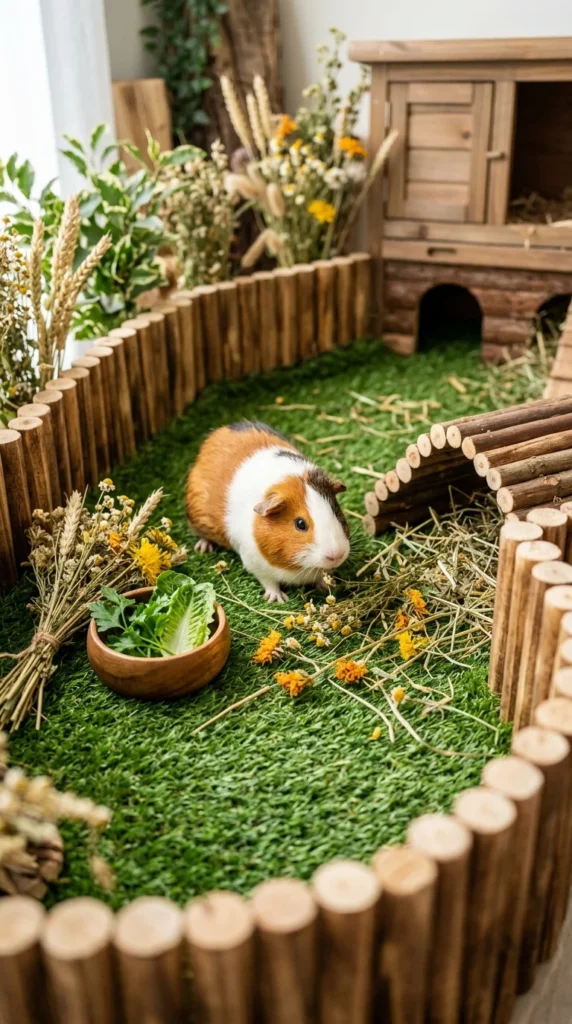
For a visually stunning cage, you can use a “natural” theme. This includes using dried flower mixes (like rose petals and marigolds), wooden houses, and earth-toned fleece. This creates a beautiful aesthetic in your home while providing various textures for your guinea pig to investigate.
20. Hammocks
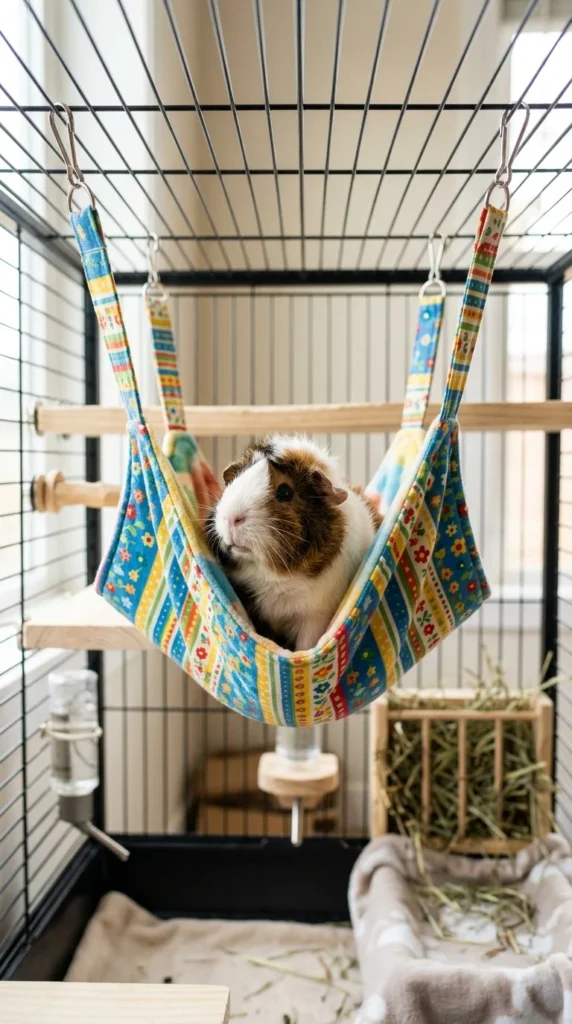
While usually associated with ferrets or rats, many guinea pigs love hammocks. The key is to hang them very low to the ground so the pig can easily hop in and out. Hammocks provide a swaying, comfortable place to rest that is tucked away from the busier areas of the cage.
21. Seasonal Themes
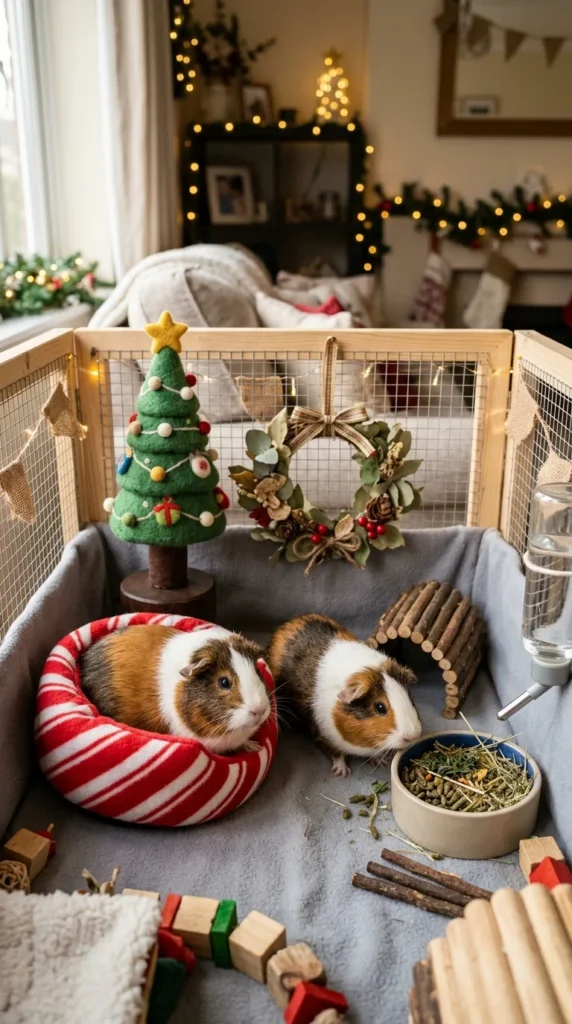
Finally, don’t be afraid to change things up! Many owners enjoy decorating their guinea pig cages for the seasons. Whether it’s spooky hideouts for Halloween or heart-shaped pillows for Valentine’s Day, changing the decor provides new sights and smells for your pets, preventing boredom and keeping their environment fresh and exciting.