
Training a rabbit to use a litter box is one of the most rewarding steps in house-rabbit ownership. Unlike many other small pets, rabbits are naturally clean animals with a biological drive to choose a specific “bathroom” corner. However, bridging the gap between instinct and a consistent household habit requires a strategy. Whether you are dealing with a stubborn adult or a high-energy kit, these seventeen tips will streamline the process and save your carpets.
1. Right Box
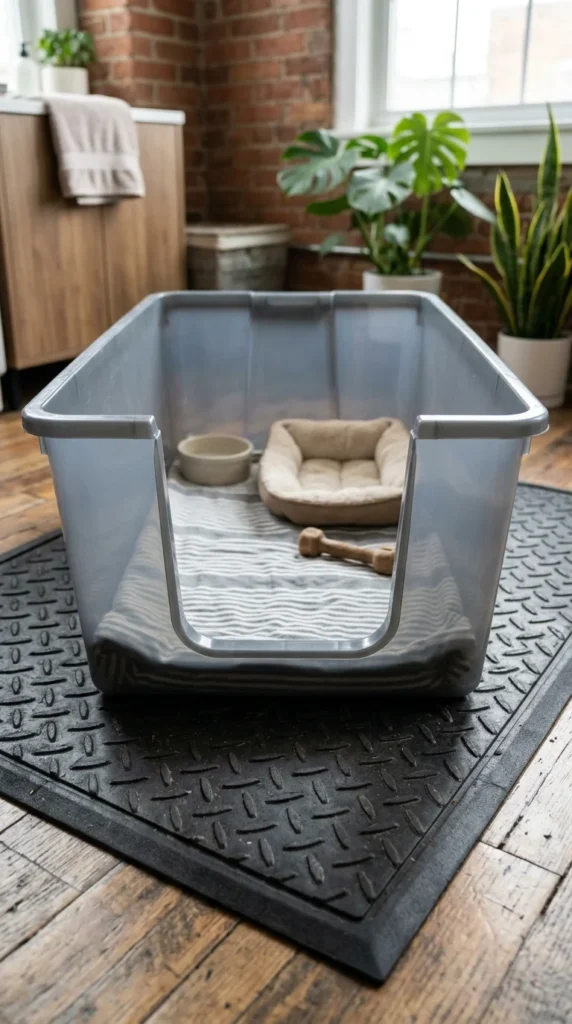
The first mistake many owners make is buying a “corner” litter box sold in pet stores. These are almost always too small. A rabbit needs to be able to hop in, turn around completely, and stretch out. For most rabbits, a medium-to-large cat litter tray or a plastic under-bed storage bin works best. If your rabbit is a senior or has mobility issues, ensure the entry point is low enough that they don’t have to leap to get inside.
2. Paper Litter
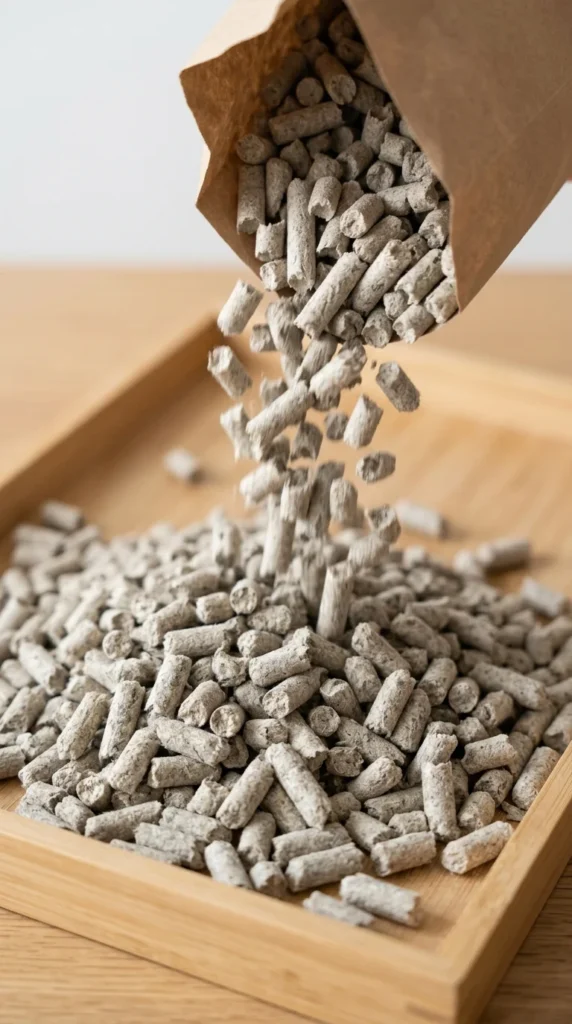
Rabbits have incredibly sensitive respiratory systems. You must avoid clumping cat litter, clay litter, or wood shavings made from cedar or pine, as these can cause liver damage or respiratory distress. Instead, opt for recycled paper pellets or aspen shavings. These are highly absorbent and safely neutralize the ammonia scent of rabbit urine without the use of harsh chemicals or perfumes.
3. Hay Placement
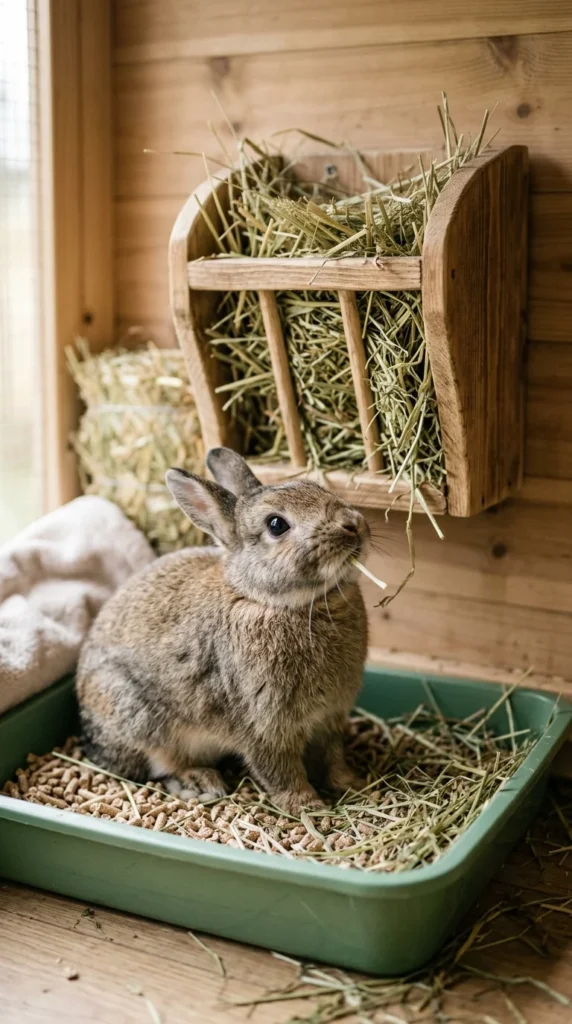
Rabbits follow a “multitasking” philosophy: they like to eat and go to the bathroom at the same time. This is the “Golden Rule” of rabbit litter training. By placing a large pile of fresh Timothy hay inside the litter box, or in a feeder directly above it, you entice the rabbit to spend time in the box. As they graze, they will naturally do their business, reinforcing the association between the box and relief.
4. Spay/Neuter
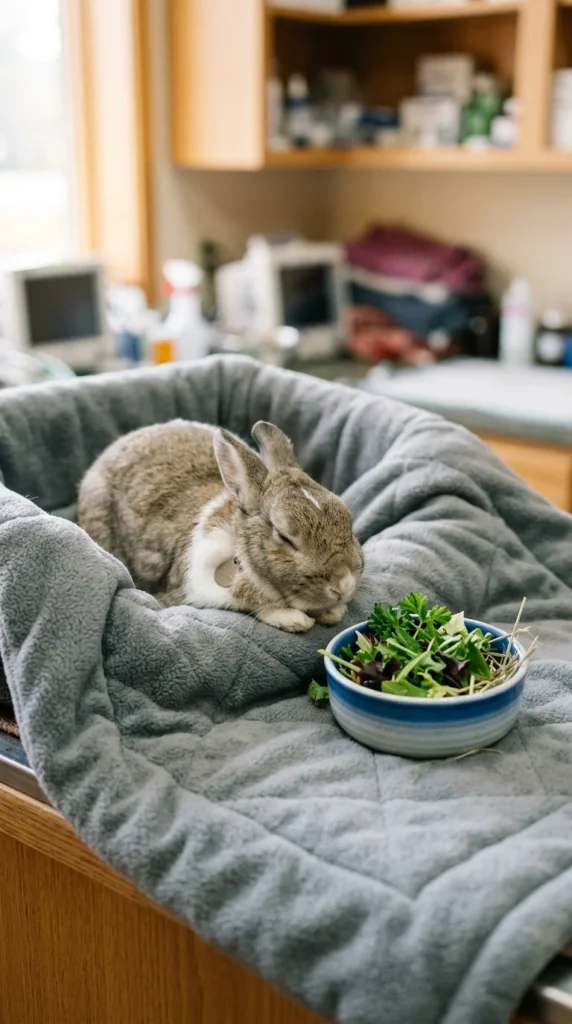
If your rabbit is over six months old and unsterilized, litter training will be significantly more difficult. Intact rabbits use urine and droppings to mark their territory, driven by powerful hormones. Spaying or neutering reduces these hormonal urges, making the rabbit much more likely to use a single location. It is the single most effective way to ensure long-term litter box success.
5. Small Space
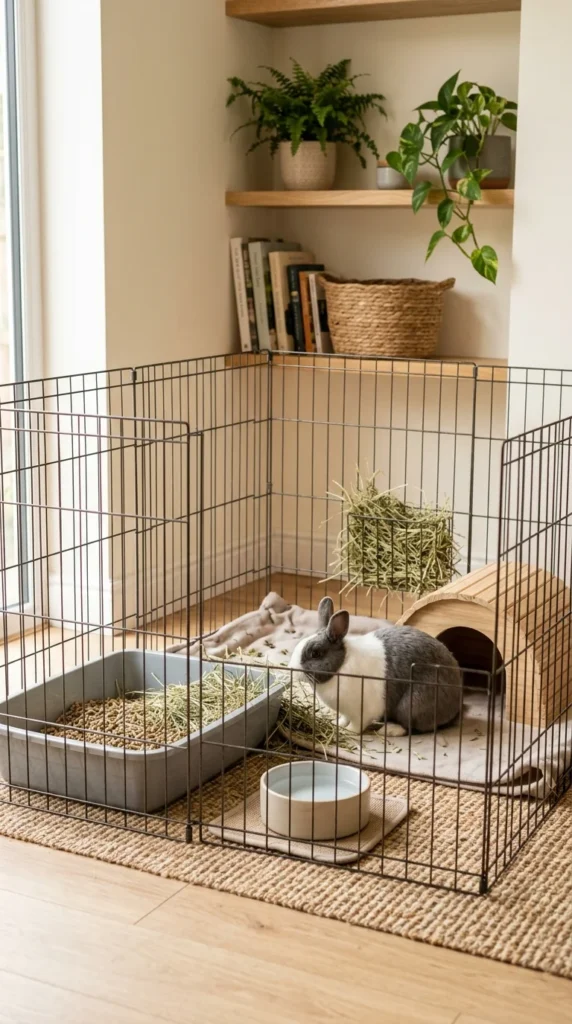
Giving a new rabbit full run of the house immediately is a recipe for accidents. Start the training in a confined area, such as an exercise pen or a small laundry room. Once they are consistently using the box in this small space, you can gradually increase their territory. If they start having accidents after an expansion, shrink their space again until the habit is solidified.
6. Scent Transfer
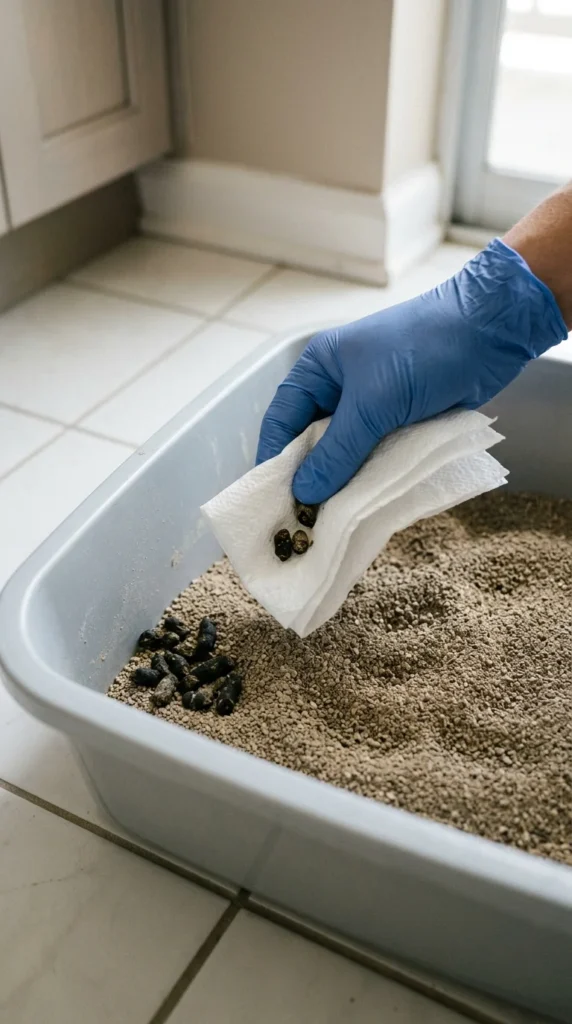
When your rabbit has an accident, don’t just throw the waste away. Pick up the droppings and place them in the litter box. If they urinate on the floor, soak it up with a paper towel and place that towel in the box as well. This tells the rabbit’s nose, “This is where the smell belongs.” By moving the scent to the desired location, you are communicating in their language.
7. Neutralize Odors
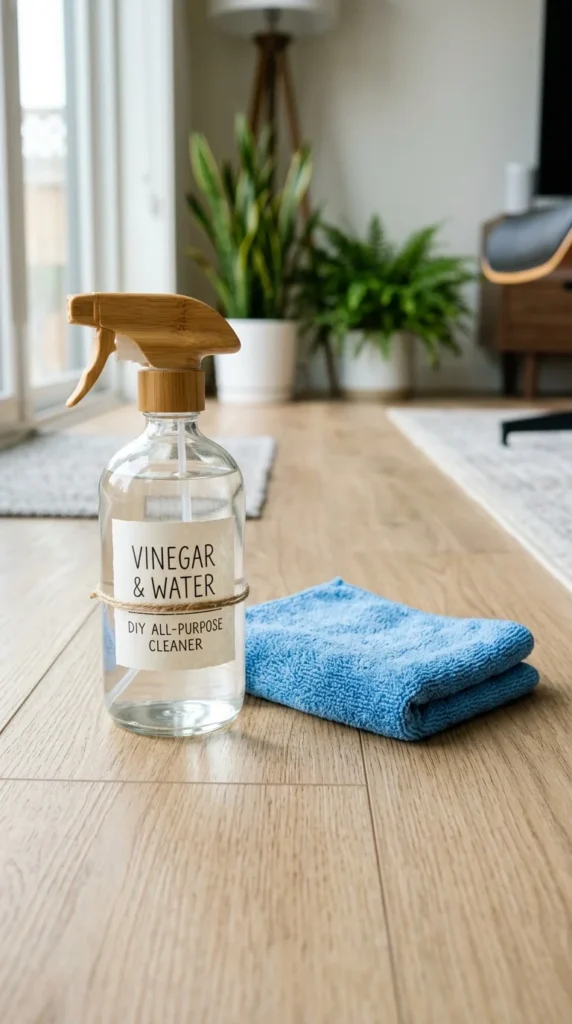
Rabbits will return to the same spot if they can smell even a faint trace of their previous urine. Standard household cleaners often contain ammonia, which actually smells like urine to a rabbit and can encourage them to mark that spot again. Instead, use a 50/50 mixture of white vinegar and water or a specialized enzymatic pet cleaner to completely break down the proteins and remove the scent.
8. Multiple Boxes
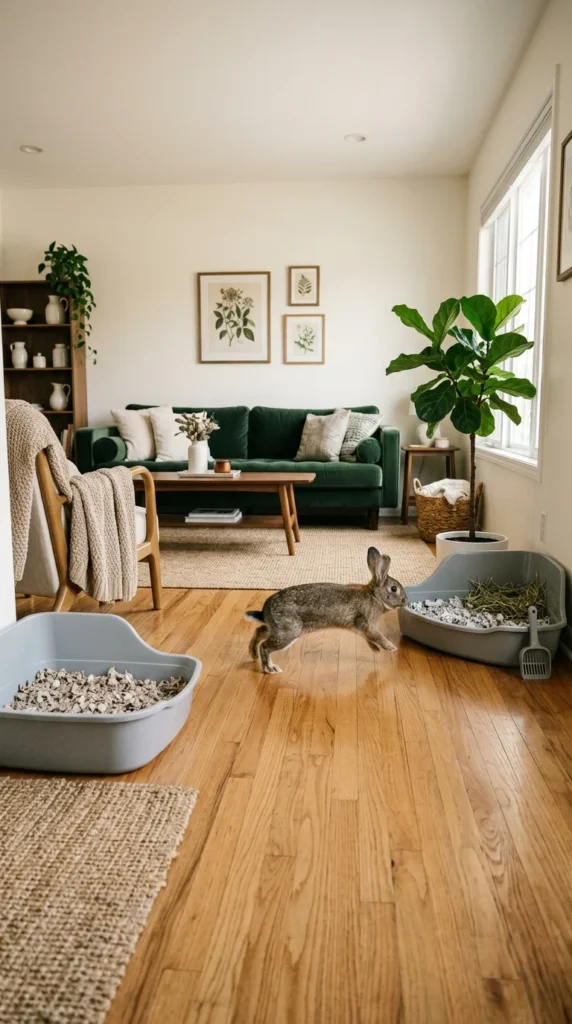
In the beginning, your rabbit might not have the bladder control or the focus to run across the house to find their one and only box. Placing multiple litter boxes in the corners where they naturally gravitate will increase the chances of success. As they become more reliable, you can slowly remove the “extra” boxes until you are down to one or two primary locations.
9. High Sides
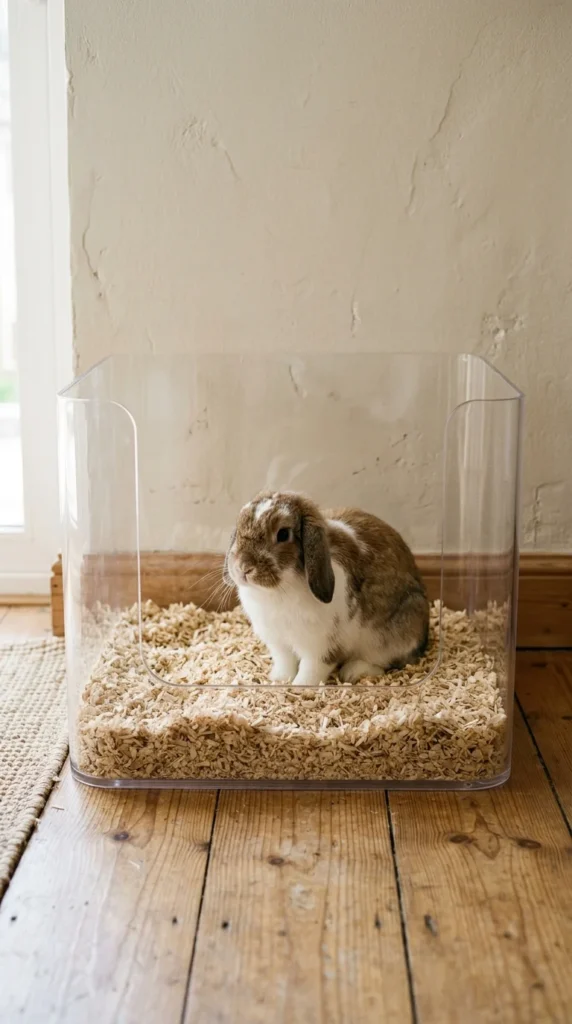
Some rabbits have a habit of “backing up” too far, resulting in urine going over the edge of the box. Others like to dig and kick their litter everywhere. A high-sided box (like a high-back cat tray) protects your walls and floors. If you use a storage bin with high sides, just make sure to cut a “doorway” in the front so the rabbit doesn’t have to jump too high to enter.
10. Corner Instinct
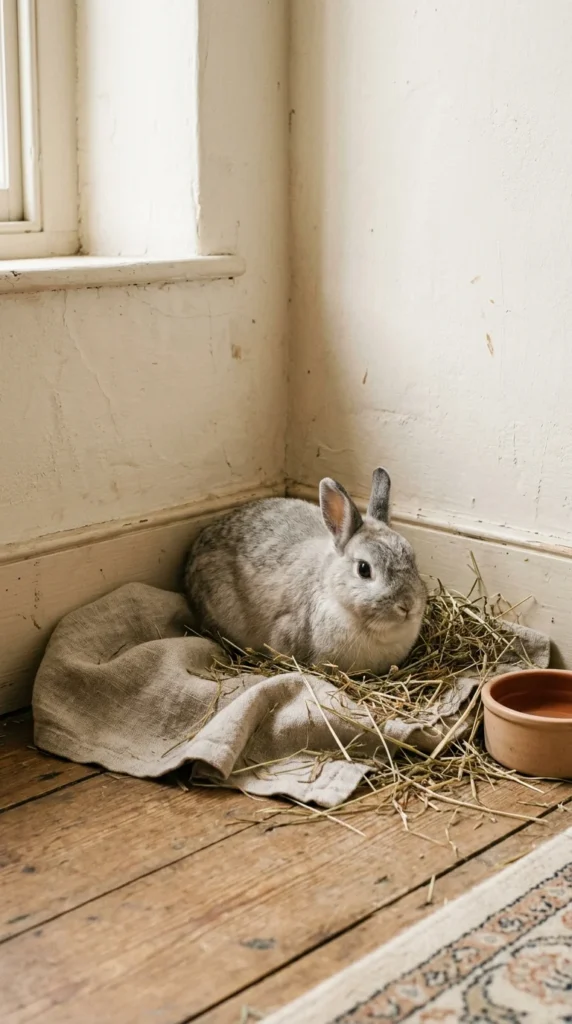
In the wild, rabbits prefer to eliminate in areas where they feel safe from predators, which usually means corners where they can’t be snuck up on from behind. Observe which corner your rabbit chooses to use naturally. Instead of trying to force them to use a box in a location you prefer, move the box to the corner they have already chosen.
11. Positive Reinforcement
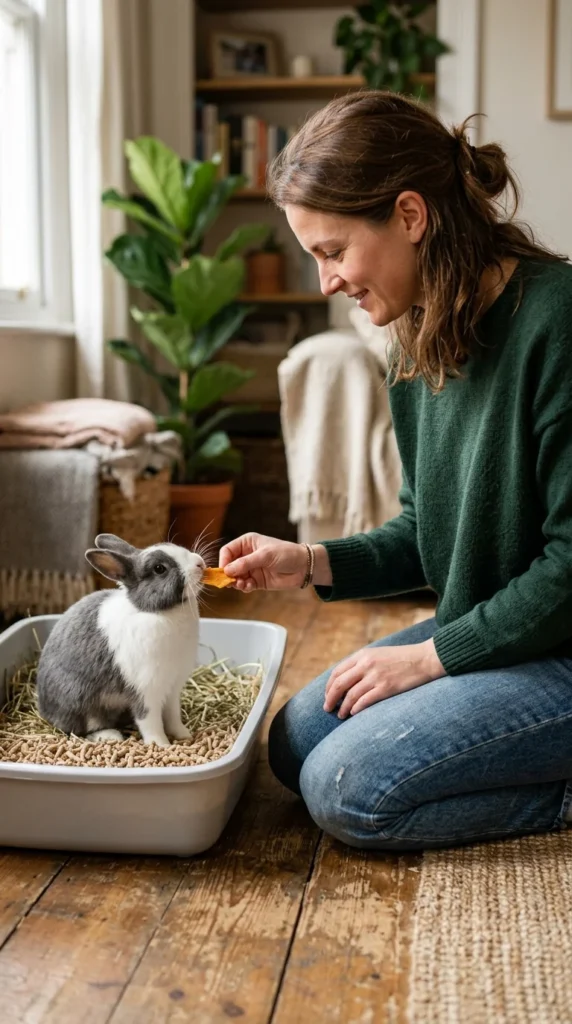
Never punish a rabbit for an accident. They do not understand physical discipline or shouting and will only become afraid of you. Instead, use positive reinforcement. When you see your rabbit hop into the box and use it, wait until they are finished and then offer a small treat, like a sprig of cilantro or a tiny piece of fruit. They will soon associate the litter box with delicious rewards.
12. Routine Cleaning
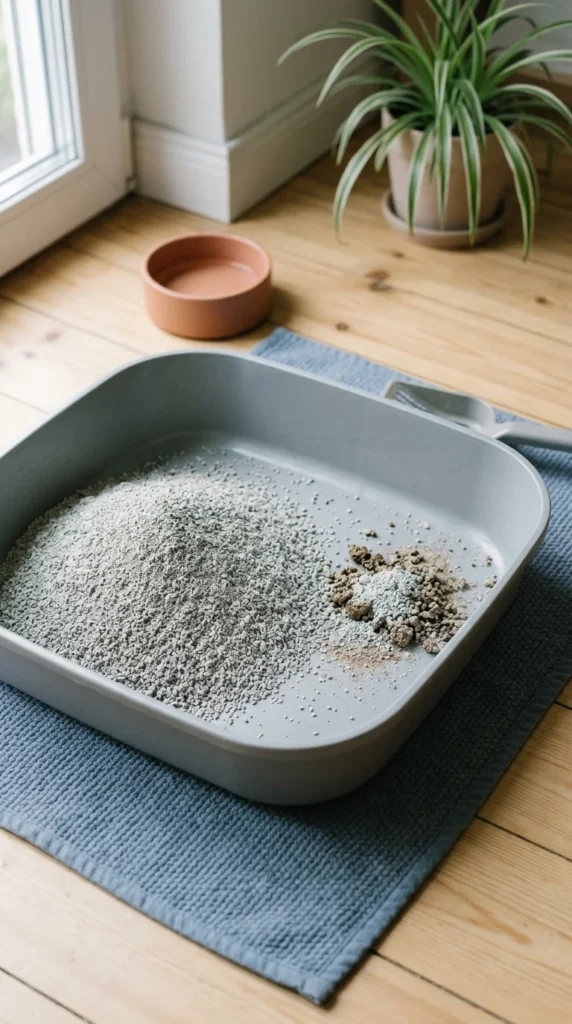
While you want a clean house, a “perfectly” clean litter box can actually be confusing for a rabbit during training. When you change the litter, leave a few of the old droppings or a small piece of the scented bedding inside. This keeps the “bathroom” scent present so the rabbit remembers the purpose of the box. Once they are fully trained, you can clean it more thoroughly.
13. Observe Patterns
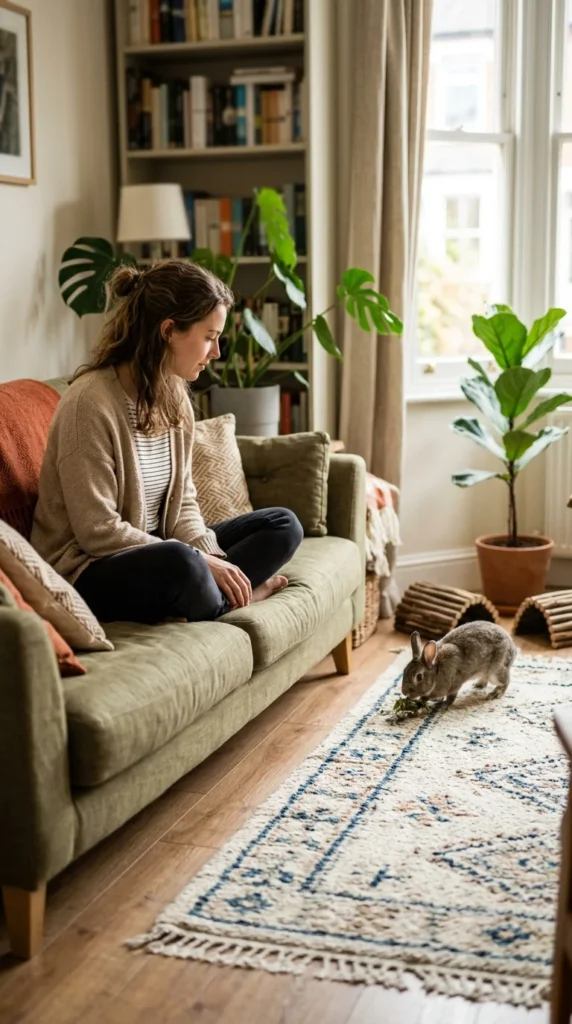
Spend time watching your rabbit’s body language. Most rabbits will lift their tail and “scoot” backwards right before they go. If you see this behavior outside of the litter box, gently pick them up (if they are comfortable with being handled) or herd them toward the box. If they finish the job in the box, reward them immediately.
14. Carpet Protection
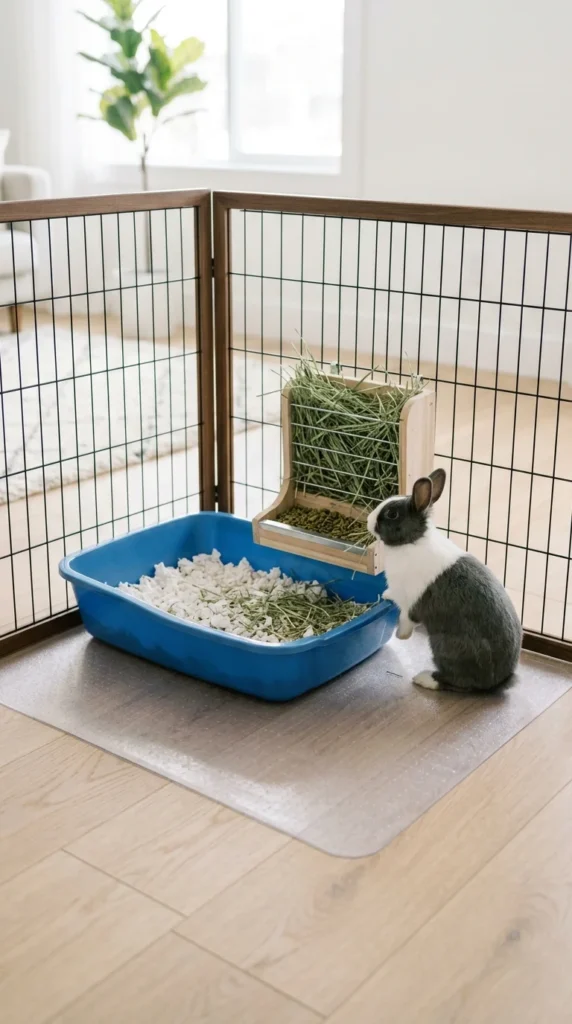
During the training phase, accidents on carpets are likely. To prevent permanent damage and to make cleaning easier, place a waterproof barrier under the litter box. A cheap piece of linoleum, a heavy-duty plastic mat, or even several layers of newspaper can protect your flooring while the rabbit learns the ropes.
15. Boredom Busters
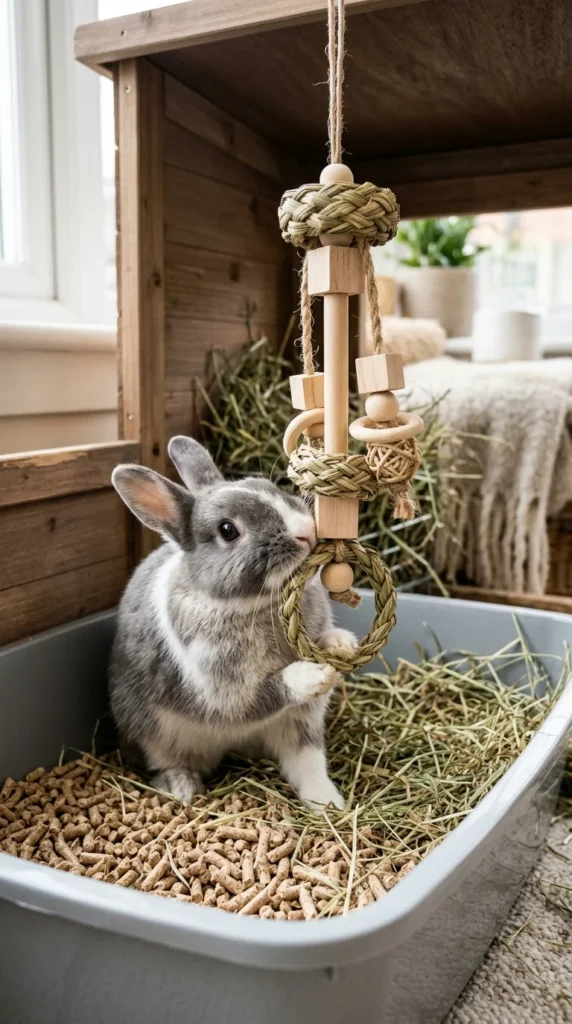
Rabbits often spend a lot of time sitting in their litter boxes. To encourage them to stay there longer (and thus do their business there), provide some entertainment. Hanging a chew toy nearby or hiding a few pellets in the hay pile can turn the litter box into a “lounge” area where they feel comfortable spending a significant portion of their day.
16. Avoid Clumping
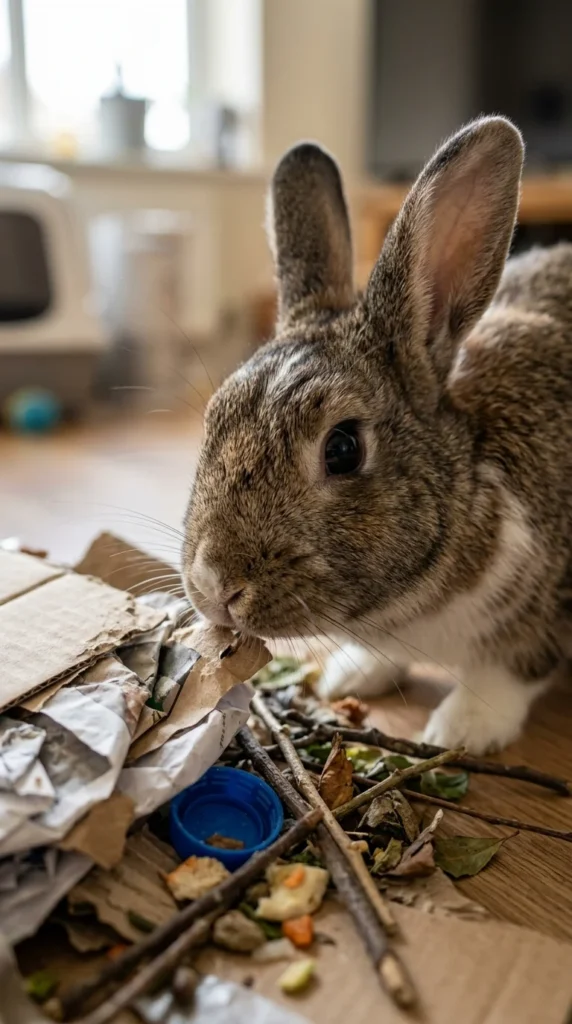
It is worth repeating: never use clumping cat litter. Rabbits are constant groomers and often sample their surroundings with their mouths. If a rabbit ingests clumping litter, it can create a fatal blockage in their digestive tract. Stick to organic, plant-based, or paper-based products that will simply pass through or break down if a tiny amount is accidentally consumed.
17. Patience Factor
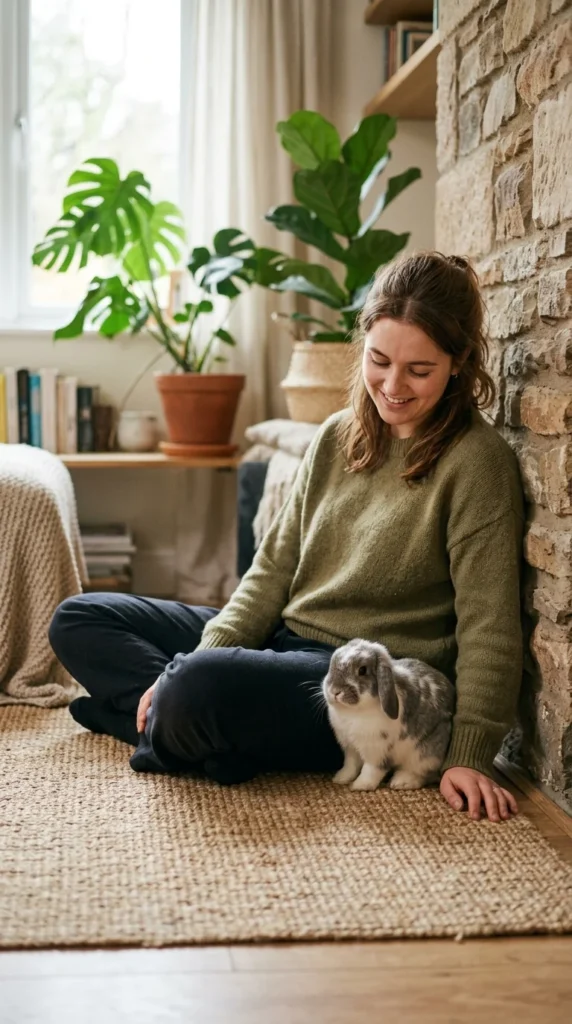
Training can take anywhere from a few days to several months. Every rabbit is an individual with a unique personality. Some will “get it” instantly, while others will have occasional setbacks, especially during changes in the environment (like moving furniture or a new pet). Stay consistent, keep the vinegar spray handy, and remember that a litter-trained rabbit is well worth the initial effort.