
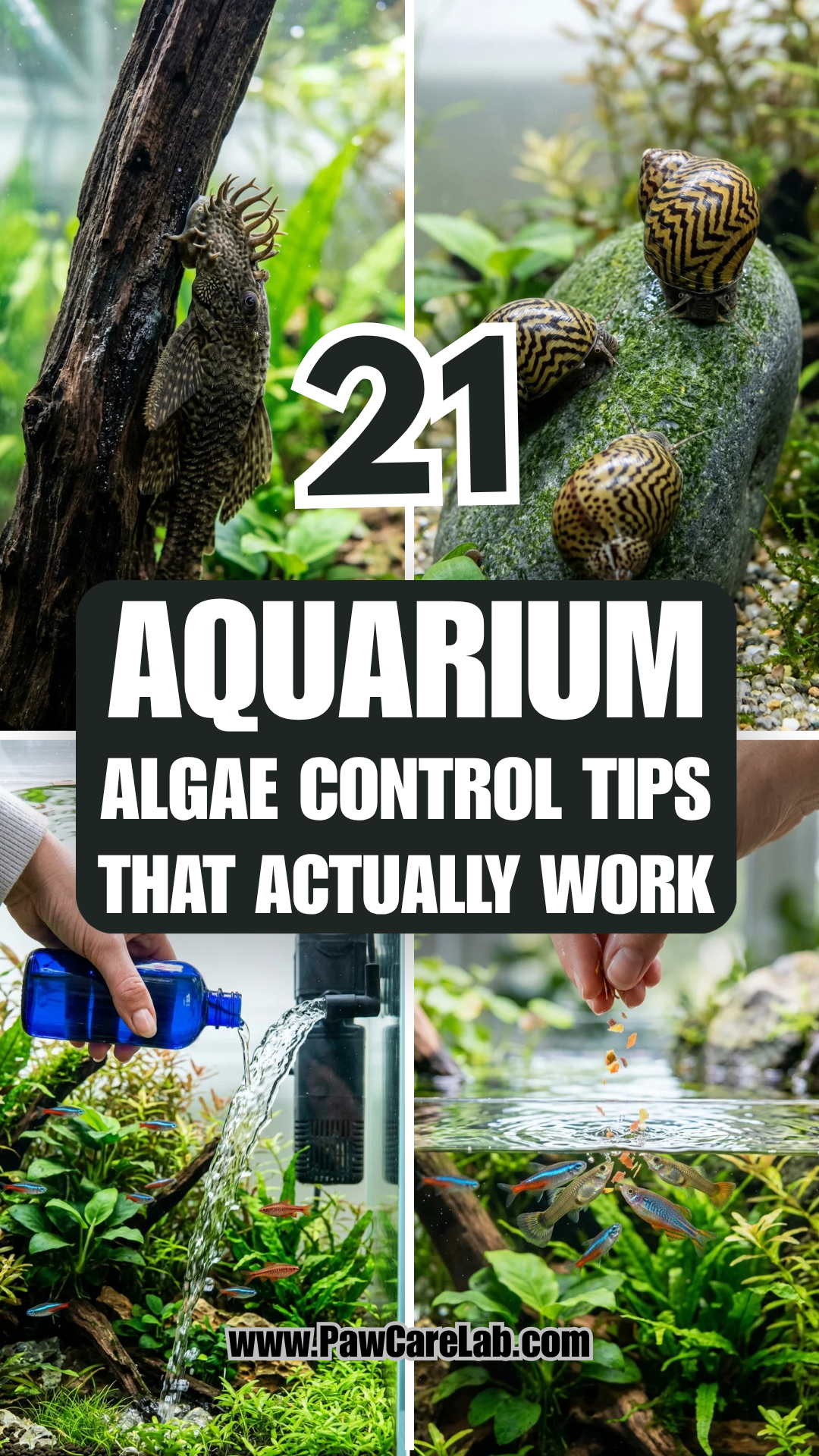
Every aquarist, from the bright-eyed beginner to the seasoned veteran, eventually faces the “green monster.” Algae is an opportunistic organism that thrives on the very things we provide for our fish and plants: light and nutrients. While a small amount of algae is a sign of a healthy ecosystem, an outbreak can turn a beautiful display into a murky, suffocating mess.
Controlling algae isn’t about total eradication; it’s about balance. When your tank’s biology is in equilibrium, your plants will outcompete the algae for resources. If you are currently battling hair algae, cyanobacteria, or the dreaded black beard algae, don’t despair. Here are 21 proven tips to regain control and keep your tank looking professional.
1. Lighting
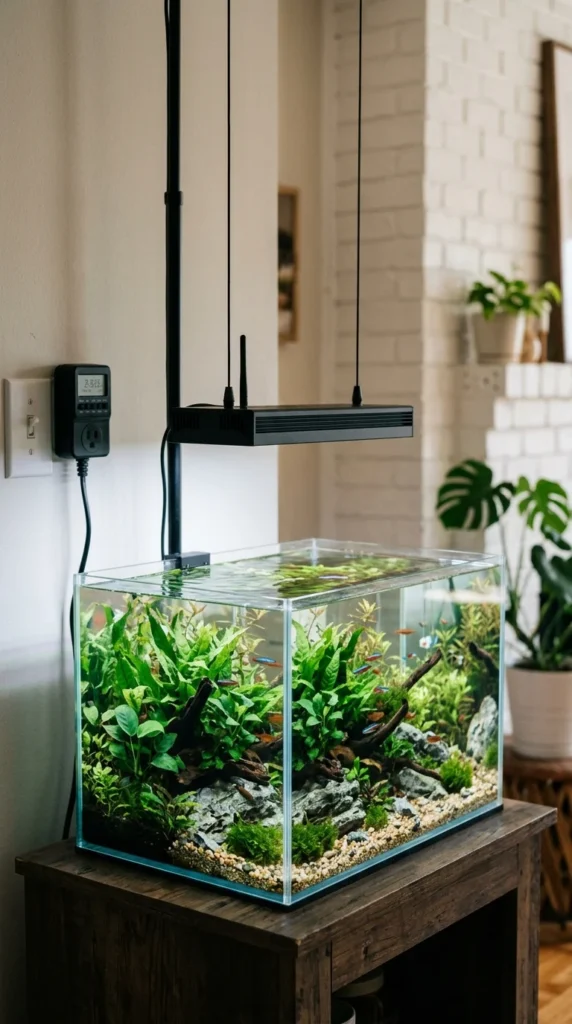
The number one cause of algae is excessive light. Most beginners leave their lights on for 12 hours or more, which is an invitation for an algae explosion. To regain control, limit your photoperiod to 6–8 hours a day. Using a digital timer is essential to ensure consistency, as irregular light cycles can stress plants and give algae the upper hand.
2. Live Plants
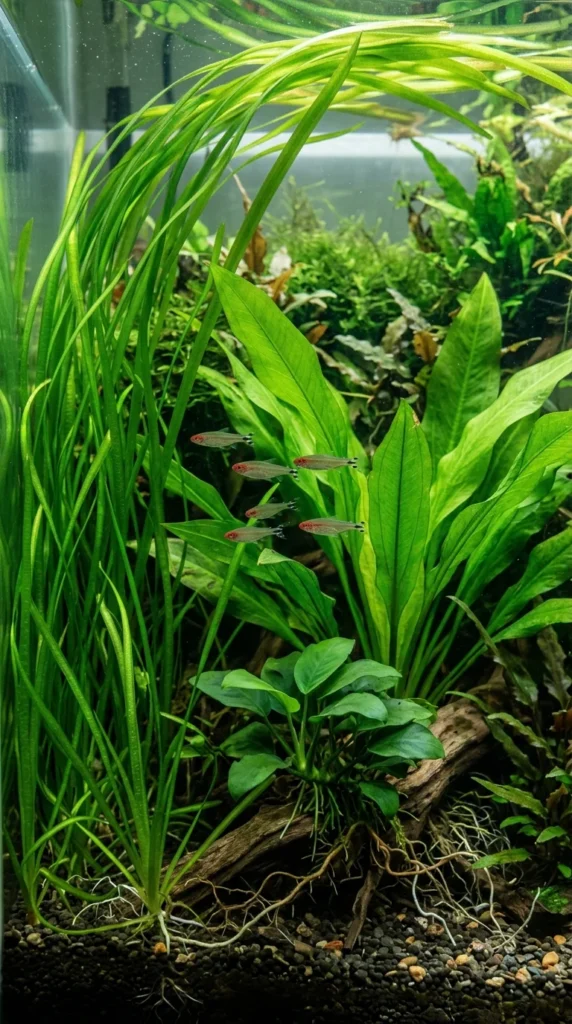
The best natural defense against algae is a tank full of healthy live plants. Plants and algae compete for the same nutrients (nitrates and phosphates). When you have a high biomass of fast-growing plants, they “starve” the algae by absorbing nutrients more efficiently. If your tank is sparsely decorated, consider adding fast growers like Water Sprite or Hornwort.
3. Nerite Snails
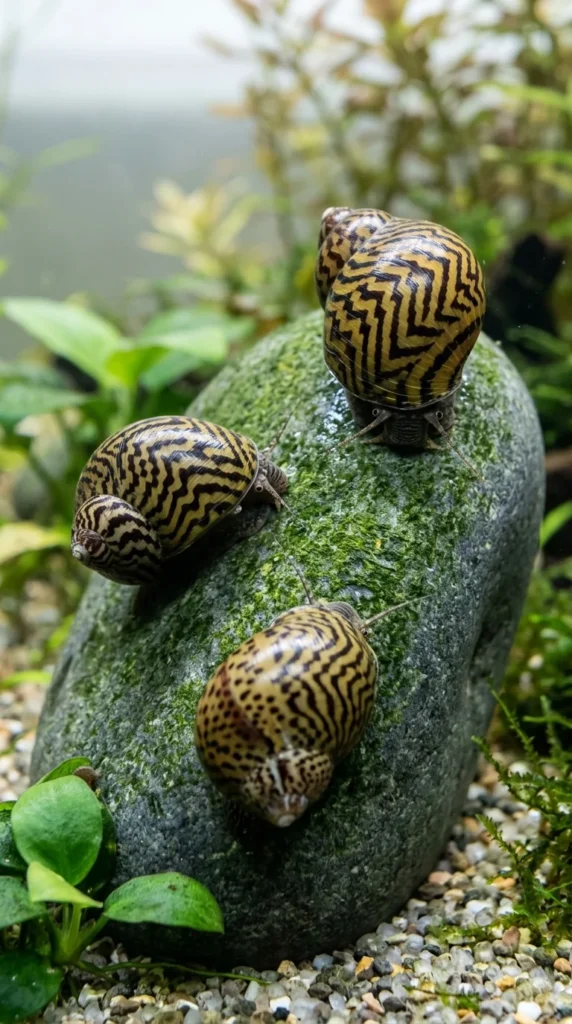
Nerite snails are the “special forces” of the algae-eating world. Unlike other snails, they won’t overpopulate your tank because their eggs only hatch in brackish water. They are tireless workers that specialize in cleaning glass, rocks, and driftwood, often eating types of algae that other inhabitants ignore, such as green spot algae.
4. Water Changes
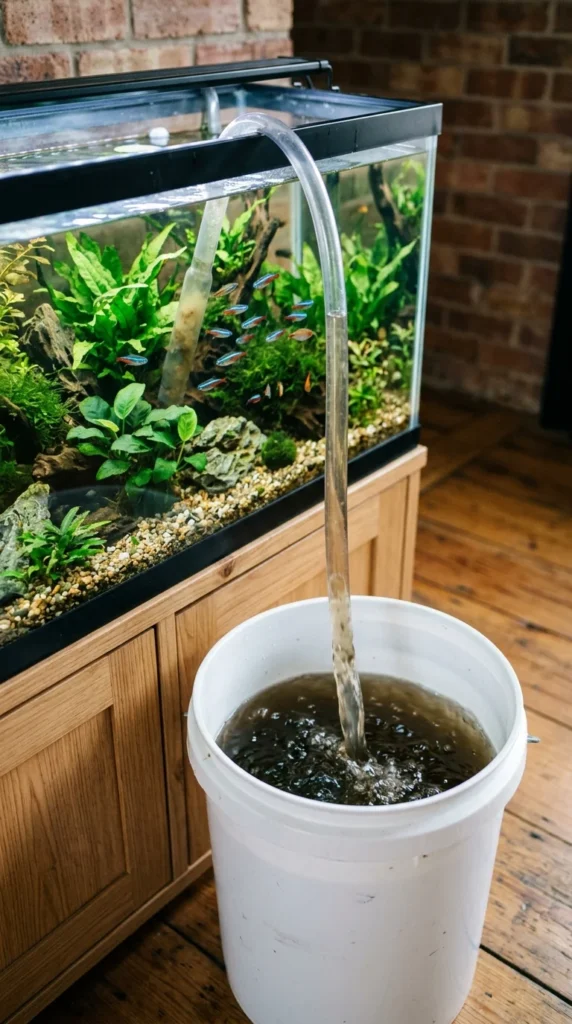
Dilution is the solution to pollution. Regular water changes (25–50% weekly) are the most effective way to remove excess nitrates and phosphates that accumulate from fish waste and uneaten food. By manually removing these “algae fuels,” you reset the nutrient clock every week, making it much harder for blooms to take hold.
5. Amano Shrimp
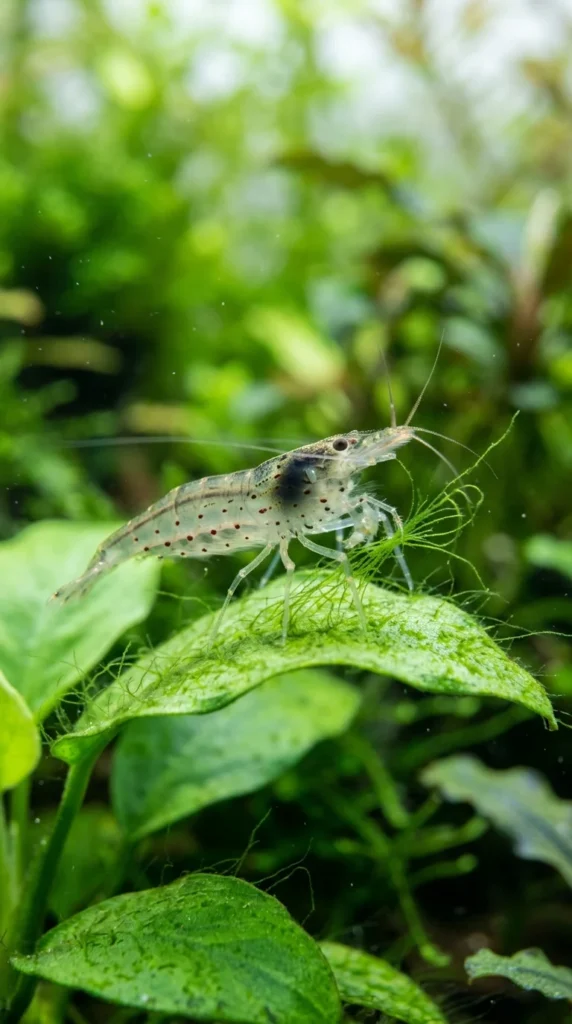
Named after the legendary aquarist Takashi Amano, these shrimp are arguably the best algae eaters in the hobby. They are larger and more robust than cherry shrimp and have a voracious appetite for filamentous algae, including the stubborn hair algae and string algae that plague many planted tanks.
6. Otocinclus Catfish
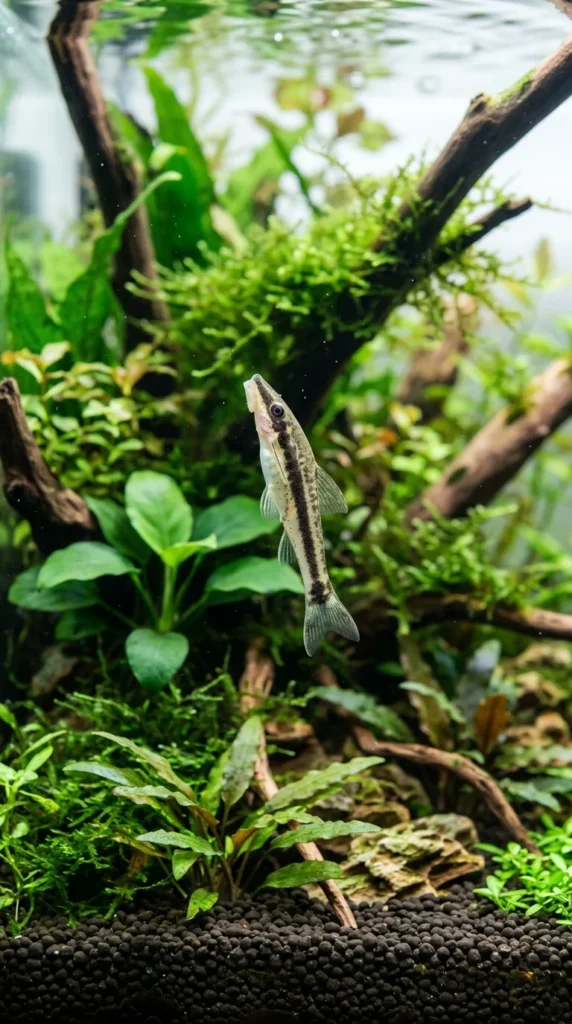
Known affectionately as “Otos,” these dwarf catfish are peaceful community members that spend 100% of their time grazing. They are particularly effective at removing brown algae (diatoms) which often appear in newly set-up tanks. Because they are small, they can reach the delicate leaves of plants that larger fish might damage.
7. Floating Plants
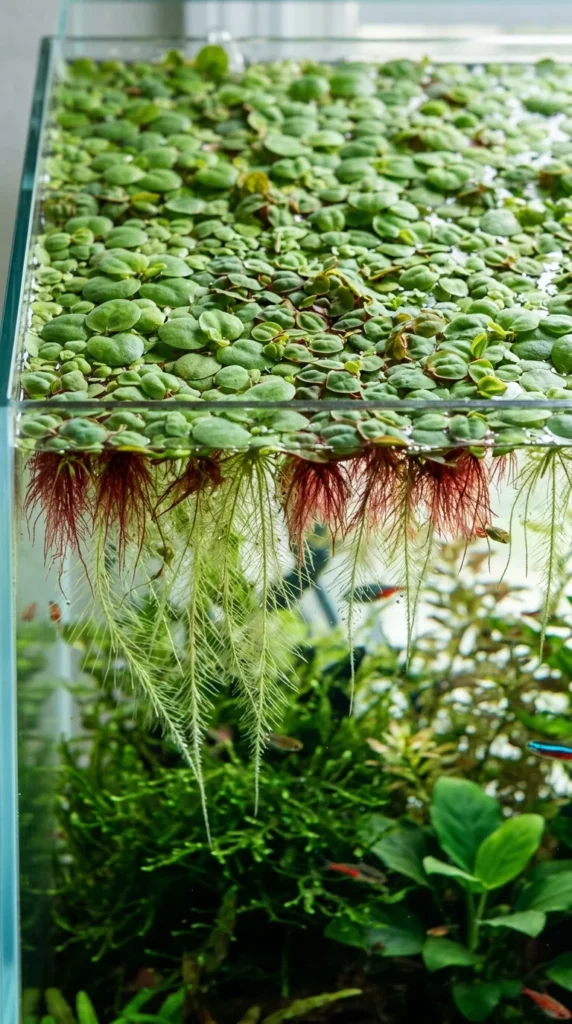
Floating plants provide a two-pronged attack against algae. First, they are incredibly fast at absorbing nitrates directly from the water. Second, they provide natural shade, dappling the light reaching the bottom of the tank. This reduction in light intensity is often the “missing link” in stopping algae growth on slow-growing plants like Anubias.
8. UV Sterilizers
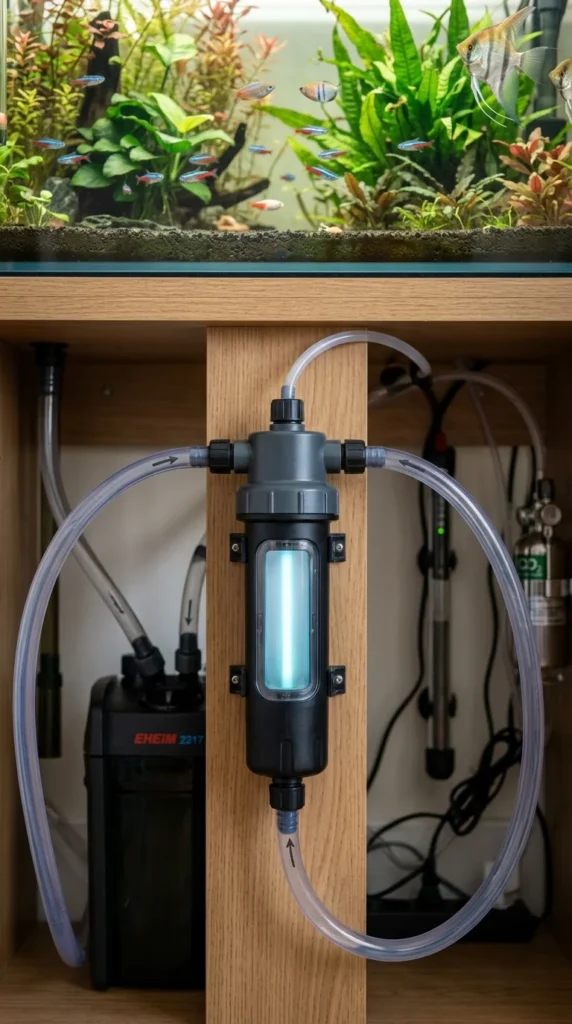
If you are dealing with “green water” (suspended algae blooms), a UV sterilizer is a miracle worker. As water passes through the unit, ultraviolet light destroys the DNA of free-floating algae cells. Within 48 to 72 hours, even the cloudiest green tank can become crystal clear. It is a highly effective, non-chemical solution for water clarity issues.
9. Overfeeding
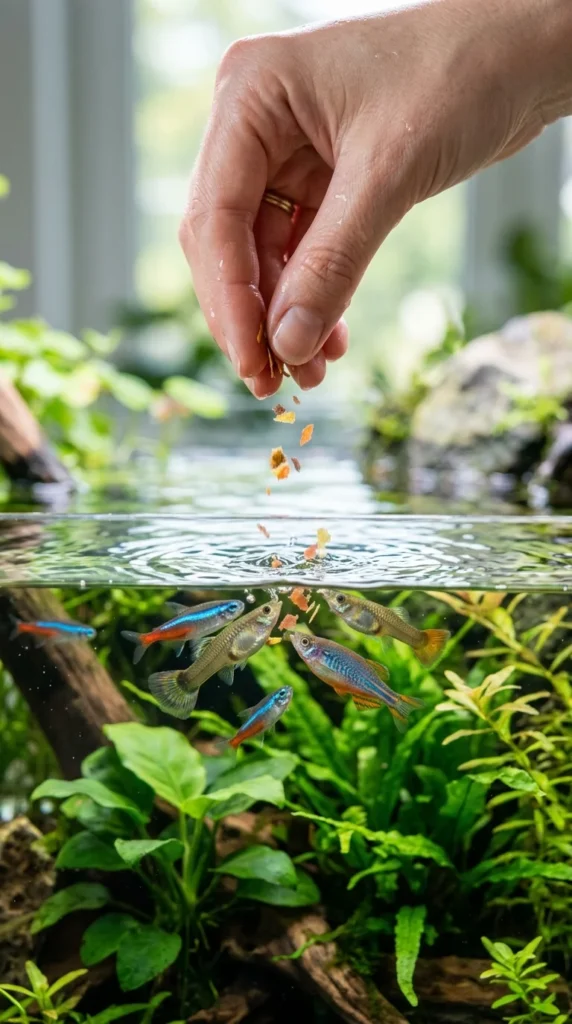
Excess food equals excess waste, and excess waste equals algae. Most people feed their fish far more than necessary. Any food that isn’t eaten within two minutes falls to the substrate and rots, releasing phosphates and ammonia. Feed sparingly, and consider skipping one day a week to allow the fish to forage and the biological filter to catch up.
10. Siamese Algae Eaters
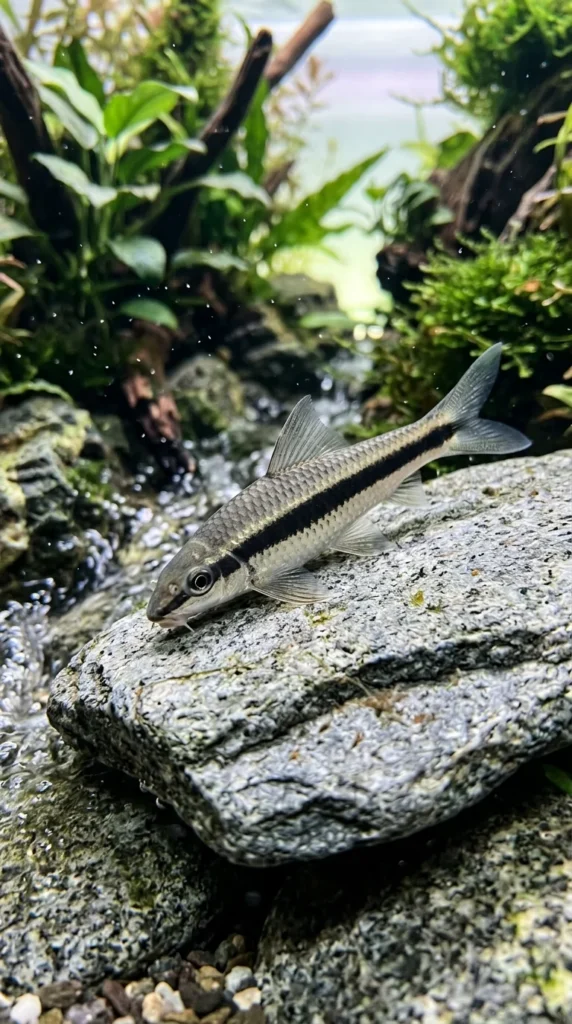
Not to be confused with the “Chinese Algae Eater,” the true Siamese Algae Eater (SAE) is one of the few fish that will eat Black Beard Algae (BBA). BBA is notoriously difficult to remove manually, but a young SAE will graze on the tufts until they disappear. They are active swimmers and add a lot of energy to the mid-ground of the tank.
11. Scrubbing
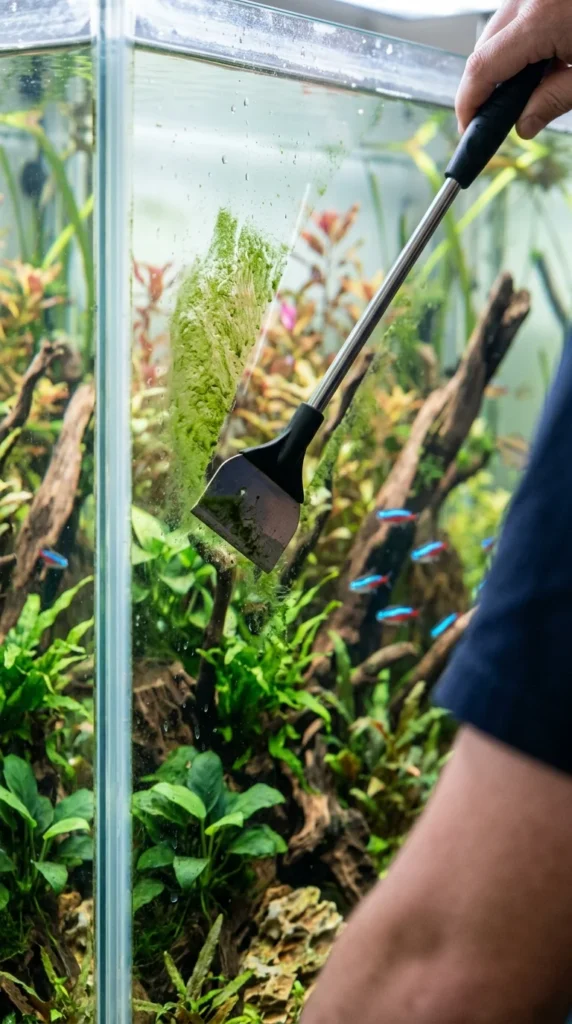
There is no substitute for manual labor. During your weekly water change, use an algae scraper or a simple sponge to wipe down the glass. Removing the algae manually before it spreads prevents it from “seeding” other areas of the tank. Always use a dedicated aquarium sponge to avoid introducing household chemicals or soaps into the water.
12. Sunlight
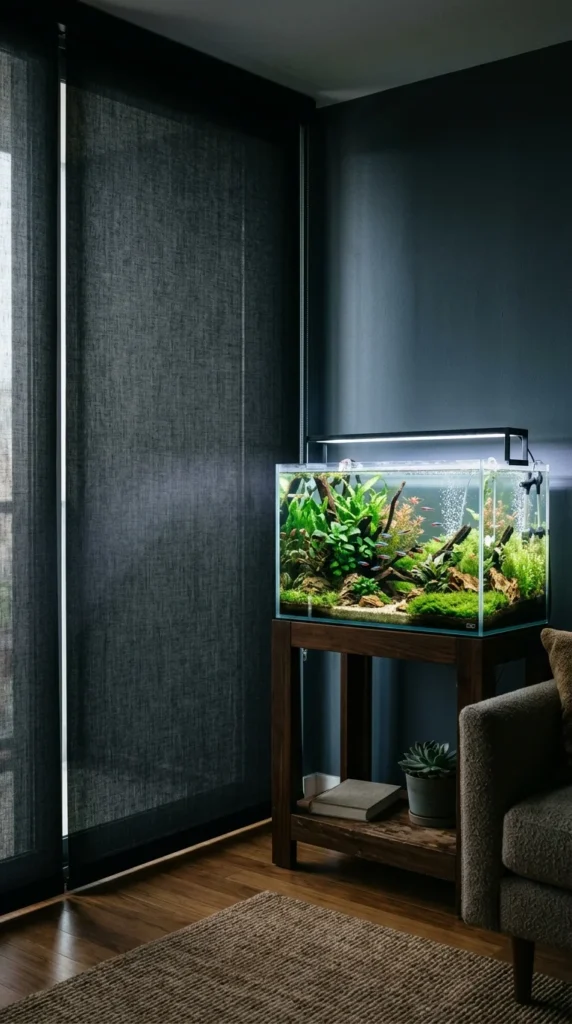
Even a few hours of direct sunlight from a nearby window can provide significantly more energy than an aquarium light, sparking a massive algae bloom. If your tank is near a window, use heavy curtains or move the tank to a darker corner of the room. Controlling the light source is the only way to ensure a predictable environment.
13. Fertilizer Balance

It sounds counterintuitive, but sometimes adding fertilizer stops algae. According to “Liebig’s Law of the Minimum,” plant growth is limited by the scarcest resource. If your plants lack potassium but have plenty of nitrates, they will stop growing. Algae then steps in to use the leftover nitrates. Providing a balanced “all-in-one” fertilizer ensures plants keep growing and competing.
14. Bristlenose Plecos
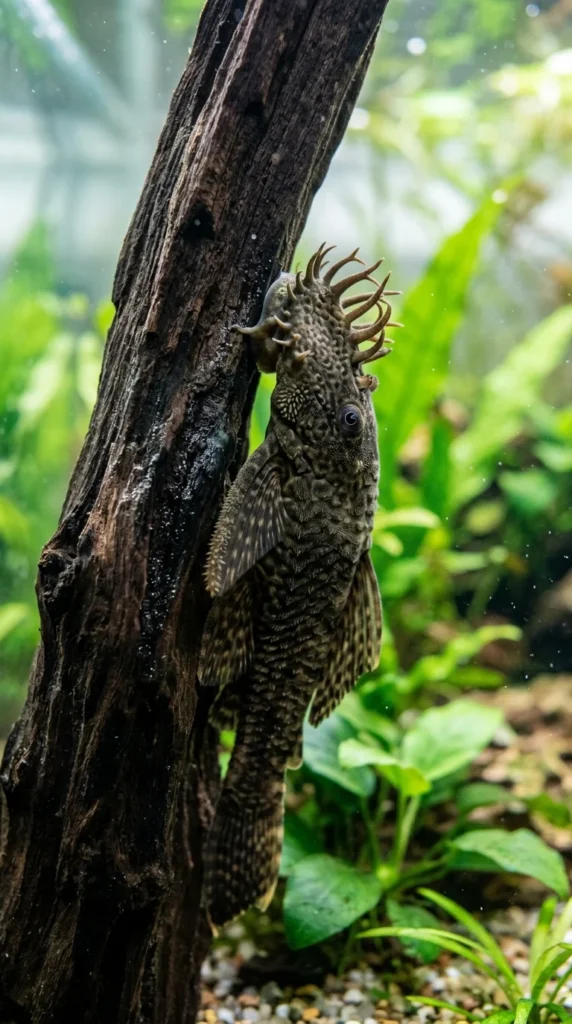
Unlike the common Pleco which grows too large for most tanks, the Bristlenose remains a manageable size (4-5 inches). They are phenomenal “janitors” for driftwood and glass. They are particularly good at eating the soft film algae and even some types of tougher green algae that other fish find unpalatable.
15. Hydrogen Peroxide
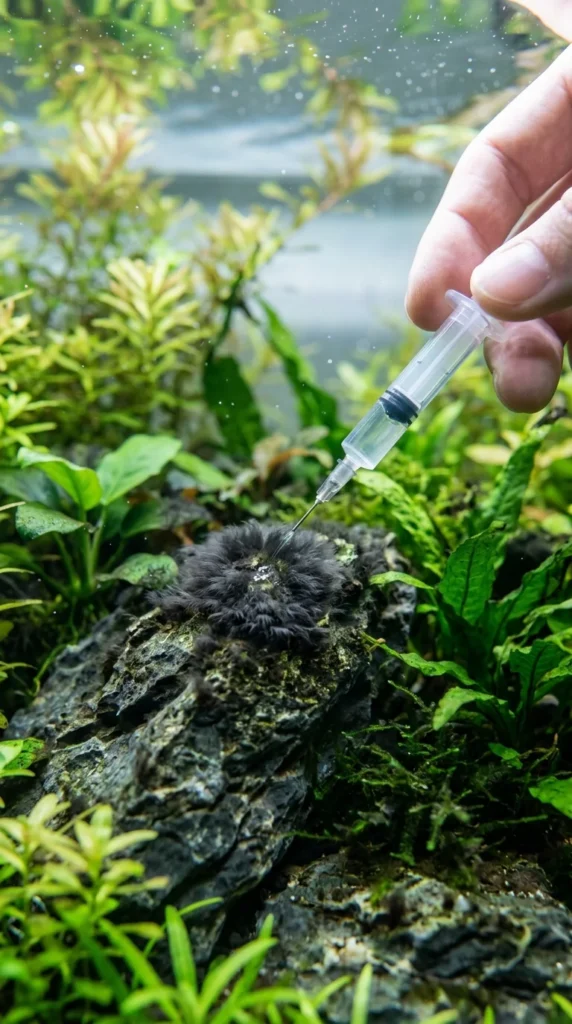
For localized outbreaks, “spot dosing” with 3% Hydrogen Peroxide can be very effective. When applied directly to algae with a syringe (with the filters turned off for 15 minutes), the peroxide oxidizes the algae cell walls, killing it almost instantly. It then breaks down into harmless water and oxygen. Note: This should be done with extreme caution around sensitive mosses and shrimp.
16. Liquid Carbon
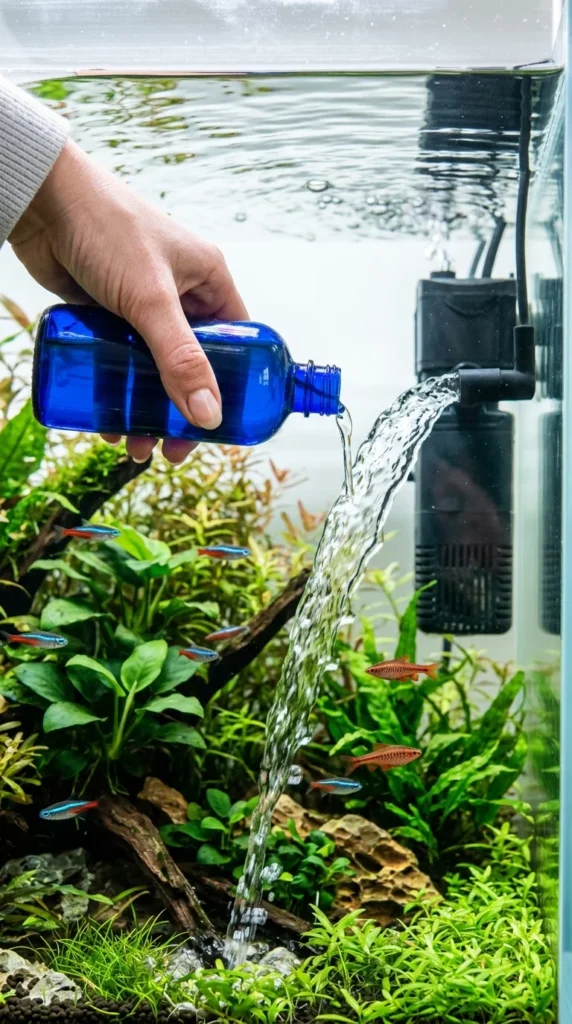
Products often sold as “liquid carbon” (like Flourish Excel) are actually mild algaecides. Regular dosing can inhibit the growth of many algae types, particularly BBA and hair algae. It also provides a bio-available form of carbon that plants can use for photosynthesis, helping them grow stronger and outcompete the algae naturally.
17. Blackouts
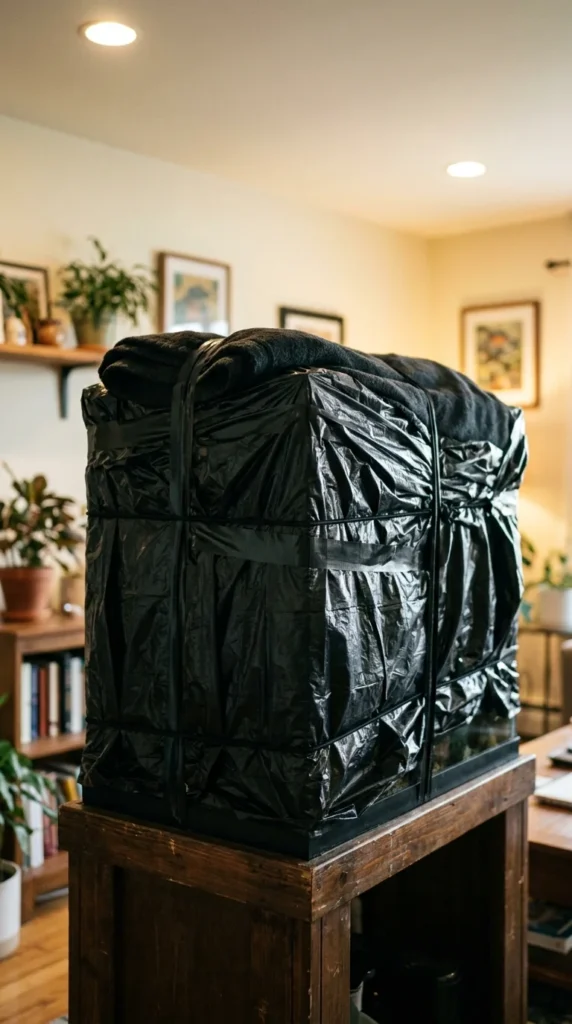
If a tank has been completely overrun by blue-green algae (cyanobacteria) or a massive bloom, a 3-day total blackout can reset the system. By depriving the tank of all light, the algae dies off while most higher-order plants survive by using stored energy. Always follow a blackout with a massive water change to remove the decaying organic matter.
18. RO/DI Water
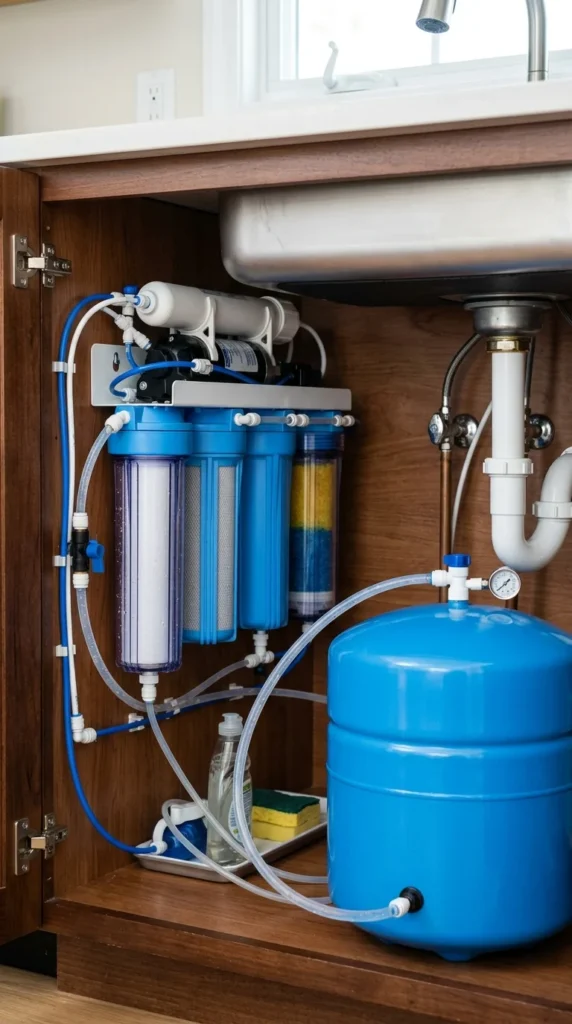
Sometimes the problem is your tap water. Many municipal water sources are high in phosphates or nitrates right out of the faucet. Using an RO/DI (Reverse Osmosis Deionization) system removes 99% of these impurities. Starting with “pure” water allows you to add back only the minerals and nutrients your plants actually need, giving you total control.
19. Phosphate Media

If your phosphate levels are consistently high, you can use specialized chemical media like GFO (Granular Ferric Oxide). Placing a bag of phosphate-removing media in your filter will strip the excess nutrients from the water column. This is a great “crutch” to use while you work on fixing the underlying cause of the imbalance, such as overfeeding or poor source water.
20. CO2 Injection
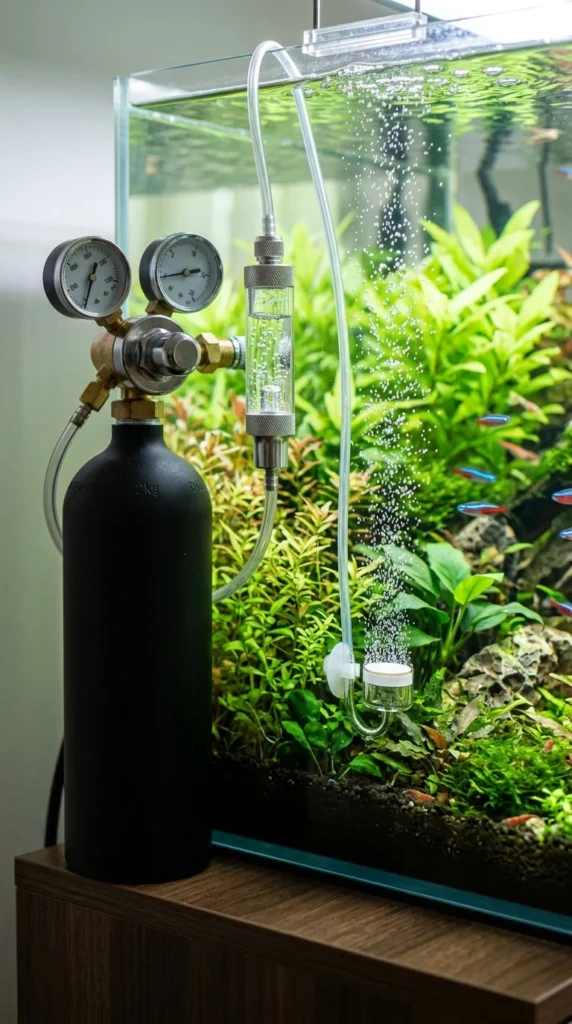
In high-light tanks, carbon dioxide is often the limiting factor for plant growth. When plants have enough light and nutrients but not enough CO2, they stall, and algae takes over. Adding a pressurized CO2 system supercharges plant growth. Healthy, rapidly growing plants are the single most effective “algae killer” in the world.
21. Filter Cleaning
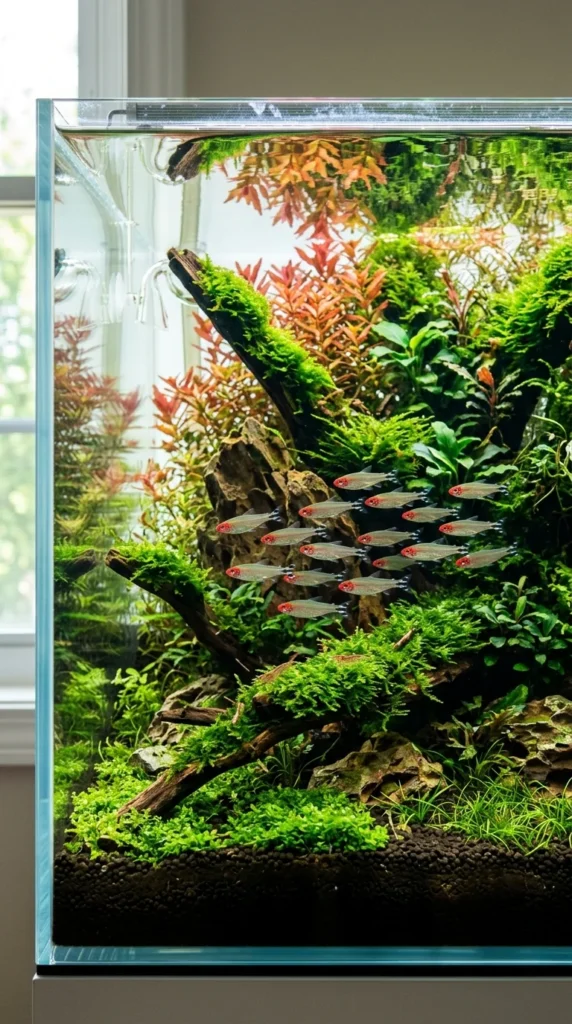
A dirty filter is a factory for algae fuel. When organic “mulm” builds up in the sponges, it slowly breaks down into ammonia and nitrates. Furthermore, a clogged filter reduces water circulation, creating “dead spots” where algae loves to grow. Clean your filter sponges in a bucket of old tank water every month to keep the water flowing and the nutrients moving toward the plants.