
Bearded dragons (Pogona vitticeps) are arguably the most popular pet reptiles in the world. Known for their docile nature, “smiling” faces, and fascinating social behaviors, they make incredible companions for those willing to learn the ropes of reptilian husbandry. However, unlike a cat or a dog, a bearded dragon requires a specific micro-environment to thrive. This comprehensive guide covers the 23 essential pillars of bearded dragon care to ensure your scaly friend lives a long, healthy, and happy life.
1. Enclosure Size
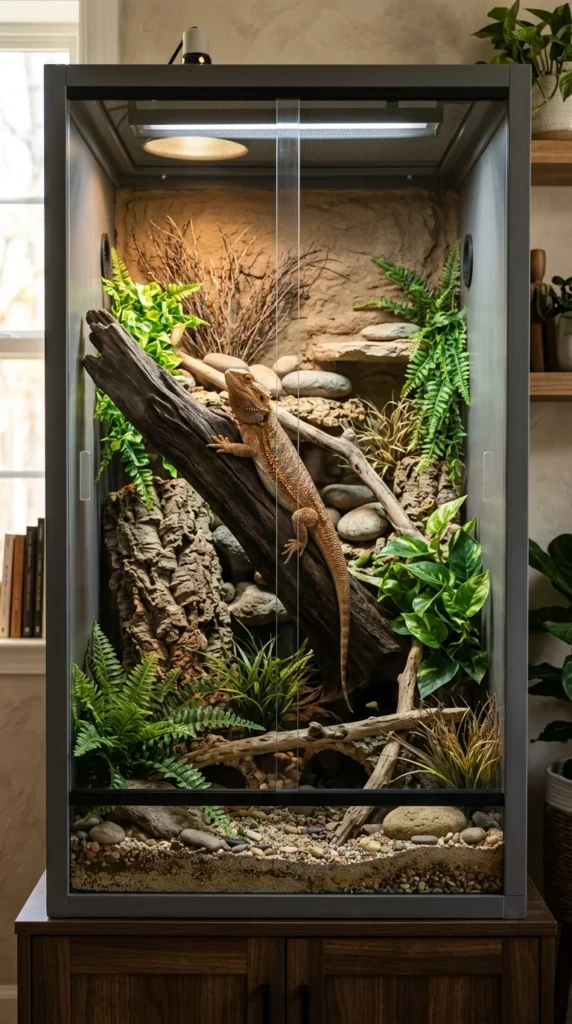
The most common mistake beginners make is starting with an enclosure that is too small. While a baby bearded dragon can live in a 20 or 40-gallon tank, they grow incredibly fast. An adult bearded dragon requires a minimum of a 120-gallon enclosure (4’x2’x2′). This size allows for a proper thermoregulation gradient, meaning there is enough space for a hot side and a cool side, giving the dragon the ability to regulate its own body temperature.
2. UVB Lighting
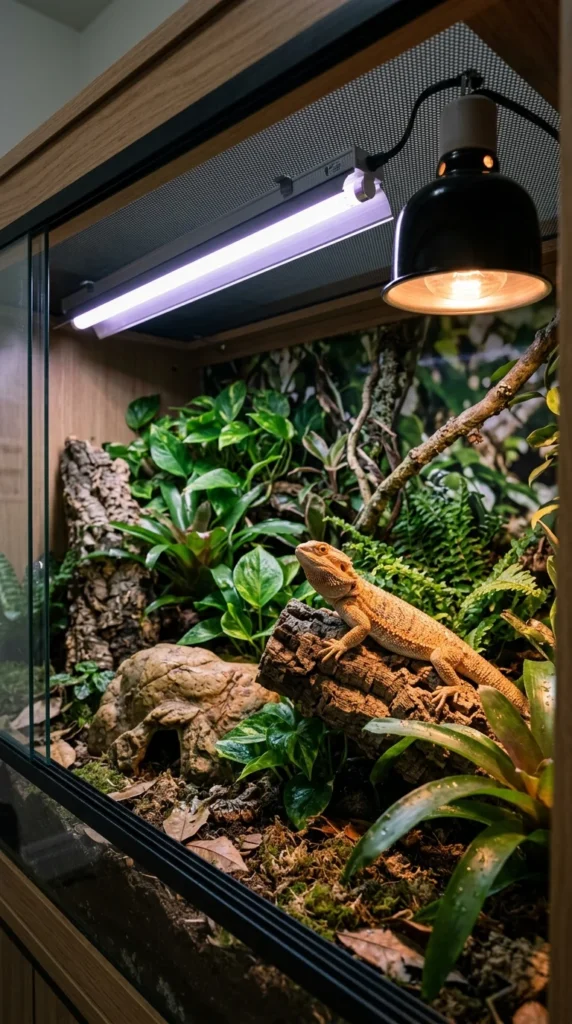
Bearded dragons are diurnal desert dwellers that require high levels of Ultraviolet B (UVB) radiation to synthesize Vitamin D3. Without D3, they cannot absorb calcium, leading to Metabolic Bone Disease (MBD). You must use a tube-style UVB bulb (like a T5 HO) that spans about half to two-thirds the length of the enclosure. Coiled or “compact” UVB bulbs are generally insufficient for the high demands of a bearded dragon.
3. Heating
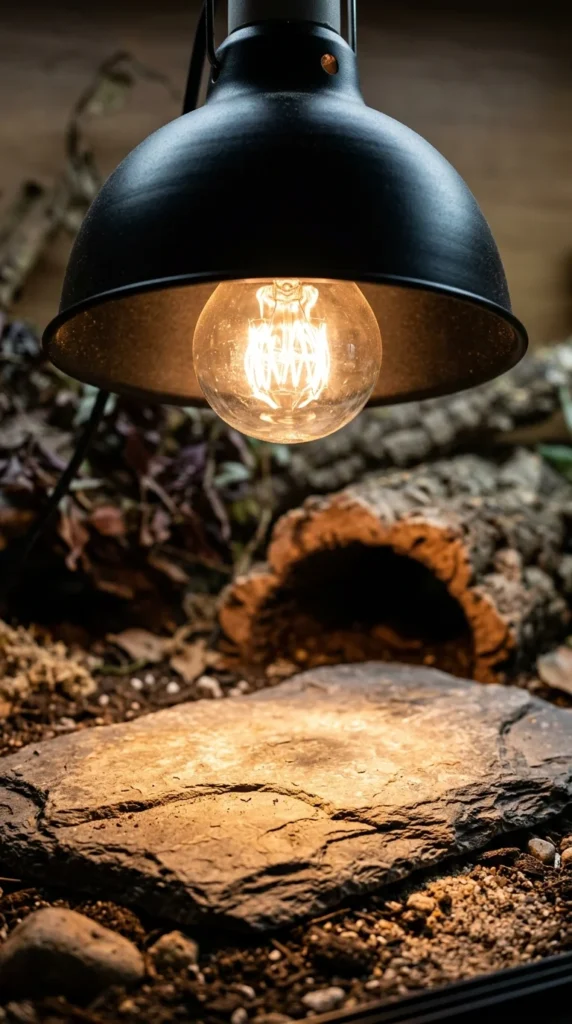
As ectotherms, bearded dragons rely on external heat sources. You need a dedicated basking spot that reaches temperatures between 100°F and 105°F for adults (up to 110°F for babies). The “cool side” of the tank should stay around 75°F to 80°F. Always use a digital thermometer or an infrared temp gun to measure these temperatures; stick-on analog dials are notoriously inaccurate.
4. Substrate Choice
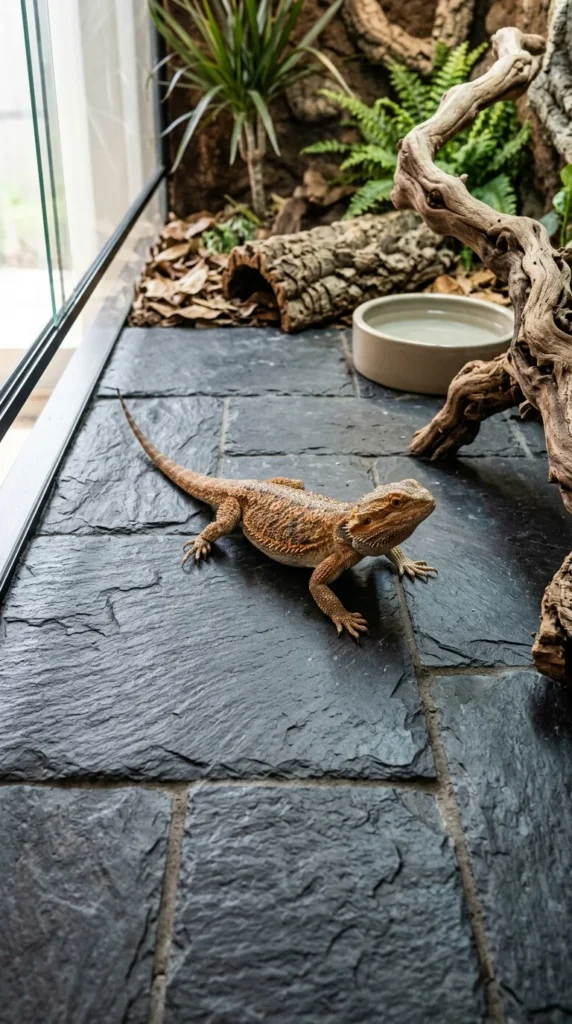
The “bedding” or substrate you choose is critical. For beginners, it is safest to avoid loose sands or walnut shells, which can cause impaction if swallowed. Instead, opt for solid surfaces like slate tile, reptile carpet (though it must be cleaned frequently), or paper towels for juveniles. These options are easy to sanitize and pose zero risk of digestive blockage.
5. Basking Decor
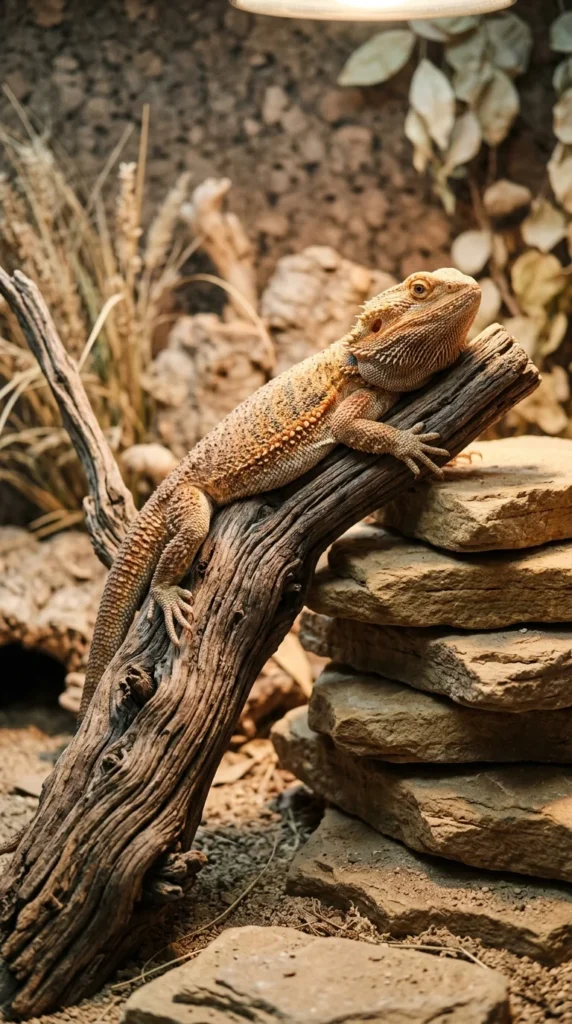
Your dragon needs a place to get closer to the heat. Sturdy branches, large rocks, or specialized “basking platforms” are essential. Ensure that whatever you use is secure and won’t collapse. Natural wood should be baked or sanitized before being placed in the enclosure to remove any potential outdoor parasites or bacteria.
6. Hiding Spots
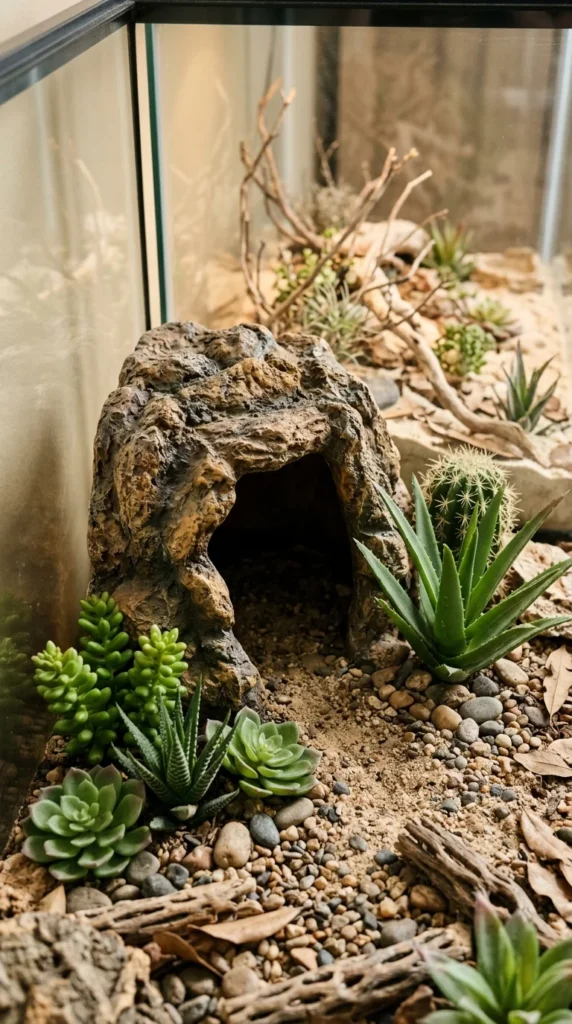
While bearded dragons love the sun, they also need to feel secure. Providing at least two hides—one on the hot side and one on the cool side—allows your pet to retreat if they feel stressed or if they want to cool down without feeling exposed. A stressed dragon is a dragon with a weakened immune system.
7. Insect Protein
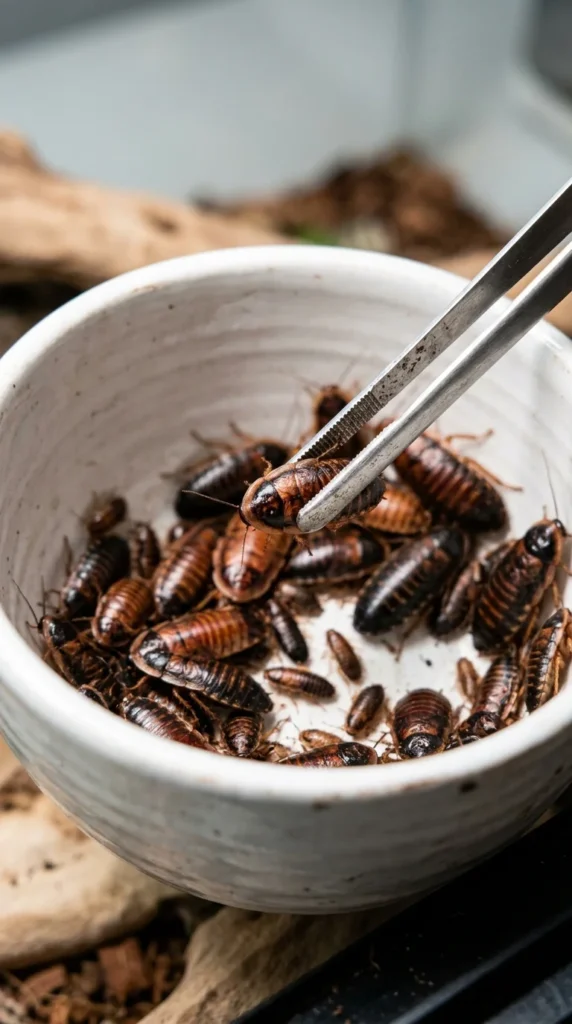
Bearded dragons are omnivores, but insects are the primary fuel for growth, especially in juveniles. Live insects like Dubia roaches, crickets, and silkworms should be offered. Avoid feeding “wild” insects from your backyard, as they may contain pesticides or parasites. As a rule of thumb, the insect should be no larger than the space between the dragon’s eyes to prevent choking.
8. Daily Greens

Adult bearded dragons should eat a diet consisting of roughly 80% vegetables and 20% insects. Provide a fresh salad daily. Safe staples include collard greens, mustard greens, turnip greens, and escarole. Avoid iceberg lettuce (no nutritional value) and use spinach or kale sparingly, as they can bind calcium if fed in excess.
9. Calcium Supplementation
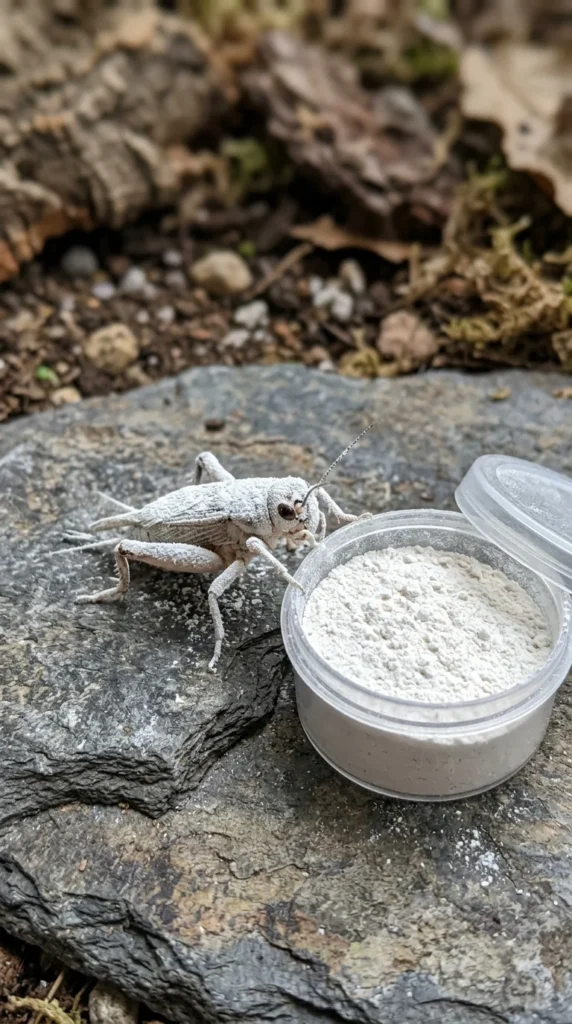
Because captive dragons don’t get the same variety of minerals as they do in the wild, you must “dust” their food with calcium powder. For most owners, a calcium powder with added Vitamin D3 is essential (unless your UVB output is exceptionally high and verified). This ensures their bones stay strong and prevents the dreaded “rubber jaw” associated with calcium deficiency.
10. Hydration Methods
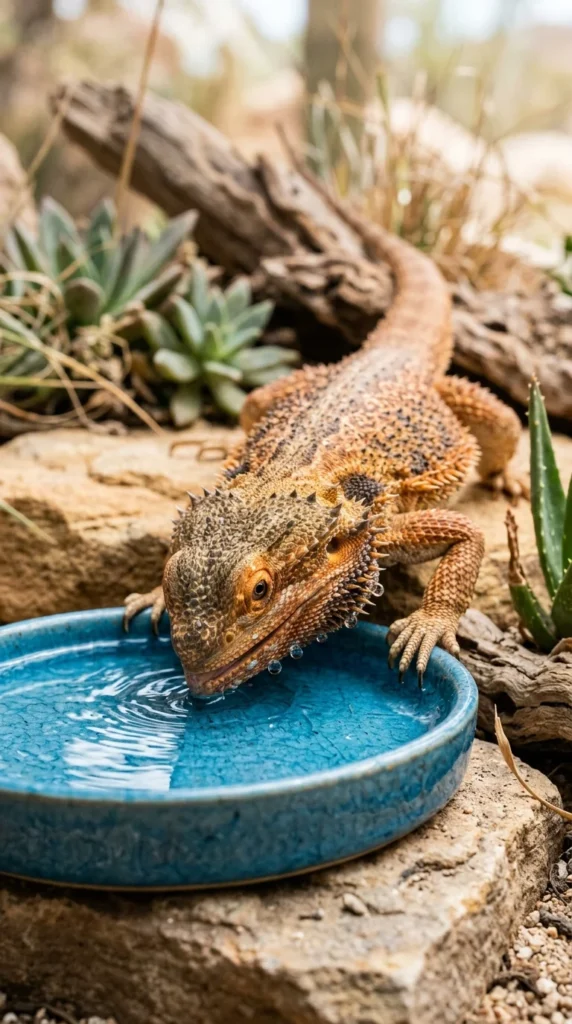
While they are desert animals, they still need water. Many dragons won’t drink from a standing bowl, as they don’t recognize it as water. You can encourage hydration by misting their greens with water or using a dropper to place water on their snout. Keeping a shallow bowl in the tank is still recommended to help with ambient humidity.
11. Shedding Care
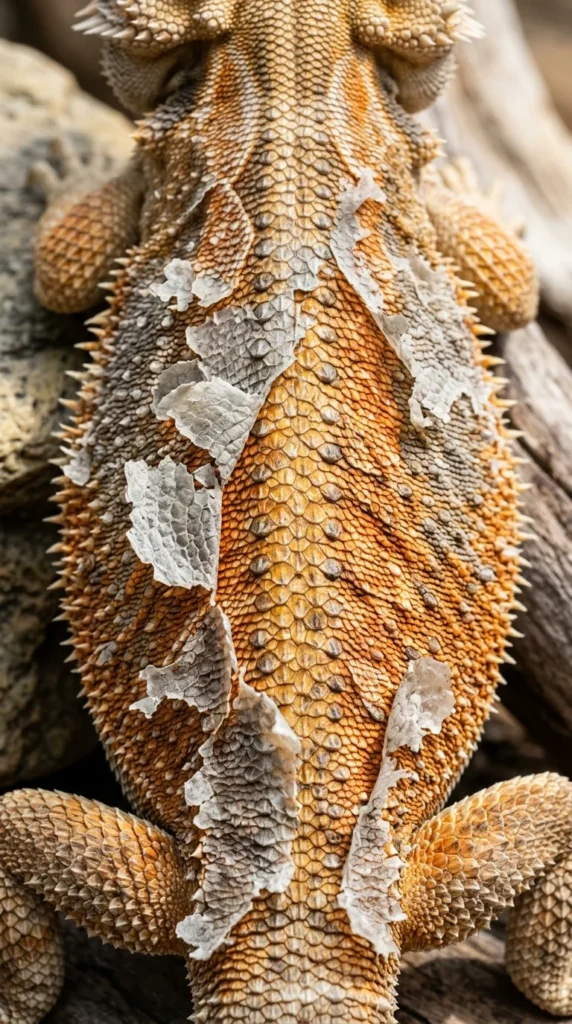
As they grow, bearded dragons shed their skin in patches. Unlike snakes, they don’t shed in one piece. Never pull off “stuck” shed, as this can damage the new scales underneath. If your dragon is struggling with a shed, a lukewarm soak or a gentle misting can help soften the old skin until it falls off naturally.
12. Brumation Awareness
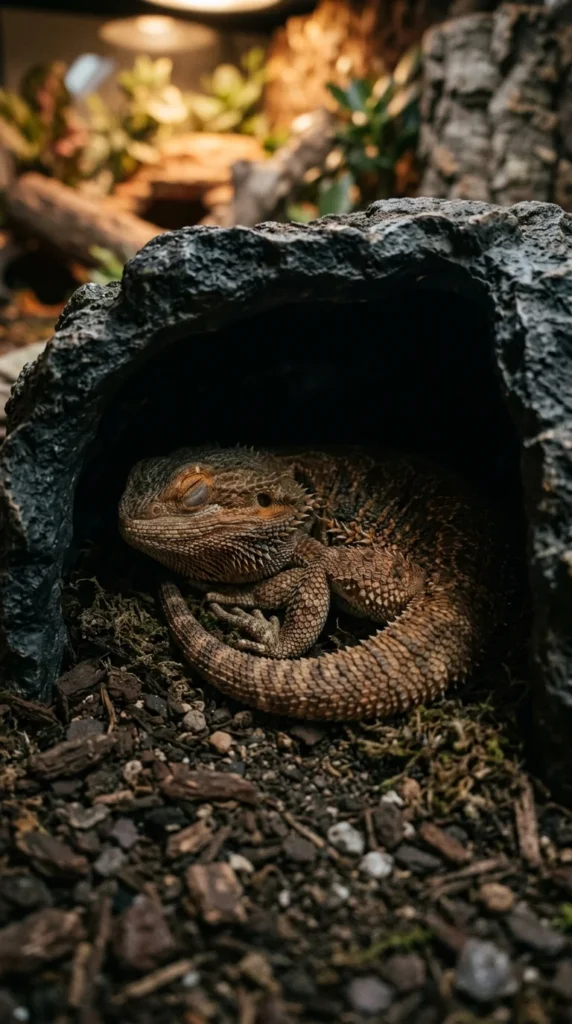
Brumation is the reptile equivalent of hibernation. During colder months, your dragon may become lethargic, lose its appetite, and sleep for weeks at a time. This is a natural biological process. However, for beginners, it can be scary. It is always best to have a fecal exam done by a vet before they go into brumation to ensure they don’t have parasites that could flourish while the dragon’s metabolism is slowed.
13. Socialization/Handling
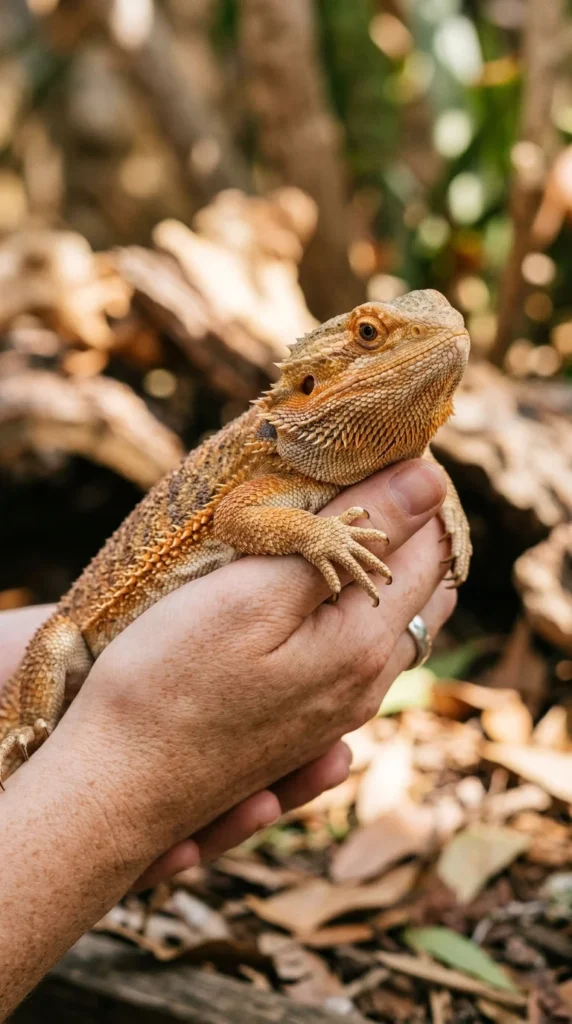
One of the best parts of owning a “beardie” is their tolerance for handling. Start slow with short sessions. Always scoop them up from underneath rather than grabbing them from above, as they have a “third eye” (parietal eye) on top of their head that detects overhead shadows—making them think a predator is attacking.
14. Cleaning Routine
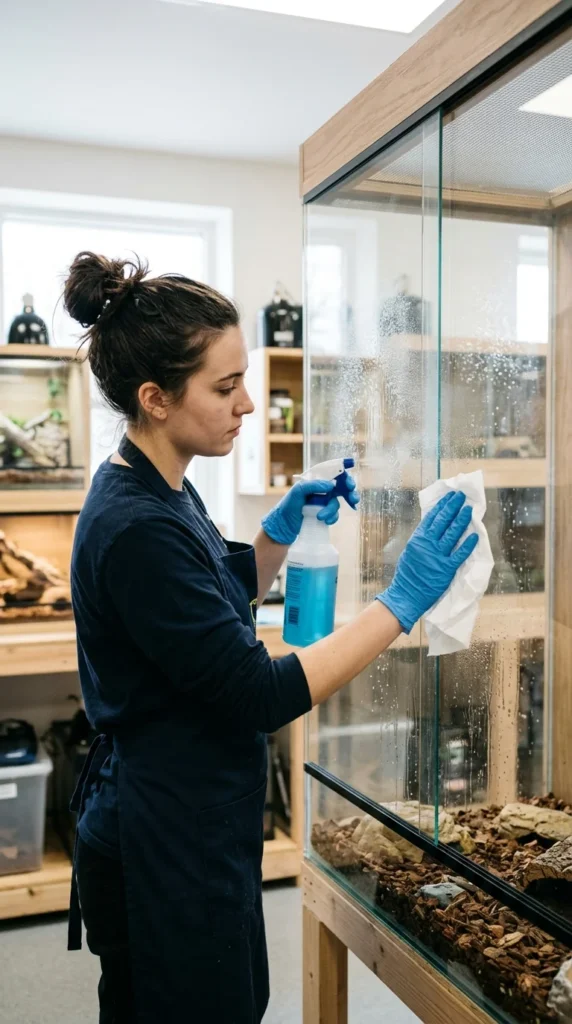
A clean environment is vital for health. Spot-clean poop and uneaten food every single day. Once a month, perform a “deep clean” where you remove all decor and substrate, disinfecting the enclosure with a reptile-safe cleaner or a diluted bleach solution (ensure it is thoroughly rinsed and dried before the dragon returns).
15. Bathing Benefits
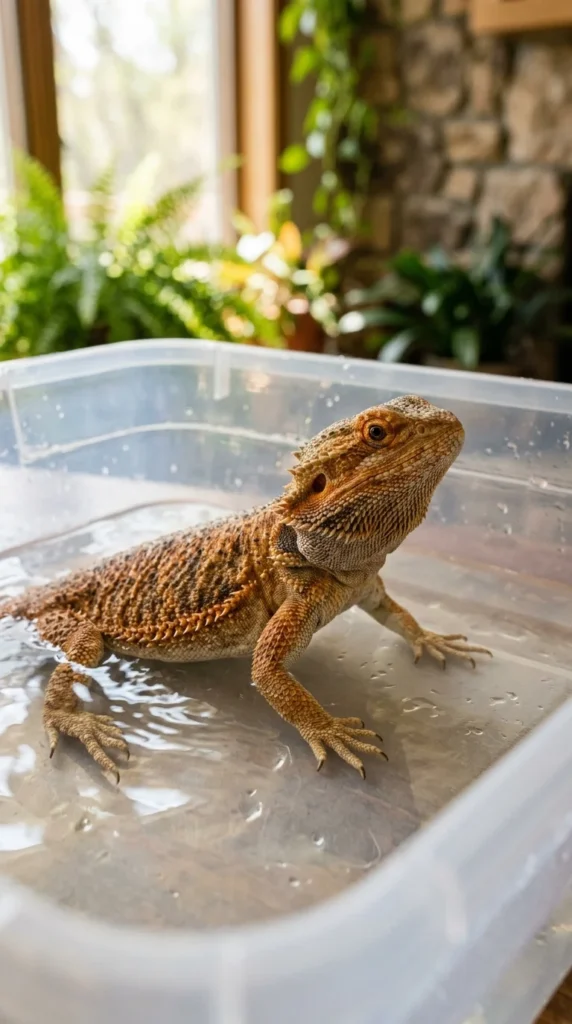
A lukewarm bath (85-92°F) once or twice a week can be very beneficial. It helps with hydration, assists in the shedding process, and often encourages the dragon to defecate, which keeps the enclosure cleaner. Ensure the water is no deeper than their chest to prevent any risk of drowning.
16. Sexing Your Dragon
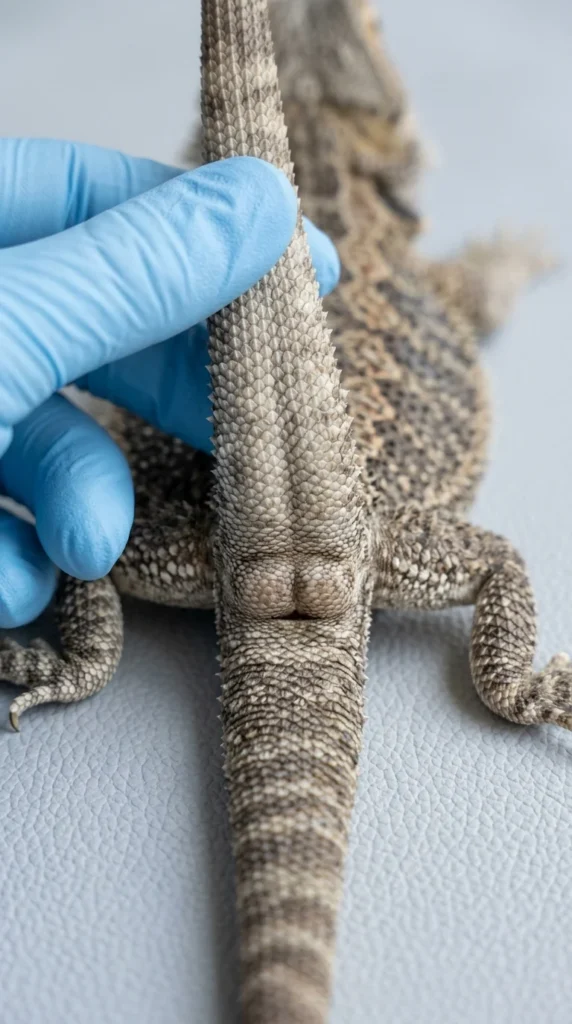
Determining the sex of your dragon is usually possible once they reach 6–8 months of age. By gently lifting the tail and looking at the underside (the vent area), you can look for hemipenal bulges. Two bulges usually indicate a male, while a single centered bulge or no bulge usually indicates a female. This is important for understanding potential future behaviors like egg-laying.
17. Metabolic Bone Disease (MBD)
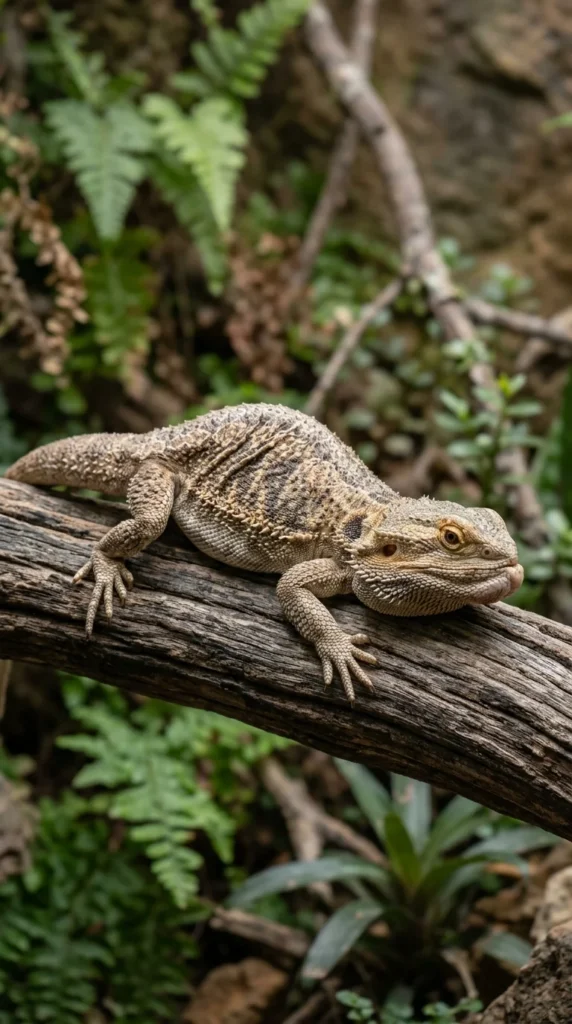
MBD is the most common preventable illness in captive bearded dragons. It is caused by a lack of UVB or calcium. Symptoms include tremors, lethargy, softened jawbones, and stunted growth. If caught early, it can be treated with veterinary intervention and corrected husbandry. This is why lighting and supplements are the two most important parts of this guide.
18. Tail Rot and Toe Health
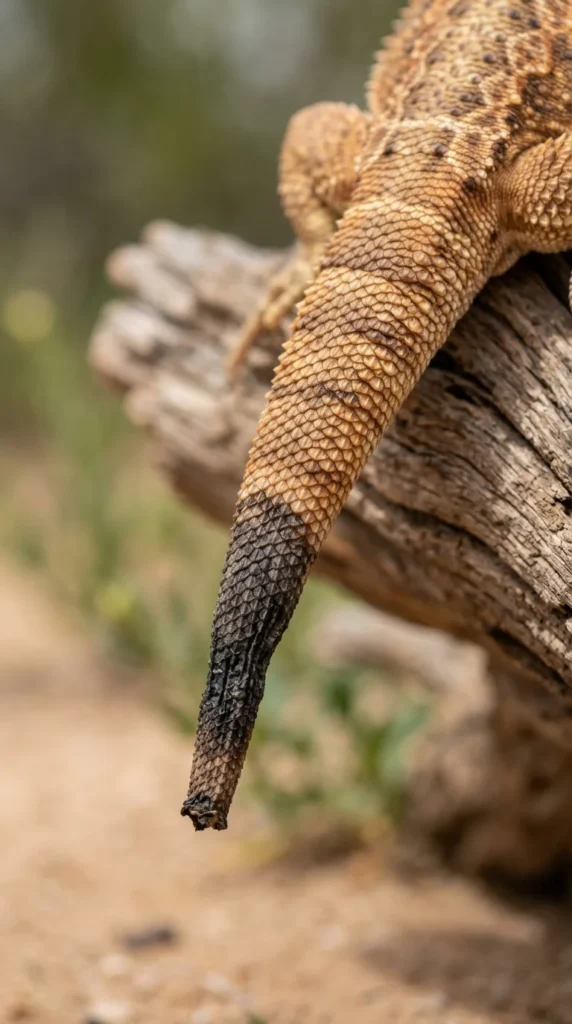
Tail rot is a condition where the tissue at the end of the tail dies due to infection or poor blood flow (often from a bad shed or injury). If the tail looks black, shriveled, or hard, it requires immediate veterinary attention. Similarly, keep an eye on their toes, as stuck shed can constrict blood flow and cause toes to fall off.
19. Understanding “The Beard”
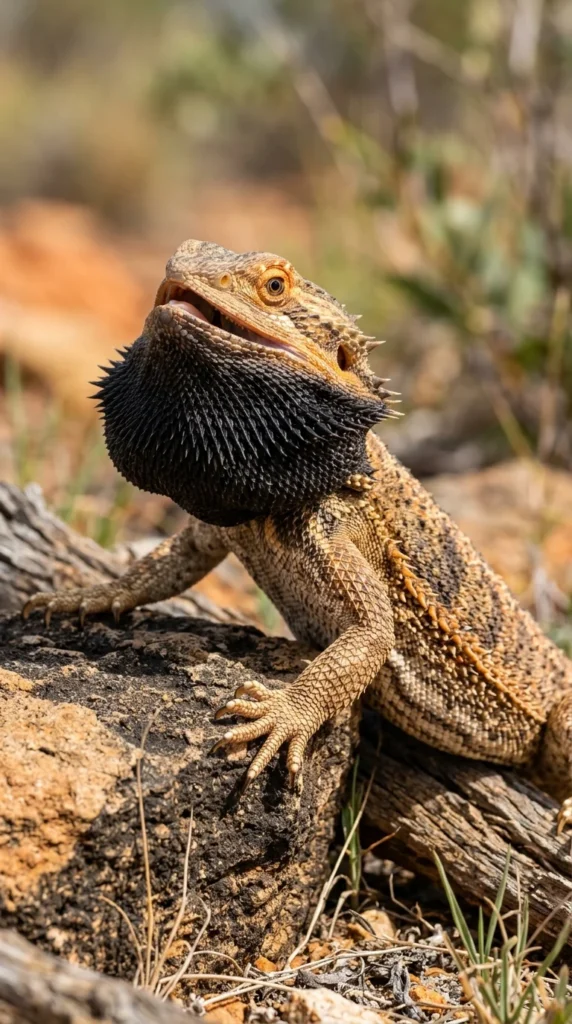
The “beard” is a group of specialized scales under the chin. When threatened, stressed, or showing dominance, the dragon will puff this area out and it will turn jet black. While it looks intimidating, it’s just their way of communicating. A black beard can also be a sign of pain or illness if it persists for long periods without an obvious external stressor.
20. Impaction Prevention
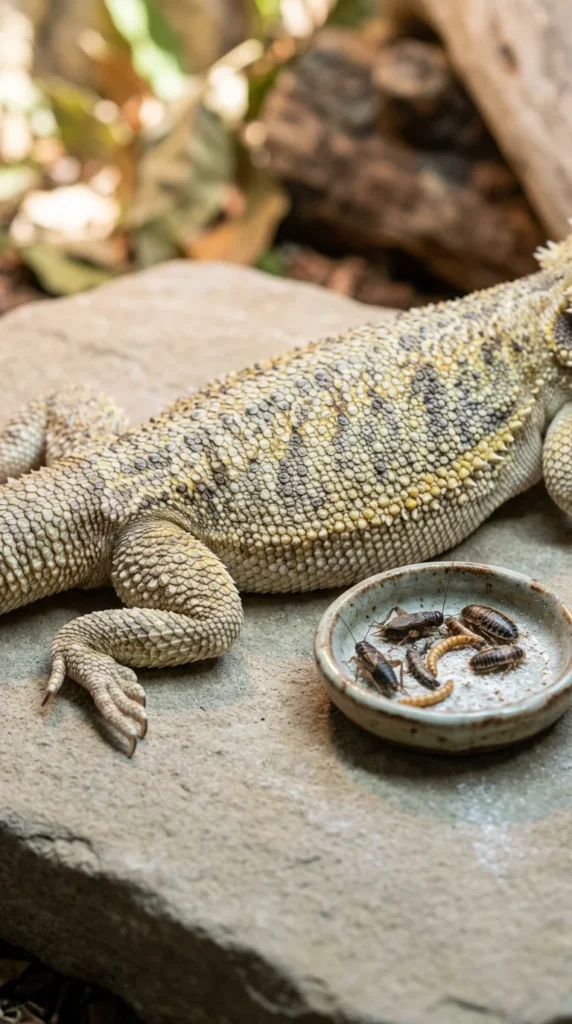
Impaction occurs when a dragon swallows something they cannot digest, which then blocks their digestive tract. This is often caused by loose substrate (sand) or feeding insects that are too large or have too much chitin (like adult mealworms for babies). If your dragon stops pooping or has trouble moving its back legs, see a vet immediately.
21. Body Language Signals
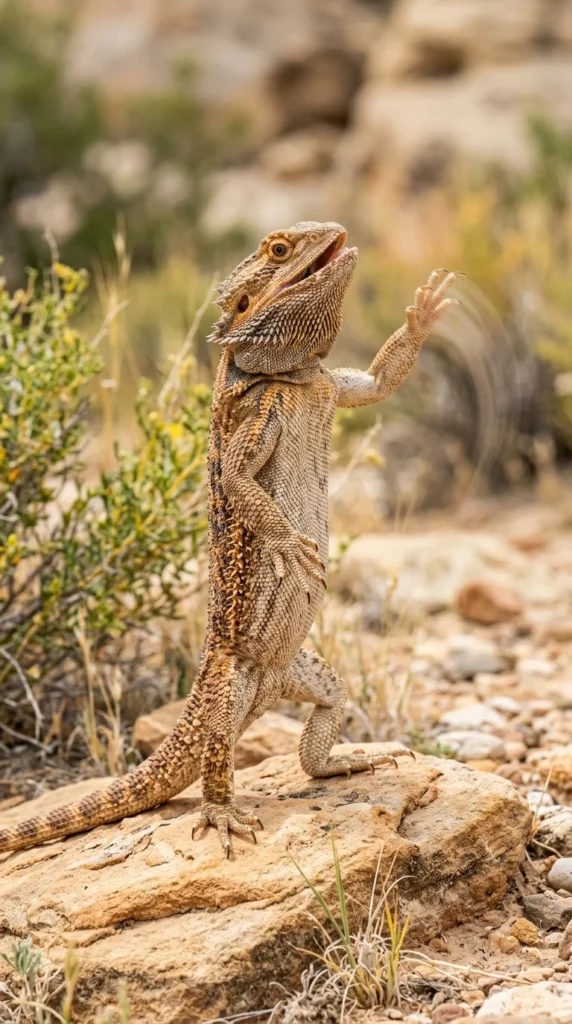
Bearded dragons have unique ways of communicating. “Arm waving” is a sign of submission, often seen in females or submissive males. “Head bobbing” is a sign of dominance. “Gaping” (sitting with the mouth open) is usually just a way for them to release extra heat while basking—think of it like a dog panting.
22. Solitary Living
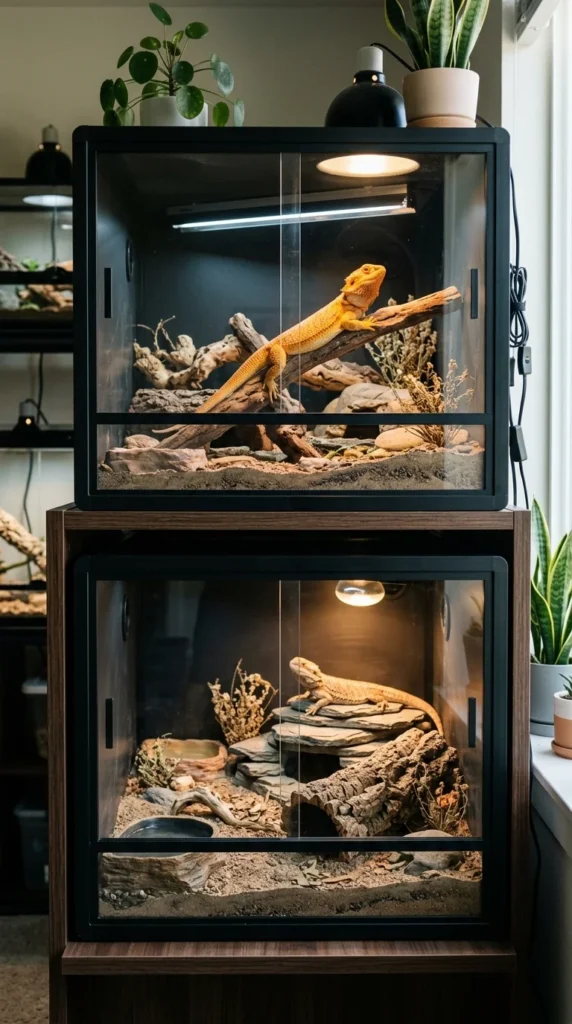
Bearded dragons are not social creatures. In the wild, they only meet to mate. Keeping two dragons in the same tank (co-habitation) often leads to stress, bullying, and violent fights that can result in lost limbs or death. Even if they “cuddle,” they are actually competing for the best basking spot. Always keep them in separate enclosures.
23. Lifespan and Commitment
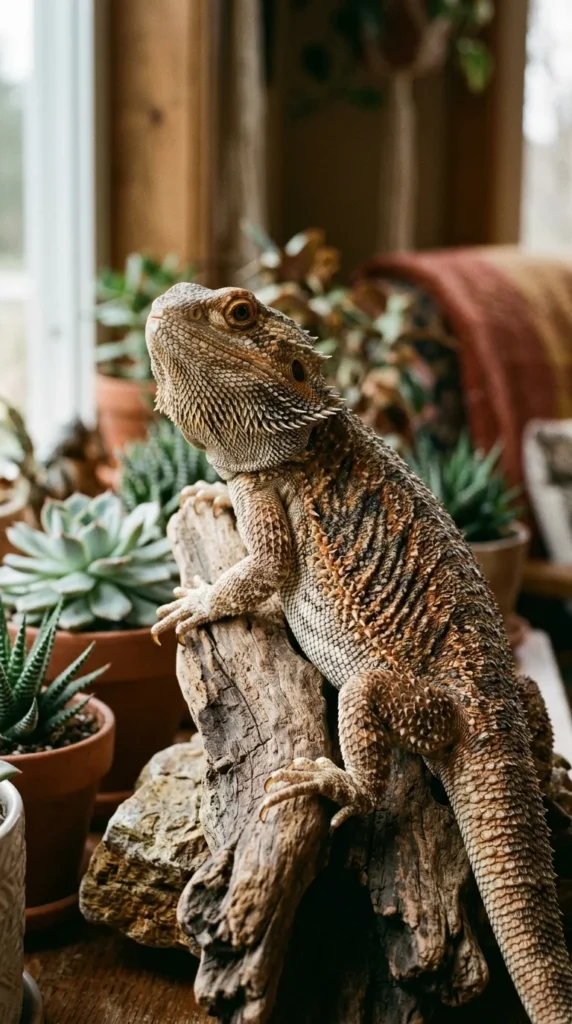
A well-cared-for bearded dragon can live 10 to 15 years. This is a long-term commitment that requires consistent financial input for food, electricity, and veterinary care. Before bringing one home, ensure you are ready for a decade-plus journey with one of the most rewarding and charismatic reptiles in the pet trade.